May 15, 2026
How NATO Standards Influence Military Vehicle Spare Parts Procurement
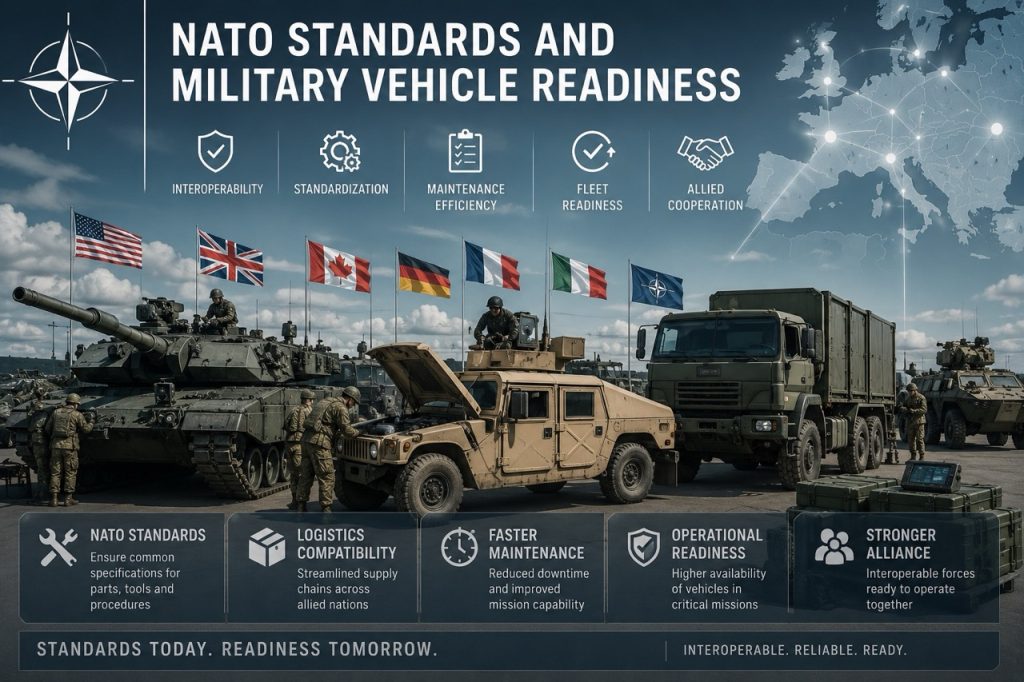
In the modern defence environment, the ability to sustain military equipment across multinational operations is not a convenience it is a strategic imperative. As NATO member states continue to conduct joint exercises, coalition campaigns, and collective deterrence missions, the challenge of maintaining operational readiness for diverse vehicle fleets has never been more acute. At the heart of this challenge lies a deceptively complex question: how do allied forces source, qualify, and distribute military vehicle spare parts in a manner that is both operationally effective and standardised across national boundaries?
The answer, to a significant degree, is governed by NATO standards a comprehensive and evolving framework of agreements, codification systems, and interoperability requirements that shape defence procurement at every level. For procurement officers, fleet sustainment managers, NATO contractors, and defence manufacturers, understanding how these standards function in practice is essential to building supply chains that are resilient, compliant, and capable of supporting forces wherever they are deployed.
This article provides a detailed, technically grounded examination of how NATO standardisation influences military vehicle spare parts procurement from the foundational architecture of STANAGs and the NATO Stock Number system, to the practical challenges of sourcing compliant components, and the emerging digital technologies reshaping defence logistics. Whether you operate on the buy side of government acquisition or the supply side as a defence manufacturer or aftermarket support provider, the frameworks discussed here are central to how modern military sustainment is managed.
What Are NATO Standards in Defence Procurement?
NATO’s approach to standardisation is not a single document or directive but a layered ecosystem of policies, technical agreements, and administrative processes designed to ensure that allied forces can operate together with maximum effectiveness. For anyone involved in military spare parts procurement or defence logistics, three pillars of this system demand particular attention.
Standardisation Agreements (STANAGs)
Standardisation Agreements universally referred to as STANAGs are the formal instruments through which NATO member nations agree to adopt common processes, procedures, terms, conditions, and technical characteristics. They cover an extraordinarily broad range of military activities, from ammunition dimensions and fuel specifications to vehicle interface standards and maintenance documentation formats.
From a procurement perspective, relevant STANAGs govern areas such as the interchangeability of components across vehicle platforms, the documentation required to accompany spare parts, and the technical qualification standards that suppliers must meet. STANAG 4107, for example, addresses mutual acceptance of government quality assurance a provision with direct implications for how suppliers are vetted and how parts are certified across national procurement programmes. STANAG 2494 covers the interoperability of vehicle lifting and recovery equipment, a seemingly operational standard that nonetheless has significant implications for spare parts compatibility and fleet maintenance planning.
The NATO Codification System (NCS)
The NATO Codification System is the backbone of military spare parts identification and management across all member states. Governed by the Allied Committee 135 (AC/135) and administered through national codification bureaux, the NCS provides a universal language for describing, identifying, and cataloguing defence materiel.
The system works by assigning a unique identifier to every item of supply managed by NATO nations, enabling procurement staff, logisticians, and maintenance personnel to communicate unambiguously about a specific component regardless of national language or cataloguing convention. This universality is what makes the codification system so operationally valuable and so consequential for procurement.
NATO Stock Numbers (NSN)
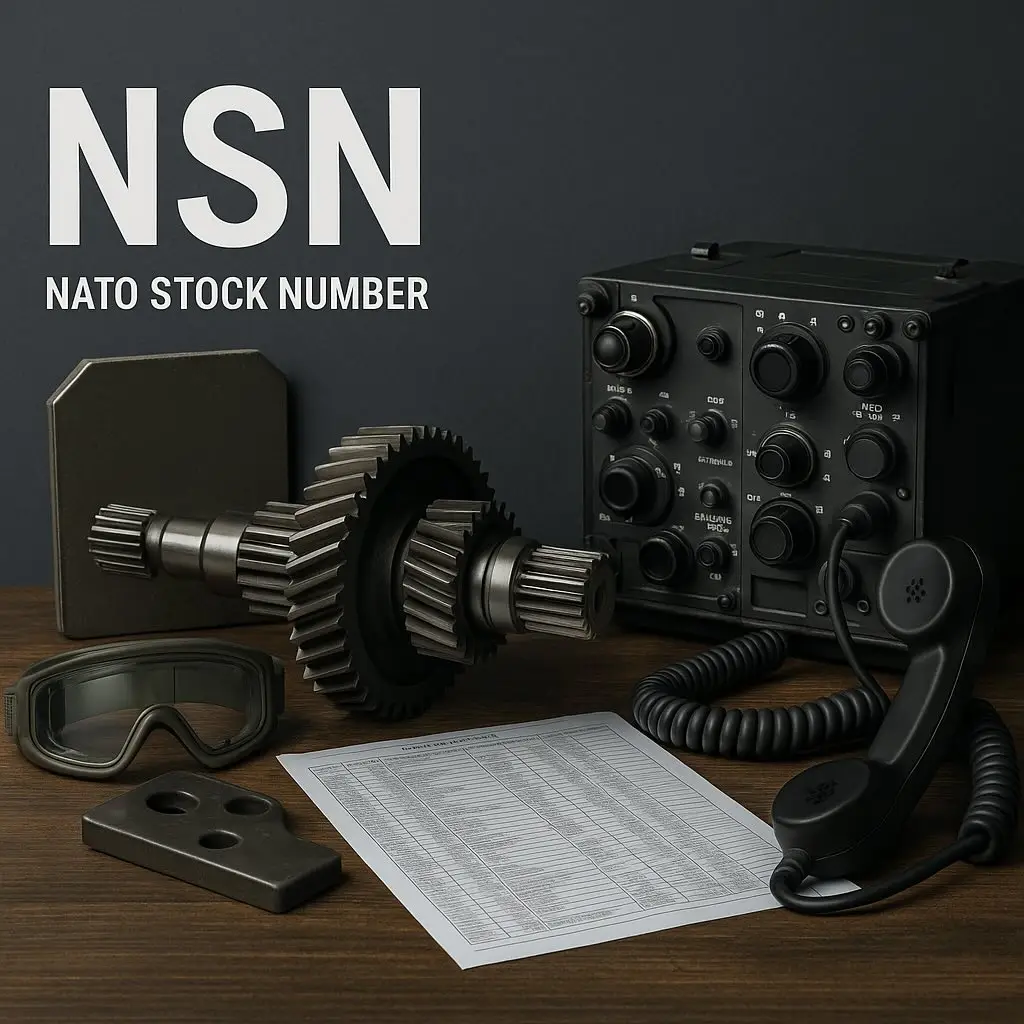
The NATO Stock Number is the specific identifier assigned to each catalogued item within the NCS. A 13 digit code, the NSN consists of a 4 digit Federal Supply Class (FSC) that categorises the item by type, followed by a 2 digit National Codification Bureau (NCB) country code, and a 7 digit Non Significant Number (NIIN) that uniquely identifies the item within that class.
For a military vehicle spare parts buyer, the NSN is the primary reference point for procurement. It eliminates ambiguity in ordering, simplifies warehouse management, accelerates maintenance cycles by ensuring the correct part is identified without cross referencing multiple national catalogues, and enables multicountry procurement from a single verified source. Every credible NATO compliant supplier will be able to reference and supply parts by NSN, and the inability to do so is itself a qualification risk indicator. Click the link to learn more: https://absdefence.com/how-nsn-and-nato-stock-number-parts-simplify-military-procurement/
Interoperability and Lifecycle Management
Beyond individual part identification, NATO standards encompass broader lifecycle management requirements. These include maintenance documentation standards, obsolescence management protocols, and sustainment planning frameworks that govern how equipment is maintained from acquisition through to disposal. For procurement officers sourcing military vehicle spare parts, these lifecycle implications mean that supplier qualification cannot be assessed on the basis of a single transaction it must reflect the supplier’s capacity to support a platform across its entire service life.
How NATO Standards Affect Military Vehicle Spare Parts Procurement
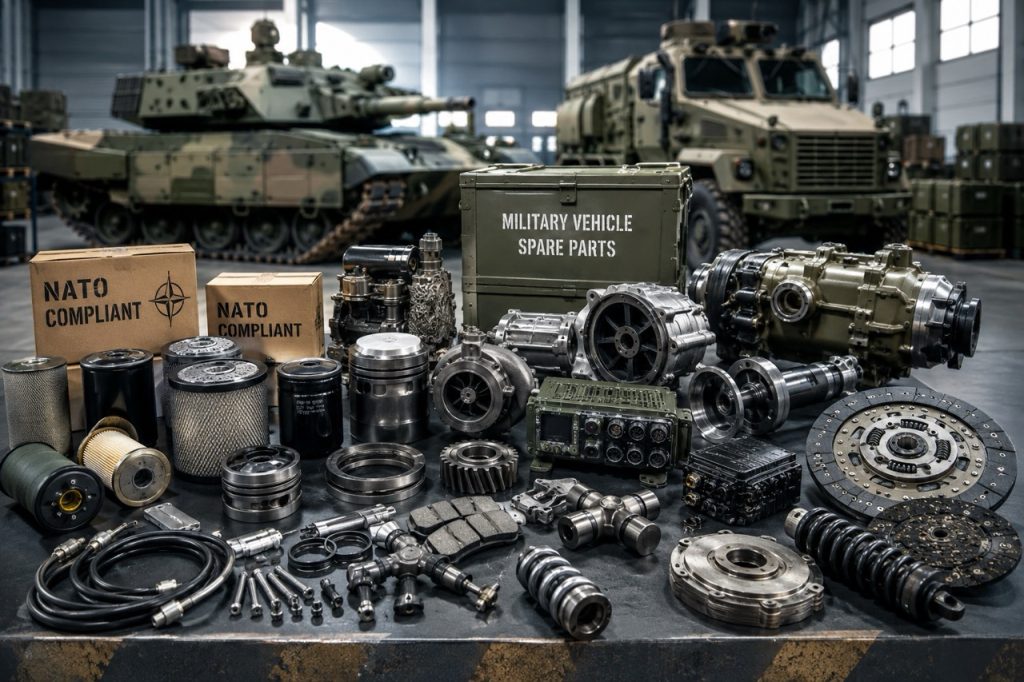
The influence of NATO standards on the procurement of military vehicle spare parts manifests at multiple points in the supply chain, from initial component specification through to delivery, acceptance, and inventory management.
Standardisation of Components and Specifications
NATO standardisation drives the use of common component specifications across member nations’ vehicle fleets. Where STANAGs mandate interchangeable components such as standardised connector types, coupling interfaces, or fluid specifications, procurement teams benefit from a larger supplier base and greater cross-border logistics compatibility. This standardisation reduces the risk of single-source dependency, one of the most significant vulnerabilities in any defence supply chain.
Supplier Qualification Requirements
To supply NATO-compliant spare parts, vendors must typically demonstrate compliance with a range of quality and technical standards. These commonly include:
Certification to NATO AQAP (Allied Quality Assurance Publication) standards, particularly AQAP-2110 for design, development, and production, or AQAP-2120 for production only.
Registration under ISO 9001:2015 as a minimum quality management baseline.
Demonstrated traceability systems that document a component’s origin, manufacturing process, and inspection history.
Where applicable, compliance with national export control regimes such as US ITAR or the UK Export Control Order.
Authorisation from Original Equipment Manufacturers (OEMs) for parts carrying proprietary design requirements.
Documentation and Traceability
NATO procurement standards impose rigorous documentation requirements on spare parts supply. Every component entering a military vehicle’s maintenance cycle must be accompanied by documentation establishing its provenance, conformance to specification, and inspection status. This documentation trail, sometimes referred to as a “birth certificate” for critical components, is non-negotiable in compliant procurement and is central to counterfeit parts mitigation.
Quality Assurance and Acceptance Testing
NATO’s AQAP framework establishes detailed quality assurance requirements that extend from the supplier’s own production processes to the government Quality Assurance Representative (QAR) assigned to verify compliance on behalf of the procuring nation. The mutual acceptance mechanism enabled by STANAG 4107 allows one NATO nation’s QAR to perform acceptance inspection on behalf of another, a provision of significant practical importance in multinational procurement programmes.
Cross Border Logistics Compatibility
NATO standardisation enables parts procured by one member nation to be used by another in a theatre of operations, provided the relevant STANAGs govern the applicable interfaces and standards. This cross-border compatibility is especially critical in forward deployment scenarios where a vehicle’s host-nation supply chain may be unavailable and support must be drawn from an allied nation’s inventory. It also underpins the NATO logistics concept of Host Nation Support, under which a receiving nation’s forces can draw sustainment from the host nation’s stockpiles.
Inventory Simplification and Fleet Management Benefits
By adopting NATO codification and common component specifications, fleet managers can rationalise their inventory holdings, reducing the number of unique line items required to support a diverse vehicle fleet. This simplification has direct financial and operational benefits: lower warehousing costs, reduced risk of stockouts for critical parts, and faster maintenance turnaround times. For nations operating multiple platforms with overlapping component requirements, NATO standards enable genuine inventory consolidation.
The Role of NATO Stock Numbers (NSN) in Spare Parts Sourcing
For anyone involved in the sourcing of military vehicle spare parts, the NATO Stock Number is the single most important piece of administrative infrastructure in the procurement process.
Simplifying Procurement Across the Alliance
The NSN provides a common reference that procurement staff across all 32 NATO member nations can use to identify and order the same item without ambiguity. Rather than navigating multiple national catalogue systems, each with its own part number conventions, nomenclature, and classification hierarchies, buyers can specify a single NSN and receive a part verified to meet the same specification regardless of where it was produced or from which allied stockpile it was drawn.
Warehousing, Inventory Control, and Issue Management
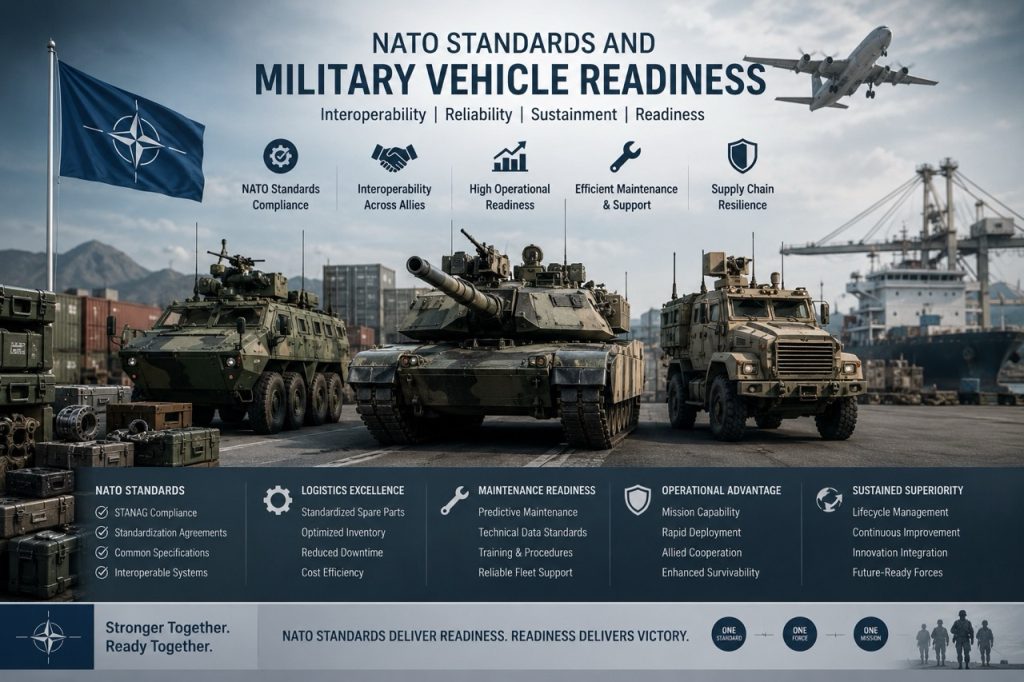
In a military warehouse or forward supply point, NSNs are the primary basis for stock recording, issue processing, and demand analysis. Warehouse management systems configured to NATO codification standards can identify items, process demands, and generate replenishment orders using NSNs as the primary key. This standardisation dramatically reduces the administrative burden on logistics personnel and minimises the risk of mis-issue, the wrong part being delivered to a maintenance unit, which in an operational context can result in vehicle unserviceability and mission failure.
Reducing Procurement Errors and Lead Times
NSNs mitigate the persistent risk of procurement errors by providing a single, authoritative identifier that links directly to a detailed item description, specification references, and approved sources of supply. When a buyer specifies an NSN, the system returns the current, valid item description including any supersession notices, ensuring that even if a part has been redesigned or respecified, the buyer is directed to the correct current item.
Multicountry Compatibility and Crisis Sustainment
The most operationally critical value of the NSN system becomes apparent during crisis sustainment, when a nation’s own supply chain has been disrupted and allied support must be drawn upon rapidly. Because NSNs are recognised universally across the alliance, a request to a NATO logistics hub for an NSN coded part can be processed, validated, and fulfilled without time-consuming administrative reconciliation. This capability is exercised regularly through NATO logistics exercises and has proven its value in real operational contexts.
Challenges Defence Buyers Face When Procuring NATO Compliant Parts
Whilst the NATO standards framework provides a robust foundation for military spare parts procurement, it does not eliminate complexity.
Counterfeit and Uncertified Components
The proliferation of counterfeit and substandard components in global supply chains represents one of the most serious risks in military spare parts procurement. Counterfeit parts, particularly electronic components, fasteners, and safety critical mechanical parts, can appear superficially identical to genuine items whilst failing to meet the specification requirements that their NSN identification implies. The consequences range from premature component failure to catastrophic system malfunction during operations.
Mitigating this risk requires multilayered controls: verified supplier qualification, end to end traceability documentation, physical and functional acceptance testing, and for electronic components, compliance with standards such as SAE AS5553 on counterfeit electronic parts avoidance.
Long Lead Times and Production Constraints
Many military vehicle components are manufactured in low volumes to exacting specifications by a limited number of approved suppliers. This market structure frequently results in long lead times, sometimes measured in months rather than weeks, for critical spare parts. The increased tempo of European defence spending since 2022 has intensified pressure on defence supply chains, with many manufacturers reporting capacity constraints across key vehicle component categories.
Obsolescence Management
Military vehicles have service lives that routinely extend over several decades. As original components reach the end of their production runs due to manufacturer business changes, material obsolescence, or technology evolution, procurement teams face the challenge of sourcing functionally equivalent replacements. Effective obsolescence management within NATO frameworks requires close coordination between engineering authorities, national codification bureaux, and the industrial base.
Legacy Platform Support
Allied fleets include numerous legacy platforms such as the M113 APC, the HMMWV, early-generation Leopard 2 variants, and various wheeled logistics vehicles that have been in service for 30 to 50 years. Supporting these platforms with compliant spare parts requires specialist suppliers with deep knowledge of original specifications, manufacturing processes, and applicable STANAGs, many of which may have been superseded since the vehicle entered service.
Export Controls and Compliance Regulations
Military spare parts are frequently subject to export control regimes that add significant administrative complexity to cross-border procurement. The US ITAR framework, the EU Common Position on Arms Exports, and various national licensing regimes all impose restrictions on the transfer of defence-related materiel. Navigating these overlapping regulatory frameworks requires specialist legal and compliance expertise.
NATO Standards and Military Vehicle Readiness
Fleet readiness, the proportion of vehicles available for operations at any given time, is the ultimate operational metric for any sustainment system. NATO standards contribute to readiness in multiple, interconnected ways.
Operational Readiness in Multinational Contexts
When allied forces operate alongside one another, as they routinely do in NATO missions, Enhanced Forward Presence battlegroups, and joint exercises, the ability to share maintenance support is a force multiplier. If British Army engineers can service German Army Leopard 2 vehicles using shared spare parts sourced to common NSNs, the combined force’s readiness is materially higher than if each nation’s maintenance chain operated in isolation. This maintenance interoperability is not achieved spontaneously; it is the product of deliberate standardisation enforced through STANAGs and the NATO codification system.
Platform Specific Sustainment Considerations
Different NATO vehicle platforms present distinct sustainment challenges:
Leopard 2: Operated by more than a dozen NATO nations, the Leopard 2’s sustainment benefits enormously from NATO codification. Common procurement of powertrain components, suspension parts, and running gear across user nations creates economies of scale and mutual logistics support opportunities, advantages actively exploited as Leopard 2 fleets have expanded in response to the changed European security environment. Click the link to learn more: https://absdefence.com/leopard-2-readiness-depends-on-more-than-firepower-the-sustainment-perspective/
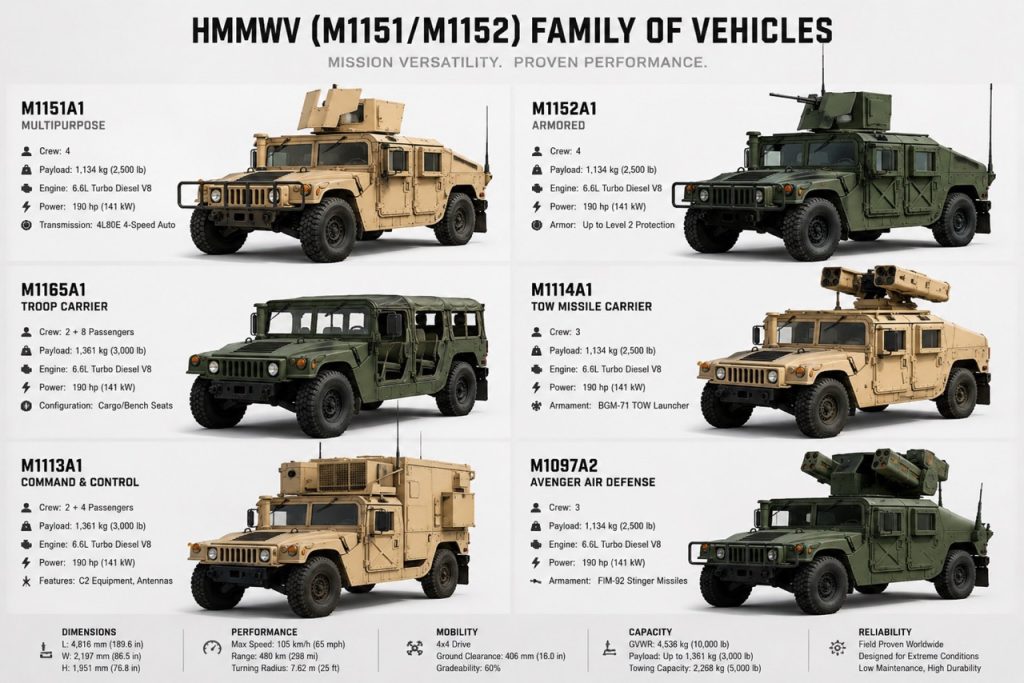
HMMWV: The HMMWV fleet spans dozens of allied and partner nations, making common NSN-based sourcing essential. Key sustainment challenges include brake systems, driveline components, and electronic assemblies, all requiring compliant sourcing to maintain fleet readiness. Click the link to learn more: https://absdefence.com/hmmwv-fleet-support-in-2026-maintenance-upgrades-and-supply-continuity/
M113 APC: As one of the most widely operated legacy platforms in NATO inventories, the M113 presents acute obsolescence challenges. Sustaining ageing fleets requires specialist suppliers capable of manufacturing or sourcing components to original specifications, in many cases working from engineering drawings held in national defence archives. Click the link to learn more: https://absdefence.com/m113-modernization-vs-replacement-what-defense-buyers-need-to-consider/
Tactical Wheeled Vehicles: Platforms such as the MAN HX range, Oshkosh FMTV, and various national light tactical vehicles require sustainment across a complex aftermarket landscape. NATO codification enables cross-reference between national vehicle configurations and common component sources.
APC and IFV Platforms: Vehicles such as the M2 Bradley, CV90, and Boxer require sustainment approaches that balance OEM support contracts with aftermarket sourcing strategies for high-turnover wear parts.
Supply Chain Resilience During Conflicts
The conflict in Ukraine since 2022 has provided a sobering illustration of the importance of supply chain resilience in real-world operational sustainment. Nations supplying and supporting armoured vehicle fleets in high-intensity operations have faced unprecedented demand for spare parts across all vehicle categories. Those with robust NATO-compliant supply chains, pre-positioned stocks, and verified supplier relationships have been better positioned to respond, reinforcing NATO’s emphasis on defence supply chain resilience as a collective security priority.
OEM vs Aftermarket NATO-Compatible Spare Parts
One of the most consequential strategic decisions in military vehicle spare parts procurement is the choice between OEM parts and qualified aftermarket alternatives.
OEM Parts: Advantages and Constraints
OEM parts carry the inherent advantage of being manufactured to the original design specification by the entity that designed the vehicle or system. For safety-critical components such as brake systems, steering linkages, or armour-related assemblies, OEM sourcing provides the highest level of confidence in technical compliance. OEM parts are typically pre-qualified within NATO procurement frameworks and come with documentation satisfying AQAP requirements.
However, OEM sourcing also carries significant constraints. Pricing frequently reflects monopoly market conditions, particularly for components unique to a specific platform. Lead times can be substantial, and OEMs may choose to discontinue support for older platforms as they reach the end of their commercial product lifecycle.
Qualified Aftermarket Parts: Opportunities and Requirements
Qualified aftermarket spare parts, manufactured by third-party suppliers to the same specification as OEM components, represent a strategically important complement to OEM sourcing. When properly qualified, aftermarket parts offer materially shorter lead times, competitive pricing, and superior availability for high-demand wear items.
Qualification of aftermarket military parts is not a simple process. It requires the supplier to demonstrate that their manufactured item conforms to the original design specification, a process that may involve reverse engineering, material analysis, functional testing, and formal approval from the engineering authority responsible for the vehicle platform.
Procurement Risk Management in the OEM vs Aftermarket Decision
A mature procurement strategy does not treat OEM and aftermarket sourcing as mutually exclusive. Instead, it segments the vehicle’s bill of materials by risk category, applying OEM sourcing to safety-critical and technically complex components, whilst leveraging qualified aftermarket sources for high-turnover wear parts, consumables, and items where multiple qualified suppliers exist. This segmented approach optimises cost and availability whilst maintaining the technical integrity NATO compliance demands.
Digitalisation and Future Trends in NATO Defence Logistics
The transformation of defence logistics through digital technology is under active development across NATO member nations and within the alliance’s own logistics frameworks.
Predictive Maintenance and Condition Based Logistics
Sensor enabled vehicle health monitoring systems are increasingly being integrated into modern military platforms, generating real-time data on component condition, usage, and degradation. When fed into predictive maintenance algorithms, this data enables maintenance teams to anticipate component failures before they occur, triggering spare parts procurement precisely when needed rather than on fixed time cycles. This shift from time based to condition based maintenance has the potential to reduce both vehicle downtime and unnecessary parts consumption.
AI-Driven Inventory Optimisation
Artificial intelligence and machine learning tools are being applied to defence inventory management to improve demand forecasting, optimise stock levels, and identify procurement patterns that human analysts would be unlikely to detect. For NATO logistics systems, AI-driven inventory tools offer the prospect of significantly reduced stockouts and excess holdings, two persistent inefficiencies in military spare parts management that drive both cost and readiness impacts.
Digital Twins in Vehicle Sustainment
The digital twin concept, a continuously updated virtual representation of a physical asset reflecting its actual condition and maintenance history, is gaining traction in defence sustainment planning. For military vehicle fleets, digital twins enable maintenance planners to model the impact of component wear and degradation, simulate the effect of different maintenance strategies, and optimise spare parts provisioning decisions.
Blockchain Traceability in Defence Supply Chains
Blockchain technology offers a technically compelling solution to one of the most persistent challenges in military spare parts procurement: end-to-end traceability. By recording each transaction in a component’s lifecycle on an immutable distributed ledger, blockchain systems can provide procurement officers and maintenance authorities with an unimpeachable audit trail that satisfies both NATO AQAP traceability requirements and the evidentiary standards required to identify counterfeit parts supply.
NATO Logistics Modernisation Initiatives
NATO’s own logistics modernisation agenda, articulated through frameworks such as the NATO Supply Chain Management initiative and the alliance’s broader digital transformation strategy, is driving harmonisation of digital logistics standards across member nations. Suppliers who can integrate their systems with NATO’s evolving digital logistics infrastructure will be better positioned to serve alliance procurement requirements.
How to Choose a Reliable NATO-Compliant Military Spare Parts Supplier
Given the technical complexity and compliance requirements that govern NATO military vehicle spare parts procurement, supplier selection is one of the most consequential decisions a procurement officer will make.
Certifications and Standards Compliance
A credible NATO-compliant spare parts supplier should hold, as a minimum:
Certification to AQAP-2110 or AQAP-2120, demonstrating a quality management system aligned to NATO’s procurement quality requirements.
ISO 9001:2015 registration as a baseline quality management certification.
Where applicable, AS9100 certification for aerospace and defence-grade quality management.
Relevant national defence supplier registrations appropriate to the procuring nation.
Technical Documentation Capabilities
The ability to provide complete, accurate technical documentation including material certifications, test reports, conformance certificates, and traceability records is a non-negotiable requirement. Suppliers should demonstrate that their documentation systems satisfy the requirements of applicable STANAGs and AQAP publications, generated and retained in a manner that supports both acceptance inspection and post-delivery audit.
Inventory Depth and Availability
A supplier’s catalogue depth, the range of NSNs and vehicle-specific part numbers they can supply, is a practical indicator of their specialisation in military vehicle aftermarket support. Suppliers with extensive, verified inventories offer procurement teams the ability to consolidate orders, reduce vendor management complexity, and achieve shorter lead times through pre-positioned stock.
Global Logistics Support Capability
Military vehicle spare parts are required wherever allied forces operate. A supplier’s ability to deliver compliantly packaged and documented parts to any location, managing export licensing requirements and interfacing with military logistics systems, is a critical operational capability. Logistics support extending to in-theatre delivery, including conformity with NATO packaging and marking standards, substantially reduces the operational burden on receiving units.
Engineering Expertise and Obsolescence Support
For legacy platforms, a supplier’s engineering capability is as important as their inventory depth. The ability to interpret historical engineering drawings, reverse engineer obsolete components, and work with national codification bureaux to update or create NSN records is a specialist capability that only a subset of defence spare parts suppliers possess.
Long Term Sustainment Partnership
The most valuable supplier relationships in military vehicle spare parts procurement are strategic partnerships built over time, in which the supplier develops a deep understanding of the customer’s fleet, maintenance patterns, and operational requirements. Long-term sustainment agreements that include stockholding commitments, priority supply provisions, and collaborative obsolescence management planning provide a level of supply chain assurance that spot-market procurement cannot deliver.
Standards as the Foundation of Sustainment Excellence
NATO standards are not administrative overhead, they are the operational infrastructure that makes allied sustainment possible. From the NSN that ensures a spare part is unambiguously identified across 32 nations, to the STANAG that governs the quality assurance process by which that part is accepted, to the AQAP-certified supplier who manufactured it, the NATO standardisation framework is the invisible architecture underpinning the readiness of allied military vehicle fleets.
For defence procurement officers, fleet sustainment managers, and NATO contractors, the practical message is clear: procurement decisions that disregard or circumvent NATO standards create technical, operational, and regulatory risks that are disproportionate to any short-term cost advantage they might appear to offer. Compliant procurement, built on qualified suppliers, codified parts, verified documentation, and robust traceability, is not just a regulatory obligation. It is the foundation of the readiness that allied forces depend upon.
As the security environment continues to evolve, with increased operational tempo, expanding alliance commitments, and growing pressure on defence industrial capacity, the importance of building and maintaining supply chains that can sustain military vehicle fleets to NATO standards will only increase. Organisations that invest in compliance, supplier qualification, and long-term sustainment partnerships now will be measurably better positioned to meet the demands of the coming decade.
You could contact us for defence spare parts
Related Military Spare Parts Categories, Vehicle Platforms & Technical Guides
Explore AB Defence’s NATO-codified (NSN) and genuine OEM spare parts catalog, platform technical specifications, and sustainment engineering guides related to this article:
Stocked Spare Parts Categories (NSN & OEM Catalog)
- NATO Standard Defence Components & Military Hardware (12,993 stocked parts)
- M60 Tank Spare Parts (M60A1 / M60A3 / M60T) (497 stocked parts)
- M109 Self-Propelled Howitzer Spare Parts (585 stocked parts)
- BMC Kirpi MRAP Spare Parts (Kirpi I & Kirpi II) (597 stocked parts)
- Mercedes-Benz Unimog Military Spare Parts (562 stocked parts)
- Full NATO NSN & OEM Spare Parts Catalog (16,760+ Parts)
Compatible Vehicle Platforms & System Hubs
- Platforms
- Product Groups
- Quality
- Capabilities
- Tracked Armoured Vehicles
- Request a B2B Quotation (RFQ) & Technical Support