May 16, 2026
5 Major Causes of Downtime in Tactical Military Vehicles
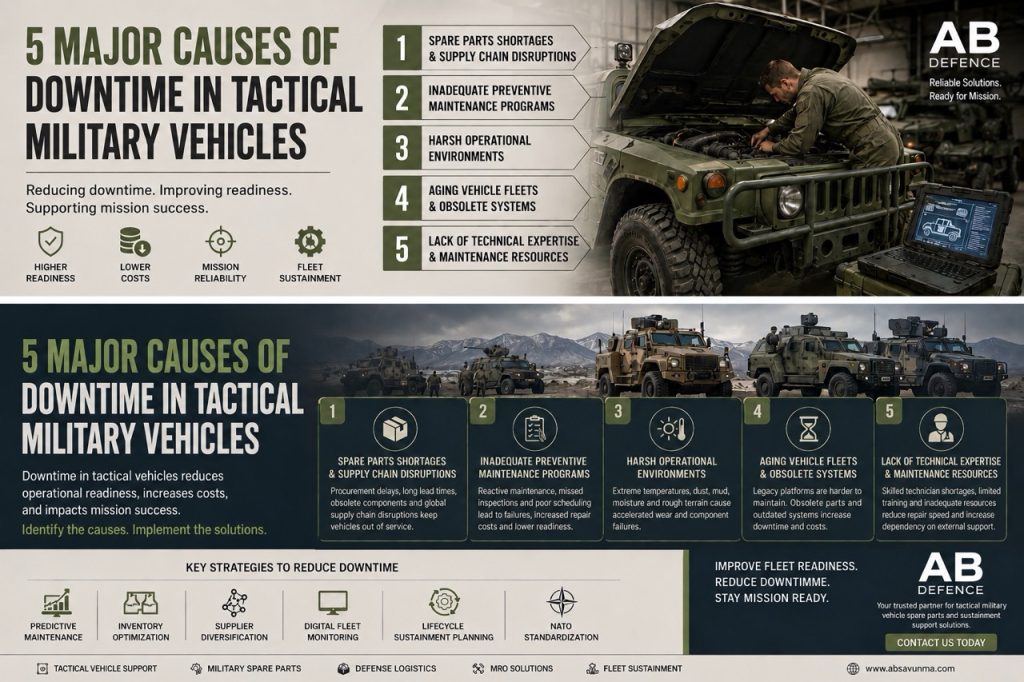
Vehicle readiness is not a logistics metric. It is a strategic asset.
When a tactical military vehicle is unavailable for operations whether due to a missing spare part, a failed drivetrain, or an undertrained maintenance crew the consequences extend far beyond the motor pool. Missions are delayed. Force projection is compromised. In high tempo operational environments, a single broken down MRAP or HMMWV can become the weak link in an entire maneuver element.
The stakes have never been higher. NATO and allied defense organizations are managing aging vehicle fleets under increasing operational pressure, while global supply chain instability, budget constraints, and growing geopolitical tensions are compressing every margin that sustains military readiness. According to a September 2025 report by the U.S. Government Accountability Office (GAO), mission capable rates declined for 16 of the 18 Army and Marine Corps ground vehicles reviewed over the period from FY 2015 to FY 2024. Critically, none of the Army vehicles examined met their mission availability targets in FY 2024.
This is not an isolated American challenge. Across NATO’s eastern flank, sustainment shortfalls including limited maintenance capabilities and fragile logistics infrastructure represent some of the most serious gaps in collective defense readiness, according to recent alliance assessments.
Understanding what causes tactical military vehicle downtime is the essential first step toward fixing it. This article examines the five primary causes of vehicle unavailability in military fleets and outlines what defense organizations, fleet managers, and logistics professionals can do to address them.
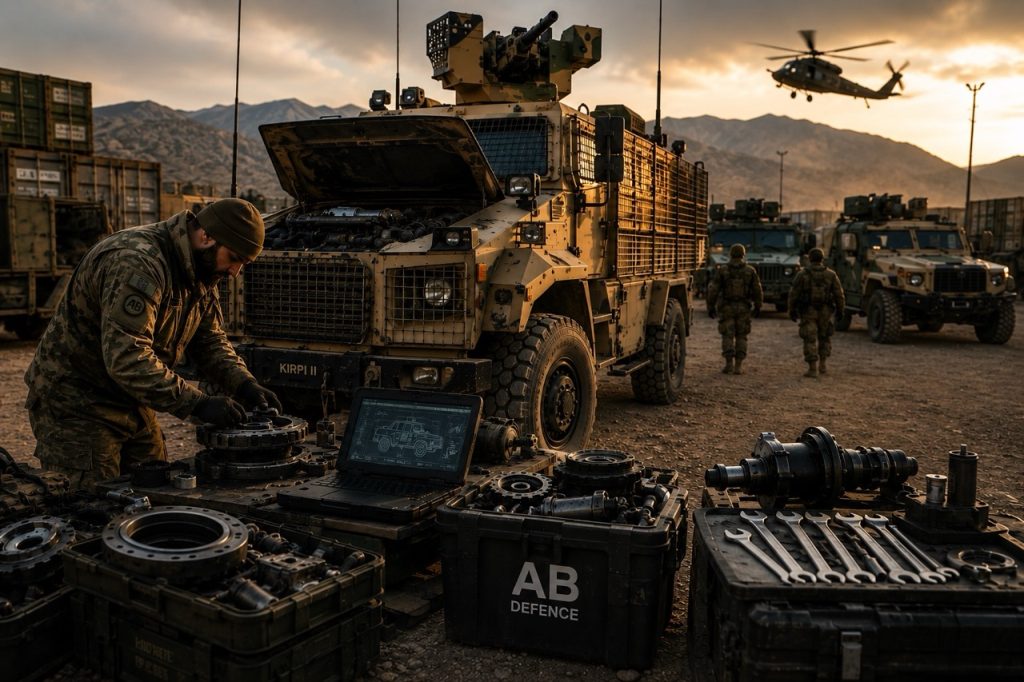
Cause 1: Spare Parts Shortages and Supply Chain Disruptions
The Single Largest Driver of Fleet Unavailability
No factor undermines tactical fleet readiness more consistently than the inability to source the right spare part at the right time. The GAO’s 2025 ground vehicle sustainment report identified spare parts shortages as one of the leading factors behind declining mission-capable rates across Army and Marine Corps fleets. But the problem is systemic, not situational.
Military supply chains are exposed to a range of structural vulnerabilities. Single source suppliers manufacturers who produce a unique component with no qualified alternative create critical dependencies. When a sole supplier experiences production disruption, a natural disaster, or a financial constraint, entire fleets can be grounded waiting for that one part. This is compounded by long lead times that are inherent to defense manufacturing, where components often require specialized tooling, controlled materials, or regulatory approval before delivery.
Obsolete Components and Legacy Platforms
For older vehicle platforms including variants of the HMMWV, legacy MRAPs, and older APC families the parts problem is existential. Original equipment manufacturers (OEMs) may discontinue components when production lines are retired, leaving operators to source from shrinking aftermarket inventories or pursue costly reverse engineering efforts. As tactical truck fleets age past their originally intended service lives, the frequency of obsolescence driven shortages accelerates.
NATO interoperability adds a further layer of complexity. Multinational vehicle fleets often share operational theaters while running different platform variants, each requiring distinct parts, documentation, and maintenance procedures. Coordinating cross border spare parts logistics in a multinational NATO sustainment framework is a significant operational challenge that most alliance members are still working to solve.
Global Logistics Bottlenecks
Post pandemic supply chain disruptions permanently restructured global logistics networks. Defense supply chains, which depend on specialized materials, precision manufacturing, and often limited supplier bases, were disproportionately affected. Freight delays, port congestion, and materials shortages that emerged in 2020 through 2022 exposed how fragile just in time procurement models are when applied to defense sustainment. Many of those vulnerabilities remain unresolved, and the defense industry is still recalibrating toward more resilient, redundant supply architectures.
The practical consequence for fleet managers is clear: vehicles wait. In some cases, they wait for weeks or months for components that should be available within days. That waiting time is downtime and downtime costs mission readiness.
Cause 2: Inadequate Preventive Maintenance Programs
Reactive Maintenance Is a Readiness Liability
The oldest failure mode in fleet management is also the most persistent: fixing vehicles after they break, rather than before. Reactive maintenance sometimes called “run to failure” is operationally disruptive, logistically expensive, and tactically dangerous. Yet it remains widespread in military vehicle fleets, particularly in units that operate under high deployment tempo with limited maintenance windows.
Preventive maintenance programs are the recognized alternative, but implementing them effectively requires resources that are not always available: trained personnel, accurate maintenance scheduling data, reliable parts inventories, and the calendar time to perform inspections and servicing before systems degrade.
The Cost of Missed Maintenance Cycles
When routine maintenance is deferred an oil change skipped, a suspension inspection missed, a cooling system service delayed minor issues become major failures. Worn brake components that might have been replaced during a scheduled inspection instead fail in the field. An engine that needed a coolant flush overheats and requires a depot-level repair that takes weeks, not hours. A vehicle that needed a tire rotation ends up with uneven wear that compromises traction and handling in critical operational conditions.
The U.S. Department of Defense’s own estimates, cited in defense industry analyses, suggest that poor maintenance practices cost the DoD between $15 and $20 billion annually. Predictive maintenance technologies which use sensor data and analytics to anticipate failures before they occur could reduce those costs by 30 to 50 percent according to industry projections. A 2024 UK Ministry of Defence report projected a 25 percent improvement in fleet availability through predictive maintenance programs alone, targeted for 2029.
Maintenance Scheduling and Readiness Rate Degradation
Military units operating in high-tempo environments face an inherent tension: every hour spent on maintenance is an hour not spent on training or operations. Commanders under pressure to maintain operational pace sometimes defer maintenance cycles, accepting short-term risk that compounds into long term fleet degradation. This is not a failure of intent it is a structural problem in how maintenance resources are planned and allocated within military organizations.
Effective preventive maintenance requires deliberate scheduling built into operational planning cycles, not treated as a residual activity after mission commitments are met. Fleets that integrate maintenance planning into operational calendars consistently demonstrate higher readiness rates than those that do not.
Cause 3: Harsh Operational Environments
The Environment as an Accelerant of Wear
Tactical military vehicles are designed to operate in conditions that would destroy commercial equipment and they do so with impressive durability. But no engineering specification fully prepares a drivetrain, an electrical system, or a suspension assembly for sustained exposure to the most demanding environments on earth. Desert operations, arctic deployments, tropical humidity, and high altitude terrain each impose unique and severe stresses on vehicle systems.
Desert and Arid Environments
Fine particulate dust the kind found in Middle Eastern and North African operational theaters infiltrates air filtration systems, fuel systems, hydraulic lines, and electrical connectors. Abrasive dust accelerates wear on engine internals and transmission components at rates far exceeding manufacturer specifications developed for temperate conditions. Sand ingestion into turbochargers is a known failure mode for tactical diesel engines in arid environments, and it is frequently underestimated in maintenance planning.
Heat amplifies every mechanical failure mode. Hydraulic fluid degrades faster. Rubber seals harden and crack. Electrical components experience accelerated thermal cycling that shortens their operational lifespan. Vehicles operating in sustained 45°C to 55°C ambient conditions require significantly more frequent maintenance interventions than the same platforms operating in temperate European climates.
Cold Weather, Mud, and Corrosion
Mud, snow, and water ingress damage drive axles, wheel bearings, and differential housings. Coastal and maritime environments introduce salt corrosion that attacks structural components, brake systems, and electrical harnesses often invisibly, beneath painted surfaces and sealed assemblies, until failures occur.
Electronic Systems Vulnerability
Modern tactical military vehicles carry increasingly dense electronic payloads: communications systems, navigation equipment, FLIR sensors, engine management systems, and electronic warfare interfaces. These systems are sensitive to the same environmental extremes that damage mechanical components and their failure modes are often more difficult to diagnose in the field, requiring specialized test equipment and trained technicians that are not always available at the point of need.

Cause 4: Aging Vehicle Fleets and Obsolete Systems
The Legacy Platform Problem
NATO and allied defense inventories include a substantial proportion of legacy platforms that have remained in service well beyond their originally planned retirement dates. Budget constraints, procurement delays, and the absence of sufficient replacement vehicles have kept older HMMWVs, early generation MRAPs, legacy APCs, and older tactical trucks in active service. These vehicles were designed for operational conditions and maintenance paradigms of past decades not the current security environment or the logistical realities of the 2020s.
As vehicle fleets age, the relationship between age and maintenance burden becomes exponential rather than linear. An older platform does not simply require the same maintenance more frequently it requires increasingly complex maintenance on systems for which parts are harder to find, technical documentation may be incomplete or outdated, and the institutional knowledge of trained maintainers is retiring along with the vehicles.
Diminishing Manufacturing Sources
The defense industry term “diminishing manufacturing sources” (DMS) captures the core problem: when a vehicle platform ages past the period of active OEM support, the supply of original components contracts. Sub-tier suppliers discontinue production of specialized fasteners, gaskets, seals, and electronic components. Circuit boards designed to specifications from the 1990s cannot simply be re ordered they require reverse engineering, new qualification testing, and often substantial investment to bring back into production.
The GAO’s 2025 sustainment report noted that Army depot overhauls comprehensive maintenance events that address accumulated wear across entire vehicle systems fell from 1,278 in FY 2015 to just 12 in FY 2024. The Marine Corps saw a parallel decline from 725 to 163 over the same period. This dramatic reduction in depot level maintenance directly contributed to the decline in mission capable rates observed across both services. Deferred comprehensive maintenance is a debt that compounds with interest.
Modernization Gaps and Fleet Mix Complexity
When older platforms remain in service alongside newer systems, fleet managers must maintain parallel supply chains, training programs, and technical documentation libraries. This complexity is not merely administrative it creates real operational risk when a unit operating a mixed fleet of legacy and modern vehicles cannot source parts for either platform efficiently because their logistics systems are not optimized for either.
Cause 5: Lack of Technical Expertise and Maintenance Resources
The Skilled Technician Gap
Military vehicle maintenance requires a combination of mechanical fundamentals, systems-specific technical training, and operational judgment that takes years to develop. Across NATO and allied defense forces, the availability of skilled military vehicle technicians is declining relative to the complexity and volume of maintenance demand. This is not simply a military problem it mirrors a broader shortage of skilled trades personnel across the defense industrial base.
The U.S. Army’s experience with MRAP maintenance training illustrates the challenge clearly. MRAP University in Texarkana, Texas, trained more than 14,600 troops over a multi-year period in a six week program covering MRAP vehicle families. The program cost between $14 million and $18 million and it was discontinued as war-era funding priorities shifted. The institutional knowledge developed through that training did not transfer seamlessly when the program ended, creating gaps in unit level maintenance capability that persisted for years afterward.
Training Gaps and Field Repair Limitations
Trained technicians at the organizational level the soldiers and Marines who perform daily maintenance are the first line of defense against vehicle downtime. When training is incomplete or outdated, routine maintenance tasks are performed incorrectly, diagnostic opportunities are missed, and minor issues escalate into mission-stopping failures. The gap between what field-level maintenance can accomplish and what depot-level repair requires has widened as vehicle systems have grown more complex.
Electronic diagnostic tools have become essential for modern tactical vehicle maintenance, but their availability at the unit level is inconsistent. Fault codes that could be resolved in hours with the right diagnostic interface instead require vehicles to be evacuated to higher echelons of maintenance adding days or weeks to what should have been a straightforward repair.
Contractor Dependency and Organic Capability Erosion
The defense industry’s increasing reliance on contractor logistics support (CLS) has transferred significant maintenance capability from military units to external vendors. For sophisticated platforms, contractor support may be the only practical option. But heavy dependence on external contractors can erode organic military maintenance capability the institutional knowledge and hands on proficiency that resides within military units themselves. When a forward-deployed unit needs a repair capability that its own personnel cannot provide, and the contracted support cannot reach the operational location in time, vehicles sit idle.
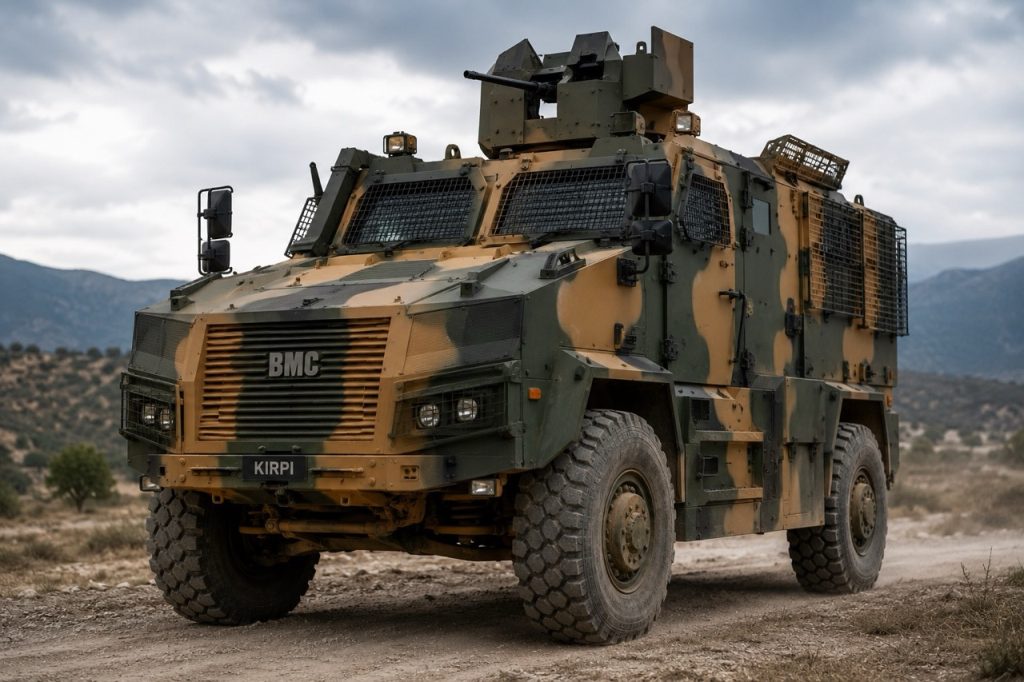
Strategies to Reduce Tactical Military Vehicle Downtime
Understanding the causes of downtime is the necessary precondition for reducing it. Defense organizations that have made measurable improvements in fleet readiness have generally done so through a combination of interconnected strategies rather than any single intervention.
Predictive maintenance is the most transformative available technology. By combining vehicle mounted sensors, telematics data, and AI driven analytics, predictive maintenance programs identify components approaching failure before they fail enabling scheduled maintenance interventions that avoid unplanned downtime. South Korea’s K2 Black Panther tank uses more than 380 sensors feeding an AI system that predicts mechanical failures with 94 percent accuracy. This capability is increasingly accessible across tactical vehicle platforms.
Inventory optimization through demand driven spare parts management reduces both the cost of excess inventory and the risk of critical shortages. Modern defense supply chain systems can analyze historical consumption data, failure rates, and operational tempo to maintain optimal stock levels of high demand components while reducing obsolete stock.
Supplier diversification reduces single source dependency by qualifying alternative suppliers for critical components. This requires upfront investment in supplier development and qualification testing, but it provides meaningful resilience against the supply disruptions that have repeatedly grounded entire fleets.
Digital fleet monitoring integrating vehicle health data, maintenance records, and parts consumption into centralized fleet management systems gives logistics commanders the visibility they need to make proactive decisions rather than reactive ones. Fleets managed through digital platforms consistently demonstrate better readiness rates than those managed through manual or paper based systems.
Lifecycle sustainment planning treats vehicle maintenance not as an annual budget line item but as a long-term strategic program with defined milestones, investment requirements, and readiness objectives. Organizations that plan sustainment across 20 to 30 year vehicle lifecycles can anticipate obsolescence challenges, plan depot level maintenance events, and structure supply chain relationships before shortages become crises.
NATO standardization efforts including STANAG aligned maintenance procedures, interoperable parts specifications, and shared logistics frameworks reduce the complexity of sustaining multinational vehicle fleets and enable allied forces to support each other’s maintenance requirements.
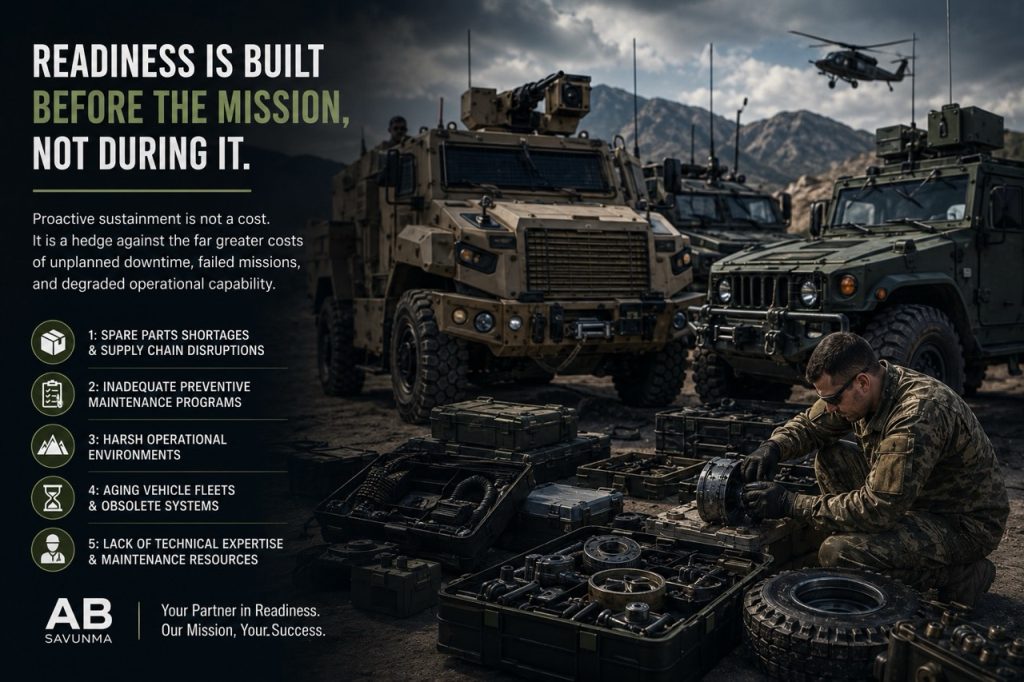
Readiness Is Built Before the Mission, Not During It
Tactical military vehicle downtime is not a maintenance department problem. It is an operational readiness problem, a strategic resource allocation problem, and ultimately a force effectiveness problem. The five causes examined in this article are not independent variables. They interact and amplify each other: spare parts shortages are worse when supply chains are fragile; aging platforms are harder to maintain when skilled technicians are scarce; harsh environments accelerate wear that preventive maintenance programs are under-resourced to address.
Proactive sustainment investing in predictive maintenance, supply chain resilience, technician development, and lifecycle planning is not a cost. It is a hedge against the far greater costs of unplanned downtime, failed missions, and degraded operational capability.
For defense organizations managing tactical vehicle fleets under operational pressure, the question is not whether to invest in sustainment. The question is whether that investment happens on a planned schedule or in an emergency.
Work With a Trusted Spare Parts and Sustainment Partner
AB Savunma provides tactical military vehicle spare parts, aftermarket components, and defense logistics support for NATO compatible and allied force vehicle fleets. Our catalog covers a broad range of platforms including HMMWV/Humvee, MRAP variants, APCs, tactical trucks, and armored utility vehicles with sourcing capabilities for both OEM specification and qualified aftermarket components.
If your organization is managing readiness challenges driven by spare parts shortages, long procurement lead times, or obsolete component sourcing, we can help. Contact the AB Savunma team to discuss your fleet’s sustainment requirements and explore how our defense spare parts solutions can support your operational readiness objectives.
You could contact us for defence spare parts
Related Military Spare Parts Categories, Vehicle Platforms & Technical Guides
Explore AB Defence’s NATO-codified (NSN) and genuine OEM spare parts catalog, platform technical specifications, and sustainment engineering guides related to this article:
Stocked Spare Parts Categories (NSN & OEM Catalog)
- NATO Standard Defence Components & Military Hardware (12,993 stocked parts)
- M60 Tank Spare Parts (M60A1 / M60A3 / M60T) (497 stocked parts)
- M109 Self-Propelled Howitzer Spare Parts (585 stocked parts)
- BMC Kirpi MRAP Spare Parts (Kirpi I & Kirpi II) (597 stocked parts)
- Mercedes-Benz Unimog Military Spare Parts (562 stocked parts)
- Full NATO NSN & OEM Spare Parts Catalog (16,760+ Parts)
Compatible Vehicle Platforms & System Hubs
- Platforms
- Product Groups
- Quality
- Capabilities
- Tracked Armoured Vehicles
- Request a B2B Quotation (RFQ) & Technical Support