June 5, 2026
Why Lead Time Matters in Military Spare Parts Supply Chains
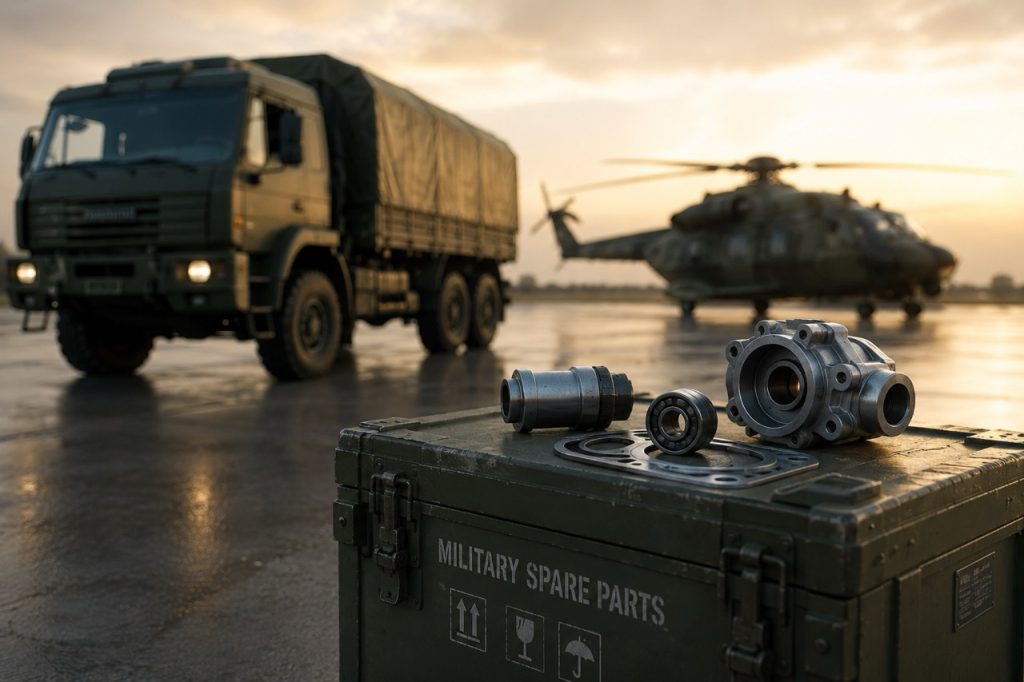
A military organization can field some of the most technologically advanced vehicles and weapon systems in the world and still find itself operationally constrained not because of a lack of capability, but because a single critical component is unavailable. An engine seal, a transmission bearing, a sensor module, or a hydraulic actuator can ground an armoured vehicle for weeks or months if the spare part cannot be sourced and delivered in time. In defense logistics, the term for this delay has a precise meaning: lead time.
Military spare parts lead time is one of the most consequential yet persistently underestimated variables in defense sustainment planning. While defense procurement teams routinely scrutinise unit cost, contract compliance, and technical specifications, lead time often receives inadequate attention until a maintenance backlog begins to erode fleet availability or an operational deployment is delayed. The consequences range from mission postponement to compromised national security commitments.
This article examines why lead time sits at the centre of effective defense supply chain management, how it directly affects military readiness, what forces are driving lead times upward in today’s environment, and what practical measures defense organisations can take to build more responsive and resilient spare parts supply chains.
What Is Lead Time in a Military Spare Parts Supply Chain?
Lead time, in its broadest sense, is the elapsed time between identifying a need for a spare part and having that part available for use. In a military spare parts supply chain, however, lead time is rarely a single measurement. It is the sum of several distinct segments, each of which introduces its own variables and risks.
Procurement Lead Time
This is the time required to identify an approved supplier, issue a purchase order or contract, and receive confirmation that the order has been accepted and scheduled. In government defense environments, this phase can be protracted by tendering requirements, multi-level approvals, and regulatory compliance checks.
Manufacturing Lead Time
Where components are not held in stock and must be manufactured to order, the production cycle adds significant time. For legacy military vehicles with obsolete components, manufacturing lead time may extend to many months, particularly when tooling, raw materials, or qualified production capacity must be sourced or re established.
Transportation Lead Time
Once manufactured or sourced, parts must be transported to the point of need. Depending on the origin of supply and the location of the end user, transportation lead time can span days or weeks. For parts sourced from distant manufacturing regions, ocean freight may be the default shipping mode, extending this segment considerably.
Customs and Export Control Lead Time
Military spare parts are frequently subject to export licensing, import customs procedures, and regulatory clearances under frameworks such as the International Traffic in Arms Regulations (ITAR) or national dual-use export control regimes. These processes are non negotiable but are often poorly factored into planning timelines. A single licensing delay can stall an otherwise complete supply chain.
Internal Military Approval and Acquisition Lead Time
Within military organisations, internal processes including requisition approvals, budget authorisation, technical acceptance, and receipt inspection add further elapsed time between order placement and part availability. These steps are essential for accountability and quality assurance but must be managed with sufficient process efficiency to avoid compounding delays.
It is the total lead time the aggregate of all these segments that determines whether a maintenance technician has the part they need when they need it. Focusing on any one segment in isolation misses the systemic nature of the problem. A supplier that manufactures quickly but operates across slow customs regimes or relies on long haul freight may deliver no faster in practice than a slower manufacturer located closer to the end user.
The Direct Relationship Between Lead Time and Fleet Readiness
Fleet readiness is the measure of how many vehicles or systems within a military fleet are operationally available at any given time. It is a fundamental indicator of military capability, and it is directly shaped by the speed and reliability of spare parts supply. When components are available on demand, maintenance cycles are short, vehicles return to service quickly, and operational readiness rates remain high. When components are not available, the consequences cascade.
Extended military spare parts lead time forces maintenance organisations to make difficult choices. Vehicles awaiting parts sit idle, accumulating opportunity cost. Maintenance schedules built around expected part availability collapse, pulling technicians away from other planned work. Deployment schedules that assumed a serviceable fleet must be revised when vehicle availability falls below the required threshold.
Customer wait time is a well established performance indicator in defense logistics it measures how long a unit waits from the moment a spare part is requested to the moment it is received. Excessive customer wait time is a direct operational liability. NATO doctrine and allied defense standards consistently identify supply responsiveness as a critical enabler of sustained combat effectiveness.
Operational planning is equally affected. Force commanders conducting sustainment assessments must account for part availability when determining their ability to sustain high tempo operations over time. A fleet that looks ready on paper, but whose maintenance pipeline is dependent on multi week lead times for critical components, carries a hidden fragility that may only become apparent under operational pressure.
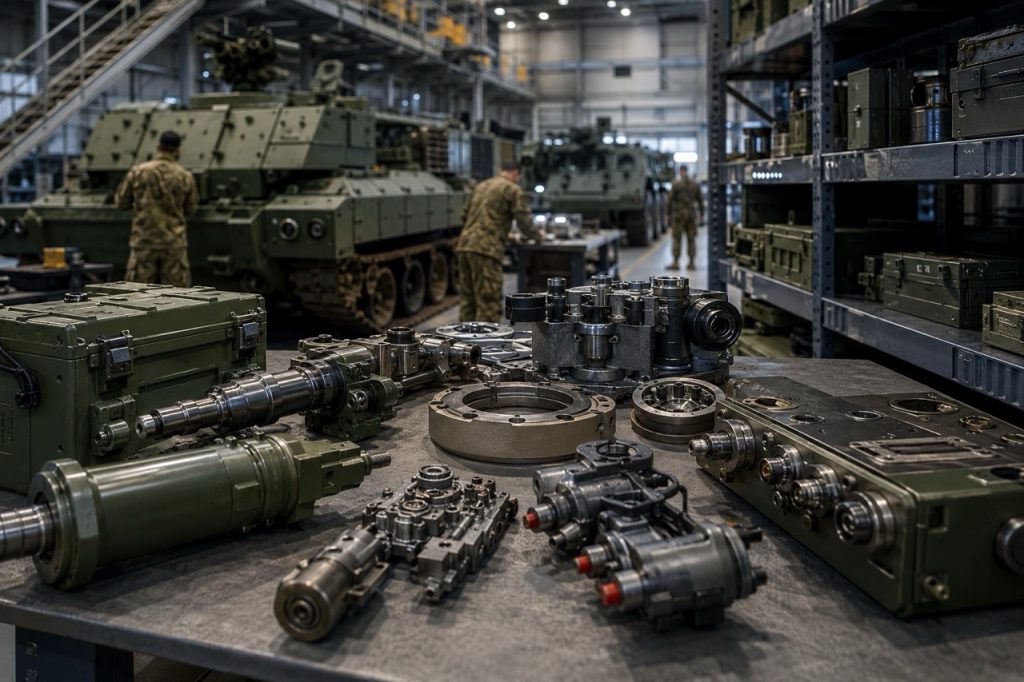
Why Lead Times Have Become Longer in Modern Defense Supply Chains
The structural factors driving extended lead times in defense supply chains have intensified over the past decade. Understanding these drivers is essential for effective defense sustainment planning.
Aging vehicle fleets represent perhaps the most significant challenge. Many NATO member states continue to operate vehicles designed and manufactured in the 1970s, 1980s, and 1990s. As these platforms age, original equipment manufacturer (OEM) support contracts expire, production lines close, and the components required to maintain operational fleets become increasingly difficult to source. Supply chains that were once direct have become fragmented, requiring aftermarket sourcing, reverse engineering, or bespoke manufacture all of which extend lead time.
Obsolescence compounds this problem. Electronic components, sensors, and specialised mechanical parts originally specified for legacy military vehicles may no longer be in production anywhere in the world. Sourcing alternatives whether through obsolescence management programs, form fit function substitutions, or new manufacturing runs requires time, engineering effort, and qualification testing that adds substantially to procurement lead time.
Single source supplier dependency creates systemic vulnerability. When a defense organisation has only one approved supplier for a critical part, any disruption to that supplier’s operations industrial action, financial difficulty, facility damage, or capacity constraints translates directly into spare parts unavailability with no immediate alternative source. This is a common structural weakness in military inventory management that sustained procurement reform has sought but often struggled to address.
Global supply chain disruptions, made highly visible by the COVID-19 pandemic and its aftermath, have demonstrated how fragile extended international sourcing networks can be. Semiconductor shortages, raw material price volatility, shipping bottlenecks, and port congestion have affected defense supply chains in ways that were not anticipated by planners operating under pre pandemic assumptions. These disruptions have proven durable rather than transient, with effects persisting years beyond the immediate crisis.
Geopolitical tensions have simultaneously increased demand for military spare parts at a time when supply capacity has not kept pace. Heightened operational tempos, accelerated force readiness timelines, and expanded ammunition and equipment requirements have created demand surges across defense supply chains in Europe and beyond. Manufacturing sectors that were calibrated for peacetime consumption are under pressure to scale output on compressed timelines, contributing to extended manufacturing lead times across the sector.
Export licensing requirements add a layer of administrative lead time that is difficult to compress without diplomatic level engagement. Parts for platforms with controlled technology content a category that encompasses most modern military vehicles must navigate national export approval processes, end user certification requirements, and sometimes multilateral licensing regimes before they can lawfully enter international supply chains. These processes are not static; changing geopolitical relationships can alter them without notice.
The Hidden Cost of Long Lead Times
Defense procurement culture has long been shaped by a focus on unit cost. Competitive tendering, value for money assessments, and budget constraint have conditioned procurement officers to prioritise price per unit as the primary variable in supplier selection. This approach systematically undervalues the cost of time and in defense logistics, long lead times carry very real financial and operational costs.
Increased inventory carrying costs are one direct consequence. Where organisations cannot depend on timely delivery, the rational response is to hold larger safety stocks. Larger inventories require more warehousing, more management overhead, and greater capital tied up in physical assets. For defense organisations operating under fiscal pressure, this represents a significant and often invisible cost burden.
Emergency procurement is one of the most tangible financial consequences of lead time failure. When a critical spare part is urgently required and the normal supply channel cannot meet the timeline, organizations resort to expedited sourcing typically at a substantial premium. Air freight, express manufacturing runs, and broker sourced components all carry cost multipliers that erode any savings achieved through lowest-price procurement.
Cannibalization the practice of removing serviceable parts from one vehicle to repair another is a visible symptom of supply chain failure. While it keeps one vehicle operational in the short term, it doubles the maintenance problem, depletes safety margins, and accelerates wear on components that should not have been disturbed. Cannibalization rates are a meaningful indicator of supply chain health; high rates signal systemic lead time and availability failures.
Maintenance backlogs accumulate when parts are unavailable. Technicians who cannot complete repairs move on to other tasks, but the unresolved work items remain. As the backlog grows, it becomes progressively harder to manage, forecasting becomes less reliable, and the true operational status of the fleet becomes obscured. Restoring normal maintenance flow after a prolonged period of constrained supply requires disproportionate effort.
Lead Time Risk in Military Vehicle Sustainment Programs
The sustainment challenges posed by long lead times are not abstract. They are experienced concretely across a range of widely operated military vehicle platforms.
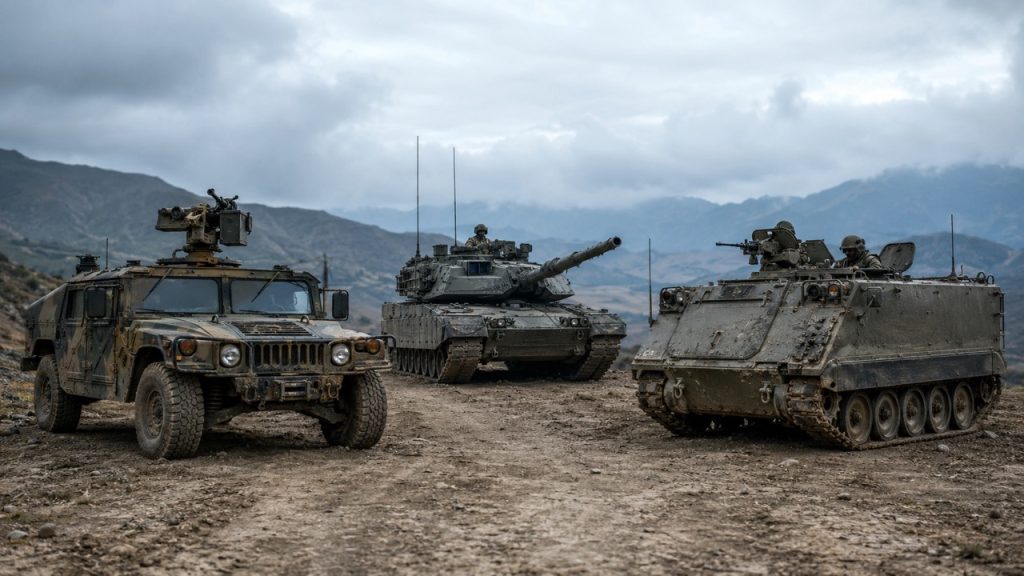
Operators of HMMWV fleets face compounding sustainment pressures. The platform has been in service for decades, and while many components remain commercially supported, the sheer scale of global HMMWV fleets and the diversity of configurations in service create a complex and fragmented parts ecosystem. Sourcing parts for specific vehicle variants or mission-equipment packages often requires navigating multiple supply tiers with varying lead times. (For HMMWV Fleet Support in 2026)
Leopard 2 operators across NATO and partner nations confront the challenges of a platform that, while operationally highly capable, draws on a precision manufacturing base concentrated in specific European countries. Political events, industrial capacity constraints, and export control considerations can all affect lead times for specific subsystem components, particularly under conditions of elevated demand. (For Leopard 2)
M113 sustainment exemplifies the obsolescence challenge. Despite being one of the most widely operated armoured vehicles in history, many M113 variants are approaching the limits of OEM support. Operators maintaining these fleets must increasingly rely on alternative sourcing strategies, aftermarket manufacturers, and rebuilt components each of which introduces its own lead time and quality assurance considerations. (For M113 Modernization vs Replacement)
MRAP vehicles, fielded extensively in response to specific operational threats, were produced in large numbers over short periods and subsequently dispersed across numerous operator nations. Post production support infrastructure varies significantly between vehicle variants and manufacturers, and parts availability for some configurations presents genuine sustainment challenges as fleets age beyond the initial support period.
Across all tactical wheeled vehicle fleets, the pattern is consistent: as fleets age, as OEM support structures contract, and as geopolitical demand increases, lead time risk grows. Sustainment planners who addressed these challenges proactively building alternative supply relationships, holding strategic stocks, and investing in demand forecasting are better positioned than those who relied on reactive procurement.
Why Lead Time Should Be a Supplier Selection Criterion
Defense procurement teams seeking to manage supply chain risk should treat lead time capability as a substantive supplier selection criterion, evaluated with the same rigour as price and technical specification. This requires a more sophisticated approach to supplier assessment than is common in standard tendering frameworks.
Historical delivery performance is the most reliable indicator of future lead time. Suppliers with documented track records of consistent on time delivery across a range of order types and volumes provide stronger risk management than those whose quoted lead times are aspirational rather than evidenced. Where historical data is available, it should be weighted accordingly in supplier evaluation.
Inventory depth the volume and breadth of stock a supplier holds ready for immediate dispatch is a direct lead time reducer. Suppliers who invest in pre positioned stock for high demand or critical components can offer substantially shorter total lead times than those who operate on a build to order basis. For defense procurement, the value of this readiness should be factored explicitly into cost benefit analysis.
Regional warehousing capability matters. A supplier with distribution capacity located close to the end user can reduce transportation lead time dramatically, particularly for urgent requirements. For NATO aligned operators, suppliers with European warehousing presence offer significant advantages over those whose inventory is held exclusively in distant manufacturing regions.
Supply chain visibility the ability for a defense customer to track the status of an order through each supply chain segment in near real time is increasingly a differentiating capability. Suppliers who offer digital tracking, proactive exception reporting, and transparent communication reduce the uncertainty that drives overstocking and emergency procurement behaviour.
Obsolescence management programs are a critical capability for sustainment of aging fleets. Suppliers who actively manage component lifecycles, develop validated alternative sources for obsolete parts, and maintain engineering capacity to adapt specifications to changed component availability provide long term sustainment value that extends well beyond the initial contract period.
Emergency fulfillment capability the demonstrated ability to accelerate supply for critical requirements should be assessed directly. Not all suppliers can reliably prioritise urgent orders without degrading service to other customers. Understanding how a supplier manages competing priorities under demand pressure is an important element of risk assessment for defense supply chain roles.

Building a Resilient Military Spare Parts Supply Chain
Supply chain resilience in defense logistics does not emerge from procurement reform alone. It requires deliberate, coordinated action across planning, investment, technology, and supplier relationship management.
Multi source procurement reduces single-point-of-failure risk by qualifying multiple suppliers for critical components. While maintaining multiple supplier relationships requires additional management effort, the supply continuity benefit substantially outweighs the administrative cost in most defense sustainment contexts. For the most critical components, sole-source dependency should be treated as a managed risk requiring mitigation, not an acceptable default.
Strategic stock planning involves pre positioning inventory based on failure rate analysis, operational demand patterns, and lead time data. Rather than holding uniform safety stock levels across all items, risk based inventory management concentrates pre positioned stock on high criticality, high lead time components those whose unavailability has the greatest impact on fleet readiness and which take the longest to replenish.
Predictive maintenance integration enables demand forecasting that extends beyond historical consumption rates. By connecting condition monitoring data from vehicles in service to the spare parts supply chain, defense organisations can anticipate component failures before they occur and initiate replenishment well in advance of actual requirement. This shifts the supply model from reactive to proactive, reducing the frequency and severity of emergency procurement.
Long term supplier partnerships, structured around sustained performance requirements rather than single transaction pricing, create conditions in which suppliers invest in the capacity and capability needed to support defense customers consistently. Framework agreements, performance based logistics contracts, and multi year supply arrangements all facilitate this type of relationship. They also provide suppliers with the demand visibility needed to hold appropriate stock levels.
Digital inventory visibility integrated platforms that provide real-time status across procurement, transit, customs, and receipt enables smarter decision making at every stage of the supply chain. When logistics managers can see exactly where every order stands and identify exceptions as they emerge, they can intervene earlier, escalate appropriately, and avoid the compounding delays that result from late detection of supply chain problems.
Regional distribution hubs positioned close to major operational theatres or allied military concentrations provide a physical buffer against international supply chain disruptions. Holding fast moving and high criticality items in geographically proximate locations reduces dependence on long haul logistics and enables much faster response to urgent requirements.
The Role of Supply Chain Agility in Defense Operations
There is an important distinction between supply chain cost optimisation and supply chain operational resilience. For commercial enterprises operating in stable, predictable environments, cost optimisation is an appropriate primary objective. For defense organisations whose operational environment is inherently uncertain and whose supply chain failures carry national security consequences, operational resilience must take precedence.
This distinction has not always been reflected in defense procurement practice. Pressure to demonstrate value for money, driven by parliamentary oversight and public expenditure accountability, has in many cases pushed defense organisations toward lowest-price procurement models that sacrifice supply chain agility for short term unit cost savings. The consequences of this trade off have become increasingly apparent as demand has surged and supply chains have come under pressure.
Agility in a defense spare parts supply chain means the ability to increase throughput rapidly in response to changing demand, to substitute alternative sources when primary sources are disrupted, and to prioritise critical requirements over routine replenishment without compromising overall supply continuity. Achieving this requires supplier relationships, inventory positioning, and logistics infrastructure that are configured for responsiveness rather than pure efficiency.
NATO military logistics doctrine has increasingly emphasised supply chain resilience and agility as enablers of sustained operations in high intensity conflict scenarios. The operational experience of allied forces in recent years has reinforced this emphasis, demonstrating clearly that sustainment chains built on peacetime efficiency assumptions are poorly suited to the demands of high intensity or extended operations.
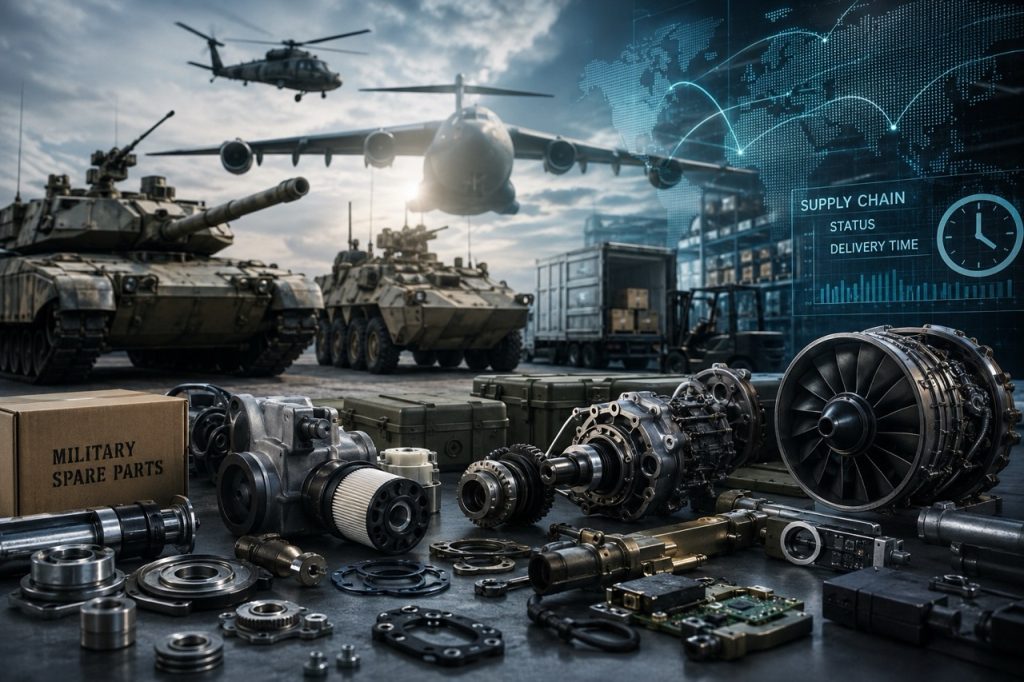
Future Trends Affecting Lead Time in Defense Logistics
Several converging trends will reshape lead time dynamics in military spare parts supply chains over the coming decade.
Additive manufacturing commonly known as 3D printing holds significant promise for reducing manufacturing lead time in specific spare parts categories. The ability to produce certain components on demand, at or near the point of use, eliminates transportation and procurement segments of the lead time equation entirely. While the technology is not yet mature enough for all defense components, its application to lower complexity structural and non safety critical parts is already operationally relevant for some armed forces.
Digital supply chain platforms that integrate supplier inventory visibility, order management, customs tracking, and delivery monitoring into a single operational view are becoming increasingly available. As these platforms mature and achieve greater adoption across the defense sector, the information asymmetry that currently degrades decision making at each supply chain stage will reduce. Better information enables faster and more accurate intervention when lead times begin to extend beyond plan.
Predictive analytics and AI supported demand forecasting represent a significant opportunity to reduce the gap between anticipated and actual spare parts requirements. Machine learning models trained on historical consumption data, vehicle usage patterns, failure rates, and operational tempo indicators can generate demand forecasts substantially more accurate than conventional methods. More accurate forecasting reduces both overstocking and emergency procurement the two most expensive failure modes in military inventory management.
Regionalization of defense supply chains is accelerating in response to geopolitical risk and the experience of supply disruptions. NATO member states and allied nations are increasingly investing in domestic or regional production capacity for critical components, reducing dependence on distant single source suppliers. This trend is reinforced by allied defense industrial policy initiatives that incentivise European and domestic production of defense relevant components.
NATO and allied supply chain cooperation initiatives, including multinational procurement frameworks, shared logistics facilities, and cooperative stock positioning, offer opportunities to aggregate demand and distribute supply chain risk across multiple nations. For smaller defense organisations whose individual demand volumes are insufficient to support dedicated supplier investment, participation in allied logistics frameworks can deliver lead time and supply continuity benefits that would not be achievable independently.
Lead Time Is a Readiness Metric
Lead time is not simply a logistics variable to be managed at the procurement officer level. It is a readiness metric with direct implications for military effectiveness, fleet availability, and the ability of defence organisations to meet their operational commitments.
The speed at which critical spare parts can be sourced, manufactured, transported, cleared through export controls, and placed into the hands of maintenance technicians determines how quickly vehicles return to service, how confidently operational planners can commit to deployment timelines, and how effectively forces can sustain operations under conditions of high demand and supply chain pressure.
Defense organisations that treat lead time as a primary rather than secondary criterion in supply chain strategy investing in inventory depth, supplier diversity, regional distribution capability, digital visibility, and long term supplier partnerships will consistently outperform those that optimise for unit cost alone. The cost of lead time failure, measured in grounded vehicles, maintenance backlogs, emergency procurement premiums, and reduced operational readiness, invariably exceeds any savings achieved through lowest-price procurement.
As geopolitical pressures continue to drive elevated demand across defense supply chains, and as the structural factors contributing to longer lead times show no signs of abating, the urgency of addressing this issue at a strategic level grows. Supply chain resilience, sustainment planning, and procurement lead time management are not administrative concerns. They are operational imperatives and the forces that treat them as such will be best positioned to maintain military readiness when it matters most.
Work With AB Defence
AB Defence operates as a specialized international supplier of military spare parts and fleet sustainment solutions, serving defense procurement organizations, military logistics managers, and armed forces across NATO and allied nations. With a rigorous approach to quality assurance, full documentation traceability, and deep technical expertise across a broad range of military vehicle and equipment platforms, AB Defence is structured to meet the demanding standards that defense procurement officers rightly require.
Whether you are managing aging fleet sustainment, sourcing critical components against compressed timelines, or seeking a long-term supply chain partner with genuine defense industry expertise, AB Defence offers the technical capability, compliance framework, and operational reliability that defense supply chains depend on.
Contact AB Defence today to discuss your procurement requirements and learn how we can support your fleet readiness objectives.
Related Military Spare Parts Categories, Vehicle Platforms & Technical Guides
Explore AB Defence’s NATO-codified (NSN) and genuine OEM spare parts catalog, platform technical specifications, and sustainment engineering guides related to this article:
Stocked Spare Parts Categories (NSN & OEM Catalog)
- NATO Standard Defence Components & Military Hardware (12,993 stocked parts)
- M60 Tank Spare Parts (M60A1 / M60A3 / M60T) (497 stocked parts)
- M109 Self-Propelled Howitzer Spare Parts (585 stocked parts)
- BMC Kirpi MRAP Spare Parts (Kirpi I & Kirpi II) (597 stocked parts)
- Mercedes-Benz Unimog Military Spare Parts (562 stocked parts)
- Full NATO NSN & OEM Spare Parts Catalog (16,760+ Parts)
Compatible Vehicle Platforms & System Hubs
- Platforms
- Product Groups
- Quality
- Capabilities
- Tracked Armoured Vehicles
- Request a B2B Quotation (RFQ) & Technical Support