AB DEFENCE Platform support
M60 Series
Explore platform information, technical systems and spare parts support.
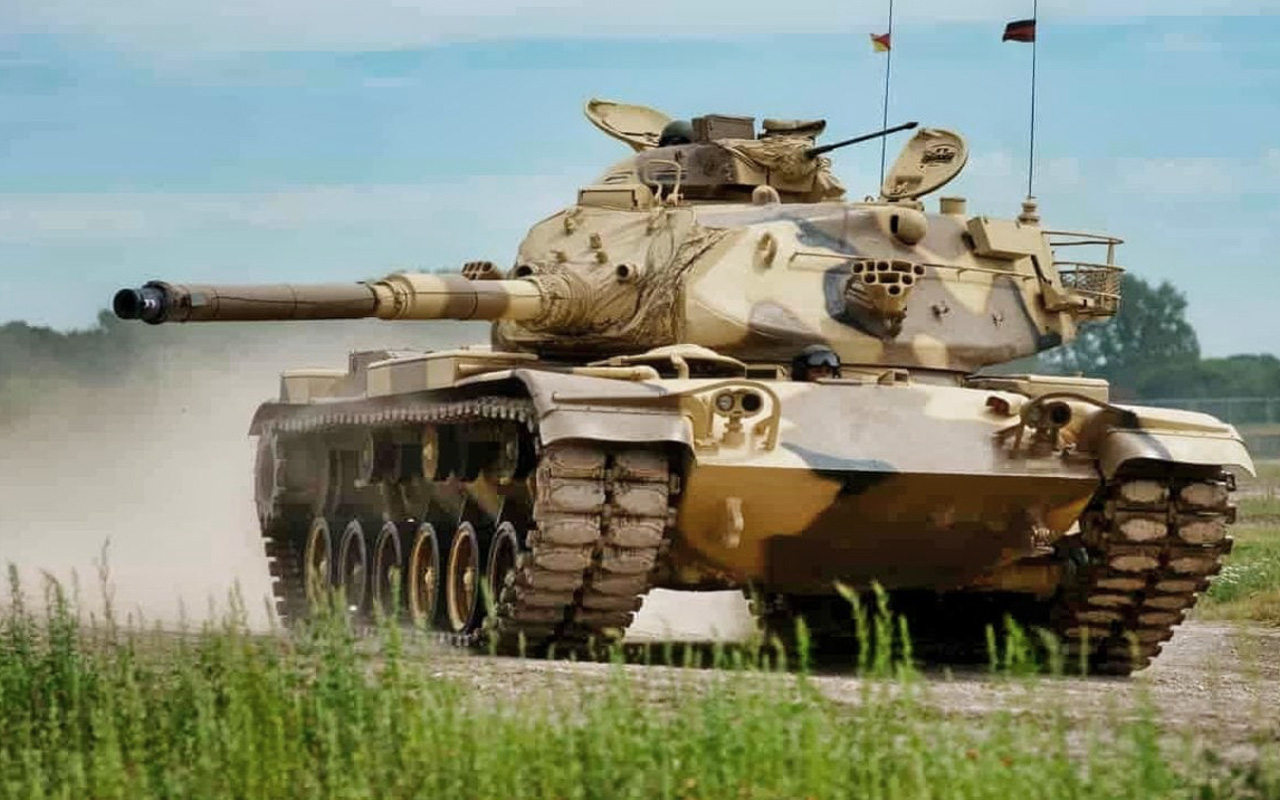
The world's most extensively modernized M60-series combat vehicle — and the M88A2 HERCULES armored recovery vehicle
Request a QuoteM60T / M60TM / M60T1
The M60T is the most comprehensively upgraded version of the M60 Patton main battle tank in service anywhere in the world. Built on the M60A1 hull, it has undergone three distinct generations of modernization since 2002 — transforming from a Cold War-era platform into a digitally networked, actively protected combat vehicle with full domestic Turkish systems integration. As of February 2024, all 166 active M60Ts have been upgraded to the M60T1 (TİYK) standard by ASELSAN, achieving near-total supply chain sovereignty for Turkey's armored force. No foreign nation has taken the M60 chassis further in capability terms.
The origins of the M60T trace to a 2002 government-to-government agreement between Turkey and Israel, under which Israel Military Industries (IMI) upgraded 170 M60A1 hulls to the Sabra Mk II configuration. This first-generation upgrade introduced the 120mm IMI MG253 smoothbore gun, the MTU 881 V12 diesel engine producing 1,000 hp, the Renk automatic transmission, a Commander's Independent Thermal Viewer (CITV), and an explosive reactive armor package. The upgraded platform was designated M60T and delivered from Kayseri 2nd Main Maintenance Factory Directorate between 2007 and 2009.
The combat deployment of M60T tanks during Operation Euphrates Shield in northern Syria in 2016 fundamentally changed the trajectory of the program. Turkish armor encountered modern anti-tank guided missile (ATGM) threats — including Russian-supplied Kornet and TOW systems — that exposed critical survivability gaps in the first-generation configuration. In direct response, the Turkish Presidency of Defense Industries (SSB) launched the FIRAT-M60T Project in 2017, with ASELSAN appointed as prime contractor. This marked the beginning of Turkey's complete separation from foreign dependence in tank electronics.
Modernization Program: Three Generations
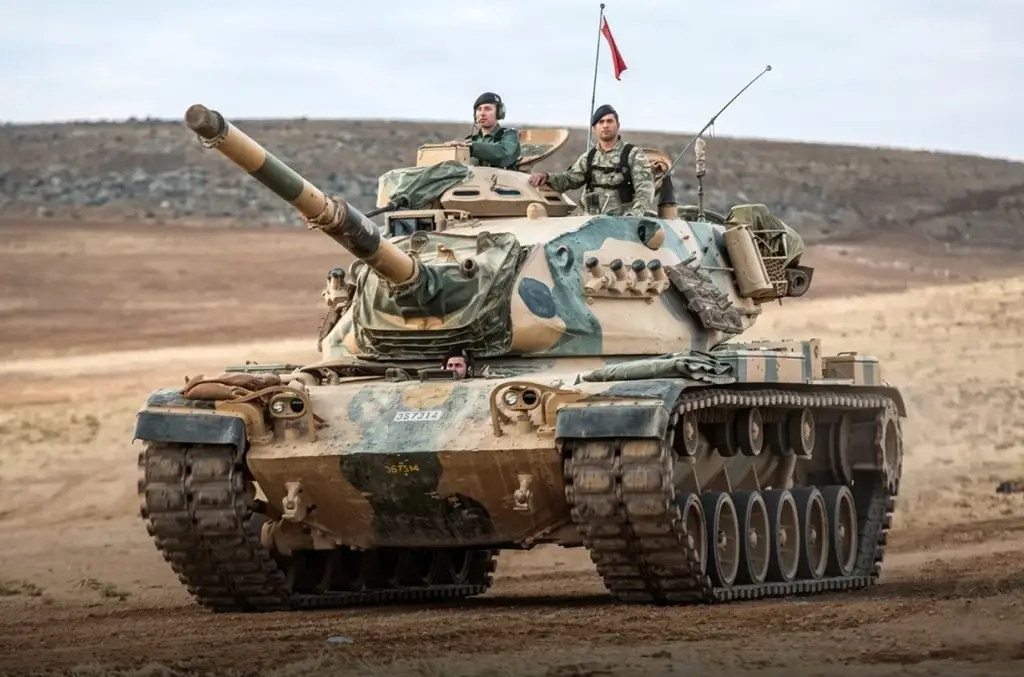
Generation 1 — Sabra Mk II / M60T (2007–2009)
The original M60T upgrade was executed under a $688 million contract between Turkey and Israel Military Industries. The program upgraded 170 M60A1 hulls to the Sabra Mk II standard, representing the most capable export configuration of the Sabra upgrade package available at the time. Key first-generation integrations included:
- IMI MG253 120mm smoothbore main gun — NATO-standard, capable of firing all 120mm ammunition types
- MTU 881 Ka-500 V12 twin-turbocharged diesel engine, 1,000 hp — produced under license by MTU Türk A.Ş.
- Renk HSWL 194 automatic transmission — 4 forward, 2 reverse gears
- Elbit Knight Mk III fire control system with Thermal Imaging System (TIS)
- Commander's Independent Thermal Viewer (CITV) enabling 360° independent target acquisition
- Explosive Reactive Armor (ERA) package on hull and turret
- Upgraded suspension and track system compatible with the heavier configuration
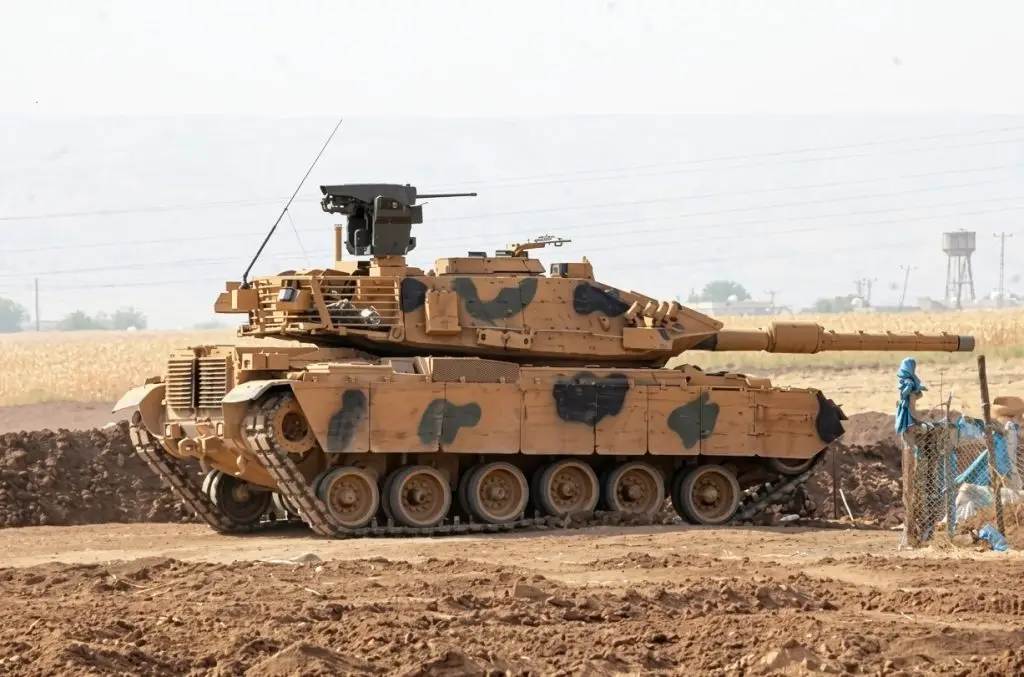
Generation 2 — FIRAT-M60T / M60TM (2017–2021)
The FIRAT-M60T Project was Turkey's most ambitious armor modernization program to date. Launched in 2017 with ASELSAN as prime contractor, its primary objective was to replace all Israeli-origin electronic systems with Turkish equivalents — eliminating foreign dependency and closing the survivability gaps identified in Syria. The total program cost was approximately 206 million Euros and 50 million Turkish Lira. All 169 active M60T platforms were upgraded to the M60TM configuration, with the completion ceremony held in 2021.
The scope of the FIRAT upgrade went far beyond a simple component swap. The program addressed both survivability and lethality deficiencies simultaneously, adding systems that placed the M60TM among the most capable modernized MBTs in service at the time of completion. The key M60TM integrations were:
Survivability: PULAT Active Protection System (APS)
Developed jointly by ASELSAN and TÜBİTAK SAGE, PULAT is a hard-kill active protection system that scans 180° in azimuth and 35° in elevation and detects incoming projectiles at up to 50 metres. Upon detecting a threat, PULAT activates one of six cylindrical countermeasure modules positioned around the hull — two per side, one front, one rear — which neutralize the incoming round using a dense cloud of high-velocity metal fragments. PULAT provides coverage against ATGMs, RPGs, and HEAT projectiles. Its combat debut during Operation Peace Spring (2019) produced reported successful interceptions of incoming ATGMs under live engagement conditions.
Lethality: SARP Remote Weapon System (RWS)
A remotely operated weapon station mounted on the turret roof, armed with either a 12.7mm heavy machine gun or a 40mm Automatic Grenade Launcher (AGL). The SARP allows the commander to engage targets from within the protected crew compartment without exposure, a critical capability in urban and asymmetric threat environments.
Situational Awareness: TEPES Telescopic Periscope System
A hydraulically operated mast-mounted observation system enabling the crew to conduct surveillance and target acquisition while fully in defilade behind terrain or obstacles. TEPES integrates thermal and daylight cameras and provides secure observation capability without requiring the tank to expose its hull or turret.
Crew Protection: YAMGÖZ Close Range Surveillance System
A panoramic camera system providing the crew with 360° visibility of the immediate tactical environment, reducing blind spots and improving crew response to close-range threats — particularly critical during urban operations.
Mobility: ADİS Tank Driver Vision System
A digital vision system for the driver providing enhanced situational awareness in low-visibility and night conditions, improving platform mobility and reducing the risk of obstacle encounters during tactical movement.
Navigation: Position and Orientation Detection System (PODS)
An inertial navigation and positioning system providing real-time position and orientation data — essential for precision fire control and network integration in a digitized battlespace.
Electronic Warfare: Laser Warning System (LWR)
Detects laser designation from enemy targeting systems and immediately alerts the crew, enabling evasive action, smoke deployment, or countermeasure activation before weapon guidance is completed.
Passive Protection: Spall Liner
Interior composite spall liners were integrated following the removal of the commander's cupola, significantly reducing crew injury risk from fragmenting projectiles that penetrate the hull. This passive protection measure directly addresses casualty patterns observed during Syrian combat operations.
Sustainability: Auxiliary Power Unit (APU)
An onboard APU allows all tank electronic systems — including surveillance, communications, and fire control — to operate with the main engine off. This enables silent watch operations, extended observation tasks, and reduces thermal and acoustic signatures in static positions.
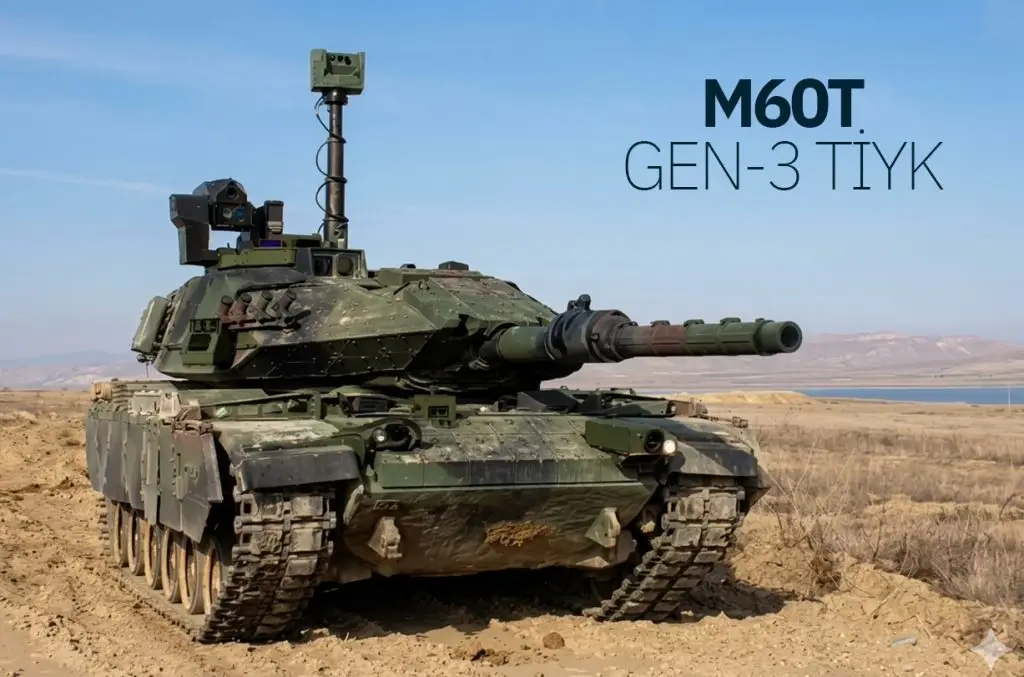
Generation 3 — TİYK-M60T / M60T1 (2022–Present)
The TİYK Program (Tanklara İlave Yetenek Kazandırılması — Tank Additional Capability Enhancement) represents the final and most strategically significant modernization layer of the M60T evolution. The TİYK-M60T agreement was signed between Turkey's Defense Industry Agency (SSB) and ASELSAN on 4 July 2022. Its defining objective was the nationalization of the fire control system — replacing the last remaining foreign-origin major electronic component on the platform with a fully indigenous Turkish system. The first two M60T1 tanks were delivered to the Turkish Land Forces Command at a ceremony in Şereflikoçhisar on 10 February 2024, with series deliveries continuing through 2025.
At the TİYK delivery ceremony, SSB President Prof. Dr. Haluk Görgün described the strategic significance of the program: the difficulties experienced with maintenance and sustainment due to foreign suppliers, and the restrictions imposed by supplier nations, had compelled Turkey to develop its own capabilities. The TİYK program, he stated, was the direct result of that strategic necessity. ASELSAN President & CEO Ahmet Akyol noted that ASELSAN had become the only company in the world capable of producing all electronic systems used on a tank in-house — a claim substantiated by the TİYK delivery.
The M60T1 TİYK integrations include:
Primary Integration: VOLKAN-M Fire Control System
The VOLKAN-M is ASELSAN's nationally developed tank fire control system, replacing the last foreign-origin FCS component on the M60T. It provides simplified architecture, high-resolution thermal and daylight imaging, high first-shot hit probability, and full fire control functionality — both stationary and on the move — across all terrain and weather conditions. Live firing demonstrations during the TİYK delivery ceremony validated the system's accuracy and integration. The VOLKAN-M is a member of the ASELSAN VOLKAN FCS family, which has been successfully exported and integrated on multiple international platforms.
Digital Integration: Tank Command, Control, Communication and Information System (TC3IS)
Provided by STM Savunma, the TC3IS enables real-time situational awareness and battle management integration within a digitized brigade. The system provides digital communications, force tracking, target data sharing, and mission management capability, placing the M60T1 within a fully networked combat framework.
Protection: Additional ROKETSAN Armor Package
An upgraded composite and reactive armor package from ROKETSAN, providing enhanced protection against the latest generation of shaped-charge warheads and kinetic energy penetrators.
Crew Survivability: T-Kalıp Blast-Resistant Crew Seats
Energy-absorbing seats from T-Kalıp that attenuate blast energy transmitted through the hull floor from mine and IED detonations, reducing crew spinal injuries — a casualty type that accounted for significant non-fatal casualties during Syrian operations.

Technical Specifications — M60T / M60TM / M60T1
| SPECIFICATION | M60T / M60TM / M60T1 DATA |
|---|---|
| Classification | Main Battle Tank (MBT) |
| Crew | 4 — Commander, Gunner, Loader, Driver |
| Combat Weight | ~55 tonnes (varies with ERA/armor configuration) |
| Hull Length | ~6.95 m (gun forward: ~9.5 m) |
| Width | ~3.63 m (hull) / wider with ERA |
| Height | ~3.27 m (to turret top) |
| Main Armament | 120mm smoothbore — IMI MG253 (Gen 1/2) / MKE 120MM 44C (Gen 3) |
| Secondary Armament | 7.62mm M240 coaxial MG (3,000 rds) | 12.7mm SARP RWS or M85 (1,000 rds) | 60mm hull mortar |
| Ammunition Stowage | 42 × 120mm rounds (NATO standard: APFSDS, HEAT, HP) |
| Smoke Grenade | Multi-spectral smoke discharger banks (8 × launchers) |
| Engine | MTU 881 Ka-500 V12 twin-turbocharged diesel — 1,000 hp @ 2,600 rpm |
| Transmission | Renk HSWL 194 — 4 forward / 2 reverse |
| Fuel Capacity | ~500 litres (diesel) |
| Road Speed | ~65 km/h (governed) |
| Cross-Country Speed | ~40–50 km/h |
| Operational Range | ~450 km (road) / ~250 km (cross-country) |
| Gradient | 60% (30° slope) |
| Side Slope | 30% |
| Vertical Obstacle | ~0.9 m |
| Trench Crossing | ~2.6 m |
| Fording Depth | 1.4 m (unprepared) / 2.4 m (prepared) |
| Active Protection | PULAT APS (M60TM / M60T1) — hard-kill, 180° azimuth, 50m intercept range |
| Fire Control | Elbit Knight Mk III (Gen 1) → VOLKAN-M / VOLKAN 201/120 (Gen 2/3) |
| C2 System | STM Savunma TC3IS (M60T1) |
| Laser Warning | Yes (M60TM / M60T1) |
| Driver Vision | ADİS system (M60TM / M60T1) |
| CBRN Protection | NBC overpressure system |
| In Service (Turkey) | 166 active units — Turkish Land Forces (as of 2024) |
Armament & Fire Control — Technical Detail
Main Gun: 120mm Smoothbore
The M60T was the first Turkish tank to be armed with a 120mm smoothbore main gun, converting from the 105mm M68 rifled gun of the legacy M60 series. In first and second-generation M60T/M60TM vehicles, the gun fitted is the IMI MG253 — the export variant of the Rheinmetall 120mm L/44 — which is the same caliber and interface as the gun on the M1A1 Abrams, Leopard 2A4, and K1A1, ensuring complete NATO ammunition interoperability.
Under the TİYK/M60T1 program, Turkey has qualified the MKE 120MM 44C — an indigenously developed 120mm smoothbore gun manufactured by Makine ve Kimya Endüstrisi (MKE). This represents a critical step in supply chain sovereignty: Turkey can now produce the main armament of its M60T fleet without reliance on Israeli or any other foreign supplier. The MKE gun maintains full compatibility with the NATO 120mm ammunition family.
Ammunition fired includes:
- APFSDS (Armor-Piercing Fin-Stabilized Discarding Sabot) — primary anti-armor round
- HEAT (High-Explosive Anti-Tank) — shaped charge for armored and hardened targets
- HP (High Pressure) / HE rounds — for soft targets and fortified positions
- All rounds produced to NATO STANAG specifications ensuring full allied interoperability
PULAT Active Protection System
The PULAT APS, developed by ASELSAN and TÜBİTAK SAGE, is the first combat-proven Turkish hard-kill active protection system. It operates on the principle of radar detection and close-range neutralization: an onboard radar continuously scans the threat envelope, identifies incoming projectiles, calculates the intercept geometry, and fires a countermeasure module that generates a high-velocity fragment cloud to destroy the incoming round before it reaches the tank.
PULAT technical parameters:
- Coverage arc: 180° in azimuth, 35° in elevation — one system covers the frontal arc; two can be fitted for full 360° coverage
- Detection range: up to 50 metres from the protected vehicle
- Countermeasure modules: 6 × cylindrical hard-kill units (2 per side, 1 front, 1 rear)
- Threat set: ATGMs, RPGs, HEAT warheads, tandem-charge munitions
- Combat validation: confirmed intercepts during Operation Peace Spring (2019), northeastern Syria
The combat validation of PULAT during Operation Peace Spring (2019) is of particular importance. M60TM tanks equipped with PULAT reported documented successful interceptions of incoming ATGM threats under live operational conditions — a distinction shared by relatively few active protection systems globally. This real-world validation distinguishes PULAT from systems that have only been tested in trials and positions it as a genuinely combat-ready technology.
These differences mean that pistons, piston rings, cylinder liners, and connecting rod big-end bearings specified for the naturally aspirated OM 352 are not correct for the OM 352A — even where dimensions appear similar. The piston cooling passages in the OM 352A block also require that any oil system overhaul correctly addresses the feed galleries and squirter nozzle condition, something that is irrelevant when working on a naturally aspirated variant. AB Defence's engine parts inventory is catalogued separately for OM 352 and OM 352A applications, eliminating this source of error at the point of order.
Complete Engine Overhaul Kits — OM 352A Specific Full gasket and seal sets specific to the turbocharged OM 352A configuration, including head gasket, rocker cover, and all core plug assemblies. Cylinder liner sleeves, piston assemblies (with piston cooling oil squirter bosses), piston ring sets, and circlip kits. Main bearing shell sets and big-end connecting rod bearing shells, with undersized options for reground crankshafts. Camshaft and timing gear assemblies, timing cover seals and front crankshaft seal sets. Rocker shaft assemblies, push rod sets, and valve train components. Cylinder head bolt sets with replacement torque specification documentation. Complete piston cooling oil squirter nozzle assemblies and feed gallery hardware.
Turbocharger System — KKK/BorgWarner Application Complete turbocharger cartridge assemblies (CHRA) for OM 352A applications as originally fitted. Compressor and turbine wheel inspection criteria and replacement sets. Turbocharger oil feed banjo bolt and copper washer seal kits. Oil scavenge return line hardware, including return elbow fittings, sealing rings, and check valve assemblies. Boost inlet hose and clamp assembly from air cleaner to compressor inlet. Exhaust manifold to turbine inlet gasket and mounting stud sets. Wastegate actuator assemblies and boost calibration hardware.
Bosch Fuel Injection System — OM 352A Calibration Bosch in-line injection pump barrel and plunger assemblies calibrated to OM 352A turbocharged specification. These are not interchangeable with naturally aspirated OM 352 pump elements despite sharing the same Bosch PE pump family architecture. High-pressure injection delivery valve assemblies and valve spring kits. Injector nozzle and needle valve assemblies (turbocharged calibration). Injection pump governor spring and tensioner sets. Complete 6-cylinder high-pressure fuel line sets. Primary and secondary fuel filter elements and housing seal kits. Fuel lift pump assemblies and diaphragm repair kits.
Cooling and Thermal Management Heavy-capacity radiator cores and complete assemblies sized for the sustained thermal output of the OM 352A under full military GVW in high-ambient-temperature environments. The U 1700 L's higher GVM compared to the U 1300 L places greater sustained demand on the cooling system, making correct radiator specification critical for operators in hot-climate theatres. Thermostat and housing assemblies. Water pump complete assemblies and mechanical seal sets. Viscous fan coupling assemblies. Complete coolant hose sets by chassis and superstructure variant. Coolant pressure cap assemblies and system test hardware.
Lubrication System — Including Piston Cooling Circuit Oil pump assemblies, pressure relief valves, and pressure regulator components. Piston cooling oil squirter feed circuit hardware — a maintenance item unique to the OM 352A that must not be overlooked during any bottom-end overhaul. Oil cooler matrix elements and housing seal kits. Front and rear crankshaft main seals and sump gasket sets. Military oil filter elements and complete filter housing assemblies. Engine breather and crankcase ventilation components.
Air Induction System Military-grade two-stage dry-type air cleaner assemblies. Primary and safety filter elements with pre-cleaner cyclonic separator units. Air restriction indicator service valves. Turbocharger inlet pipe and hose assemblies. Intake manifold gaskets and associated fastener hardware.
Operational History - Combat Deployments
The M60T / M60TM has been deployed in four Turkish cross-border operations between 2016 and 2020, accumulating more live combat experience in short succession than any other M60-family variant has seen in the 21st century. This operational record is significant not only as a testament to the platform's endurance but because each deployment directly informed the next generation of upgrades — creating a feedback loop between combat exposure and platform evolution that few programs have achieved.
Operation Euphrates Shield — Northern Syria (August 2016 – March 2017)
M60T tanks provided direct fire support for the Syrian National Army (SNA) against ISIS and YPG forces in a combined arms operation that marked Turkey's first large-scale armored cross-border intervention since the Korean War. The terrain was a complex mix of open desert, agricultural land, and urban built-up areas across the Jarabulus-Azaz corridor. The tanks performed direct fire support missions clearing fortified ISIS positions and providing armored cover for advancing SNA formations.
Euphrates Shield exposed a critical vulnerability: the M60T, in its first-generation Sabra Mk II configuration, was vulnerable to modern ATGMs — particularly the Russian 9M133 Kornet, which outranged the reactive armor package. Several M60T platforms were struck, some with crew casualties. The operational data gathered during Euphrates Shield became the direct technical basis for the FIRAT-M60T modernization program launched the following year — one of the clearest examples in recent history of combat experience directly driving a major defense acquisition decision.
Operation Olive Branch — Afrin, Syria (January – March 2018)
Approximately 170 M60T tanks — many of which had already begun receiving FIRAT-M60T field upgrades — were deployed in the Olive Branch operation aimed at removing YPG forces from the Afrin District. The operation was conducted across rugged mountain terrain, olive groves, and urban areas in northwestern Syria. The M60T performed primarily as a direct fire support asset, neutralizing fortified positions and providing armored protection for infantry during urban clearing operations. The combination of mountainous terrain and urban engagement patterns placed significant demands on crew situational awareness systems — data that would feed into the TEPES and YAMGÖZ integration priorities of the FIRAT program.
Operation Peace Spring — Northeastern Syria (October 2019)
Operation Peace Spring represented the first large-scale combat deployment of M60TM tanks — vehicles that had completed the full FIRAT upgrade package including PULAT APS. The operation was conducted against SDF/YPG positions in the area between Tal Abyad and Ras al-Ayn (Serêkaniyê). During this operation, M60TM tanks equipped with PULAT were reported to have successfully intercepted incoming ATGMs under live combat conditions — the first confirmed combat use of Turkey's indigenous hard-kill APS. This achievement validated the entire FIRAT-M60T modernization program in the most demanding possible testing environment.
Operation Spring Shield — Idlib Province, Syria (February – March 2020)
The final major Turkish armored operation in the Syrian theater, conducted in response to a Syrian government offensive in Idlib Province that resulted in significant Turkish casualties. M60TM tanks participated in direct fire engagements against Syrian Army regular armored formations — a more conventional military-on-military armored confrontation than the asymmetric threat environments of previous operations. This engagement provided additional data on M60TM performance in peer-adversary armored combat conditions.
Bashiqah Incident — Northern Iraq (April 2016)
On 21 April 2016, a stationary M60T tank training Iraqi forces at the Bashiqah camp in northern Iraq was struck by an ISIS-fired Russian-manufactured 9M133 Kornet ATGM. The Kornet is one of the most capable man-portable ATGMs in the world, capable of defeating conventional composite armor. The M60T's reactive armor package successfully protected the crew — no fatalities were reported from the hit. While the incident demonstrated the penetration limitation of the first-generation ERA configuration against Tier-1 ATGM threats, it simultaneously confirmed effective crew protection under a real-world Kornet engagement — a data point that directly shaped the weight-of-effort placed on APS integration in the subsequent FIRAT program.

M88 / M88A1 / M88A2 HERCULES
The M88A2 HERCULES (Heavy Equipment Recovery Combat Utility Lifting Extraction System) is the world's pre-eminent heavy armored recovery vehicle and the recovery system of record for all NATO 70-tonne armored formations. Designed to retrieve, winch, tow, and hoist main battle tanks up to 70 tonnes under live fire conditions, the HERCULES is currently in production and service with over 25 nations. It has accumulated more large-scale armored conflict experience than any other ARV in history, having been deployed in Vietnam, the Gulf War, Operation Iraqi Freedom, Afghanistan, Kosovo, and — most recently — Ukraine. No other armored recovery system in its class can match the HERCULES combination of proven recovery capacity, armored crew protection, and operational validation depth.
The M88 traces its origins to a U.S. Army requirement in the late 1950s for an armored recovery vehicle capable of supporting the newly fielded M60 Patton tank — which, at over 50 tonnes, exceeded the recovery capacity of the existing M74 ARV. BMY (Bowen McLaughlin York) designed the M88 using M48 and M60 Patton chassis components as a blueprint, ensuring automotive commonality with the tank fleet it would support. The original M88 was introduced in 1961; the M88A1 followed in 1977 with a diesel powerplant; and the M88A2 HERCULES entered service in 1997 as a comprehensive redesign capable of supporting the M1 Abrams series at up to 70 tonnes. Today, BAE Systems — which acquired the manufacturer's successor entity in 2005 — continues production and global sustainment.
Technical Specifications — M88A2 HERCULES
| SPECIFICATION | M88A2 HERCULES DATA |
|---|---|
| Classification | Armored Recovery Vehicle — Heavy (ARV-H) |
| Crew | 3 — Commander, Driver, Recovery Operator |
| Combat Weight | ~63.5 tonnes (M88A2 with overlay armor) |
| Length | ~8.6 m (338 inches) |
| Width | ~3.7 m (144 inches) |
| Height | ~3.2 m (123 inches) |
| Engine | Continental AVDS-1790-8CR — V12, air-cooled, twin-turbocharged diesel — 1,050 hp |
| Transmission | XT-1410-5A cross-drive — 3-speed forward, 1-speed reverse |
| APU | Onboard Auxiliary Power Unit — electrical & hydraulic power, engine-off operation |
| Road Speed | ~40 km/h (unladen); ~25 mph / 40 km/h governed |
| Operational Range | ~322 km road (200 miles) |
| Fuel Capacity | ~1,563 litres diesel |
| Gradient | 60% / side slope 30% |
| Fording Depth | 2.6 m |
| Ground Clearance | 432 mm |
| Wall Climb | 1.1 m |
| Trench Crossing | 2.6 m |
| Main Winch (single line) | 63,504 kg / 140,000 lb constant pull |
| Main Winch (2:1 pulley) | 140 tonnes with 140-tonne pulley block |
| Winch Cable Length | 85.3 m / 280 feet |
| Auxiliary Winch | 3 tonnes — for main cable deployment and light recovery |
| Boom (A-frame) Capacity | 35 tonnes — with spade deployed as anchor |
| Dozer / Spade | Dual function: earth anchor for winching / light earth moving |
| Recovery Capability (tow) | Single-vehicle tow of M1 Abrams (70T), Leopard 2, any 70T-class MBT |
| Armament | 1 × 12.7mm M2 Browning HMG (1,300 rounds) |
| Armor Protection | Overlay armor + ballistic skirts + appliqué panels (M88A2) |
| NBC / CBRN | Full NBC overpressure protection + smoke screen generator |
| Smoke Grenade | Smoke screen generator for concealment during recovery operations |
| Slave Start | Yes — can slave-start other combat vehicles |
| Refuel / Defuel | Yes — onboard refuelling capability for supported vehicles |
| Unit Cost (approx.) | ~$2.05 million USD (as of 2000, M88A2 replacement cost) |
| In Production | Yes — BAE Systems, York PA. 1,575+ units produced, 25+ operator nations |
Recovery Systems
Main Winch: 140,000 lb / 63,504 kg Constant Pull
The main winch of the M88A2 is the defining capability of the HERCULES. It provides a single-line, constant-pull capacity of 140,000 pounds (63,504 kg) — sufficient for the direct recovery of a fully laden M1A2 Abrams tank in most recovery scenarios. When a 140-tonne pulley block is used in a 2:1 mechanical advantage configuration, the effective recovery capacity doubles to 140 tonnes, enabling recovery of severely mired or entangled vehicles in the most demanding ground conditions.
The winch cable is 85.3 metres (280 feet) in length, providing sufficient deployment distance to anchor the HERCULES in a covered or protected position while the cable runs to the disabled vehicle. Compared to the M88A1, the M88A2 main winch represents a 55% increase in winching capacity — a direct consequence of the M1 Abrams weight requirement that drove the HERCULES design.
Built into the HERCULES main winch are five micro-switches designed to protect the winch motor and hydraulic system from overload damage. These switches monitor cable tension and drum wrap condition, shutting down the hydraulic system to prevent catastrophic winch failure under excessive load — a protection mechanism that was refined following early operational experience with the system.
A-Frame Boom: 35-Tonne Hoist
The extended A-frame boom of the M88A2 provides a 35-tonne vertical lifting capacity when the front spade is deployed as a ground anchor. This represents a 40% increase over the M88A1 hoist capability. The boom is specifically sized to enable extraction of the M1A1 turret assembly for turret changeout in field conditions — a task that was not achievable with the M88A1 and that drove the HERCULES boom length specification. In the context of M60T support, the 35-tonne boom provides full powerpack (MTU 881 engine + Renk transmission) extraction capability in field conditions, enabling engine replacement at Forward Armored Repair Points (FARPs) without returning the tank to a base depot.
Auxiliary 3-Tonne Winch
The auxiliary winch serves primarily to deploy the main winch cable from the drum to the recovery point — eliminating the need for crew members to manually handle the heavy main cable under fire. It also provides independent light recovery capability for smaller vehicles and can be used with chain and davit hoist combinations for handling heavy components during field maintenance. The auxiliary winch was identified in the HERCULES design as a key contributor to crew size reduction from four (M88A1) to three (M88A2).
Dozer Blade / Ground Spade
The front-mounted spade provides two operational functions. As an earth anchor, it arrests the HERCULES' rearward displacement when the main winch is under full load — without a deployed spade, the winching force would simply drag the recovery vehicle forward rather than extracting the stuck vehicle. As a dozer blade, it provides light earth-moving capability for clearing approach paths, filling ditches, creating hasty vehicle defilade positions, and earth anchoring preparatory work.
Auxiliary Power Unit (APU)
The onboard APU provides independent electrical and hydraulic power for all vehicle systems when the main engine is not running. APU functions include: powering the hydraulic winch and boom systems, providing electrical power for communication and navigation equipment, slave-starting other combat vehicles with depleted batteries, operating the hydraulic impact wrench and other maintenance tools, and supporting refuelling or defuelling operations for supported vehicles. The APU is a critical silent watch and maintenance enabler, particularly in forward operating locations where main engine noise signature discipline is required.
Armor & Survivability
A key distinction between the M88A2 and its predecessors is the integration of genuine armored protection as a design priority rather than an afterthought. The M88A2 introduced overlay armor protection, armored ballistic track skirts, and appliqué armor panels to the basic hull — features that were entirely absent from the M88 and M88A1. This protection package brings the M88A2's combat weight to approximately 63.5 tonnes — deliberately matched to the weight class of the vehicles it recovers, enabling it to operate in the same tactical corridors as front-line armor without requiring separate route clearance.
The hull is designed to provide protection against anti-personnel mines, artillery fragments, and small arms fire up to heavy machine gun caliber. The armored track skirts provide protection to the running gear and lower hull against RPG and fragmentation threats that are common in recovery approaches — which typically require the HERCULES to advance toward disabled vehicles that are often in direct-fire contested areas.
Additional survivability features include:
- NBC / CBRN overpressure protection system enabling operations in contaminated environments — a capability that allows the HERCULES to conduct recovery operations in NBC-contaminated areas where M60T or M1 crews must remain sealed
- Smoke screen generator for generating concealment during recovery approaches and withdrawal from contact
- M2 Browning .50-calibre machine gun with 1,300 rounds for vehicle self-defence and force protection
M88 Variant History & Evolution
M88 (1961) — Medium Recovery Vehicle
The original M88 was designed by BMY using M48 and M60 Patton chassis and automotive components. It was powered by a Continental AVSI-1790-6A gasoline engine producing 980 hp — a high-power choice that delivered good performance but at significant fuel cost. The vehicle carried a crew of five and had an operational range of approximately 450 km. The original M88 design divided the vehicle into three functional sections: hydraulics, engine, and crew compartment. It was the recovery system designed to support the M60 Patton tank, and 1,075 units were acquired by the U.S. Army. The original M88 is designated a 'medium recovery vehicle.'
M88A1 (1977) — Improved Medium Recovery Vehicle
The M88A1 re-powered the original design with a Continental AVDS-1790-2DR diesel engine and added a 10 hp diesel APU, addressing the original model's high gasoline consumption. NBC protection was integrated as a standard feature. The M88A1 became the most widely exported and distributed variant of the M88 series, serving in NATO armies across Europe and the Middle East. The German Army adopted the vehicle as the Bergepanzer 1, adding minor changes including different smoke grenade launchers and a 7.62mm MG3A1 machine gun. The M88A1 remained effective against the M60 tank fleet; however, the introduction of the M1 Abrams at over 60 tonnes exceeded the A1's practical recovery capacity — typically requiring two M88A1s to tow a single M1 — which directly drove the M88A2 development.
M88A2 HERCULES (1997) — Heavy Recovery Vehicle
The M88A2 HERCULES is a comprehensive redesign of the M88 platform rather than an incremental upgrade. The development was driven by the U.S. Army's formal recognition in 1991 that the M88A1 was operationally inadequate for sole-vehicle recovery of the M1 Abrams series, following lessons from Desert Storm. The HERCULES program upgraded existing M88A1 hulls, modified to specification by Anniston Army Depot, with entirely new powerplant, transmission, recovery systems, and armor. Key M88A2 improvements over the M88A1:
- Engine: AVDS-1790-8CR — 1,050 hp vs. ~750 hp M88A1 (+40% power)
- Main winch capacity: +55% vs. M88A1
- Boom hoist capacity: +40% vs. M88A1
- Tow capacity: +25% vs. M88A1
- New: overlay armor + ballistic skirts + appliqué armor panels (M88A1 had no add-on armor)
- New: extended A-frame boom — capable of lifting M1A1 turret (M88A1 boom was shorter)
- Crew reduced: from 4 (M88A1) to 3 (M88A2) through automation of cable deployment via auxiliary winch
- Improved power-assisted braking enabling M1A1 tow on slopes and in mud
The M88A2 was first fielded to the 1st Cavalry Division at Fort Hood in July 1997. It has been the primary recovery system for all U.S. and coalition heavy armored operations since the late 1990s, with over 748 M88A2 units in U.S. Army service and approximately 1,575+ units produced across all variants for 25+ nations.
M88A3 HERCULES (In Development — BAE Systems)
In September 2019, BAE Systems was awarded a $318 million contract to develop the M88A3 — the next-generation HERCULES designed to support the upgraded M1A2 SEPv3 Abrams and future heavy platform variants. Key M88A3 improvements include:
- Engine: Caterpillar C32 ACERT diesel — ~1,350 hp (vs. 1,050 hp on A2)
- Tow capacity: ~80 tonnes (vs. 70 tonnes on A2)
- Hoist capacity: ~40 tonnes (vs. 35 tonnes on A2)
- Suspension: Hydro-pneumatic — 7 road wheels (vs. 5 on A2) for improved stability and cross-country performance
- Combat weight: ~78 tonnes (increased for heavier armor and system additions)
- Development timeline: 44-month contract scope from award (2019 contract)
Operational History — Combat Deployments
Vietnam War (1965–1973)
The original M88 entered combat service during the Vietnam War, providing the first large-scale armored recovery support in tropical terrain environments. The M88 operated alongside M48 and M60 tank formations in jungle, riverine, and urban terrain conditions that severely challenged wheeled recovery vehicles. The vehicle's tracked mobility proved essential for reaching disabled tanks in terrain where wheeled ARVs could not operate. Vietnam established the M88 as the definitive armored recovery platform for the U.S. military.
Operation Desert Storm (1991)
The Gulf War provided the most significant capability validation event in M88 history — but in an unexpected direction. Desert Storm demonstrated that the M88A1 was inadequate for single-vehicle recovery of M1 Abrams tanks, confirming the strategic capability gap that would drive the HERCULES program. Two M88A1s were required to tow a single M1 in many recovery scenarios. Despite this limitation, M88A1 crews performed extensive recovery and maintenance operations throughout the 100-hour ground campaign, maintaining high M1 readiness rates across Iraqi desert terrain.
Operation Iraqi Freedom (2003)
The M88A2 HERCULES served as the primary 70-tonne recovery system throughout Operation Iraqi Freedom — its first major combat deployment. The HERCULES performed thousands of recovery operations across the advance from Kuwait to Baghdad, maintaining M1 Abrams operational readiness in sand, urban debris, and canal-laced terrain. The HERCULES gained global recognition on 9 April 2003, when U.S. forces used an M88A2 to pull down the statue of Saddam Hussein in Baghdad's Firdos Square — an image transmitted worldwide that became one of the most recognized media events of the Iraq War. The vehicle's recovery operations throughout OIF validated every major design objective of the HERCULES program.
Afghanistan (2001–2021)
M88A2 HERCULES vehicles supported coalition armored operations throughout the Afghanistan campaign, conducting recovery operations in high-altitude mountain terrain, narrow valley roads, and flood plains — operating conditions that placed extreme demands on the vehicle's mobility and winching systems. Afghanistan provided significant operational data on HERCULES performance in extreme altitude and temperature ranges, informing both tactical recovery procedures and future design parameters for the M88A3 program.
Kosovo (1999)
M88A2 vehicles deployed with Allied ground units in Kosovo, recovering heavy armored vehicles in European mountainous terrain during the NATO peacekeeping mission. Kosovo validated the HERCULES's improved braking and steering performance in wet, muddy, and sloped conditions compared to the M88A1 — a key design improvement that had been specifically targeted in the A2 program.
Ukraine (2023–Present)
Approximately 8 M88 vehicles were transferred to Ukrainian forces as part of U.S. security assistance in 2023, coinciding with the delivery of M1 Abrams tanks. These vehicles have been employed during the 2023 counteroffensive and subsequent defensive operations, marking the M88's first deployment in high-intensity conventional peer-adversary warfare in Europe. Operational experience in Ukraine — including recovery under direct fire, drone-observed recovery operations, and recovery from heavily mined terrain — is providing unprecedented operational data for future HERCULES developments.
Global Operator Fleet
| NATION | VARIANT | QUANTITY (EST.) | NOTES |
|---|---|---|---|
| United States (Army) | M88A1 / A2 | 748+ A2 | System of record — all heavy armored divisions |
| United States (USMC) | M88A1 / A2 | 69 procured | Marine Corps armored support |
| Egypt | M88A1 / A2 | 308+ | Largest non-US M88 fleet |
| Turkey | M88 / A1 | 33 A1 | Turkish Land Forces — supports M60T / Leopard fleet |
| Greece | M88A1 | 95 | Hellenic Army armored support |
| Poland | M88A2 | 26+ (23 ordered) | PGZ-BAE Systems sustainment MoU 2025 |
| Saudi Arabia | M88A1 / A2 | 78 A1 active | Potential further 20 announced 2016 |
| Morocco | M88A1 | 81 | Royal Moroccan Army |
| Pakistan | M88A1 | 52 | Pakistan Army |
| Iraq | M88A2 | 29+ | U.S. FMS deliveries |
| Australia | M88A2 | 13+ | ADF armored support |
| Kuwait | M88A2 | 14 | Kuwait Army |
| Thailand | M88A1 / A2 | 22 A1 + 6 A2 | Royal Thai Army |
| Republic of China | M88A1 / A2 | 37 A1 + 14 A2 order | RoC Army |
| Portugal | M88A1 | 8 | Portuguese Army |
| Tunisia | M88A1 | 6 | Tunisian Armed Forces |
| Spain | M88A1 | 1 | Spanish Naval Infantry |
| Sudan | M88A1 | 2 | Sudan Armed Forces |
| Ukraine | M88 (mixed) | ~8 | U.S. security assistance 2023 — combat active |
Platform Synergy: M60T + M88 in Combined Arms Operations
The M60T main battle tank and the M88 armored recovery vehicle share common automotive heritage through the M48/M60 Patton chassis lineage — a structural relationship that creates deep and quantifiable operational, logistical, and training synergies for any armed force operating both platforms. Understanding this relationship is essential for defense procurement planners, maintenance commands, and combined arms force designers.
Chassis and Mechanical Commonality
Both the M60T and the M88A1/A2 are designed around the M48/M60 Patton automotive architecture. The running gear — road wheels, track assembly, suspension torsion bars, and drive sprockets — shares significant component compatibility across the families. This commonality was deliberately built into the original M88 design, which used M60 chassis components as a direct blueprint. The practical implications are:
- Mechanics trained on M60T running gear maintenance are immediately proficient on M88 running gear — reducing cross-platform training time and enabling cross-utilization of maintenance personnel
- Spare parts inventory overlaps between M60T and M88A1 fleets — particularly road wheels, track shoes, pins, and suspension components — reducing total inventory holdings required for a combined force
- Continental AVDS-1790 engine family: the M88A1 uses the AVDS-1790-2DR and the M88A2 uses the AVDS-1790-8CR. Both are V12 air-cooled turbocharged diesels within the same engine family. Nations operating both types benefit from mechanics with cross-qualified engine maintenance skills
- Common diesel fuel: both M60T and M88 run on diesel, simplifying forward logistics and Class III fuel supply chain — no split fuel handling required within a combined armored battalion support element
Tactical Recovery Integration
From a tactical standpoint, the M88A2's 70-tonne single-line winch and 35-tonne boom position it as the purpose-designed recovery system for the M60T fleet. At approximately 55 tonnes, the M60TM is well within the HERCULES single-line recovery envelope, enabling straightforward extraction in all but the most severe miring conditions (where 2:1 pulley configuration extends capacity to 140 tonnes). Specific tactical integration points:
- Single-vehicle M60T tow: The M88A2 can tow an M60T in single-vehicle configuration on slopes up to 60% gradient and in muddy or soft-ground conditions — the full design envelope
- Powerpack extraction: The 35-tonne A-frame boom enables full MTU 881 engine and Renk transmission extraction in field conditions, supporting FARP-level repair without base depot return. Typical powerpack swap time: under 4 hours for a trained crew
- NBC environment recovery: The M88A2's CBRN overpressure protection allows recovery operations in contaminated areas where M60T crews must remain sealed — enabling vehicle extraction from NBC-contaminated zones that would otherwise require the loss of the platform
- Tactical positioning: The M88's combat weight (63.5 tonnes) and tracked mobility allow it to follow M60T formations on any terrain the tanks can cross — providing recovery capability at combat range rather than from a safe rear area
Integrated Procurement and Sustainment Value
For nations evaluating defense procurement decisions involving M60-series tanks, the M88 represents the natural and validated recovery partner. The combined procurement of M60T upgrade packages and M88 ARVs provides:
- Pre-validated interoperability: No integration testing required — the M88 has supported M60-family tanks since 1961. The compatibility is inherent, not engineered
- Single-source training model: Combined crew training programs for M60T operators and M88 recovery specialists, sharing automotive, maintenance, and logistics modules
- Reduced sustainment complexity: One combined maintenance program, one fuel type, one family of track and running gear spares, one overarching depot support framework
- NATO standardization benefit: Both platforms are NATO-documented and operated across the Alliance, ensuring full interoperability with allied armored formations in multinational operations and exercises
- Export package completeness: A nation purchasing M60T upgrades that also procures M88 ARVs receives a self-contained, end-to-end heavy armored capability — combat power and the logistics tail that sustains it — from established, combat-validated platforms
The M60T and M88 HERCULES together represent one of the most thoroughly validated armored force packages available in the international defense market: a modernized main battle tank with indigenous active protection and digital fire control, paired with the world's most capable and widely deployed heavy recovery vehicle. Both platforms have been tested under live fire in the same geographic theater — Syria and Iraq — providing an unmatched depth of combined operational data.
Frequently Asked Questions — M60T & M88 Platforms
What is the difference between M60T, M60TM, and M60T1?
The M60T (also called Sabra Mk II) is the first-generation Turkish upgrade of the M60A1 tank, completed in 2007–2009 with Israeli IMI systems. The M60TM is the second-generation FIRAT-M60T upgrade (2017–2021) that replaced all Israeli electronics with Turkish ASELSAN and ROKETSAN systems, adding the PULAT active protection system. The M60T1 is the third-generation TİYK upgrade (2022–present) that adds the ASELSAN VOLKAN-M fire control system and STM TC3IS battle management system, achieving near-complete nationalization of all electronic systems.
Does the M60T have an active protection system?
Yes. The M60TM and M60T1 variants are equipped with the PULAT Active Protection System (APS), developed by ASELSAN and TÜBİTAK SAGE. PULAT is a hard-kill system that uses radar to detect incoming projectiles at up to 50 metres and neutralizes them with high-velocity fragment clouds from cylindrical countermeasure modules. PULAT saw combat during Operation Peace Spring in 2019, with reported successful interceptions of incoming ATGMs — making it one of the few APS systems with confirmed combat intercepts.
What gun does the M60T tank use?
The M60T uses a 120mm smoothbore main gun — the IMI MG253 in first and second-generation versions (the same caliber as the M1A1 Abrams and Leopard 2A4), and the indigenously developed MKE 120MM 44C in the latest M60T1 TİYK configuration. The gun fires all NATO-standard 120mm ammunition types including APFSDS, HEAT, and HP rounds.
How many M60T tanks does Turkey have?
As of 2024, Turkey has approximately 166 M60T tanks in active service with the Turkish Land Forces. All have been upgraded to at least the M60TM (FIRAT) standard, and the TİYK program is progressively upgrading them to the full M60T1 configuration with VOLKAN-M fire control. This does not include reserve or storage-held M60A3 and M60TT hulls.
What is the M88A2 HERCULES used for?
The M88A2 HERCULES is a heavy armored recovery vehicle designed to recover, tow, winch, hoist, and repair main battle tanks weighing up to 70 tonnes under live fire conditions. Its primary recovery missions include extracting stuck or mired vehicles, towing battle-damaged vehicles from the forward area, replacing powerpack assemblies and turrets in the field, and slave-starting other vehicles. It is fully armored and NBC-protected, enabling recovery operations in direct fire corridors and contaminated environments.
What is the winch capacity of the M88A2?
The M88A2 main winch provides a 140,000 lb (63,504 kg) constant single-line pull with 280 feet (85.3 m) of cable. When used with the 140-tonne pulley block in a 2:1 mechanical advantage configuration, the effective recovery capacity doubles to 140 tonnes — capable of extracting even the most severely mired 70-tonne MBT. The auxiliary winch provides an additional 3-tonne capacity for cable deployment and light recovery tasks.
Can the M88 HERCULES recover an M1 Abrams tank?
Yes. The M88A2 HERCULES was specifically designed and engineered to recover the M1 Abrams series as its primary mission. The M88A1 had insufficient capacity for single-vehicle M1 recovery (typically requiring two M88A1s), which was the primary driver for the M88A2 HERCULES development program. The HERCULES can tow an M1A2 Abrams on slopes, in mud, and on soft ground in single-vehicle configuration. It also provides the 35-tonne boom capacity to extract the M1A1 turret for field replacement.
How many countries use the M88 HERCULES?
The M88 series (across all variants) is operated by more than 25 nations worldwide. Major operators include the United States (~748+ M88A2), Egypt (308+), Greece (95), Morocco (81), Turkey (33 M88A1), Poland (26+ M88A2), Pakistan (52 M88A1), Saudi Arabia (78+ M88A1), and Australia. The M88A2 HERCULES remains in continuous production by BAE Systems, with over 1,575 total M88 units produced.
Is the M88 compatible with the M60T tank?
Yes — highly compatible. Both platforms are built on the M48/M60 Patton chassis lineage, sharing road wheel, track, suspension, and running gear components. The M88A2's 70-tonne winch capacity, 35-tonne boom, and 25% tow advantage over the M88A1 are all well within the M60T's approximately 55-tonne weight class. Nations operating both M60T and M88 benefit from shared spare parts, cross-qualified mechanics, common diesel fuel, and identical training infrastructure.
What is the difference between the M88A1 and M88A2 HERCULES?
The M88A2 HERCULES represents a major capability increase over the M88A1. The A2 replaces the A1's ~750 hp diesel engine with a 1,050 hp AVDS-1790-8CR engine, increases main winch capacity by 55%, hoist capacity by 40%, and tow capacity by 25%. It adds overlay armor, ballistic track skirts, and appliqué armor panels that the A1 entirely lacks. The crew is reduced from 4 to 3 through automated cable deployment. The A2 also introduces a longer A-frame boom capable of lifting MBT turrets — a task the A1 boom could not perform.
Has the PULAT APS been tested in real combat?
Yes. During Operation Peace Spring in October 2019 in northeastern Syria, M60TM tanks equipped with PULAT APS were engaged by ATGM fire and reported successful active interceptions. This makes PULAT one of a very small group of active protection systems globally to have achieved confirmed combat intercepts under live operational conditions — as opposed to trials-only validation. This operational data significantly increases confidence in the system compared to unvalidated APS technologies.
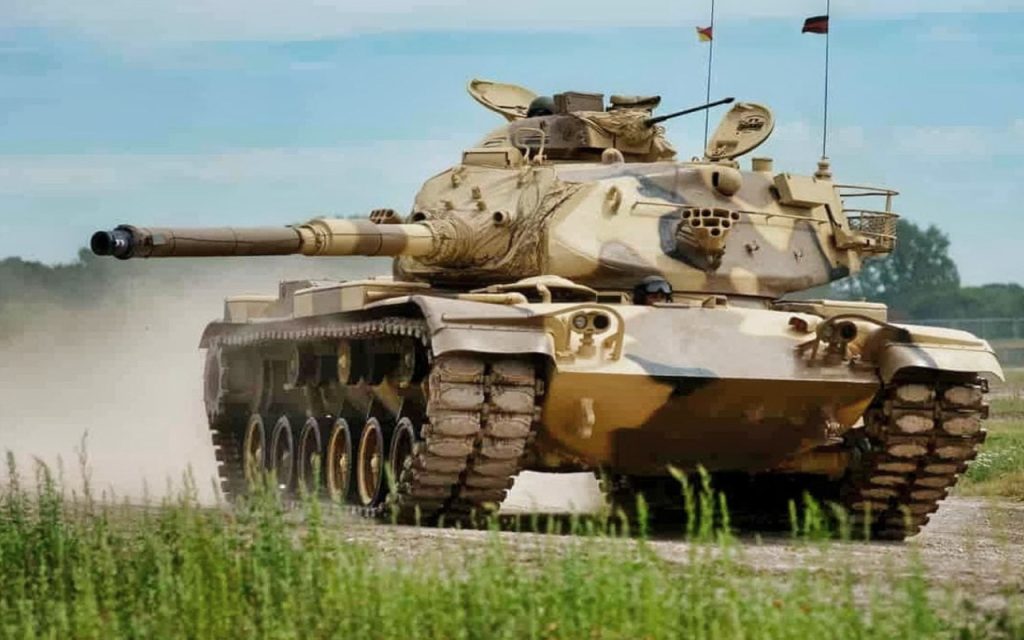 Request Technical Support
Get a response from our engineering team within 24 hours
Contact Us
M60 Defence Spare Parts
All M60 Tank PartsVerified NSN & OEM Spare Parts in Stock
Below is a representative selection of NATO-codified (NSN) and OEM spare parts stocked by AB Defence for this platform. View the full category catalog or click any component for complete cross-reference specifications:
AB DEFENCE / Platform support
Discuss this platform with our team.
Share your platform requirements, sourcing priorities or documentation needs.
For a specific part, use the request form on its product page.
Browse spare parts ↗AB DEFENCE
Platform support enquiry
M60 Series