AB DEFENCE Platform support
M109 Self-Propelled Howitzer Series
Explore platform information, technical systems and spare parts support.
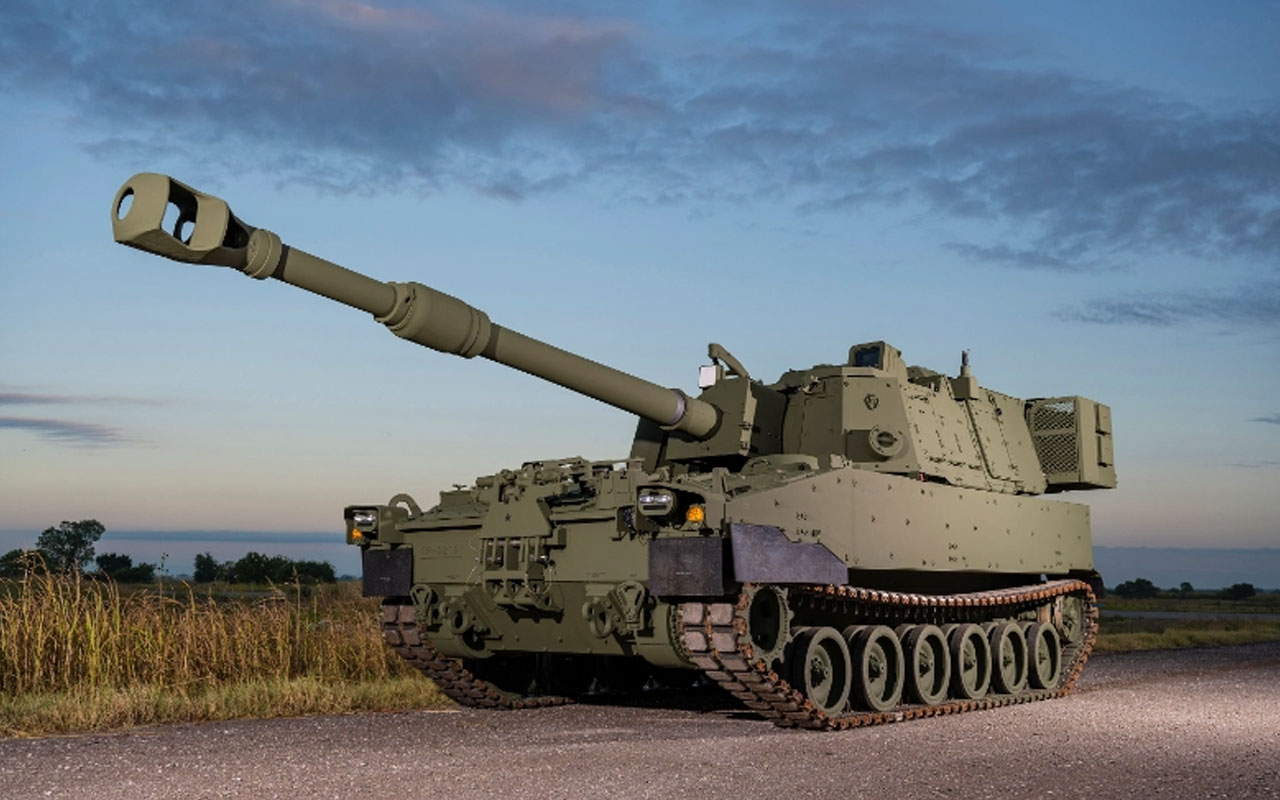
The M109 Self-Propelled Howitzer is a proven 155 mm tracked artillery platform widely used by NATO and allied forces for mobile indirect fire support. With variants such as the M109A5, M109A6 Paladin, and M109A7, the platform remains operationally relevant through continuous modernization, strong battlefield mobility, and a mature global sustainment ecosystem. For defense industry professionals, M109 readiness depends not only on firepower but also on reliable spare parts sourcing, lifecycle support, subsystem maintenance, and configuration-aware supply solutions.
Request a QuoteM109 Self-Propelled Howitzer
The M109 Self-Propelled Howitzer is one of the most widely recognized 155 mm tracked artillery platforms in service worldwide. Originally developed in the United States, the M109 family has served for decades as a core indirect fire support system for armored and mechanized forces. Its long operational history, continuous modernization path, NATO-standard 155 mm ammunition compatibility, and extensive global support ecosystem make it a highly relevant platform for armed forces, maintenance organizations, defense contractors, and military supply chains.
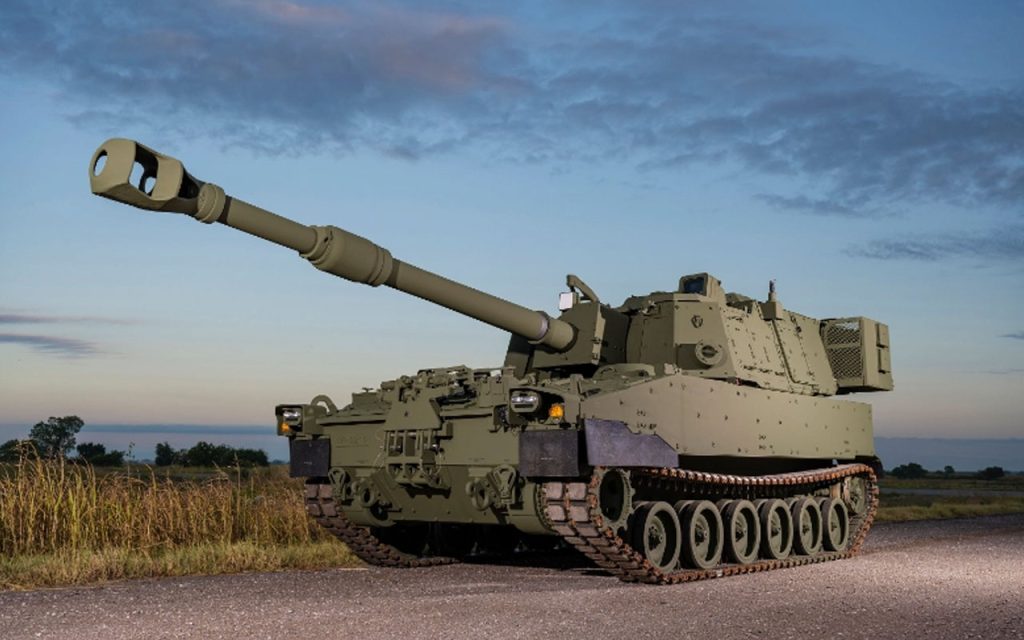
Today, the M109 family includes multiple variants, ranging from early M109 and M109A1 configurations to the widely used M109A5, M109A6 Paladin, and the latest U.S. Army standard, the M109A7 Paladin. BAE Systems describes the M109A7 as the latest howitzer in the M109 family, designed to provide critical indirect fire support to Armored Brigade Combat Teams while improving survivability, reducing operating costs, and sustaining combat capability.
For defense organizations operating or supporting M109 fleets, platform readiness depends not only on firepower but also on reliable spare parts, subsystem sustainment, obsolescence management, depot-level maintenance, and lifecycle support.
The M109 is a tracked, armored, self-propelled 155 mm howitzer designed to deliver indirect fire support while maintaining tactical mobility on the battlefield. Unlike towed artillery systems, the M109 combines firepower, mobility, crew protection, and onboard support systems in a single platform.
Its core operational role is to support maneuver units by delivering suppressive, neutralizing, and destructive fires against enemy formations, artillery positions, logistics nodes, command posts, and other high-value targets. The platform is especially valuable for armored and mechanized formations because it can move with tracked combat units, occupy firing positions, execute fire missions, and relocate rapidly to reduce vulnerability to counter-battery fire.
Operational Role in Modern Artillery Forces
The M109 is not simply a legacy artillery vehicle. It remains relevant because modern artillery operations require a balance of mobility, survivability, fire control integration, ammunition logistics, and maintainability.
In operational use, M109 units are typically integrated into a broader fire support network that may include:
- Fire direction centers
- Forward observers
- Counter-battery radar systems
- Unmanned aerial systems
- Tactical communications networks
- Ammunition resupply vehicles
- Maintenance and recovery assets
The M109A6 Paladin introduced significant improvements in onboard fire control, navigation, communications, and survivability, enabling the system to conduct rapid “shoot-and-scoot” operations. Open-source platform data describes the M109A6 Paladin as being equipped with onboard fire control, position-navigation systems, radios, improved ballistic protection, and diagnostic capabilities.
This ability to fire and reposition quickly remains a critical requirement in environments where counter-battery sensors, loitering munitions, precision fires, and unmanned reconnaissance systems increase the risk to static artillery units.
M109 Variants and Evolution
The M109 family has evolved through several major variants. Each generation introduced improvements in range, reliability, fire control, survivability, mobility, or sustainment.
M109
The original M109 entered service in the 1960s and was equipped with a shorter 155 mm cannon. It established the basic platform architecture: a tracked armored chassis, rotating turret, 155 mm artillery system, and onboard ammunition storage.
M109A1
The M109A1 introduced a longer 155 mm cannon to improve firing range. This marked one of the first major performance upgrades in the M109 family.
M109A2 and M109A3
The M109A2 and M109A3 variants incorporated reliability, availability, maintainability, and ammunition storage improvements. These upgrades helped extend the platform’s operational life and made the system more practical for sustained field use.
M109A5
The M109A5 introduced the 155 mm M284 cannon system, improving artillery performance and providing a basis for later Paladin configurations. The M109A5 remains relevant in several fleets due to its upgrade potential and compatibility with broader M109 sustainment ecosystems.
M109A6 Paladin
The M109A6 Paladin represented a major modernization step. It improved survivability, onboard navigation, digital communications, fire control, ammunition storage, and mission execution speed. The M109A6 is powered by a 440 hp Detroit Diesel 8V71T engine and Allison transmission, with a reported maximum speed of approximately 40 mph and an operational range of approximately 214 miles.
M109A7 Paladin
The M109A7 is the current U.S. Army production standard. It builds on the Paladin concept while introducing major improvements to chassis, powertrain, suspension, steering, electrical systems, and commonality with Bradley Fighting Vehicle components. Army Recognition describes the M109A7 as an upgraded version of the M109A6 with a new chassis, engine, transmission, suspension, and steering system, while retaining the cannon assembly.
M109A7 Paladin: Current Modernization Standard
The M109A7 Paladin is designed to address many of the sustainment and modernization challenges associated with older M109 variants. Rather than focusing only on the weapon system, the M109A7 upgrade emphasizes the total combat vehicle architecture.
Major M109A7 improvement areas include:
- New chassis architecture
- Improved mobility systems
- Enhanced electrical power generation and distribution
- Increased commonality with Bradley Fighting Vehicle components
- Improved survivability
- Reduced logistics burden
- Better long-term maintainability
- Integration with the M992A3 ammunition carrier
BAE Systems identifies the M109A7 as the latest member of the M109 family and states that it is designed to enhance survivability, reduce operational costs, ensure sustained combat capability, and support Armored Brigade Combat Teams.
The M109A7 is closely paired with the M992A3 Carrier Ammunition Tracked, which supports ammunition resupply and helps sustain artillery operations in the field. Recent production contracts include both M109A7 howitzers and M992A3 ammunition carriers, confirming that the platform is treated as a system-of-systems rather than a standalone artillery vehicle.
Armament and Firepower
The M109 family is built around a 155 mm artillery system. Depending on the variant, the platform has used different cannon configurations, including the M126, M185, and M284 155 mm cannon systems.
Modern M109A5, M109A6, and M109A7 configurations are commonly associated with the 155 mm M284 cannon. Open-source technical data for the M109A7 identifies the vehicle as using a 155 mm / 39-caliber cannon and indicates a range of up to approximately 22–24 km with standard projectiles and up to approximately 30 km with rocket-assisted ammunition, depending on source and ammunition type.
From a sustainment and procurement perspective, the armament system creates demand across several critical support categories:
- Cannon components
- Breech and recoil system parts
- Elevation and traverse systems
- Hydraulic and electromechanical subsystems
- Fire control interfaces
- Gun laying and stabilization-related components
- Ammunition handling and stowage systems
- Turret mechanical parts
- Seals, bearings, pins, bushings, fasteners, and wear parts
For M109 operators, artillery effectiveness depends on keeping these systems reliable, calibrated, and mission-ready.
Mobility and Automotive Systems
Mobility is central to the M109’s combat value. As a tracked self-propelled system, the M109 is designed to accompany armored formations across difficult terrain while maintaining the ability to reposition between fire missions.
The M109A6 Paladin uses a 440 hp Detroit Diesel 8V71T engine and an Allison ATD-XTG-411-4 transmission, with high-strength torsion bar suspension and high-capacity shock absorbers.
The M109A7 takes mobility modernization further by introducing new automotive systems and increased commonality with Bradley Fighting Vehicle components. This commonality is important from a logistics perspective because it can reduce the variety of unique parts required at unit and depot level.
Key mobility-related support areas include:
- Engine components
- Transmission and driveline parts
- Final drives
- Suspension arms and torsion bars
- Road wheels and return rollers
- Idlers and sprockets
- Track shoes and track hardware
- Steering system components
- Cooling system parts
- Fuel system components
- Filters and fluid management parts
For defense sustainment programs, these components are often among the most important categories for readiness, especially in fleets operating under high tempo, harsh terrain, or long service-life conditions.
Protection and Survivability
The M109 is an artillery platform, not a main battle tank. Its armor protection is intended primarily to protect the crew against small arms fire, shell fragments, and battlefield debris. However, survivability in modern artillery operations depends on far more than armor alone.
M109 survivability is supported by:
- Rapid displacement after firing
- Armored crew compartment
- Digital fire control and navigation
- Reduced emplacement time
- Dispersed firing operations
- Integrated communications
- Reliable mobility systems
- Sustainment of critical mission systems
The M109A6 Paladin significantly improved survivability through onboard fire control, navigation, communications, improved ballistic protection, and diagnostic systems.
For operators and maintenance organizations, survivability also depends on the availability of replacement components and the ability to quickly restore vehicles to operational status after mechanical failure, combat damage, or intensive training use.
M992A3 Ammunition Carrier and System-Level Support
Modern M109 operations rely heavily on ammunition resupply. The M992 family of ammunition carrier vehicles is designed to support M109 artillery units by transporting and handling 155 mm ammunition in the field.
The latest U.S. Army M109A7 production packages include the M992A3 Carrier Ammunition Tracked, reflecting the importance of ammunition logistics in artillery readiness. BAE Systems has announced contracts covering both M109A7 Paladin Self-Propelled Howitzers and M992A3 Ammunition Carriers for the U.S. Army.
For fleet sustainment, this means M109 support should not be limited to the howitzer alone. A complete support strategy should also consider ammunition carrier subsystems, shared chassis components, electrical systems, tracks, suspension, and field maintenance requirements.
 Request Technical Support
Get a response from our engineering team within 24 hours
Contact Us
M109 Defence Spare Parts
All M109 Tank PartsVerified NSN & OEM Spare Parts in Stock
Below is a representative selection of NATO-codified (NSN) and OEM spare parts stocked by AB Defence for this platform. View the full category catalog or click any component for complete cross-reference specifications:
AB DEFENCE / Platform support
Discuss this platform with our team.
Share your platform requirements, sourcing priorities or documentation needs.
For a specific part, use the request form on its product page.
Browse spare parts ↗AB DEFENCE
Platform support enquiry
M109 Self-Propelled Howitzer Series