AB DEFENCE Platform support
PARS IV 6×6
Explore platform information, technical systems and spare parts support.
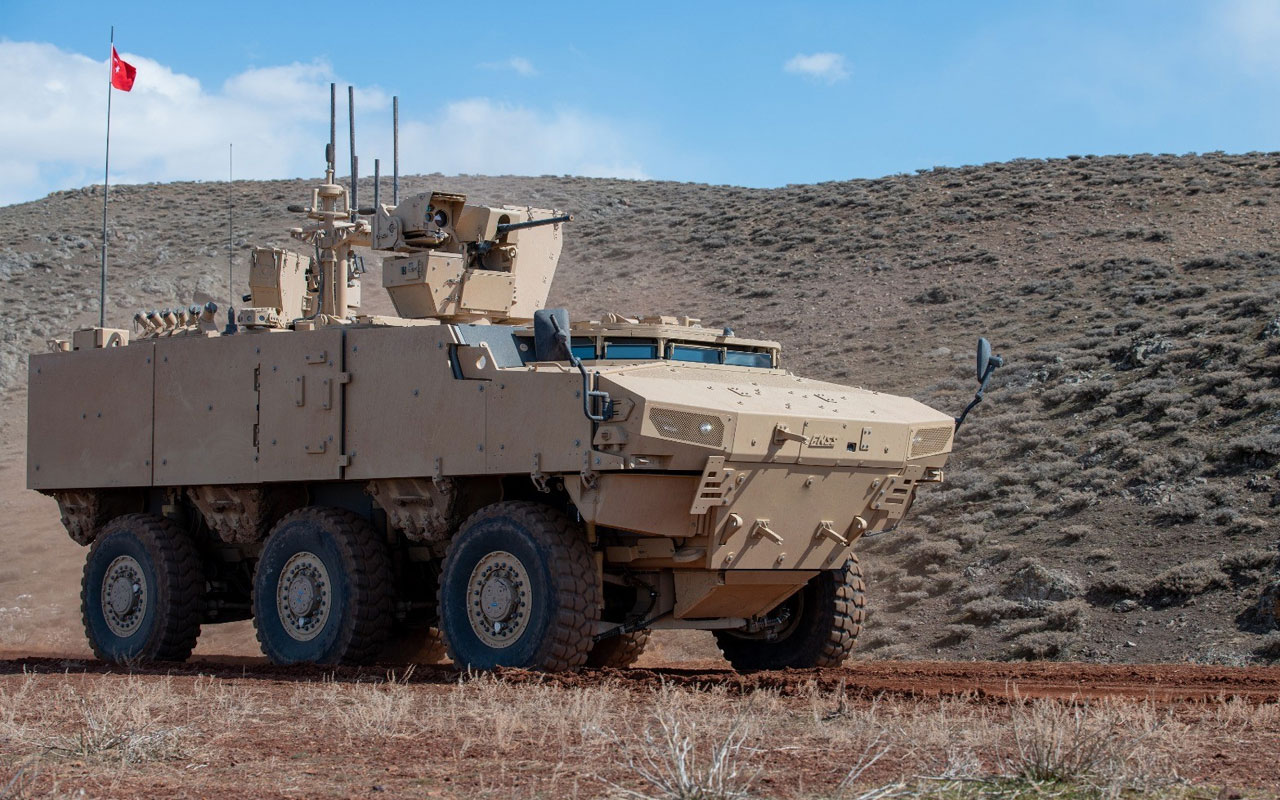
The FNSS PARS III 6x6 is a high-performance Wheeled Armoured Vehicle (WAV) engineered for superior tactical mobility and advanced ballistic and mine protection in modern combat environments. This sophisticated platform utilizes a state-of-the-art independent hydropneumatic suspension system and a high-torque power pack to ensure mission success across the most challenging off-road terrains. We provide a comprehensive range of FNSS PARS III 6x6 spare parts, specializing in drivetrain components, electronic architecture, and mission-critical engine systems to guarantee maximum fleet uptime. Through our precision-engineered lifecycle sustainment solutions and genuine OEM parts supply, we ensure the operational readiness of the PARS III 6x6 for strategic defense operations worldwide.
Request a QuoteThe FNSS PARS IV 6×6 SOV: Where MRAP Protection Meets Tactical Wheeled Vehicle Mobility
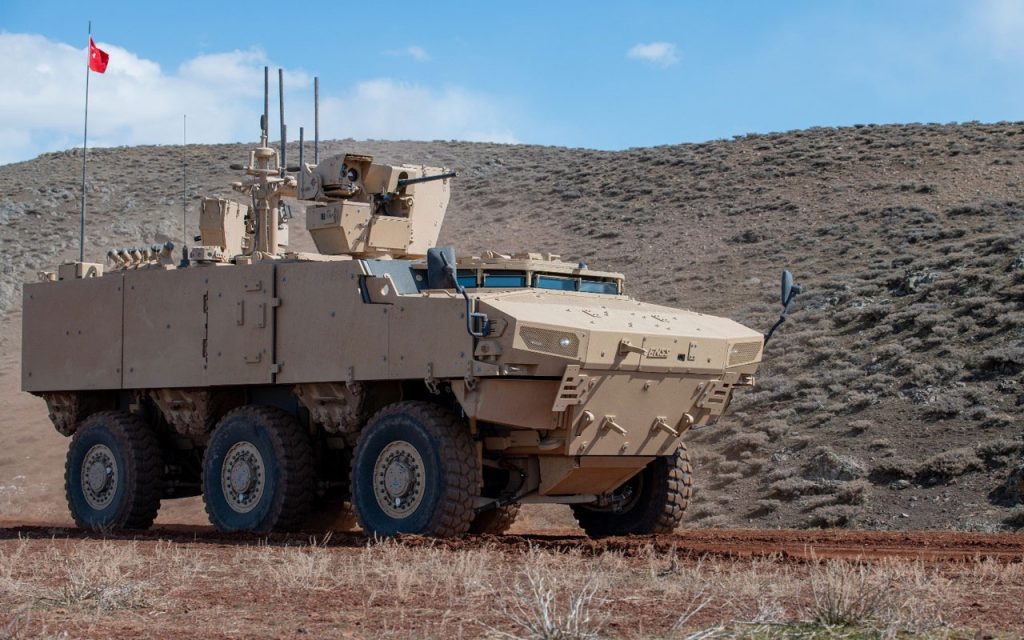
The PARS IV 6×6 Special Operations Vehicle occupies a category that the defence industry has sought to define precisely since the operational experience of asymmetric conflicts made clear that conventional wheeled armoured vehicles and purpose-built MRAPs address different but sometimes overlapping requirements — and that the most operationally demanding missions require a platform that does both simultaneously. FNSS's response to this requirement is the PARS IV 6×6 SOV: a vehicle that the Turkish Defence Industry Presidency describes as a world first in its class due to the combination of its protection level with the tactical mobility characteristics of a wheeled armoured combat vehicle.
The PARS IV 6×6 SOV was developed under the 6×6 Mine Protected Vehicle (MKKA — Mayına Karşı Korumalı Araç) Procurement Project signed between FNSS and Turkey's Presidency of Defence Industries (SSB). Design work commenced in 2019. The vehicle was publicly unveiled at IDEF 2021 in Ankara in August of that year, and the first three vehicles of a 12-vehicle initial contract were delivered to the Turkish Armed Forces at a ceremony held at FNSS's Gölbaşı, Ankara facility on 22 November 2022 — attended by SSB President Prof. Dr. İsmail Demir, who characterised the vehicle as carrying the highest mine, IED, and ballistic protection levels of any vehicle in its class to date. The full 12-vehicle contract was completed with the delivery of the final three vehicles at a subsequent ceremony, bringing the initial fleet to its contracted total.
The PARS IV 6×6 SOV is not a general logistics or infantry transport vehicle. It is explicitly designed for special operations missions in environments where the timing, direction, and intensity of threats cannot be reliably estimated — the defining conditions of asymmetric and hybrid warfare operations. The vehicle must protect its crew and power pack against mines, anti-tank IEDs, and ballistic threats at levels comparable to purpose-built MRAP platforms, while simultaneously maintaining the tactical mobility — road speed, cross-country capability, urban manoeuvrability — that allows special operations units to reach their objectives, operate in them, and extract. A purpose-built MRAP typically sacrifices mobility for protection. A wheeled armoured combat vehicle typically trades some protection depth for mobility. The PARS IV 6×6 SOV is designed to refuse this trade-off.
AB Defence supports the PARS IV 6×6 SOV as a current-generation, operationally active tactical wheeled vehicle platform in Turkish Armed Forces service. Our parts supply capability for this vehicle reflects the platform-level knowledge we have developed across the entire PARS family — from the 4×4 through the PARS III 6×6 and PARS III 8×8 to the PARS IV 8×8 — applied to the PARS IV 6×6's specific architecture, protection system, and mission equipment configuration.
Platform Architecture
For the defence professional evaluating this platform — or managing parts requirements for a fleet of them — three architectural decisions define the PARS IV 6×6 SOV's character and directly determine its maintenance and parts profile.
MRAP-Level Protection in a Wheeled Tactical Vehicle Body
The PARS IV 6×6 SOV achieves its headline protection level through a combination of mechanisms that operate simultaneously: the hull geometry is shaped to deflect blast energy away from the crew compartment; the underbelly structure and base plates are engineered to absorb and redirect mine detonation impulse; the modular ballistic steel armour system provides scalable protection against small arms, heavy machine gun rounds, and artillery fragments; the RPG net adds a passive stand-off layer against hollow-charge warheads; and mine-resistant seats with five-point harnesses complete the protection chain by limiting the acceleration transmitted to crew spines during a detonation event.
The integrated IED protection kit extends the vehicle's survivability against improvised threats, and the power pack itself is explicitly included within the protection boundary — a detail that matters operationally because an immobilised vehicle in a threat environment is a casualty waiting to happen. The combination of these layered protection mechanisms is what SSB President Ismail Demir characterised as a world first in the 6×6 class at the November 2022 delivery ceremony.
Front and Rear Axle Steering: A Turning Radius Narrower Than a 4×4
The PARS IV 6×6 SOV steers on both its front and rear axles, achieving a turning radius described by FNSS as narrower than a 4×4 vehicle. For a 26,000 kg, 7-metre long tactical wheeled vehicle, this is not a minor convenience — it is a capability that directly expands the operational envelope into the low-infrastructure urban terrain that defines contemporary special operations environments. Alleyways, compound entries, vehicle checkpoints, and congested civilian infrastructure that would require a conventionally-steered 6×6 to reverse and reposition can be navigated in a single movement by the PARS IV 6×6 SOV. This manoeuvrability, combined with the vehicle's protection level, is the primary tactical argument for the platform in its intended mission role.
The rear axle steering system is electronically managed, with progressive reduction of rear axle steering angle at higher road speeds to maintain directional stability. This electronic management architecture — with its steering control unit, rear axle actuators, and feedback sensors — requires correct-specification parts maintenance that AB Defence provides with full system-level parts identification.
Dual FNSS SANCAK RCWS — 360-Degree Simultaneous Engagement Capability
The standard weapon fit of the PARS IV 6×6 SOV comprises two FNSS SANCAK Remote Controlled Weapon Stations — one mounted at the front of the vehicle and one at the rear — giving the vehicle simultaneous engagement capability in any direction without requiring crew exposure. Each SANCAK station is compatible with the 7.62mm machine gun, the 12.7mm (.50 Cal) heavy machine gun, and the 40mm automatic grenade launcher, and weapon type can be changed according to mission requirements. Stabilised engagement is confirmed against elevated targets including positions on buildings and high terrain, and the vehicle's 360-degree electro-optic situational awareness infrastructure means that all crew members can monitor the threat environment simultaneously from within the armoured hull with hatches closed.
The dual RCWS configuration reflects the threat assessment underlying this vehicle's design: in special operations environments, threats appear from multiple simultaneous directions and from elevation. The weapon station's stabilisation system, Aselsan-developed optronic components, and its power and data interfaces are mission-critical systems for which AB Defence maintains parts coverage.
PARS IV 6×6 SOV Technical Specifications
| Parameter | Specification |
|---|---|
| Manufacturer | FNSS Defence Systems, Ankara, Turkey |
| Programme | 6×6 Mine Protected Vehicle (MKKA) Procurement Project — SSB / FNSS |
| Programme Start | 2019 |
| First Public Display | IDEF 2021, Ankara (August 2021) |
| First Delivery | 22 November 2022, FNSS Gölbaşı facility, Ankara |
| Initial Contract Quantity | 12 vehicles |
| GVW | 26,000 kg |
| Length | Approximately 7 metres |
| Width | 3.0 metres |
| Height | 2.45 metres |
| Maximum Road Speed | 100 km/h |
| Operational Range | 700 km |
| Grade | 60% |
| Side Slope | 30% |
| Vertical Obstacle | 0.6 metres |
| Trench Crossing | 1.5 metres |
| Fording Depth | 1.5 metres |
| Transmission | Fully automatic, 7 forward + 2 reverse gears |
| Axle Configuration | 6×6, full all-wheel drive |
| Steering | Front and rear axle steering; turning radius narrower than a 4×4 vehicle |
| Suspension | Fully independent, ride-height adjustable, hydro-pneumatic |
| Braking | ABS |
| Tyre System | CTIS (Central Tyre Inflation System); run-flat system |
| Power Pack | High-performance diesel; protected against mine and ballistic threats |
| Hull | Ballistic steel |
| Armour System | Modular; highest mine, IED and ballistic protection in class |
| IED Protection | Integrated IED protection kit; modular armour infrastructure |
| RPG Protection | RPG net (passive stand-off layer) |
| Mine Protection | Hull geometry, underbelly structure, base plates, mine-resistant seats |
| Crew Seating | Mine-resistant; five-point harnesses all positions |
| Weapon Stations | 2× FNSS SANCAK RCWS (front and rear) |
| RCWS Compatibility | 7.62mm MG / 12.7mm (.50 Cal) HMG / 40mm AGL |
| Situational Awareness | 360° electro-optic; front and rear cameras (thermal + optical); 180°+ direct driver view |
| Displays | Flat-panel displays, driver and commander |
| Electronics | Open architecture; high-capacity image, voice and data communications |
| Durability Testing | 25,000 km in difficult conditions (FNSS CEO confirmed) |
| Qualification Tests | Mine, IED, ballistic, manoeuvring, environmental, EMC |
Mission Profile: The Tactical and Operational Context
The PARS IV 6×6 SOV was designed for a specific and well-defined mission context: special operations units conducting missions in asymmetric threat environments where conventional wheeled armoured vehicles cannot provide adequate protection and purpose-built MRAPs cannot provide adequate mobility. Understanding this context is directly relevant to how parts availability must be managed — the vehicles in this programme are not garrison transport; they are operational platforms exposed to the full spectrum of threats the vehicle was designed to resist.
Special Operations in Urban and Peri-Urban Terrain
The defining characteristic of contemporary special operations in urban and peri-urban environments is the concurrent presence of multiple threat types — IED, mine, direct fire from multiple simultaneous directions, RPG, and threats from elevated positions — in a terrain that constrains vehicle movement and limits approach and extraction routes. The PARS IV 6×6 SOV was designed explicitly for this environment. Its front-and-rear axle steering enabling a turning radius narrower than a 4×4, its 360-degree electro-optic situational awareness allowing the crew to operate entirely under armour with hatches closed, its dual SANCAK RCWS providing simultaneous engagement in any direction including elevation, and its MRAP-comparable mine and IED protection are all direct responses to the urban special operations threat environment.
Counter-IED and Mine-Threat Environments
The vehicle's mine and IED protection architecture — hull geometry, underbelly plates, modular armour system, and integrated IED protection kit — represents the highest protection levels achieved in the 6×6 tactical wheeled vehicle class at the time of its introduction, as confirmed by the SSB. Operating in these environments means that the mine-resistant seats' energy-absorbing mechanisms, the underbelly protection plates, and the IED kit components must be maintained to specification and replaced following any blast event regardless of apparent condition. AB Defence treats these components as safety-critical items requiring certification documentation and post-event mandatory replacement guidance.
Internal Security Operations
The platform's suitability for internal security operations — explicitly referenced in FNSS documentation — extends its mission profile to high-threat security and law enforcement support tasks. In this role, the combination of MRAP protection levels with tactical wheeled vehicle mobility enables operations in environments where ambush and IED threats coexist with civilian infrastructure and the requirement for proportionate and controlled force application. The dual RCWS weapon compatibility — from 7.62mm to 40mm AGL — provides the appropriate force graduation for these missions.
Cross-Country and All-Terrain Operations
The ride-height adjustable independent hydro-pneumatic suspension and 6×6 all-wheel drive system ensure that the PARS IV 6×6 SOV's mobility is not limited to the road network. A 60% grade capability, 30% side slope, 1.5-metre fording depth, and 1.5-metre trench crossing capability allow the vehicle to follow special operations units into the terrain features — riverbeds, rough tracks, agricultural terrain — that characterise the approaches to many special operations objectives. These cross-country operations accelerate wear on suspension components, drivetrain seals, and CTIS components at rates that must be factored into the maintenance planning of any fleet operating the vehicle in its intended role.
PARS IV 6×6 SOV Spare Parts Coverage
Power Pack & Transmission Components
The power pack is positioned between axles one and two on the left side of the hull — the standard PARS family mid-ship layout that distributes weight evenly across all three axles and preserves the right-side aisle connecting driver-commander cockpit to rear crew compartment. On the PARS IV 6×6 SOV, the power pack is explicitly included within the vehicle's protection boundary, with the hull and armour system designed to protect it against mine detonation and ballistic threats alongside the crew — a design decision that reflects the operational reality that a power pack failure in a threat environment is as tactically critical as a crew casualty.
AB Defence supplies: diesel engine assemblies and sub-assemblies for PARS IV 6×6 installation, engine cooling system components including water pump, thermostat, radiator, intercooler, all coolant hoses and associated hardware, engine air filtration system components including primary and safety filter elements, housing assemblies and intake ducting, engine lubrication system components including oil pump, oil cooler, all filter elements and gasket sets, fuel system components including primary and secondary fuel filters, fuel lift pump assembly and all fuel system seals, complete engine overhaul gasket and seal sets for all maintenance levels, fully automatic transmission assemblies (7 forward + 2 reverse) and complete service component sets, transmission filter and seal kits, transmission control module and interface components, all engine bay wiring harness assemblies and connector sets.
6×6 All-Wheel Drive Drivetrain
The PARS IV 6×6 SOV's full all-wheel drive system with equal axle load distribution across all three axles sustains the vehicle's cross-country mobility in the terrain conditions its mission profile demands. Equal axle loading — a direct result of the mid-ship power pack placement — moderates differential wear across the drivetrain, but the combination of 26,000 kg GVW and regular cross-country operation demands active drivetrain component condition management.
AB Defence supplies: front axle differential assembly, centre axle differential assembly, rear axle differential assembly, axle lock actuator assemblies and control components for all three axles, driveshaft assemblies (front-to-centre and centre-to-rear sections), propshaft universal joint cross-kits for all positions, centre bearing support assemblies, wheel hub assemblies and bearing kits for all six wheel positions, drive flange assemblies and associated fasteners, axle shaft assemblies and inner and outer oil seals, axle lock engagement sensors, differential oil seals and gasket sets, axle breather valves and filler/drain plugs.
Front and Rear Axle Steering System Components
The front-and-rear axle steering system — delivering a turning radius narrower than a 4×4 vehicle — is electronically managed with progressive rear axle angle reduction at speed. The rear axle steering control unit and its associated actuators, position sensors, and feedback mechanisms are safety-critical components: a failure that prevents rear axle angle reduction at road speed creates a vehicle handling condition that makes high-speed operation unsafe.
AB Defence supplies: steering electronic control unit (SCU) for front and rear axle management, front axle steering gear assembly, rear axle steering actuator assemblies, steering position and feedback sensors for both steering axles, hydraulic power steering pump, steering hydraulic hose sets (high-pressure and return), track rod assemblies and track rod ends (front and rear axles), steering knuckle assemblies and kingpin sets, steering column assembly, steer-by-wire wiring harness and connector repair kits.
Ride-Height Adjustable Hydro-Pneumatic Suspension
The fully independent ride-height adjustable hydro-pneumatic suspension is the primary cross-country mobility system and an active element of the vehicle's mine protection architecture — raising ground clearance increases standoff from buried devices, directly reducing blast impulse transmitted to the hull. The hydro-pneumatic struts, ride height control valves, and associated hydraulic circuit components are purpose-designed military systems with no commercial vehicle analogue.
AB Defence supplies: hydro-pneumatic strut assemblies for all six wheel positions, strut internal seal and complete rebuild kits, ride height control valve assemblies, hydraulic accumulator assemblies and nitrogen gas charges, suspension circuit hydraulic reservoir, suspension hydraulic pump assembly, suspension hydraulic hoses and fittings, upper and lower suspension arm assemblies for all six corners, suspension arm bushing sets, ball joint assemblies (upper and lower, all corners), anti-roll bar assemblies and link rod sets, all suspension fasteners and torque-critical hardware.
Braking System — ABS
AB Defence supplies: brake disc assemblies for all six wheel positions, brake caliper assemblies and caliper rebuild kits for all positions, brake pad sets by axle specification, ABS wheel speed sensors for all six wheels, ABS exciter rings and tone wheels, ABS electronic control unit, brake master cylinder and reservoir assembly, brake booster assembly, all hydraulic brake lines and fittings, brake system bleed fittings and hardware.
Central Tyre Inflation System (CTIS) & Run-Flat System
The CTIS allows real-time tyre pressure adjustment while moving — optimising traction across the transition from road to cross-country terrain that characterises special operations routes to objectives. The run-flat system ensures continued mobility following tyre damage in threat environments.
AB Defence supplies: CTIS rotary union assemblies for all six wheel positions, CTIS control valve assemblies, CTIS pressure sensors and monitoring components, CTIS electronic control unit, CTIS air supply lines and fittings, valve stem assemblies, run-flat insert assemblies for all six tyre positions, wheel rim assemblies and fastener hardware.
Protection System Components — Mine, IED & Ballistic
The PARS IV 6×6 SOV's layered protection system requires maintenance and post-event component management that differs fundamentally from the routine wear parts of the automotive platform. The protection system is not static — it is composed of components with defined service lives, mandatory post-event replacement requirements, and strict certification standards.
AB Defence supplies: underbelly protection base plate assemblies, modular armour panel assemblies (hull sides, floor, roof — by position), integrated IED protection kit components and replacement elements, RPG net assemblies and mounting hardware, ballistic glass panels for driver's armoured windscreen and side vision ports, glazing mounting hardware and seal sets, armour mounting brackets and fasteners.
Mine-Resistant Seats & Five-Point Harness Systems
Mine-resistant seats are the final element in the vehicle's blast protection chain. Their energy-absorbing mechanisms are designed to function once under design-load conditions, after which the mechanism must be replaced — whether or not visible damage is present. This mandatory post-event replacement requirement applies to any blast event that subjects the seat to its design load, regardless of perceived severity.
AB Defence supplies: mine-resistant seat assemblies for all crew positions, seat energy-absorber mechanisms and manufacturer-specified rebuild kits, five-point harness assemblies for all positions, harness buckle and adjustment components, seat mounting frame assemblies and attachment hardware, anti-blast floor plate assemblies and fasteners.
Dual FNSS SANCAK RCWS — Weapon Station Components
The two FNSS SANCAK Remote Controlled Weapon Stations are the primary offensive systems of the PARS IV 6×6 SOV and must be maintained to operational standard for the vehicle to perform its designated mission. The SANCAK's stabilisation system, optronic interface, power management, and weapon mounting hardware all require correct-specification maintenance components.
AB Defence supplies: SANCAK RCWS elevation and traverse drive motor assemblies, RCWS stabilisation gyroscope and sensor units, RCWS power supply and distribution modules, RCWS weapon mount and locking mechanism assemblies, universal weapon mount hardware and retention systems, RCWS optical and camera housing assemblies, RCWS electronic control unit components, RCWS wiring harness sets and connector repair kits, RCWS environmental sealing kits.
Electronic Architecture & Situational Awareness Systems
The PARS IV 6×6 SOV's new-generation electronic infrastructure provides 360-degree situational awareness to all crew members and integrates high-capacity image, voice, and data communications. The open architecture supports the integration of mission equipment — communications systems, targeting data, route planning systems — through standardised interfaces.
AB Defence supplies: vehicle main control module assemblies, engine control module (ECM), transmission control module (7-speed automatic), ABS control module, CTIS control module, suspension ride height control module, steering control unit (front and rear axle management), flat-panel display units for driver and commander positions, thermal camera assemblies (front and rear), optical driving camera assemblies (front and rear), driver's armoured glass periscope units, driver and commander roof hatch assemblies and seal kits, vehicle electrical wiring harness assemblies (engine bay, cab, chassis), solid-state power distribution module assemblies, battery assemblies and isolator switches, connector and terminal repair kits.
Rear Access & Crew Compartment Components
AB Defence supplies: rear access door or ramp actuator assemblies (per vehicle configuration), ramp hinge assemblies and pivot pins, ramp and door seal profiles and weatherstrip sets, locking mechanism assemblies, emergency manual release components, interior trim panels and crew compartment fittings, interior lighting assemblies.
Filters, Seals & Service Consumables
AB Defence maintains continuous stock of all consumable service items: engine oil filter elements, primary and secondary fuel filter elements, primary and safety air filter elements, automatic transmission oil filter elements, suspension hydraulic system filter elements, complete engine overhaul gasket sets, shaft oil seals by assembly and position, O-ring and seal kits organised by system, CTIS seal kits and valve service kits, hydro-pneumatic strut seal kits.
The PARS IV 6×6 SOV in the PARS Family Parts Context
The PARS IV 6×6 SOV shares its design generation — the PARS IV generation — with the PARS IV 8×8 NG-WAV, and its 6×6 configuration lineage with the PARS III 6×6. For operators managing fleets that include multiple PARS platform types, this generational and configuration overlap creates the opportunity for rationalised parts management across the fleet.
The key distinctions that AB Defence applies in managing parts for the PARS IV 6×6 SOV relative to other PARS platforms are as follows. The PARS IV 6×6 SOV's GVW of 26,000 kg is heavier than the PARS III 6×6's 25,000 kg, and drivetrain, suspension, and brake components are dimensioned and rated to reflect this difference — cross-fleet substitution without specification confirmation is not appropriate. The PARS IV 6×6's front-and-rear axle steering system and its electronic control architecture are generation-specific and not interchangeable with PARS III 6×6 steering components. The transmission specification — 7 forward + 2 reverse fully automatic — differs from PARS III configurations and requires transmission-specific parts identification. The dual SANCAK RCWS weapon station configuration is specific to the SOV variant and has no direct equivalent in the PARS III 6×6 production variants delivered to Oman and Kosovo.
AB Defence's technical team maintains these distinctions rigorously, resolving every parts enquiry to the correct generation and configuration before supply.
FNSS PARS IV 6×6 SOV Spare Parts & Maintenance Solutions
Current Production, SSB Programme Pedigree
The PARS IV 6×6 SOV is a current-generation, SSB-contracted platform in active Turkish Armed Forces service. Its 12-vehicle initial fleet represents the first 6×6 wheeled armoured combat vehicle of this capability class in the Turkish military inventory — confirmed by FNSS CEO Nail Kurt at the delivery ceremony. Parts supply for this vehicle requires access to the Turkish defence industry supply chain that supported its development and production. AB Defence's procurement relationships within the Turkish defence industry provide this access.
Protection System Parts — A Non-Negotiable Standard
The PARS IV 6×6 SOV is, at its core, a protection system that happens to be mobile. Every component of its layered protection architecture — armour panels, underbelly plates, RPG net, mine-resistant seats, IED kit elements, ballistic glazing — must be sourced to the correct specification with full certification and traceability. AB Defence applies this standard to every protection component supplied, ensuring that no vehicle returns to service with unverified protection system components.
SANCAK RCWS System Support
The dual FNSS SANCAK RCWS is the vehicle's primary mission-enabling system. A vehicle with a non-operational SANCAK station is a protected transport, not a special operations vehicle with organic fire support capability. AB Defence maintains parts coverage for the SANCAK system's mechanical, electronic, and optical components, recognising that weapon station serviceability is as operationally critical as automotive serviceability on this platform.
PARS Family Knowledge, Generation IV Applied
AB Defence's procurement depth spans the entire PARS family. The PARS IV 6×6 SOV benefits from this accumulated platform knowledge while being treated with the generation-specific discipline its distinct architecture requires. We do not substitute PARS III components for PARS IV applications, and we do not assume dimensional interchangeability between the 6×6 SOV and the 8×8 NG-WAV. Every enquiry is resolved against vehicle-specific documentation.
Post-Blast Component Management
Operating in mine and IED threat environments means that post-blast component assessment and mandatory replacement is a routine maintenance event for PARS IV 6×6 SOV fleets. AB Defence understands the mandatory post-event replacement requirements applicable to mine-resistant seats, energy-absorber mechanisms, and protection system components, and can supply these items with the documentation required to certify the vehicle's return to operational protection standard.
Frequently Asked Questions FNSS PARS IV 6×6 SOV Spare Parts
Under which programme was the PARS IV 6×6 SOV developed? The vehicle was developed under the 6×6 Mine Protected Vehicle (MKKA — Mayına Karşı Korumalı Araç) Procurement Project, signed between FNSS and Turkey's Presidency of Defence Industries (SSB). The project commenced in 2019. The vehicle was unveiled at IDEF 2021 and entered Turkish Armed Forces service with the first delivery ceremony on 22 November 2022.
How many PARS IV 6×6 SOV vehicles were delivered under the initial contract? Twelve vehicles were delivered under the initial SSB contract, with the first three delivered at the November 2022 ceremony and the remaining vehicles completed in subsequent deliveries.
What is the GVW of the PARS IV 6×6 SOV? The confirmed GVW is 26,000 kg.
What is the weapon station configuration? Two FNSS SANCAK Remote Controlled Weapon Stations — one at the front and one at the rear of the vehicle — each compatible with 7.62mm machine gun, 12.7mm (.50 Cal) heavy machine gun, and 40mm automatic grenade launcher. Weapon type is interchangeable per mission requirements.
Is the PARS IV 6×6 SOV amphibious? The vehicle has a confirmed fording depth of 1.5 metres but is not documented as having full amphibious swimming capability in its SOV configuration. AB Defence does not claim amphibious system parts coverage for this variant.
Are PARS III 6×6 parts interchangeable with PARS IV 6×6 SOV parts? Not assumed. While the platform lineage is shared, the GVW difference (25,000 kg PARS III vs 26,000 kg PARS IV 6×6 SOV), transmission specification (7F+2R vs PARS III specification), and generation-specific electronic architecture mean that cross-generation substitution requires specific technical confirmation. AB Defence confirms specification from vehicle documentation before supply.
 Request Technical Support
Get a response from our engineering team within 24 hours
Contact Us
AB DEFENCE / Platform support
Discuss this platform with our team.
Share your platform requirements, sourcing priorities or documentation needs.
For a specific part, use the request form on its product page.
Browse spare parts ↗AB DEFENCE
Platform support enquiry
PARS IV 6×6