November 6, 2026
Military Vehicle Transmission Failures: Warning Signs, Maintenance and Essential Spare Parts
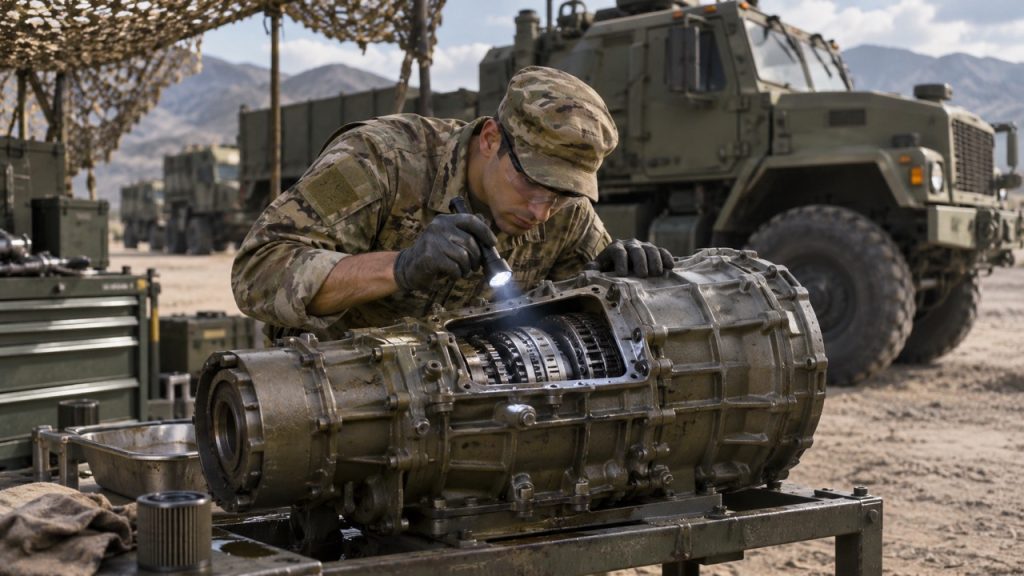
Why Transmission Reliability Matters for Military Vehicle Readiness
A military vehicle that cannot put engine power to the ground is not mobile, however sound the rest of the platform may be. The transmission sits between the engine and the final drive, so a fault there can take a vehicle out of service even when the engine, brakes and suspension are in good order. For maintenance planners, transmission condition is a direct readiness issue. For procurement teams, the right replacement part, identified correctly the first time, can decide whether a vehicle returns to service within days or waits for weeks.
Military transmissions work under conditions that differ widely between platforms and missions, from heavy loads and soft ground to temperature extremes, dust and field-level maintenance. This article does not quote operating limits, because those belong in the technical manual for each vehicle. It explains how transmission failures typically develop, which warning signs justify early inspection, what published documentation supports for maintenance and how to approach spare parts identification and procurement.
Understanding Military Vehicle Transmission Systems
A transmission transfers engine torque to the driveline, provides the gear ratios a vehicle needs, and allows the drive to be disconnected. Three technologies are relevant to military fleets.
Manual transmissions rely on a driver operated clutch and gear selection, so wear concentrates in the clutch, gears, bearings and seals. Automatic transmissions use a torque converter, hydraulically applied clutch packs and an oil pump, so the fluid does more than lubricate: it also cools the unit and carries the hydraulic force that applies the clutches. Electronically controlled automatics add sensors, solenoids and a control unit that decides when to shift. Allison, for example, describes its 3000 and 4000 Series transmissions as fully electronically controlled, with diagnostic codes that can be read through the shift selector.
Allison states that its products operate in nearly all U.S. Department of Defense medium and heavy tactical trucks, and the U.S. Army’s Weapon Systems handbook lists an Allison automatic transmission for the Family of Medium Tactical Vehicles. Even within one vehicle family, configurations differ: the HMMWV technical manuals cover both the 3L80 and the 4L80-E automatic transmissions, with separate fluid and service details for each. Maintenance requirements follow the exact transmission fitted, not the vehicle category.
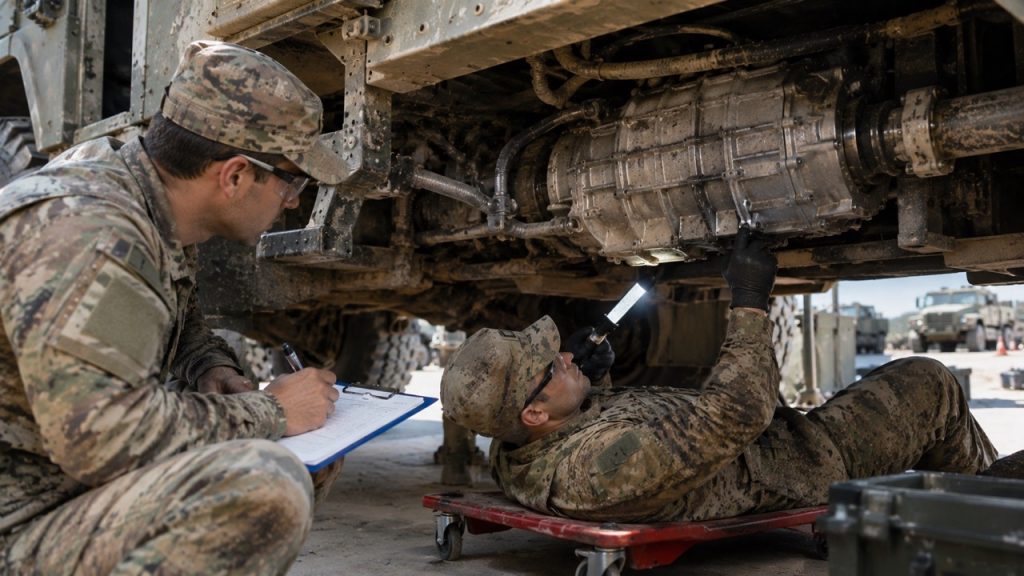
Common Military Vehicle Transmission Failures
Transmission failures rarely have a single, isolated cause. A symptom points toward a system and a set of possibilities; it is not proof that a particular component has failed.
Transmission Overheating
Automatic transmission fluid lubricates and cools moving parts and also does hydraulic work, so anything that disturbs its quantity, condition or circulation raises heat. Allison’s operator documentation warns that a fluid level that is too low or too high can cause overheating and irregular shifting. The Army troubleshooting procedure for the M939-series trucks (TM 9-2320-272-24-1) directs the technician first to the fluid level and then to a clogged or restricted oil cooler when the temperature gauge indicates overheating.
Abnormal Shifting, Slipping and Loss of Drive
In both the HMMWV and M939-series procedures, fluid level is the first check for rough or delayed shifting. Allison explains that too little fluid starves the converter and clutches, while too much can aerate it. A restricted filter can limit what the pump draws, so clutch pistons may not apply fully and will slip, producing heat and premature wear. Engine coolant in the fluid can dissolve the bonding agent that holds friction material to the clutch discs.
Loss of drive must be separated from faults downstream. The HMMWV reference information notes that if the speedometer works but the vehicle does not move, the transmission may be sound and the fault may lie in the final drive, most likely the transfer case output shafts.
Fluid Leakage and Contamination
Leaks commonly develop at seals and gaskets. The TM 9-2320-302-20 troubleshooting table for 6×4 truck tractors lists a faulty or missing output flange seal, front seal leaks and converter leaks, and refers several to direct support maintenance.
Allison’s service technology manager identifies external dirt, spent friction material and engine coolant as the common contaminants. Dirt often enters during fluid checks or filling and particle damage typically appears as scoring on sealing surfaces and bearing races. A milky appearance justifies investigation, but it can indicate coolant ingress or aeration, so the cause must be established rather than assumed.
Internal Wear: Bearings, Seals and Clutch Components
Wear is often the end result of another problem. When lubrication is inadequate, Allison describes metal to metal contact with rising heat. The HMMWV maintenance instructions call for inspection of the drain plug for metal particles, a practical way to detect wear debris early. Debris does not identify the worn component, and any decision to overhaul the unit belongs to the maintenance level and procedure specified for it.
Control, Electrical and Torque Converter Problems
Where shifting is commanded electronically, faults in sensors, wiring connections, solenoids or the control unit can produce symptoms that resemble mechanical wear. Reading stored diagnostic codes before components are removed helps avoid replacing sound parts. Allison’s shift selector manual lists codes for conditions such as high sump fluid temperature and a failed oil level sensor. Torque converter problems apply only to designs that have one; a converter is exposed to fluid starvation when the level is low, and converter leaks appear in the Army troubleshooting tables.
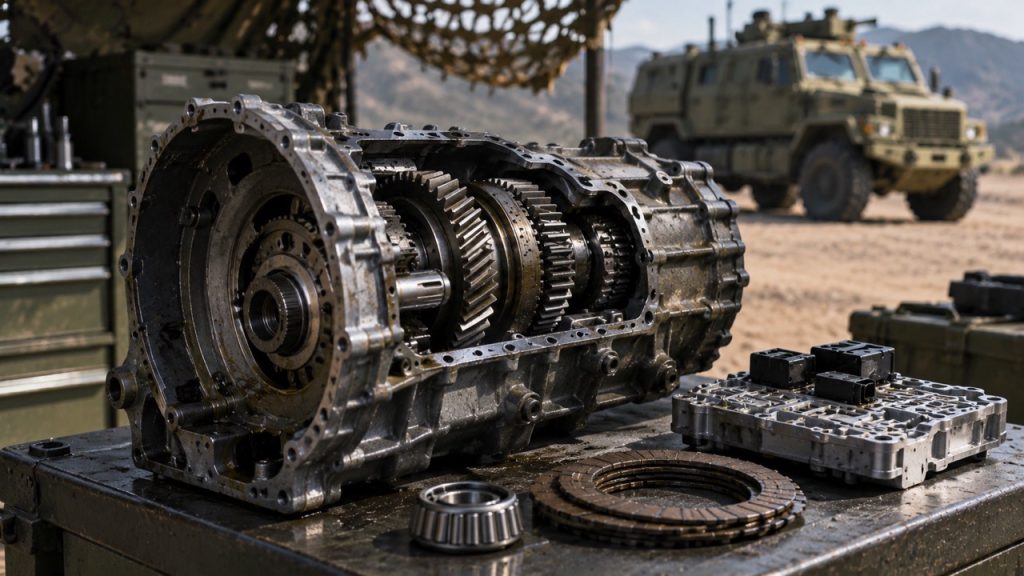
Early Warning Signs of Transmission Problems
The HMMWV technical manual’s fluid inspection guidance tells the technician to look for a burnt smell, grit, discoloration, air bubbles or a milky appearance. Each points toward something different, but none identifies a failed part by itself.
Other developing signs include fluid on the ground or oil thrown from the dipstick tube, which the M939-series manual links to overfilling; delayed engagement or rough shifting; rising temperature indications; stored diagnostic codes; and abnormal noise. The 6×4 truck tractor manual attributes an intermittent buzzing noise to low fluid, an air leak at the suction screen canister, clogged filters or aerated fluid.
Early inspection matters because these causes feed one another. Found at the fluid stage, a problem may need only a level correction or a filter change; found at the clutch or bearing stage, it may need an overhaul and a far larger parts requirement.
Many of the same symptoms can come from outside the transmission. Engine performance problems, transfer cases, differentials and final drives can all change how a vehicle shifts, sounds or moves. The manuals deal with this through structured troubleshooting that starts with simple checks of fluid level and condition rather than assuming one symptom means one part.
Major Causes of Transmission Damage
Improper Lubrication
Both low and high fluid levels are damaging. The HMMWV operator manual warns that overfilling will damage the transmission and that the level rises with temperature, so it must not be checked before the transmission reaches normal operating temperature. It specifies different Dexron grades for the 3L80 and 4L80-E and states that the wrong fluid will cause damage. Allison publishes approved fluid lists under its TES specifications and treats military specification fluids as a separate category for military vehicles only. Which fluid applies to a given vehicle is a question for its technical manual.
Contamination and Inadequate Maintenance
Allison’s service technology manager has described fluid related problems as one of the biggest causes of automatic transmission failure. A filter left unchanged for too long can leave the pump unable to draw enough fluid, so the transmission behaves as though it is short of lubricant.
Excessive Operating Temperature and Environment
Incorrect fluid level, a restricted cooler, aeration and slipping clutches can all raise temperature, and sustained heat degrades the fluid and accelerates wear. Environment acts through duty cycle severity and servicing conditions: Allison places responsibility on the operator to adjust fluid and filter intervals to the severity of operation, and the HMMWV manual specifies a different fluid for arctic conditions. Limits for a given transmission are set by its manufacturer, and this article does not substitute figures of its own.
Component Wear and Incorrect Replacement Parts
Replacement parts are part of the maintenance system. Allison’s service guidance allows its extended fluid change intervals on 3000 and 4000 Series transmissions only with genuine high capacity filters, which shows how a part that does not match the specification can undermine the programme built around it.
Preventive Maintenance and Inspection
The practices below are general principles drawn from published manufacturer and Army documentation. The technical manual or OEM documentation for the specific vehicle and transmission takes precedence, especially where sources differ.
Fluid Specification, Level and Condition
Use only the fluid the OEM or technical manual specifies. Check the level using the stated procedure: at normal operating temperature, on level ground, with the engine at the specified condition. Both underfilling and overfilling cause harm. Inspect the fluid for smell, colour, debris, bubbles or a milky appearance, and keep dirt out of containers, funnels and dipsticks.
Filters and Drain Inspection
For the HMMWV, the manual directs that the transmission oil filter be replaced each time the transmission is drained and that the drain plug be inspected for metal particles. Oil and filter are changed when known to be contaminated or clogged, or when service is recommended. Other transmissions have their own requirements.
Cooling System, Leaks and Seals
Inspect the oil cooler and cooler lines for restriction and leakage, since the Army procedures list a restricted cooler among the causes of overheating. Check seals, gaskets and the breather, and treat any sign of coolant in the fluid as urgent.
Electronic Fault Diagnosis
On electronically controlled transmissions, read and record diagnostic codes before parts are changed and clear them only as the manufacturer’s procedure allows.
Mechanical Inspection, Noise Assessment and Records
Relate any change in noise to fluid level and condition, as the troubleshooting tables do. Keep records of fluid and filter changes, drain plug findings, fault codes and fluid analysis results; the HMMWV maintenance table, for example, includes transmission oil sampling under the Army Oil Analysis Program. Service intervals vary widely between transmission families, fluids and duty cycles, so they should come from the manual for the exact configuration.
Essential Military Vehicle Transmission Spare Parts
Which parts are relevant depends on the design: a manual gearbox has no torque converter, for example. No vehicle uses every part listed below.
Service and Sealing Items
Filter assemblies and elements protect the pump and hydraulic circuit from contamination and are replaced on a service basis. Gaskets, oil seals and O-rings keep fluid in and contaminants out. These are the parts most often required, so accurate identification matters most here. In the HMMWV manual, the 3L80 uses a filter assembly with one gasket, while the 4L80-E uses a filter element kit with a different gasket. The two are not interchangeable.
Rotating, Hydraulic and Friction Components
Bearings support shafts and gears and are vulnerable to contamination and lubricant starvation. Clutch packs and friction components apply drive in automatic and some manual designs, and they suffer when fluid is aerated, contaminated or insufficient. Torque converters apply only to designs that use them. Oil pumps supply the pressure and flow that the converter, clutches and lubrication circuit depend on. Shafts, gears and other internal components are specific to the transmission model and configuration.
Control and Cooling Components
Solenoids, sensors, wiring connections and electronic control components belong to electronically controlled transmissions, and diagnosis should come before replacement. Oil coolers, cooler lines and bypass valves support heat management; the HMMWV manual lists cooler lines and a bypass valve as separate replacement tasks.
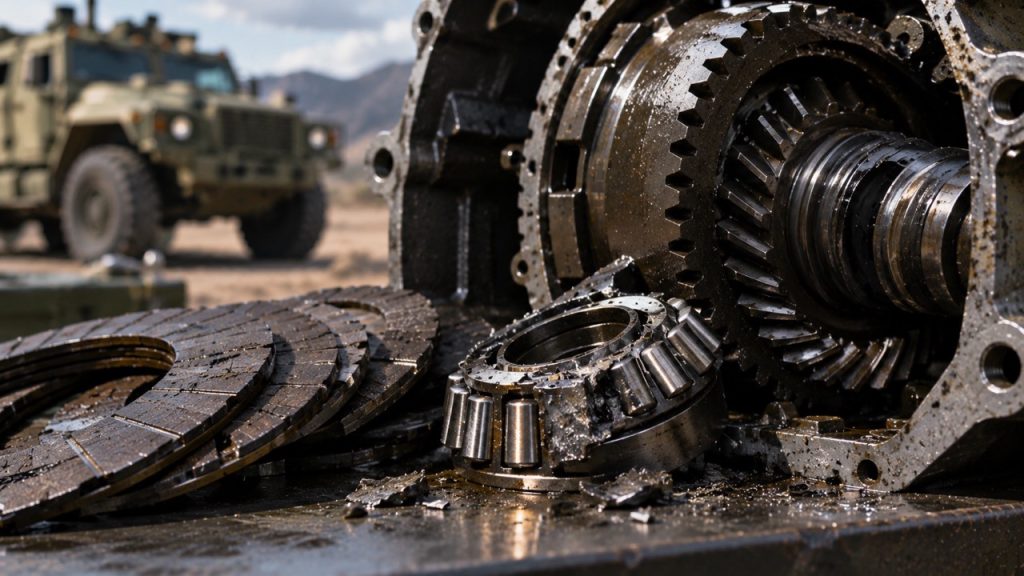
How to Identify the Correct Transmission Spare Parts
Correct identification is a verification process, not a catalogue search. Before ordering, confirm the following.
- The vehicle manufacturer, model and variant, and the vehicle identification or chassis serial number.
- The transmission manufacturer, model and serial number, usually from the data plate or vehicle records.
- The OEM part number and technical description from the applicable parts manual.
- The NATO Stock Number, where one has been verified for the item.
- Manufacturer supersession information, because a part number in an old manual may have been replaced.
- Technical compatibility and configuration, including options that change the parts required.
- Approved replacement requirements and the documentation or quality requirements in the contract.
NATO’s codification system supports item identification. An NSN is a 13 digit number made up of a four digit supply classification code, a two digit nation code and a seven digit item identification number, and each reference part number listed under an NSN is accompanied by a NCAGE code. Codification is a government to government function, so a supplier’s role is usually limited to providing technical documentation or part number verification. An NSN should be quoted only after it has been verified against a catalogue or the relevant national codification bureau. For part numbers that may have changed, see AB Defence’s guide on how to identify superseded military vehicle part numbers before ordering.
Visual similarity is not evidence of interchangeability. Filters, seals and housings may look alike while differing in dimensions, materials or fitment, as the HMMWV 3L80 and 4L80-E examples show. Where documentation is incomplete, confirm the part against the transmission serial number and the technical manual before ordering.
Transmission Spare Parts Procurement and Operational Readiness
Readiness depends on connecting planned maintenance, correct parts, inventory and repair quality. Planned fluid and filter service reduces unplanned failures, knowing which service parts a transmission needs allows them to be sourced before the vehicle is waiting, and verified identification keeps the repair right the first time.
Poor identification works against all of this. A wrong part may be rejected on receipt, and the vehicle stays down while the correct one is traced, ordered and shipped. The cost includes the delay, the return or write off of the incorrect item and the extra administration; a low cost filter or seal can idle a vehicle for far longer than its price suggests.
Maintaining Transmission Reliability and Operational Readiness
Transmission failures usually develop through a chain: incorrect fluid level or contamination leads to heat, heat and slipping lead to wear, and wear removes the vehicle from service. The documentation reviewed points to consistent practical conclusions. Check fluid level and condition correctly, act on early warning signs, read diagnostic codes before replacing parts, and follow the technical manual for the exact transmission fitted.
The second half of reliability is parts supply. Good maintenance still fails when the replacement part is wrong or unverified. Confirming the vehicle, transmission, OEM part number, NSN and supersession status before ordering protects both the repair and fleet readiness.
Work With AB Defence
Partner with AB DEFENCE for Reliable Combat Support Vehicle Sustainment. AB DEFENCE is a specialist international supplier of military spare parts and fleet sustainment solutions serving NATO and allied defense organisations. With deep inventory across a wide range of combat support vehicle platforms, rigorous quality assurance processes, export compliance expertise, and a commitment to long term supply chain partnership, AB DEFENCE helps defense buyers maintain fleet availability, reduce sustainment costs, and meet their operational readiness obligations. Contact the AB DEFENCE team to discuss your spare parts requirements, strategic inventory planning, and long-term sustainment programme needs.
Contact AB Defence to discuss your procurement requirements and learn how we can support your fleet readiness objectives.
Related Military Spare Parts Categories, Vehicle Platforms & Technical Guides
Explore AB Defence’s NATO-codified (NSN) and genuine OEM spare parts catalog, platform technical specifications, and sustainment engineering guides related to this article:
Stocked Spare Parts Categories (NSN & OEM Catalog)
- NATO Standard Defence Components & Military Hardware (12,993 stocked parts)
- M60 Tank Spare Parts (M60A1 / M60A3 / M60T) (497 stocked parts)
- M109 Self-Propelled Howitzer Spare Parts (585 stocked parts)
- BMC Kirpi MRAP Spare Parts (Kirpi I & Kirpi II) (597 stocked parts)
- Mercedes-Benz Unimog Military Spare Parts (562 stocked parts)
- Full NATO NSN & OEM Spare Parts Catalog (16,760+ Parts)
Compatible Vehicle Platforms & System Hubs
- Platforms
- Product Groups
- Quality
- Capabilities
- Tracked Armoured Vehicles
- Request a B2B Quotation (RFQ) & Technical Support