April 3, 2026
How Middle Eastern Armed Forces Maintain Armored Vehicles in Desert Conditions
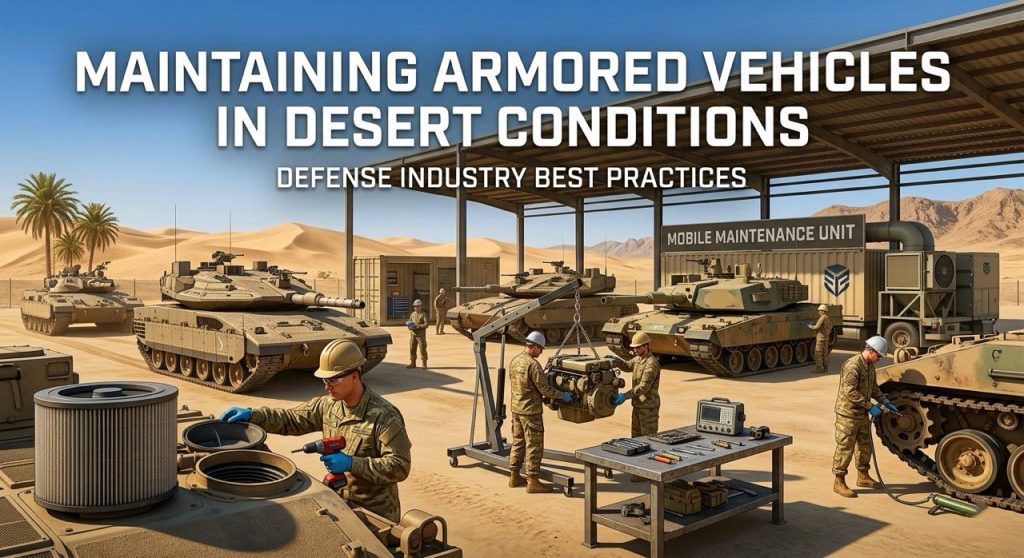
Few operational environments on earth demand as much from a piece of military hardware as the Arabian Peninsula and its surrounding deserts. Temperatures regularly exceed 50°C (122°F) at ground level, fine silica dust penetrates every ungasketed cavity, and the thermal cycling between scorching midday heat and near-freezing desert nights places mechanical stress on metals, seals, and lubricants that no engineer in a temperate climate can fully replicate in a laboratory. For the armed forces of Saudi Arabia, the UAE, Jordan, Egypt, Kuwait, and their neighbors, keeping armored vehicle fleets combat-ready is not a periodic concern — it is a continuous, resource-intensive discipline that directly determines operational capability.
This article examines, in practical terms, how Middle Eastern militaries approach the problem. It covers the environmental threats in detail, the engineering responses built into modern platforms, the maintenance protocols that field units follow, the logistical structures that sustain those protocols, and the strategic direction the region is moving toward. The goal is to give defense procurement officers, logistics planners, and fleet managers a clear picture of what actually keeps an armored vehicle alive in the desert — not in theory, but in practice.
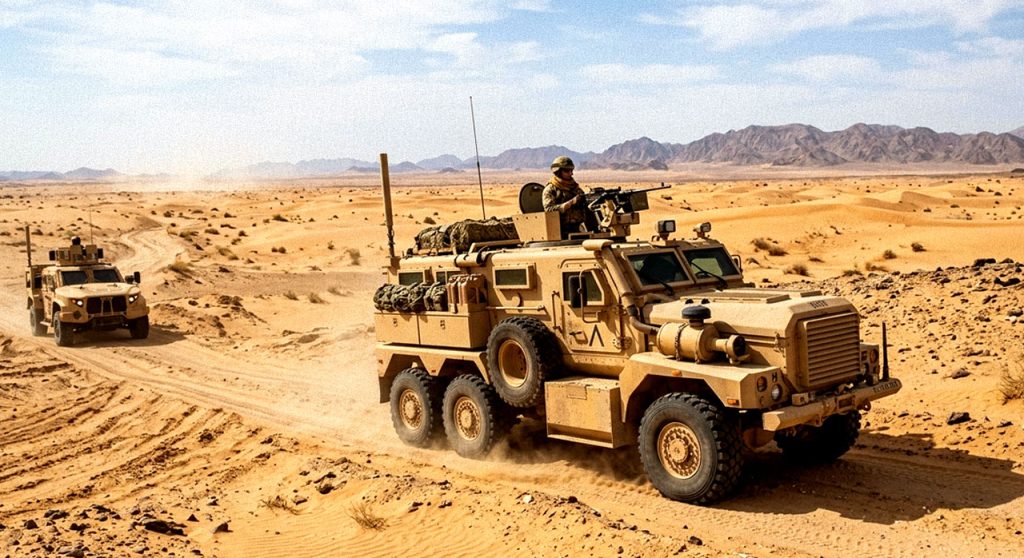
Understanding the Enemy: What the Desert Does to Armored Vehicles
Before protocols and procedures can be discussed, the threat environment must be understood in mechanical terms. Desert conditions attack military vehicles through four distinct vectors, each of which compounds the others.
Abrasive Particulate Ingestion
Desert sand is not a uniform material. In the Arabian Peninsula, the finest airborne particles — typically below 20 microns in diameter — behave almost like aerosol, staying suspended in the air column for extended periods and penetrating gaps that coarser material cannot reach. When a column of tracked vehicles moves across dry terrain, the dust concentration in the surrounding air can reach concentrations above 1 gram per cubic meter. A 700-kilowatt tank engine drawing 3,400 cubic meters of air per hour at that dust density will ingest over 170 kilograms of particulate during a 50-hour operational period at maximum load — an extraordinary abrasive burden for any filtration system to bear.
Sand mixed with engine oil creates a lapping compound that accelerates wear on piston rings, cylinder walls, and bearing surfaces at a rate several times higher than in temperate conditions. Simultaneously, fine particles infiltrating brake systems, turret traverse mechanisms, and weapon station bearings generate friction in components designed to operate with near-zero clearance. The result is accelerated wear across virtually every moving assembly on the vehicle.
Thermal Extremes and Cycling
Ambient temperatures recorded in Middle Eastern deserts routinely approach 55°C, and internal temperatures inside sealed steel hulls — particularly in vehicles without active cooling — can exceed 70°C during periods of high solar irradiance. At these temperatures, conventional engine oil loses viscosity faster than its formulation is designed to handle, coolant systems operate dangerously close to their capacity limits, and rubber seals harden and lose elasticity. Electronic components — particularly those governing engine management, fire control, and communication systems — are highly sensitive to sustained thermal stress.
What compounds the problem is the diurnal temperature swing. In the inland Sinai and across much of the Arabian interior, day-to-night temperature differentials of 30°C to 40°C are common. This cycling causes repeated thermal expansion and contraction of metal components, fatiguing gaskets, accelerating seal degradation, and creating micro-fractures in surfaces that would otherwise remain stable under constant-temperature conditions. Vehicles that sit stationary overnight in cold conditions and then start under full load at midday are subject to thermal shock that routine maintenance schedules in Europe or North America were never designed to address.
Corrosion and Salt Contamination
Coastal deployments along the Persian Gulf, the Red Sea, and the Gulf of Oman introduce salt-laden air into the equation. Salt particles accelerate electrochemical corrosion on exposed metal surfaces, attack electrical connectors, and degrade painted and treated surfaces that would last years in continental interiors. Vehicles operating in Kuwait, Qatar, Bahrain, and coastal Saudi Arabia face a combined challenge of high-temperature desert conditions by day and salt-air corrosion continuously — a combination that demands corrosion protection regimes beyond what purely inland desert operations require.
Terrain-Induced Mechanical Stress
Rocky wadis, soft sand, gravel plains, and broken hardpan each impose different suspension and drivetrain loads. Soft sand requires reduced tire pressure for tracked vehicles and significantly increased engine effort, raising thermal load. Rocky terrain places high point-load impacts on suspension components, track links, road wheels, and return rollers. Vehicles that transition between terrain types — as any operationally deployed platform will — must cope with rapidly changing mechanical demands that place uneven wear patterns across their running gear.
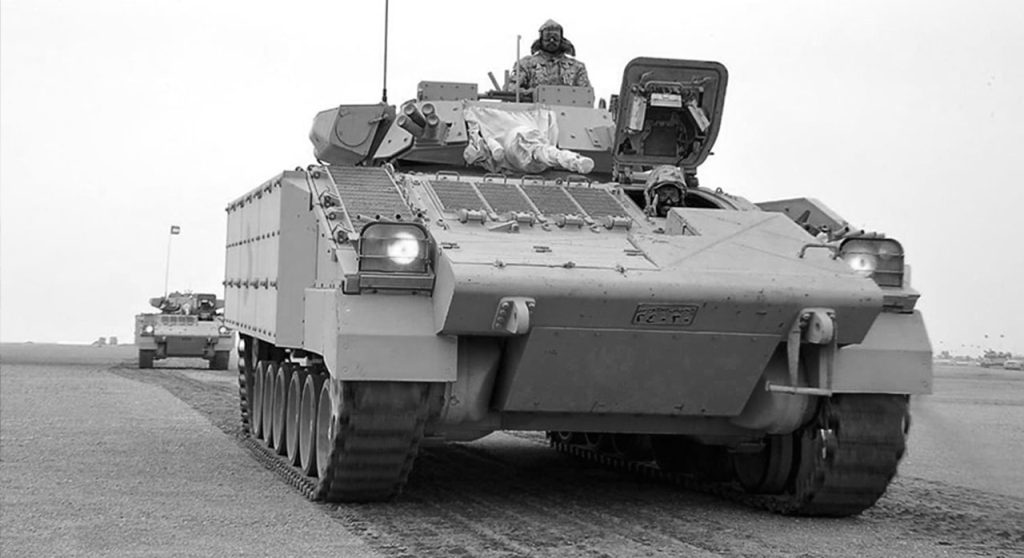
How Modern Platforms Are Engineered for Desert Survivability
Awareness of these challenges has driven significant engineering investment in platforms procured by or developed for Middle Eastern armed forces. The design choices made at the platform level directly determine how much maintenance burden falls on the units that operate the vehicles in the field.
Multi-Stage Air Filtration Systems
The air intake system is the first and most critical line of defense against desert particulate. Modern military vehicles deployed to the region — from the M1A2S Abrams operated by the Saudi Arabian Army to the NIMR family of wheeled armored vehicles developed specifically for UAE requirements — incorporate multi-stage filtration designed for high-dust environments.
A typical two-stage military air filtration system combines a vortex particle separator as the first stage with a cleanable barrier filter as the second. The vortex separator uses centrifugal force to throw the majority of large and medium-density particles outward before they reach the filter media, reducing the particulate load on the barrier filter by as much as 90 percent. The barrier filter then captures remaining fine particles. Critically, in well-designed systems, both stages can be cleaned in the field using compressed air or water, without requiring chemical solvents or specialist tools — a necessity in forward-deployed environments where supply lines may be stretched.
For turbine-powered vehicles, the engineering challenge is even more demanding. Mineral dust ingestion causes erosive wear on compressor and turbine blades that is progressive and irreversible. The M1 Abrams gas turbine engine, for example, requires additional attention to inlet protection in desert environments and is subject to accelerated turbine section inspection intervals when operating in high-dust conditions.
Enhanced Cooling Systems
The NIMR family of armored vehicles, developed by NIMR Automotive as a purpose-built platform for UAE armed forces operations across the MENA region, incorporates a cooling system rated for continuous operation at ambient temperatures up to 55°C — a specification that reflects the actual operational requirement rather than a comfortable margin above a temperate-climate baseline. This kind of desert-specific thermal engineering determines whether a vehicle can continue operating during the hottest part of a summer afternoon or requires a heat-mitigation rest cycle that would interrupt the mission.
More broadly, platform cooling in desert-designed vehicles addresses not just the engine but the crew compartment. An overheated crew loses cognitive function, decision-making capacity, and physical endurance within hours. Air conditioning systems in armored vehicles operating in the Gulf are not comfort features — they are operational necessities that directly affect combat effectiveness. Maintenance of these systems, including refrigerant levels, compressor belt tension, condenser cleanliness, and blower motor function, is therefore as operationally critical as engine oil condition.
Sealing and Dust Exclusion Engineering
Platform manufacturers targeting Middle Eastern procurement have invested heavily in improving the dust exclusion of drivetrain components, electronics housings, and weapon systems. Positive-pressure NBC (nuclear, biological, chemical) protection systems — fitted across much of the region’s fleet — serve a secondary function in desert conditions by maintaining a slight positive air pressure inside the crew compartment, preventing dust from infiltrating through door seals and vision ports. The electronics and electro-optic systems fitted to the NIMR and similar platforms are specified with dust-resistant connectors and housing seals appropriate to the operational environment.
Central Tire Inflation Systems (CTIS), fitted to wheeled armored vehicles including the NIMR’s 4×4 and 6×6 variants, allow operators to adjust tire pressure from within the vehicle according to terrain conditions. Beyond the traction benefit on soft sand, CTIS reduces the need for crews to exit the vehicle to deflate and reinflate tires manually — a minor but real reduction in the number of maintenance touchpoints in a hostile environment.
Field-Level Maintenance: What Units Actually Do
Engineering choices at the platform level set the ceiling for desert survivability. What happens below that ceiling depends on the quality and consistency of field-level maintenance practices. The operational doctrine that governs these practices draws on decades of accumulated experience — including lessons from the 1991 Gulf War, ongoing operations in Yemen, and long-term Gulf state deployments across demanding terrain.
Accelerated Service Intervals
The most fundamental adjustment desert operations require is compressing maintenance intervals. Engine oil that would be changed every 5,000 kilometers under temperate operating conditions typically requires replacement every 2,500 to 3,000 kilometers — or more frequently — in high-dust, high-temperature desert operations. The rationale is straightforward: grit accumulation in the oil pan accelerates, heat-induced oxidation of the lubricant base stock occurs faster, and unburned fuel seeping past worn piston rings dilutes oil more rapidly, reducing its viscosity and protective film strength. Diluted lubricant is less effective at cooling bearing surfaces, which accelerates wear further — a compounding failure mode that the shortened change interval is designed to interrupt.
Air filters, coolant levels, fuel system water separators, and hydraulic fluid condition all require inspection at compressed intervals. In high-intensity operations during summer months, some platforms require daily checks of items that field service schedules in milder conditions address weekly. This places a substantial burden on unit-level maintenance personnel — a point with direct implications for manning, training, and spare parts inventory management.
Pre-Operation and Post-Operation Procedures
Experienced desert maintenance culture emphasizes what happens at the bookends of each operation as much as what happens during it. Before a vehicle moves, crews inspect air filter restriction indicators, coolant levels, and tire condition. Lubrication points on the undercarriage — track adjustment mechanisms, suspension pivot arms, road wheel bearings — are greased on a schedule calibrated to the abrasive conditions rather than distance traveled. Any oil or fuel leak, however minor, is addressed before departure, because in desert conditions, leaked lubricant that coats a heat exchanger surface quickly accumulates dust and forms an insulating layer that degrades cooling — a failure mode that can escalate quickly at high ambient temperatures.
Post-operation, vehicles are wiped down to remove dust accumulation from air intake areas, engine bay surfaces, and cooling system fins. Protective covers are fitted to barrels, vision ports, and externally mounted optics. In a serious desert maintenance culture, the period immediately after a vehicle stops is treated as a maintenance window, not simply a rest period.
Workshop-Level Maintenance and the Cannibalization Problem
At workshop level — the intermediate tier between crew-level checks and depot overhaul — maintenance teams manage component replacement, subassembly repair, and diagnostic investigation of performance anomalies. This is where the condition of spare parts inventories becomes decisive. A fleet that cannot source replacement air filter elements, oil seals, or cooling system components on a timely basis will face a choice between running vehicles at reduced serviceability or cannibalizing parts from other vehicles in the fleet — a practice that provides short-term solutions while eroding overall fleet readiness.
The cannibalization problem is documented across the region. GCC armed forces commonly retain mixed-age fleets containing vehicles from multiple procurement generations and several different manufacturers, with few formalized logistics support contracts aligned to their actual operational tempos. When a part is needed urgently, the path of least resistance is often to remove it from a lower-priority vehicle — a decision that reduces the spare vehicle count and, over time, concentrates operational hours on a diminishing number of serviceable hulls.
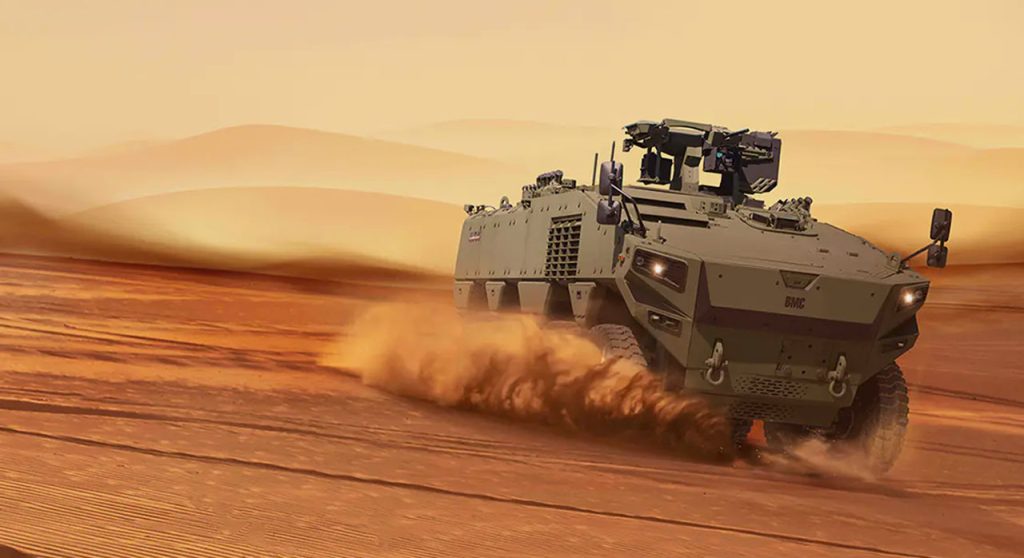
The MRO Challenge: Structural Issues in Gulf Military Maintenance
The operational maintenance challenge connects directly to a structural strategic challenge: how Middle Eastern militaries organize, contract, and resource their maintenance, repair, and overhaul (MRO) functions.
Outsourcing and Its Limitations
The predominant model across GCC armed forces has historically been to outsource MRO functions to contractors — either OEM-affiliated service organizations or independent defense support companies. This approach carries a superficial appeal: it transfers technical complexity to specialist organizations and reduces the need for large in-house maintenance workforces. In practice, however, it creates dependencies that compromise military readiness in ways that are difficult to measure until a crisis exposes them.
Contractor-managed MRO works adequately in peacetime, when vehicles operate on predictable schedules and parts pipelines flow normally. Under operational surge conditions — precisely when vehicle readiness is most critical — contractor availability, parts lead times, and contract scope limitations frequently become binding constraints. An armed force whose MRO capability resides predominantly outside its organic structure has, in effect, subordinated a component of its operational readiness to commercial factors.
Strategic analysis of GCC military readiness consistently identifies this as a central vulnerability. The recommended direction is toward availability-based and performance-based logistics contracts that link contractor compensation to measurable readiness outcomes — fleet availability rates, turnaround times for specific repair categories, repeat repair rates — rather than to activity metrics like labor hours and parts consumed. This shifts risk toward the party with the greatest ability to manage it: the contractor with technical expertise and supply chain visibility.
Fleet Management Technology
Mature defense organizations globally have moved toward cloud-based enterprise resource planning (ERP) systems that provide real-time visibility of fleet condition, parts inventory, and maintenance history at the individual vehicle level. Combined with telematics — onboard sensors that transmit operational data including engine hours, fault codes, and fluid condition indicators — these systems enable predictive maintenance: identifying components approaching end-of-life before they fail, scheduling replacements during planned downtime rather than emergency repair windows, and building accurate budget forecasts for future maintenance requirements.
The adoption of these technologies across Middle Eastern militaries is uneven. Some forces have implemented ERP systems with dedicated maintenance management modules; others rely on manual records, spreadsheets, and institutional knowledge that resides with individual technicians rather than in organizational systems. The difference in fleet readiness between these approaches is significant — a well-instrumented fleet with predictive maintenance capability will consistently outperform an equivalent fleet managed reactively, particularly in the demanding desert environment where component life is shorter and failure consequences are higher.
Controlled humidity storage for vehicles and critical components not in active operational use represents another gap in current practice. Desert humidity fluctuates dramatically between seasons and between day and night; controlled storage environments extend the serviceable life of sensitive electronics, optical systems, and rubber components during periods when they are not needed operationally.
Spare Parts: The Decisive Variable in Desert Fleet Readiness
Everything discussed above — engineering, protocols, MRO organization, fleet management technology — converges on a single practical reality: a vehicle cannot be maintained without the parts required to maintain it. In desert operations, where component consumption rates are higher than any temperate baseline, spare parts availability is the most immediate determinant of fleet readiness.
The OEM vs. Aftermarket Parts Question
For procurement officers managing armored vehicle fleets in the region, the tension between OEM parts and aftermarket alternatives is a constant. OEM parts are designed and tested to the original platform specification, carry manufacturer validation, and in many cases are the only option for components critical to safety or structural integrity — armor fittings, fire suppression system components, ballistic glass. For these categories, no legitimate maintenance doctrine permits substitution.
For high-consumption items — air filter elements, oil and fuel filters, belts, hoses, seals, brake components — qualified aftermarket suppliers who manufacture to original specification and hold appropriate certifications offer cost and availability advantages that become significant across a large fleet. The key criterion is verification: that the aftermarket part meets the dimensional, material, and performance specification of the OEM component, and is not simply a physically similar part of inferior quality. In desert operating conditions, an undersized piston seal or a filter element with insufficient particulate capture efficiency will fail far faster than in temperate conditions, turning a cost-saving decision into a vehicle availability problem.
Strategic Stocking and Forward Pre-positioning
Desert operations complicate parts resupply logistics in ways that urban or continental operations do not. Long distances between forward-deployed units and depot-level supply points, limited road infrastructure in remote areas, and the operational tempo of active operations all argue for forward pre-positioning of the highest-consumption spare parts categories at unit level or at least at formation level.
Best-practice fleet management identifies consumption patterns by vehicle type and operating environment, then uses that data to establish forward stockage lists — specific parts in specific quantities that units carry with them or can access from nearby support points. A formation that enters an extended desert operation with 90 days of air filter elements, critical seals, and wear components has a fundamentally different operational endurance than one that relies on just-in-time supply from a distant depot.
Operators like Streit Group and Osprea, who supply armored vehicle platforms and spare parts to forces across the region, have built logistics infrastructure specifically oriented toward this requirement — pre-configured spare parts kits matched to individual platform models, supported by remote technical assistance that can be accessed from forward areas. The practical effect is to extend effective maintenance capability to locations where specialist workshops cannot operate.
Training: The Human Factor That Determines Whether Everything Else Works
Technology, protocols, and parts availability are all inert without competent people to apply them. The human factor in armored vehicle maintenance — specifically, the training level and institutional culture of maintenance personnel — is where many of the region’s armed forces face their most persistent challenge.
Vehicle operators who understand the mechanical reasons behind maintenance requirements — not just the procedural steps — make better decisions when conditions deviate from the manual. A driver who understands why oil viscosity matters under thermal load will respond differently to an oil pressure anomaly than one who has memorized a checklist without understanding it. Unit commanders who treat maintenance as a parallel operational discipline rather than an administrative function will resource it appropriately and enforce compliance even when operational pressures make shortcuts tempting.
Desert-specific maintenance training needs to address not just the what but the why of accelerated procedures. It also needs to cover the specific failure modes most common in the operational environment — air filter restriction, cooling system degradation, track adjustment requirements in soft sand — so that crews can identify early warning signs before they become vehicle-stopping events. Comprehensive operator training programs for desert utility vehicles cover desert navigation, vehicle recovery procedures, off-road driving techniques in varied terrain, and maintenance checks specific to hot and dusty environments. Simulated desert training environments, where these conditions can be replicated, are more valuable than purely classroom instruction.
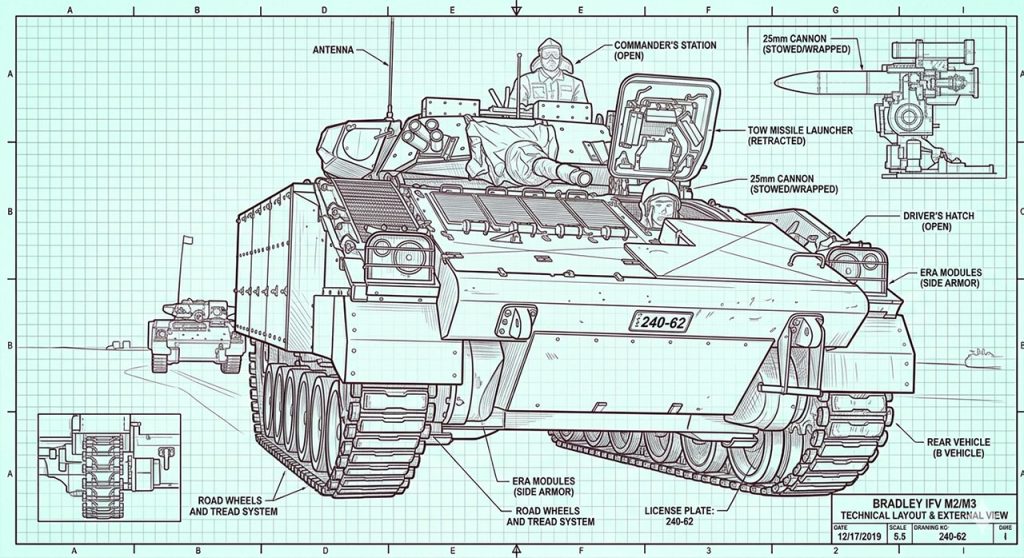
At the technical level, workshop maintenance personnel working on complex platforms including the M1 Abrams, M2 Bradley, M113, and Leopard 2 variants operated across the region require formal qualification on specific platform systems. Mixed-fleet inventories — common across GCC forces — multiply this requirement, because technicians qualified on one platform are not automatically proficient on another. Managing the training pipeline for a diverse vehicle inventory is a logistics challenge in itself.
Regional Modernization and the Direction of Travel
The military vehicle fleets of the Middle East are not static. Saudi Arabia, the UAE, Kuwait, Jordan, and Egypt are all engaged in modernization programs that will reshape their armored inventories over the coming decade, with direct implications for maintenance requirements.
The UAE’s ongoing initiative to modernize all units of its armed forces with advanced military equipment includes platforms specifically engineered for the regional environment — a contrast with earlier generations of procurement that took temperate-climate designs and adapted them post-delivery. Saudi Arabia maintains one of the world’s largest defense budgets at approximately $57 billion annually, and a substantial portion of that spending addresses fleet sustainment and modernization in parallel. The Turkish defense industry has emerged as a significant regional supplier, with FNSS, Otokar, and other manufacturers providing platforms including the Cobra II and ARMA variants that are in service or under evaluation across several regional forces; FNSS’s contract to extend the service life of the Turkish Army’s ACV-15 fleet by 20 years using upgraded subsystems demonstrates the depth of regional investment in fleet sustainment engineering.
The growing emphasis on domestic defense industrial development — particularly in Saudi Arabia and the UAE — has direct maintenance implications. Domestically produced platforms and locally held spare parts inventories reduce the foreign exchange and lead-time exposure associated with overseas procurement. They also create opportunities to design maintenance procedures and parts specifications around the specific environmental conditions of the region, rather than adapting documentation written for a different operating environment.
The integration of autonomous and unmanned systems into ground vehicle fleets is an emerging factor. Unmanned ground vehicles operating in the desert will require maintenance in the same environment as their manned counterparts — but the failure modes, diagnostic procedures, and required skillsets will be different. Preparing maintenance organizations for this transition is a planning challenge that forward-thinking defense establishments are beginning to address.
Practical Implications for Defense Procurement and Logistics Professionals
For those directly involved in armored vehicle procurement, logistics, or fleet management for Middle Eastern defense clients, several practical conclusions follow from the operational picture described above.
Platform selection cannot be evaluated on cost and performance specifications alone. A vehicle’s suitability for desert deployment must include assessment of its air filtration system design, the cleanability and replacement interval of filter elements in field conditions, the rated operating temperature of its cooling system, the dust-exclusion quality of its drivetrain and electronics sealing, and the availability of spare parts through established supply channels. A platform that performs adequately on a test range but whose spare parts supply chain is thin or geographically distant from the operating theater creates a maintenance liability that will manifest as reduced fleet availability in the field.
Logistics support contracts should be evaluated on readiness outcomes, not activity metrics. The shift from labor-hour-based contracts to availability-based and performance-based arrangements is the most significant structural improvement available to GCC armed forces seeking to improve fleet readiness without simply adding more vehicles to the inventory. Contracting structures that financially incentivize the contractor to keep vehicles operational — rather than simply to perform maintenance activities — align commercial interests with military operational requirements.
Spare parts forward pre-positioning is a readiness multiplier. An accurate, data-driven understanding of consumption rates by vehicle type and operating environment, translated into forward stockage quantities held at formation or unit level, will reduce the frequency of vehicle downtime waiting for parts more effectively than any other single logistics intervention. This requires investment in fleet management data systems capable of tracking consumption patterns accurately enough to generate reliable forward-stocking guidance.
Training investment pays operational dividends. The cost of qualified maintenance personnel — both in terms of initial training and in the institutional infrastructure required to retain institutional knowledge — is small relative to the cost of the equipment they maintain and the operational cost of vehicle downtime. Forces that invest seriously in maintenance training culture consistently achieve higher fleet availability rates than those that do not, controlling for all other variables.
Conclusion
Maintaining armored vehicles in Middle Eastern desert conditions is an engineering, logistical, and human challenge of a different order of magnitude than maintaining the same platforms in temperate environments. The thermal extremes, the abrasive particulate load, the salt-air coastal environment, and the mechanical stress of varied desert terrain collectively accelerate component wear, compromise lubricant performance, and challenge filtration systems in ways that standard maintenance schedules and supply chain assumptions were not designed to address.
The armed forces of the region have developed operational experience and institutional knowledge that addresses these challenges with varying degrees of effectiveness. The direction of improvement — more capable platforms engineered for desert conditions, performance-based logistics contracting, predictive maintenance technology, improved training, and forward-positioned spare parts — is clear. Execution is the hard part.
For the defense industry organizations that supply platforms, spare parts, and logistics support to these forces, understanding the operational maintenance environment in this level of detail is not academic. It is the foundation of credible, practical support to customers whose vehicle fleets are the physical expression of their national defense capability — and whose operational readiness, in this part of the world, is never a hypothetical concern.
Related Military Spare Parts Categories, Vehicle Platforms & Technical Guides
Explore AB Defence’s NATO-codified (NSN) and genuine OEM spare parts catalog, platform technical specifications, and sustainment engineering guides related to this article:
Stocked Spare Parts Categories (NSN & OEM Catalog)
- NATO Standard Defence Components & Military Hardware (12,993 stocked parts)
- M60 Tank Spare Parts (M60A1 / M60A3 / M60T) (497 stocked parts)
- M109 Self-Propelled Howitzer Spare Parts (585 stocked parts)
- BMC Kirpi MRAP Spare Parts (Kirpi I & Kirpi II) (597 stocked parts)
- Mercedes-Benz Unimog Military Spare Parts (562 stocked parts)
- Full NATO NSN & OEM Spare Parts Catalog (16,760+ Parts)
Compatible Vehicle Platforms & System Hubs
- Platforms
- Product Groups
- Quality
- Capabilities
- Tracked Armoured Vehicles
- Request a B2B Quotation (RFQ) & Technical Support