April 30, 2026
COBRA II Fleet Readiness: The Maintenance Factors That Matter Most
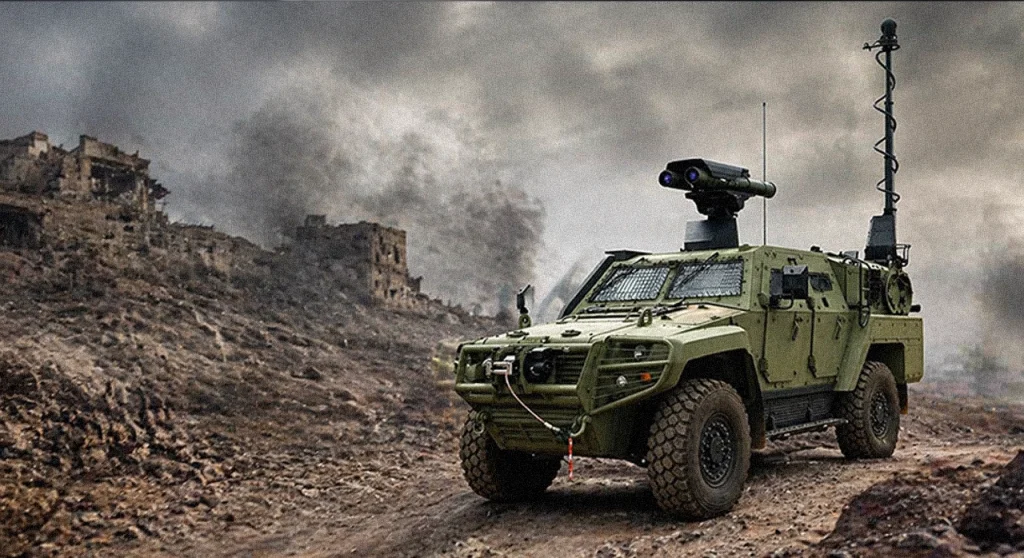
Unveiled in 2013, the COBRA II is a light 4×4 tactical armored vehicle developed by Turkish manufacturer Otokar, and it has grown into one of the most widely adopted platforms in its class. With more than 33,000 Otokar vehicles currently in service globally and a growing footprint in NATO aligned countries, the question of how fleets sustain operational readiness across diverse theatres, climates, and mission profiles is no longer theoretical. It is immediate and pressing.
Understanding What “Fleet Readiness” Actually Means for COBRA II
Before getting into the technical details, it’s worth establishing what fleet readiness actually means in practice. In armored vehicle operations, readiness is typically measured as the percentage of vehicles in a fleet that are fully mission capable at any given time. A vehicle that is undergoing scheduled maintenance, awaiting a spare part, or sidelined by an unresolved technical deficiency is not mission ready regardless of what a procurement brochure says about its design.
The COBRA II is a modular platform with superior technical and tactical characteristics, providing higher ballistic and mine protection, increased payload capacity, and large internal volume, while delivering high performance across the toughest terrain and climate conditions. These qualities are genuine. But they also introduce maintenance complexity that operators need to understand deeply, because each layer of capability the armored hull, the powertrain, the mission systems, the protection layers carries its own sustainment requirements.
The Powertrain: Where Most Readiness Problems Begin
In my experience, the single greatest driver of fleet availability in wheeled armored vehicles is the powertrain, and the COBRA II’s powertrain is both a strength and a factor that demands disciplined maintenance. COBRA II is powered by a 6.7 litre, six cylinder, water-cooled, turbocharged, common rail diesel engine mated to an automatic six speed gearbox. It produces 360 horsepower at 2,650 rpm and 1,100 Nm of torque at 1,400 rpm.
That torque figure is significant. It enables the vehicle to handle extreme gradients and off road terrain that would defeat lighter platforms, but high torque common rail diesel systems operating in dusty, sandy, or high temperature environments are among the more demanding powerplants to sustain in the field. Common rail injection systems are sensitive to fuel quality in ways that older mechanical injection systems simply were not. Contaminated fuel a persistent reality in forward operating environments can cause injection pump degradation and nozzle fouling that cascades into significant downtime if not caught early through proper filtration maintenance protocols.
The automatic transmission, while operationally advantageous (particularly for crews who need to focus on situational awareness rather than gearchanging), requires its own discipline. Transmission fluid condition monitoring and filter replacement intervals must be adhered to strictly in high-demand operational environments. Failure to do so typically manifests as erratic shifting, slippage under load, and eventually complete transmission failure a Category 3 maintenance event that takes a vehicle off the line for an extended period. Units that track fluid condition proactively through regular sampling almost invariably see significantly better transmission longevity than those operating on a simple calendar-based interval system.
Protection Architecture and the Structural Maintenance Challenge
The COBRA II’s protection system is one of its key differentiators, and it is also one of the most frequently under maintained aspects of armored vehicle fleets in general. The vehicle provides high level of protection against ballistic, mine, and IED threats, and it achieves this through a combination of its monocoque armored hull, additional appliqué armor options, and a shaped hull profile designed to deflect blast energy away from the occupant compartment.
The V-hull is effective. It works. But a blast event even a survivable one applies structural stresses to the hull that are not always visible to the naked eye. Micro-cracking at weld seams, deformation of the floor plate, and loosening of the hull-to-superstructure joints can all result from a mine or IED detonation that leaves the crew uninjured and the vehicle apparently functional. Many operators, understandably focused on the crew’s wellbeing and the continuation of operations, return these vehicles to service without a proper structural inspection. This is a mistake. Post-blast structural assessment should be a mandatory, non-negotiable protocol after any significant blast event, and units that treat it as optional tend to see hull integrity issues compound over time.
Similarly, appliqué armor panels require periodic inspection of their mounting hardware. The vibration loads imposed by tactical cross-country driving are substantial, and if fasteners work loose, panels can shift reducing the protection they were designed to provide, or in extreme cases, becoming a hazard themselves.
The Run-Flat Tyre System: Underappreciated and Frequently Neglected
Standard equipment on the COBRA II includes a run-flat system along with a Central Tyre Inflation System (CTIS), two features that significantly enhance tactical survivability and mobility. Run flat inserts allow the vehicle to continue operating after a tyre puncture, and CTIS enables the driver to adjust tyre pressure on the move to optimize traction across different surfaces.
In practice, I’ve seen run-flat inserts become a serious readiness liability on fleets where they are not regularly inspected and replaced on a proper cycle. Run flat inserts degrade with age and heat exposure. An insert that looks serviceable on external inspection may have cracked internally and will provide far less than its rated distance of travel after a tyre failure. CTIS valves and pneumatic lines are also susceptible to wear and damage from the same terrain abuse that is the vehicle’s intended operating environment. A CTIS that is inoperable doesn’t ground the vehicle, but it meaningfully degrades the crew’s ability to optimize mobility and that matters operationally.
The maintenance lesson here is simple but often overlooked: do not treat the run-flat and CTIS systems as “set and forget” components. They require active inspection and scheduled replacement of wear items to deliver the capability they were designed to provide.
Mission Equipment and Electronic Systems: The Growing Maintenance Burden
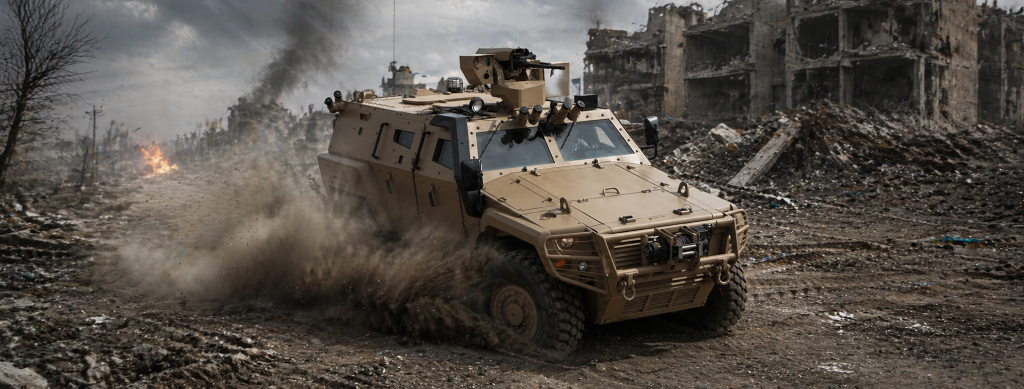
The COBRA II’s modular design is one of its most commercially successful features. The vehicle is produced in nine configurations for the Romanian Armed Forces alone, including CBRN, engineering, MEDEVAC, anti tank with Spike missiles, and mortar carrier variants. This versatility is operationally valuable, but it creates a maintenance challenge that is often underestimated during the procurement phase: every mission specific equipment fit brings its own sustainment tail.
Remote weapon stations, thermal cameras, navigation systems, communications suites, and specialized mission equipment all require their own maintenance disciplines, calibration schedules, and spare parts pipelines. Optional equipment includes a self-recovery winch, nuclear, biological and chemical filtration kit, automatic fire extinguishing system, intercom system, navigation system, and an auxiliary power unit. Each of these systems adds capability, and each one can become a single point of failure that prevents the vehicle from being fully mission capable.
The most common failure mode I’ve seen with complex mission equipment fits is connector and cable harness degradation. Military vehicles operate in environments that are brutal on electrical connections — vibration, temperature cycling, moisture ingress, and physical abuse from crew mounting and dismounting. Connectors corrode, crimp connections fatigue, and cable routes that pass through hull penetrations are particularly vulnerable. A disciplined harness inspection program, combined with the use of proper MIL-SPEC connector types and good cable management at installation, pays enormous dividends in sustained electronic system availability.
Logistics and the Spare Parts Pipeline: The Strategic Maintenance Factor
All of the vehicle-level maintenance disciplines described above are for nothing if the spare parts pipeline doesn’t function. For the COBRA II, this has historically been a manageable challenge, but the scale of recent procurements means that the demand signal is changing.
Otokar signed a contract valued at approximately €857 million with Romania’s defence procurement agency in November 2024 for the delivery of 1,059 Cobra II armored vehicles, representing by far the largest single country COBRA II order to date. To support the program, Otokar established a wholly owned subsidiary in Romania and signed a 50-50 joint venture agreement with Automecanica S.A. in April 2025 to form SAROM, which is responsible for local manufacturing, engineering coordination, marketing, and after-sales support.
The integration of local production and maintenance capability through SAROM is the right approach for fleet sustainability at this scale. In-country maintenance capacity trained technicians, local parts fabrication capability, and a regional supply chain for consumables dramatically reduces the mean time to repair and eliminates the delays that come with dependence on a distant OEM for every maintenance event. The contract includes investments in infrastructure, the training of Romanian engineers and technicians, and the development of a local supplier network for specific vehicle components, and this is precisely the kind of investment that determines long-term fleet availability rates, not just initial procurement success.
For fleets without this level of in-country support, the alternative is rigorous pre-positioning of critical spares. The key is understanding failure modes and their frequency across the fleet which requires real-time maintenance data collection and analysis. Operators who track Mean Time Between Failure (MTBF) data for major subsystems can predict when spares will be needed and position them accordingly. Those who don’t track this data find themselves perpetually reacting to failures rather than anticipating them.
Scheduled Maintenance Intervals and the Discipline of Documentation
There is a dimension of fleet readiness that receives far less attention than it deserves, and that is the quality of maintenance record keeping. A vehicle that is maintained perfectly but has no records to prove it is an unknown quantity. A vehicle with complete, accurate maintenance records is a known one and knowing the status of every vehicle in a fleet is the foundation of any serious readiness management program.
The COBRA II, like all modern armored vehicles, has defined scheduled maintenance intervals for its major systems: engine oil and filter changes, transmission fluid, cooling system flushes, brake system inspections, suspension component checks, and so on. These intervals exist because the engineers and test teams who developed the vehicle accumulated data on where and when components fail and built a preventive maintenance schedule that keeps those failures from occurring operationally. Following the schedule consistently and documenting every maintenance action including any anomalies observed transforms a fleet from a collection of individual vehicles into a managed capability.
Environmental Factors: The Often-Underestimated Threat
The COBRA II delivers high performance in the toughest terrain and climate conditions, but environmental factors remain among the most potent accelerators of component degradation. High-temperature desert environments accelerate cooling system stress, rubber seal degradation, and lubricant breakdown. In 2017, the Turkish Army deployed COBRA II vehicles on the Turkish-Syrian border, an environment that combines extreme heat, dust, and high operational tempo a demanding combination by any measure.
Cold climate operations introduce a different set of challenges: hydraulic fluid viscosity changes, battery performance degradation, increased engine wear during cold starts, and the risk of moisture contamination in pneumatic systems freezing. Units transitioning between climate zones common in international deployments need to adjust their lubricant specifications and inspection intervals accordingly, something that is frequently overlooked in standard maintenance planning.
The Human Factor: Trained Crews and the First Line of Defence
No discussion of fleet readiness is complete without addressing the human element. The most important maintenance asset in any armored fleet is a trained crew that conducts thorough before operations checks, reports anomalies honestly, and understands what they are looking at when they inspect their vehicle. Crew level first line servicing checking fluid levels, tyre pressures, CTIS function, running gear condition, and mission equipment status catches the majority of developing faults before they become operational failures.
This requires two things: training and culture. Crews need to be trained on exactly what to check and what they are looking for, with clear standards for what is acceptable and what is not. And the organizational culture needs to be one where reporting a vehicle deficiency is seen as professional responsibility, not as something that reflects poorly on the crew or creates friction with the chain of command. In my experience, the fleets with the highest readiness rates are invariably those where crews feel empowered and obligated to report what they find and where those reports are acted upon.
Integrated Logistics Support: The Framework That Makes It All Work
Modern armored vehicle programs increasingly recognize that the vehicle itself is only part of what a customer is buying. Sustained operational capability requires an Integrated Logistics Support (ILS) framework that covers technical documentation, training, spare parts provisioning, maintenance tooling, and engineering support throughout the vehicle’s service life. The Romanian contract includes integrated logistic support services, which is the right way to structure a program of this scale.
The ILS framework matters because it creates contractual and organizational accountability for sustainment, not just delivery. It ensures that the OEM has a defined role in supporting the fleet throughout its operational life, that training is structured and documented, and that the supply chain has visibility into the operator’s long-term needs.
Looking Forward: What the COBRA II’s Expanding Operational Footprint Tells Us
The pace of COBRA II adoption with Otokar’s armored vehicles now fielded by more than 40 countries worldwide tells us something important about where the light armored vehicle market is heading. Operators globally are choosing platforms that balance proven mobility and protection with modular adaptability and a manageable sustainment burden. The COBRA II competes successfully because it delivers on all of these dimensions.
But as fleets grow in scale and operational diversity, the maintenance challenge grows with them. The Romania program, which will eventually field over a thousand vehicles in ten different configurations across six different branches of the armed forces, is a case study in the complexity that comes with large-scale adoption of a modular platform. Getting readiness right on that fleet requires everything discussed in this article disciplined powertrain maintenance, structural integrity management, mission equipment sustainment, robust spare parts pipelines, environmental adaptability, trained crews, and a capable ILS framework working together as a system.
There are no shortcuts. Fleet readiness is an outcome, not a specification. It is earned through consistent, disciplined maintenance practice applied every day, across every vehicle in the fleet. The COBRA II is a capable platform. Whether that capability is available when it matters is a maintenance question and that question is always answered by the decisions made long before the mission begins.
Related Military Spare Parts Categories, Vehicle Platforms & Technical Guides
Explore AB Defence’s NATO-codified (NSN) and genuine OEM spare parts catalog, platform technical specifications, and sustainment engineering guides related to this article:
Stocked Spare Parts Categories (NSN & OEM Catalog)
- BMC Kirpi MRAP Spare Parts (Kirpi I & Kirpi II) (597 stocked parts)
- Military Brake Calipers, Master Cylinders & Hydraulic Systems (103 stocked parts)
- Military Portal Axles, Differentials & Drive Shafts (107 stocked parts)
- Military Engine Internal Components & Overhaul Parts (104 stocked parts)
- Electrical, Electronic & Vision Systems for Military Vehicles (250 stocked parts)
- Full NATO NSN & OEM Spare Parts Catalog (16,760+ Parts)
Compatible Vehicle Platforms & System Hubs
- Kirpi I (BMC)
- Cobra II
- Ejder Yalçın
- Tactical Wheeled Vehicles
- Brake & Suspension Systems
- Request a B2B Quotation (RFQ) & Technical Support