August 12, 2026
How Aging HMMWV Platforms Impact Maintenance Costs
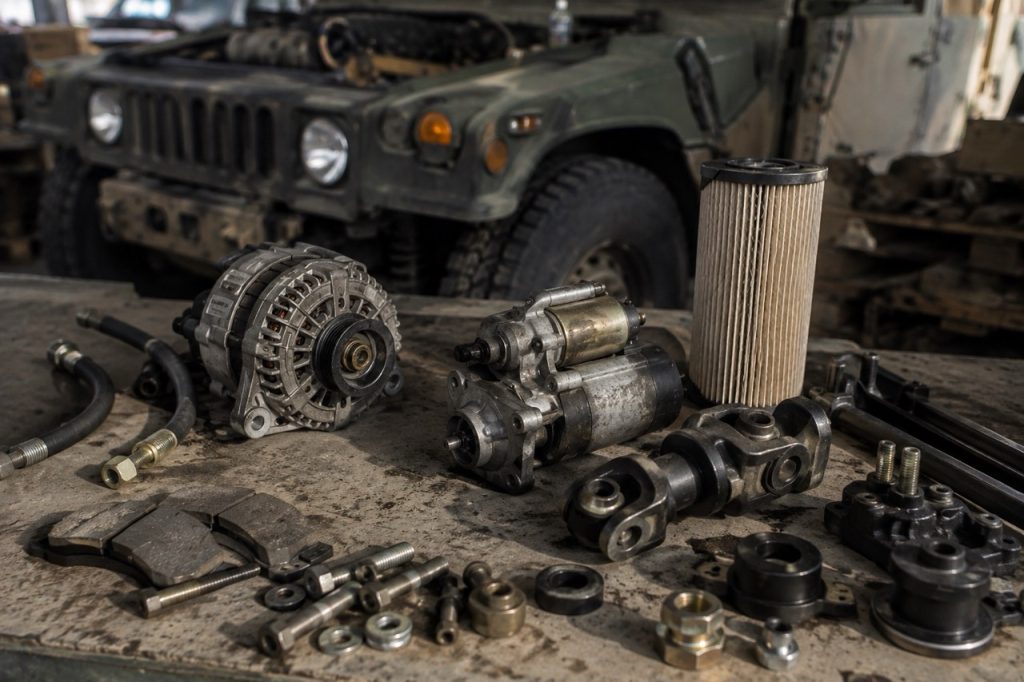
The High Mobility Multipurpose Wheeled Vehicle has been a fixture of American and allied ground forces for four decades, and much of the global HMMWV fleet is now operating well past the point where age, mileage, and duty cycle start shaping the maintenance bill. For fleet managers, procurement officers, and logistics planners, the question is rarely whether an aging HMMWV can still run most can, with the right care. The real question is what it costs to keep it running reliably, and how that cost curve changes as the platform matures.
This is not a story of a vehicle falling apart. HMMWVs have earned a reputation for durability precisely because they were engineered for hard use and depot level rebuildability. But durability and low cost are not the same thing. As HMMWVs accumulate operating hours, exposure to harsh climates, and years on the books, the pattern of maintenance demand shifts from mostly scheduled, low cost servicing toward a mix that includes more unscheduled repair, more component replacement, and more time spent locating parts rather than installing them. Understanding that shift, and planning around it, is what separates fleets that stay ready from fleets that quietly bleed budget and availability.
Why Aging HMMWVs Require a Different Sustainment Strategy
The Army selected AM General’s design for production as the M998 HMMWV in late 1982, with production beginning in 1984 and the first vehicles entering service in October 1985, replacing older light tactical vehicles. Over the following decades the platform expanded into a large family of variants cargo and troop carriers, armament carriers, TOW missile carriers, ambulances, and shelter carriers with total production reaching roughly 190,000 units by 2008 across U.S. military and more than forty allied nation customers.
A vehicle family fielded in this volume, over this many years, does not simply get replaced overnight when a successor comes along. The Joint Light Tactical Vehicle program was designed to take over a significant share of the HMMWV mission set, and it was developed to restore or exceed the original HMMWV’s mobility and payload capabilities while improving survivability and sustainability. Even so, JLTV fielding has proceeded gradually, and the services have historically expected large numbers of HMMWVs to remain relevant for years after a replacement program begins. In the 2010s the Army’s own light tactical vehicle strategy anticipated sustaining significant portions of the HMMWV fleet for an additional 20 to 30 years through recapitalization and depot-level repair, work carried out through programs such as the HMMWV Recapitalization and Modernized Expanded Capacity Vehicle initiatives, which by February 2011 had converted more than 46,000 vehicles across Red River Army Depot, Letterkenny Army Depot, and the Maine Military Authority. (Defense Media NetworkGlobal Security)
That posture has since shifted. Under the 2025 Army Transformation Initiative, Army leadership directed the service to cancel procurement of what it characterized as excess ground vehicles, including the HMMWV and JLTV, alongside other legacy systems, and follow-on congressional reporting identified the HMMWV among the systems the Army planned to divest starting in fiscal year 2026. At the same time, the Marine Corps has reaffirmed its intent to replace its entire Humvee fleet with the JLTV, and lawmakers pressing for continued LTV modernization funding have noted that many HMMWVs still in service with the National Guard and Reserve components are older than the soldiers operating them. Put together, the picture for fleet operators including allied and partner nation forces that acquired HMMWVs through foreign military sales and continue to operate them independently of U.S. Army procurement decisions is one of a platform that is being drawn down at the front end of the pipeline while a large population of legacy vehicles still requires years of active sustainment. That combination is exactly the condition under which maintenance economics change most. (MilitarySpot)
How Vehicle Age Drives Maintenance Costs
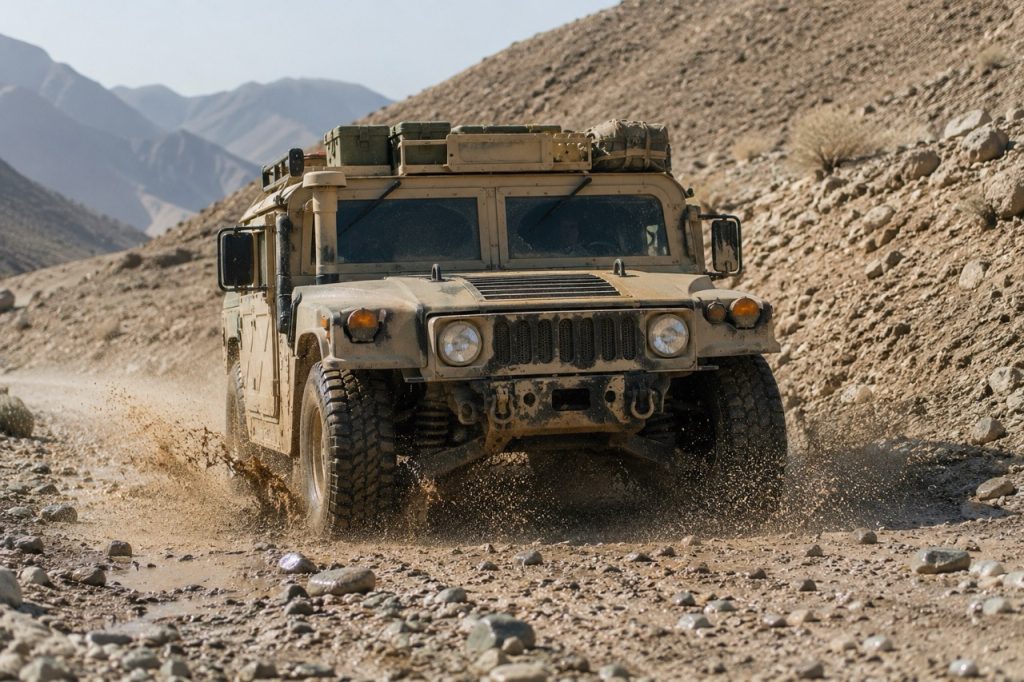
Vehicle aging does not raise maintenance costs through any single mechanism. It works cumulatively, through several reinforcing effects.
As components approach and pass their expected service life, the probability of failure at any given operating interval increases, which raises both the frequency of maintenance actions and the likelihood that a given repair requires full component replacement rather than adjustment or minor repair. Troubleshooting also tends to take longer on older vehicles, particularly where wiring, connectors, and sensors have degraded or where prior repairs and part substitutions have introduced inconsistencies from the original technical data package. More labor hours per repair event, combined with more repair events, compounds quickly across a fleet.
Perhaps the most consequential shift is the balance between scheduled and unscheduled maintenance. A newer vehicle’s maintenance burden is dominated by planned servicing the kind that can be scheduled around mission requirements. An aging vehicle increasingly generates unscheduled maintenance: failures that occur during operation, that pull the vehicle off the line unpredictably, and that compress the time available to source parts and execute the repair. Unscheduled work is inherently more expensive than scheduled work of equivalent scope, because it disrupts planning, often requires expedited parts sourcing, and extends vehicle downtime beyond what the repair itself would otherwise take.
This is also where GAO’s most recent government-wide review of ground vehicle sustainment is instructive, even though it covers the broader Army and Marine Corps ground vehicle portfolio rather than the HMMWV in isolation. GAO found that even as mission capable rates and depot overhauls declined across the fleets it reviewed, maintenance costs rose for most of the selected ground vehicles Army maintenance costs increased for nine of eleven ground vehicles between fiscal years 2015 and 2023. That same review specifically identified vehicles well into their expected service lives citing both services’ HMMWVs and the Army’s armored personnel carrier fleet as facing common challenges tied to diminished manufacturing sources and obsolete parts. The mechanism GAO describes generally applies with particular force to HMMWVs precisely because so much of the surviving fleet is now decades past its original fielding date. (Military FactoryU.S. GAO)
HMMWV Components Most Exposed to Long Term Wear
Unit and direct support maintenance for the HMMWV family is documented across the TM 9-2320-280 series of technical manuals, which lay out preventive maintenance checks and services covering engine, electrical, transmission, transfer case, propeller shaft, axle, suspension, brake, and steering systems. Age and cumulative use interact with essentially every one of these systems, though not uniformly and not in a way that guarantees failure on any particular vehicle.
Engine-related wear items seals, gaskets, belts, and cooling-system hoses are among the first to show age related degradation, particularly on vehicles that have spent significant time in hot or dusty environments. Transmission and transfer case components can develop wear in seals and internal hardware as duty cycles accumulate, especially on vehicles used heavily off road or in stop and start convoy operations. Axle and differential components, along with suspension bushings, mounts, and steering linkage, absorb repeated mechanical stress and are directly affected by terrain, payload, and driving conditions over the vehicle’s life. Brake system components wear according to use rather than calendar age alone, but corrosion and rubber degradation in older brake hydraulics and seals become more common as vehicles age. Electrical systems starting, charging, and wiring harnesses are frequently cited by field maintainers as an area where age related connector corrosion and insulation breakdown create intermittent faults that are disproportionately time consuming to diagnose.
None of this means every older HMMWV is mechanically compromised. A well maintained vehicle with moderate mileage, careful storage, and a consistent maintenance history can outperform a younger vehicle that has been run hard with deferred servicing. Age, mileage, operating hours, climate exposure, mission profile, and maintenance history all interact, and any credible assessment of an individual vehicle’s condition has to account for all of them rather than treating the model year as a proxy for reliability.
The Hidden Costs Behind HMMWV Maintenance
The price of a replacement part is often the smallest line item in the true cost of an aging vehicle repair. Technician labor including diagnostic time, which lengthens as fault patterns become less predictable typically represents a larger share of the total than the part itself. Vehicle downtime carries its own cost in lost operational availability, particularly when a unit’s mission planning assumed a certain number of mission capable vehicles and a maintenance event removes one unexpectedly.
Parts sourcing adds further cost layers once a repair is identified: locating the correct part, verifying its compatibility with a specific vehicle configuration and serial number range, and when a part is not on hand absorbing the cost and lead time of expedited shipping to avoid extending downtime further. Procurement administration, inventory carrying costs for parts held against anticipated failures, and the coordination overhead of scheduling depot-level maintenance for repairs beyond unit-level capability all add to the real cost of sustaining a mature fleet. Where units resort to cannibalizing parts from vehicles being phased out of service a practice GAO documented as a partial mitigation strategy Army depots have used as overhaul funding declined this can preserve near term readiness for other vehicles but reflects underlying materiel shortages rather than a sustainable long term solution. GAO’s review noted that the Army partially offset declining depot overhauls by harvesting parts from vehicles being phased out of service, a pattern that illustrates how parts scarcity and fleet age reinforce each other operationally, even outside the HMMWV specific figures. (Military Factory)
Spare Parts Availability and Obsolescence Challenges
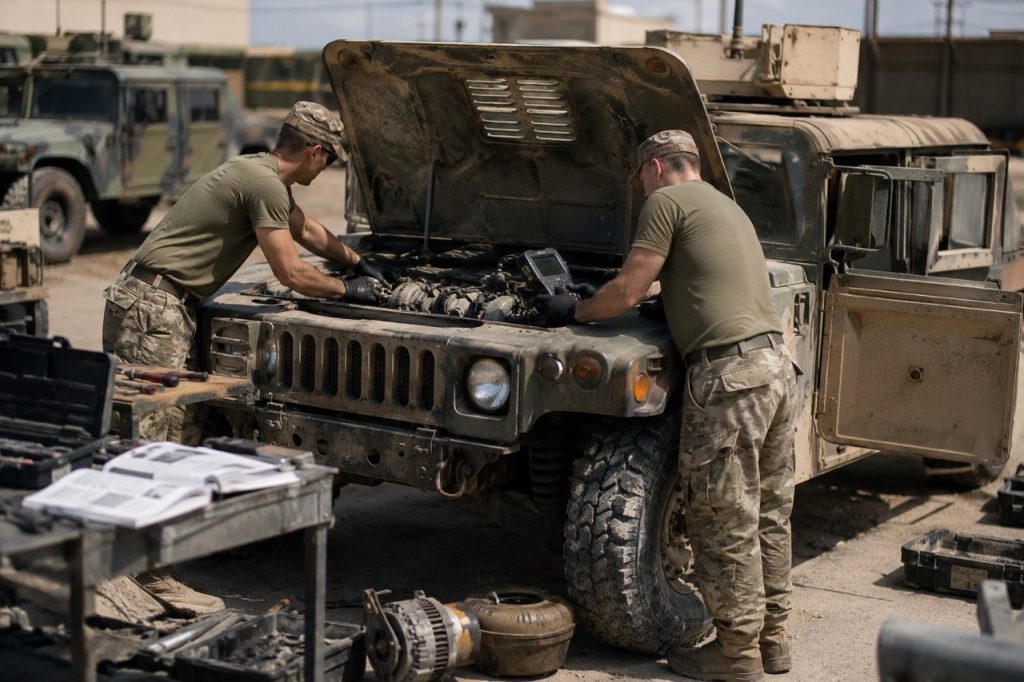
Mature military platforms accumulate a particular kind of procurement risk that has little to do with the vehicle’s mechanical condition: the parts that sustain it can become harder to buy long before the vehicle itself is unserviceable. Original manufacturing runs for many HMMWV specific components ended years or decades ago. Suppliers exit low volume defense niches, tooling for legacy part numbers is retired, and technical data packages that once supported multiple qualified sources sometimes narrow to a single remaining supplier or go out of currency altogether.
GAO’s ground vehicle sustainment review found that a lack of parts and materiel, along with the absence of current technical data or drawings, affected all eighteen of the Army and Marine Corps ground vehicles it examined a finding that applies with particular relevance to platforms like the HMMWV that have been in the inventory since the mid 1980s. The report also noted that aging ground vehicle fleets have experienced diminished manufacturing sources for parts, leading to lengthy production timelines, with obsolete parts, single-source suppliers, and fleets competing for the same manufacturers’ production capacity all contributing to the shortfall. This is procurement complexity, not mechanical failure: a HMMWV can be entirely serviceable and still be difficult to keep in the field if the seal, bushing, or electrical component it needs is no longer in active production and has to be sourced through remanufacture, reverse engineering, or a qualified alternative supplier. (Military FactoryU.S. GAO)
For fleet managers, the practical implication is that part identification and interchangeability research confirming which components are genuinely equivalent across HMMWV variants and production years becomes as important as the repair itself, particularly for older A0 and A1-series vehicles where documentation may be thinner than for later production runs.
How Aging HMMWVs Affect Fleet Readiness
The relationship between platform age and readiness runs through a fairly direct chain: as vehicles age, component degradation increases; that raises maintenance demand; higher maintenance demand increases the call on spare parts; when parts are not readily available, repair events take longer; longer repair events mean more vehicles are down at any given time; and fewer available vehicles reduces overall fleet readiness.
GAO’s most recent review captured this dynamic across the broader ground vehicle portfolio: none of the Army ground vehicles it reviewed met the service’s goal of 90 percent availability in fiscal year 2024, and sixteen of the eighteen vehicles examined had seen declining mission capable rates since 2015. The report attributes this decline to the combination of reduced depot overhaul capacity and the parts and technical-data shortfalls already discussed the same mechanisms that disproportionately affect platforms that have been in service the longest. For a HMMWV fleet operator, the takeaway is not that age alone determines readiness, but that age amplifies the consequences of any weakness elsewhere in the sustainment chain inventory planning, supplier diversification, or preventive maintenance discipline.
Preventive Maintenance and the Cost of Avoiding Failure
Preventive maintenance becomes more valuable, not less, as a HMMWV fleet ages precisely because the cost gap between planned servicing and unplanned failure widens with age. Structured inspection programs, adherence to the scheduled service intervals documented in the TM 9-2320-280 series, careful fluid and lubrication management, and condition monitoring that flags wear before it becomes failure all help shift the maintenance mix back toward the lower cost, scheduled side of the ledger.
Maintenance history matters here in a way that is easy to underweight: a vehicle whose service records show consistent servicing intervals and documented repairs gives a maintenance team a much stronger basis for anticipating the next likely failure point than a vehicle with gaps or inconsistent records. Tracking failure trends across a fleet which components fail, at what mileage or operating hour intervals, under which mission profiles turns individual repair events into fleet level intelligence that can inform both maintenance scheduling and spare parts planning. None of this eliminates failures. Preventive maintenance reduces the frequency and severity of unscheduled events; it does not guarantee against them, and any sustainment program that treats it as a guarantee will be caught out by the inevitable exceptions.
Why Spare Parts Planning Matters More as HMMWVs Age
As the probability of unscheduled maintenance rises, the cost of poor spare parts planning rises with it. A critical spare parts list built from actual failure trend data rather than assumption lets a fleet operator prioritize inventory around the components most likely to cause downtime rather than spreading limited budget evenly across the parts catalog. Demand forecasting informed by fleet age, operating tempo, and historical failure rates supports more accurate safety stock levels, reducing both the risk of stockouts and the carrying cost of excess inventory.
Supplier diversification and the qualification of approved alternative sources reduce exposure to the single source risk that GAO’s review flagged as a recurring sustainment challenge across aging ground vehicle fleets. Long lead item planning identifying which components have extended production or sourcing timelines and building procurement schedules around those realities rather than around ideal case lead times is one of the more effective ways fleet managers can reduce the downtime associated with parts scarcity. Ongoing obsolescence monitoring, paired with disciplined documentation and traceability for whatever components are sourced, rounds out a spare parts strategy built for a platform that will likely remain in the field longer than its original service life projections anticipated.
OEM vs Qualified Alternative HMMWV Spare Parts
Procurement decisions for aging HMMWV fleets increasingly involve a choice between original equipment manufacturer parts, genuine remanufactured components, and qualified alternative sources reverse engineered, licensed, or third party manufactured parts that meet the applicable technical specifications. Neither category is categorically superior. OEM parts typically carry the strongest documentation and traceability back to original technical data, which matters for components where exact tolerances or material specifications are safety relevant. But OEM availability for a platform this mature is not guaranteed, and lead times for genuine parts can be long precisely because of the manufacturing source and obsolescence pressures already discussed.
Qualified alternative sourcing can close availability gaps that OEM channels cannot, provided the alternative supplier’s parts are genuinely verified against the applicable technical specifications, backed by appropriate quality documentation, and traceable. The decision should weigh technical compatibility, quality assurance, documentation, reliability history, lead time, and total cost of ownership together not treat price or availability alone as the deciding factor. For safety critical systems such as brakes and steering, the bar for verification should be correspondingly higher than for lower criticality wear items.
Managing the Total Cost of Ownership of Aging HMMWVs
Purchase price is the most visible number in any spare parts transaction and often the least representative of total cost. A complete view has to add logistics cost freight, customs, and expedited shipping where downtime pressure forces it installation labor, the value of downtime avoided or incurred, the part’s demonstrated reliability once installed, how frequently it will need replacement given the vehicle’s operating profile, and the ongoing lifecycle support behind it, including documentation and future availability. A cheaper part that fails sooner, requires more labor to install, or comes without adequate documentation can easily cost more over the vehicle’s remaining service life than a more expensive part that performs reliably and is well supported. GAO’s broader finding that sustainment costs typically account for roughly 70 percent of a weapon system’s total lifecycle cost underscores why this framing matters at the fleet level, not just the individual transaction level sustainment decisions made repair by repair accumulate into the dominant share of what a platform costs to own over its service life. (U.S. GAO)
Practical Strategies for Controlling Aging HMMWV Maintenance Costs
Fleet managers working to control the cost trajectory of an aging HMMWV fleet generally benefit from a consistent set of practices: building and continuously updating a critical spare parts list grounded in actual fleet data; tracking failure trends and recurring component issues rather than relying on generic service life assumptions; prioritizing inventory and procurement attention on the parts with the highest combined failure frequency and mission impact; maintaining inventory levels calibrated to realistic lead times rather than best case assumptions; qualifying multiple suppliers where the market supports it; planning proactively for components approaching obsolescence rather than reacting after a stockout; using accumulated maintenance data to forecast future demand; coordinating procurement planning directly with maintenance scheduling so parts arrive ahead of predictable service events; and evaluating repair versus replacement decisions on lifecycle economics rather than the upfront repair estimate alone. None of these practices eliminates the underlying cost pressure that comes with an aging platform, but together they determine whether that pressure is managed proactively or absorbed reactively, vehicle by vehicle, as failures occur.
How AB Defence Supports HMMWV Fleet Sustainment
Organizations operating aging HMMWV fleets whether as active duty units managing legacy vehicles, National Guard and Reserve components, or allied and partner-nation militaries that acquired HMMWVs through foreign military sales face a common challenge: keeping mechanically sound vehicles in service depends on reliable access to parts that are becoming progressively harder to source through conventional channels.
AB Defence works with defense procurement and fleet sustainment organizations to help close that gap. That includes sourcing HMMWV spare parts and military vehicle components across a wide range of systems, supporting the identification of hard to source and legacy parts where original manufacturing lines have narrowed or closed, coordinating with qualified suppliers internationally, and supporting the logistics that get verified parts to fleet locations without unnecessary delay. For sustainment teams managing procurement across multiple vehicle programs and multiple international supply chains, that kind of coordination matched with attention to documentation and part traceability is often what determines whether an aging fleet stays ready or slips into extended downtime waiting on parts.
Fleet managers and procurement officers evaluating their HMMWV sustainment strategy are welcome to reach out to AB Defence to discuss current parts requirements and supply planning for aging fleet segments.
Aging HMMWV platforms do not become unreliable on a fixed schedule, and treating vehicle age as a simple countdown to failure misrepresents how these platforms actually behave in service. What age reliably does is shift the maintenance mix toward more unscheduled events, longer diagnostic time, greater dependence on spare parts availability, and a growing procurement burden tied to obsolescence rather than mechanical wear alone. That shift, documented at the fleet wide level in recent GAO reporting on Army and Marine Corps ground vehicle sustainment, is exactly why disciplined preventive maintenance, data driven spare parts planning, and a considered approach to OEM versus qualified alternative sourcing matter more for a mature HMMWV fleet than for a newly fielded one. Total cost of ownership, not the price of the next part, is the number that ultimately determines whether an aging fleet remains a sustainable operational asset or a growing drain on maintenance budgets and readiness.
Work With AB Defence
Partner with AB DEFENCE for Reliable Combat Support Vehicle Sustainment. AB DEFENCE is a specialist international supplier of military spare parts and fleet sustainment solutions serving NATO and allied defense organisations. With deep inventory across a wide range of combat support vehicle platforms, rigorous quality assurance processes, export compliance expertise, and a commitment to long term supply chain partnership, AB DEFENCE helps defense buyers maintain fleet availability, reduce sustainment costs, and meet their operational readiness obligations. Contact the AB DEFENCE team to discuss your spare parts requirements, strategic inventory planning, and long-term sustainment programme needs.
Contact AB Defence to discuss your procurement requirements and learn how we can support your fleet readiness objectives.
Related Military Spare Parts Categories, Vehicle Platforms & Technical Guides
Explore AB Defence’s NATO-codified (NSN) and genuine OEM spare parts catalog, platform technical specifications, and sustainment engineering guides related to this article:
Stocked Spare Parts Categories (NSN & OEM Catalog)
- HMMWV (Humvee / Hummer M998) Spare Parts (203 stocked parts)
- Electrical, Electronic & Vision Systems for Military Vehicles (250 stocked parts)
- Military Brake Calipers, Master Cylinders & Hydraulic Systems (103 stocked parts)
- Military Portal Axles, Differentials & Drive Shafts (107 stocked parts)
- Military Engine Cooling Systems, Radiators & Water Pumps (57 stocked parts)
- Full NATO NSN & OEM Spare Parts Catalog (16,760+ Parts)
Compatible Vehicle Platforms & System Hubs
- HMMWV M998
- Tactical Wheeled Vehicles
- Electrical, Electronic & Vision Systems
- Brake & Suspension Systems
- Engine & Powertrain Systems
- Request a B2B Quotation (RFQ) & Technical Support