August 7, 2026
The Most Common HMMWV Failures During Extended Field Operations
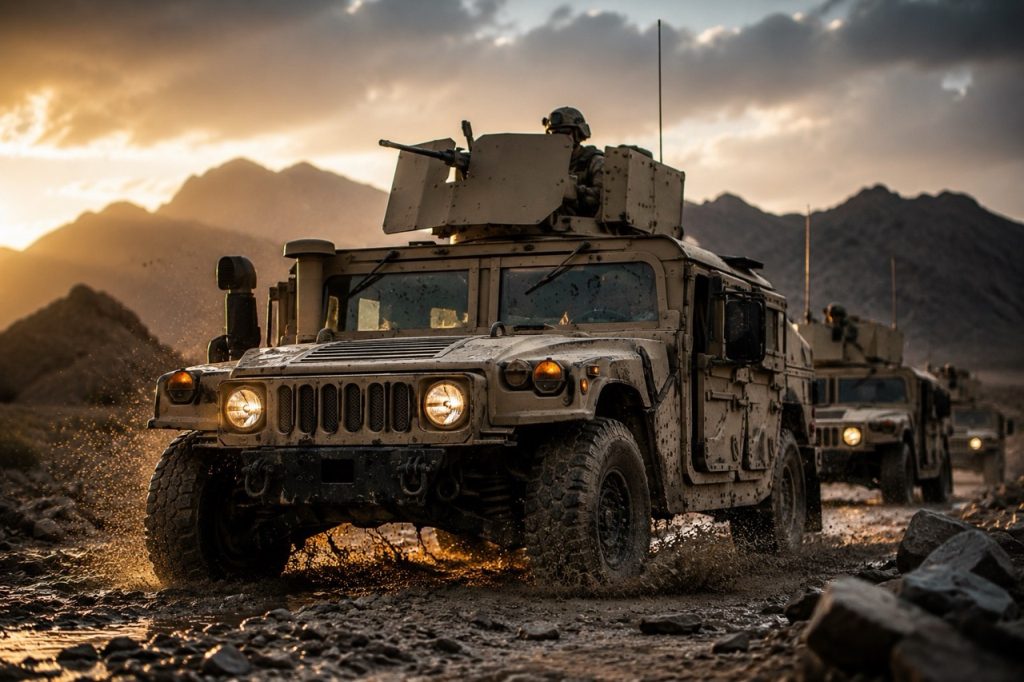
The HMMWV has been the backbone of tactical mobility for the United States Army and dozens of allied and NATO aligned forces since AM General began fielding the M998 series in the mid 1980s. Four decades on, variants of the platform still carry troops, weapons systems, communications equipment, and casualties across terrain that ranges from open desert to mountain switchbacks. Few tactical wheeled vehicles have logged as many operational hours in as many climates.
That longevity is a testament to the original design, but it also means the HMMWV fleet has spent years absorbing duty cycles well beyond what routine peacetime service ever anticipated. During the height of operations in Iraq and Afghanistan, the U.S. Government Accountability Office found that HMMWVs were being used at roughly six times their normal peacetime operational tempo. Extended field operations, sustained convoy duty, heavy add on armor, and constant exposure to sand, mud, and extreme temperature swings all accelerate component wear well ahead of programmed maintenance intervals.
For procurement officers, fleet sustainment managers, and maintenance engineers, understanding exactly which systems fail first, and why, is not academic. It shapes spare parts inventory planning, maintenance scheduling, and ultimately whether a unit’s HMMWVs are available when a mission requires them. This article walks through the failure modes most consistently documented in official Army maintenance literature and sustainment reporting, and explains what disciplined preventive maintenance and reliable spare parts logistics do to keep them in check.
Understanding Extended Field Operations
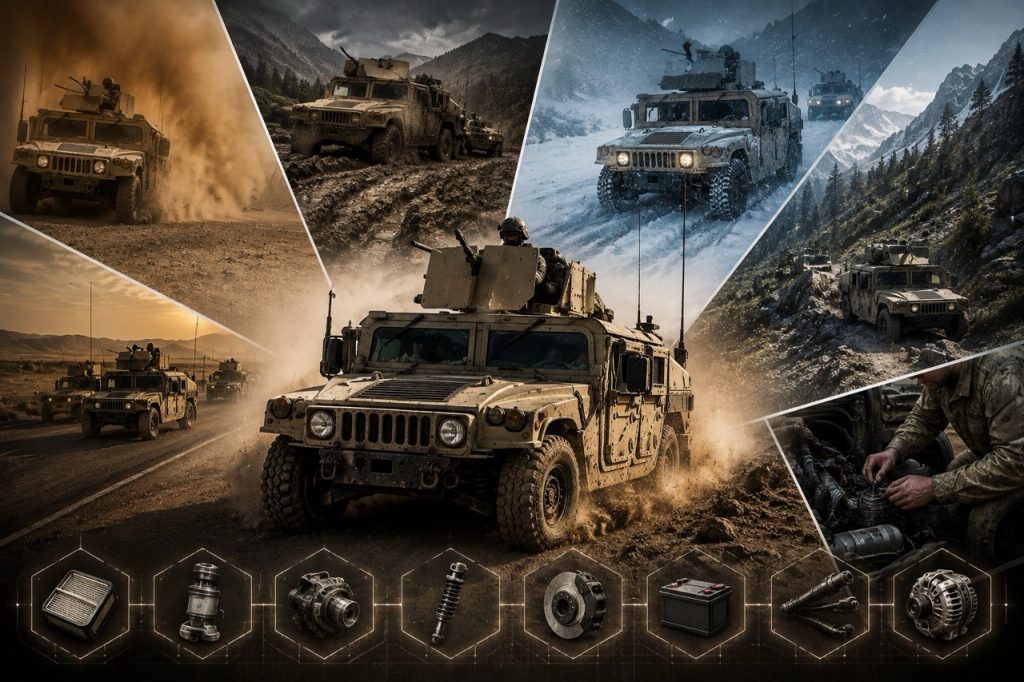
“Extended field operations” covers a wide range of conditions, but the common thread is duration under stress: vehicles running for weeks or months with limited access to organizational or field level maintenance facilities. The operating environments that place the greatest demand on HMMWV systems typically include:
- Desert and arid environments, where fine particulate sand infiltrates air filtration, fuel, and electrical systems
- Mud and saturated terrain, which loads suspension and drivetrain components and accelerates corrosion
- Snow and sub freezing conditions, which stress batteries, cooling systems, and rubber and seal components
- Mountainous and off-road terrain, which subjects steering, suspension, and brake systems to constant cyclical loading
- Continuous convoy operations, where vehicles run for extended hours with minimal cool down or inspection time
- Heavy payloads, including armor kits, communications equipment, and weapons systems that raise gross vehicle weight well above baseline configurations
- High cumulative operating hours between scheduled services, often driven by operational tempo rather than the calendar
- Limited maintenance opportunities, particularly during combat operations or in austere forward locations without direct support facilities
Each of these conditions individually accelerates wear on a specific set of components. In combination, and sustained over weeks of continuous operation, they compound. A HMMWV that has been running loaded convoy routes through desert terrain for an extended rotation is not simply experiencing more of the same wear a garrison vehicle sees it is experiencing a materially different and more demanding duty cycle, one that preventive maintenance programs have to account for explicitly rather than by default calendar based scheduling alone.
Most Common HMMWV Failures
The failure patterns below are drawn from the systems the Army’s own unit and field maintenance manuals, PS: The Preventive Maintenance Monthly, and defense sustainment reporting consistently flag as high wear areas under sustained field use. Failure rates vary by vehicle age, variant, armor configuration, and theater, so this section focuses on explaining the mechanisms rather than citing figures that cannot be verified across the fleet as a whole.
Engine Cooling System Failures
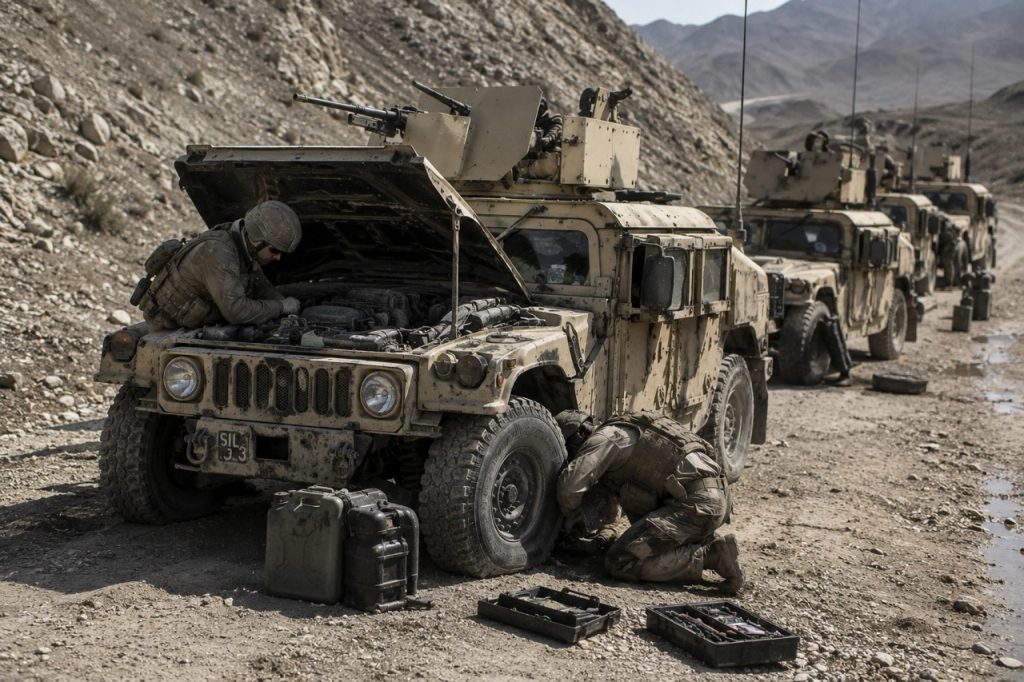
Cooling system failure is one of the most persistent issues reported across HMMWV variants, particularly on earlier 6.2L and 6.5L diesel equipped models. The engine bay is compact, radiator surface area is limited relative to the load the turbocharged diesel places on it, and sustained high ambient temperature operation leaves little thermal margin. Overheating under prolonged desert or high altitude operation, radiator core damage from debris and stone impact, coolant leaks at hose fittings and water pump seals, fan clutch wear, and thermostat failures are all commonly reported field issues.
Clogged cooling passages from sediment buildup and cracked cylinder heads from repeated heat cycling under load are the more serious downstream consequences when overheating goes unaddressed. Preventive measures center on strict adherence to PMCS coolant level and condition checks, regular radiator core cleaning to clear accumulated dust and insect debris, and prompt hose and clamp inspection before and after extended movements.
Suspension Wear
shock absorbers
Rough terrain does not just wear these components faster it changes the failure pattern. A control arm bushing that might last years of on road duty can develop measurable play within a single extended field rotation. Systematic suspension inspection during scheduled services, rather than waiting for driver reported handling complaints, is the more effective approach in sustained field conditions.
Steering System Problems
Steering linkage wear, tie rod end degradation, steering gear issues, and hydraulic power-steering leaks show up disproportionately on vehicles that have logged extended off-road mileage. The steering system absorbs continuous shock loading from uneven terrain, and hydraulic lines and fittings are vulnerable to both vibration fatigue and the same sand and dust infiltration that affects other systems. Left unaddressed, steering play or fluid loss becomes both a maintenance issue and a driver safety concern, which is why steering system checks are a standard PMCS item rather than a periodic only inspection.
Brake System Failures
Extended convoy operations, mountainous terrain, and loaded vehicle weight all increase brake system demand. Brake overheating from repeated hard stops on grades, accelerated pad and rotor wear, hydraulic line leaks, and brake fluid contamination from moisture and dust ingress are the failure modes documented most often. Contaminated brake fluid is a particular concern in humid or wet field environments, since absorbed moisture lowers the fluid’s boiling point and increases the risk of brake fade under sustained heavy use. Fielding of antilock braking and electronic stability control on up armored HMMWV variants beginning in 2019 improved handling and rollover resistance, but did not change the underlying maintenance discipline required to keep friction and hydraulic components serviceable in the field.
Drivetrain and Differential Failures
Universal joints, the transfer case, axle shafts, and front and rear differentials all carry the compounded load of a heavier, up armored vehicle operating in low range four wheel drive for extended periods. Drivetrain vibration is often the first symptom reported, and it can originate from a worn universal joint, differential gear wear, or an out of balance axle shaft. Units operating in sand heavy theaters have also reported transfer case wear tied to contamination working past seals during sustained low range operation, which is why transfer case fluid condition and seal integrity are recurring PMCS and field maintenance checkpoints.
Transmission Problems
Transmission overheating, shifting irregularities, transmission fluid degradation, and seal failures are recurring themes in Army sustainment reporting on the HMMWV fleet. Notably, transmission stress is not purely a function of mileage. The Army’s own preventive maintenance publication has documented cases of HMMWV transmissions failing prematurely on vehicles with comparatively low annual mileage but heavy stationary or low speed operational use, underscoring why usage based maintenance planning matters as much as time based service intervals. The Non Combat Operations Maintenance Plan was introduced specifically to align maintenance requirements with actual vehicle usage rather than calendar driven intervals alone, reflecting this reality.
Electrical System Failures
Batteries, alternators, wiring harnesses, connectors, exterior lighting, and the power supply for communications equipment are all vulnerable to the combination of vibration, moisture, and dust that defines extended field operations. Corroded or loosened connectors are among the most frequently reported electrical faults, often manifesting as intermittent faults that are difficult to diagnose without methodical continuity testing. Battery life is shortened by both temperature extremes and the parasitic draw of mounted electronics and communications gear during extended stationary operations, making battery condition checks a routine PMCS requirement rather than a reactive fix.
Fuel System Issues
Clogged fuel filters, injector contamination, fuel pump wear, and inconsistent fuel quality in forward or austere locations all affect HMMWV diesel engine reliability. Fine sand and dust that bypass air filtration can also work into fuel system components over time, and units operating on host nation or field expedient fuel sources sometimes contend with contamination levels well above what garrison fuel supplies would present. Regular fuel filter changes and water separator draining are the primary preventive measures, particularly in theaters where fuel quality cannot be guaranteed.
Tire and Wheel Problems
Uneven tire wear, beadlock issues on vehicles so equipped, wheel bearing wear, and alignment problems are common after extended off-road use, particularly when suspension components have already begun to degrade. Because tire wear patterns often reflect an underlying suspension or alignment issue rather than a standalone tire defect, experienced maintenance personnel treat abnormal wear as a diagnostic signal and inspect suspension and steering components alongside the tires themselves.
Air Filtration Problems
Dust and sand ingestion is one of the single most damaging environmental factors for HMMWVs operating in desert and arid theaters. A clogged or degraded air filter reduces engine performance, increases fuel consumption, and accelerates internal engine wear as abrasive particulate bypasses filtration and reaches combustion chamber surfaces. Air filter condition checks are a basic PMCS item, but in high dust environments the practical service interval is often far shorter than the printed baseline, which is why experienced fleet managers track filter condition by environment rather than by the calendar alone.
Operational Consequences
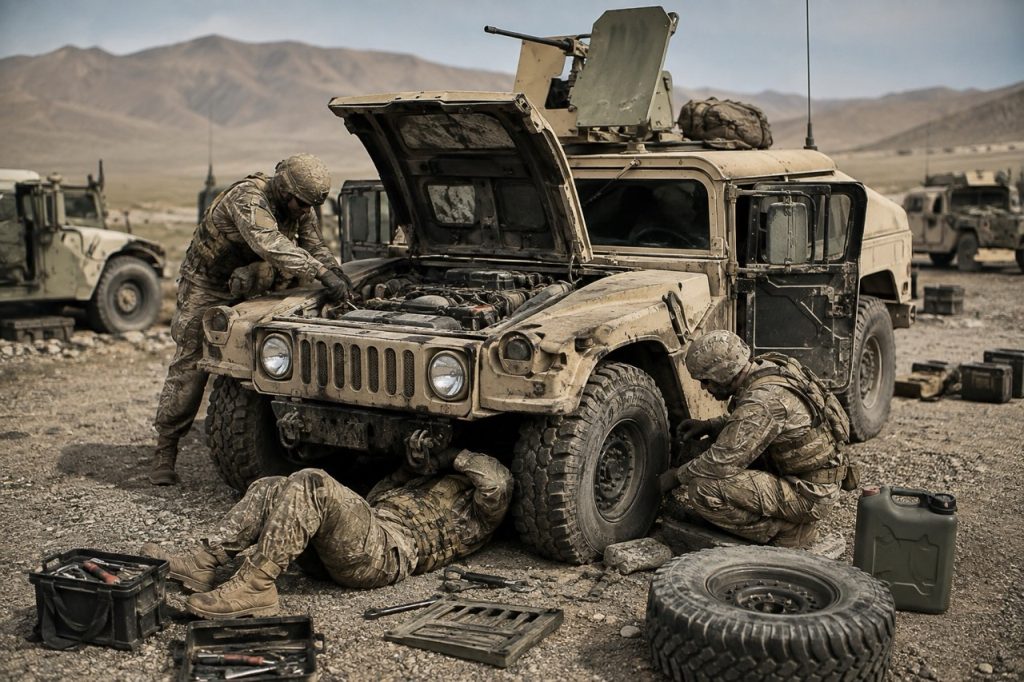
Component failure on a single vehicle rarely stays a single vehicle problem in a deployed unit. A HMMWV down for cooling system or transmission repair pulls a seat, cargo capacity, or a weapons mount out of the convoy plan, forces route and load redistribution, and consumes maintenance personnel and parts that were allocated elsewhere. Recent Government Accountability Office reporting on Army and Marine Corps ground vehicle sustainment found that none of the reviewed vehicle types met the services’ 90 percent availability goal in fiscal year 2024, and that mission capable rates had declined for the majority of vehicle types reviewed since fiscal year 2015 a trend GAO attributed in part to sustained high operational tempo and parts and maintenance capacity constraints.
Beyond the immediate mission impact, unaddressed field failures compound into lifecycle cost. A cooling system failure caught early is a radiator or hose replacement; left unaddressed through repeated overheating cycles, it becomes a cracked cylinder head and an engine overhaul. The same pattern holds across drivetrain, transmission, and suspension systems: deferred maintenance in the field converts a routine repair into a depot level rebuild, with corresponding cost and downtime multiplying well beyond the original fault.
Preventive Maintenance Best Practices
The single most consistent theme across Army maintenance publications and sustainment guidance is that scheduled, disciplined preventive maintenance checks and services (PMCS) are what keep the failure modes above from compounding. Effective practice includes:
- Scheduled inspections performed to the printed PMCS interval, adjusted upward in frequency for high dust, high heat, or high mileage operating conditions
- Predictive and condition based maintenance that tracks component wear indicators rather than relying on calendar intervals alone, consistent with the intent behind usage-aligned maintenance planning
- Routine lubrication of suspension, steering, and drivetrain components, particularly after river crossings, mud, or extended dust exposure
- Fluid analysis for engine oil, transmission fluid, and coolant to catch contamination or degradation before it produces a failure
- Cooling system inspections, including radiator core cleaning and hose and clamp checks, at a frequency matched to ambient operating temperature
- Electrical system testing, with particular attention to connector corrosion and battery condition in humid or high-vibration environments
- Suspension and steering inspections that treat abnormal tire wear as a diagnostic cue rather than an isolated tire issue
- Brake system inspections, including fluid condition checks in humid or wet theaters
- Spare parts planning that anticipates the specific failure modes associated with the unit’s actual operating environment, not a generic baseline
None of this is complicated in principle. What makes it difficult in practice is sustaining the discipline through weeks of continuous operations, when maintenance windows compete directly with mission tempo. Units that build maintenance time into the operational schedule, rather than treating it as leftover time, consistently report better fleet availability.
Importance of High Quality Spare Parts
Preventive maintenance only works if the correct part is available when a component reaches the end of its service life or fails unexpectedly. This is where spare parts quality and sourcing become a readiness issue rather than a purely logistical one. Genuine OEM components and properly qualified, high quality aftermarket components both have a legitimate place in a sustainment strategy, but the distinction matters: a component manufactured to the correct material specification, dimensional tolerance, and quality standard performs predictably under the stresses described above, while a substandard or counterfeit part introduces exactly the kind of unpredictable failure that preventive maintenance is designed to prevent.
Supplier qualification, traceable sourcing documentation, and component testing are not bureaucratic overhead they are how a fleet sustainment manager avoids installing a part that looks correct but fails prematurely under field load. Counterfeit and unverified parts have been a recognized risk area in defense supply chains, and the operational cost of a failed part is rarely limited to the part itself; it includes the labor to diagnose and replace it again, the vehicle downtime, and in some cases collateral damage to adjacent components. Properly qualified spare parts, by contrast, reduce lifecycle cost by getting the repair right the first time and by supporting more accurate inventory planning, since a maintenance team can trust that a stocked part will perform to specification.
Why Reliable Defense Suppliers Matter
Fleet availability during extended field operations depends as much on the supply chain behind the wrench as on the maintenance work itself. An experienced military spare parts supplier contributes to fleet readiness in ways that go beyond simply stocking components:
- Fleet availability improves when lead times for high wear components cooling system parts, suspension bushings, brake components, electrical connectors are short and predictable
- Maintenance efficiency improves when parts are correctly identified, quality verified, and delivered with documentation that supports rapid installation without additional inspection delay
- Procurement planning benefits from a supplier that understands HMMWV variant differences and can support accurate part identification across the fleet’s mixed configuration
- Logistics continuity matters for units operating across multiple theaters or supporting NATO and allied fleets with parts interoperability requirements
- International defense support requires a supplier able to navigate export documentation, end use certification, and cross border logistics without adding delay to an already time sensitive repair
Extended field operations do not create new failure modes so much as they compress the timeline in which familiar ones appear. Cooling systems, suspension components, steering linkages, brakes, drivetrain assemblies, transmissions, electrical systems, fuel systems, and air filtration all face accelerated wear when a HMMWV runs loaded, over rough terrain, for weeks at a time with limited maintenance windows. That is the nature of the mission the platform was built for.
What separates a fleet that stays mission-ready from one that does not is not the absence of wear it is disciplined preventive maintenance matched to actual operating conditions, and a spare parts supply chain reliable enough that a diagnosed fault becomes a routine repair rather than an extended downtime event. For procurement officers, sustainment managers, and maintenance engineers supporting HMMWV fleets in demanding environments, that combination of maintenance discipline and dependable logistics support is what keeps the platform doing, four decades in, exactly what it was designed to do.
Work With AB Defence
Partner with AB DEFENCE for Reliable Combat Support Vehicle Sustainment. AB DEFENCE is a specialist international supplier of military spare parts and fleet sustainment solutions serving NATO and allied defense organisations. With deep inventory across a wide range of combat support vehicle platforms, rigorous quality assurance processes, export compliance expertise, and a commitment to long term supply chain partnership, AB DEFENCE helps defense buyers maintain fleet availability, reduce sustainment costs, and meet their operational readiness obligations. Contact the AB DEFENCE team to discuss your spare parts requirements, strategic inventory planning, and long-term sustainment programme needs.
Contact AB Defence to discuss your procurement requirements and learn how we can support your fleet readiness objectives.
Related Military Spare Parts Categories, Vehicle Platforms & Technical Guides
Explore AB Defence’s NATO-codified (NSN) and genuine OEM spare parts catalog, platform technical specifications, and sustainment engineering guides related to this article:
Stocked Spare Parts Categories (NSN & OEM Catalog)
- HMMWV (Humvee / Hummer M998) Spare Parts (203 stocked parts)
- Electrical, Electronic & Vision Systems for Military Vehicles (250 stocked parts)
- Military Brake Calipers, Master Cylinders & Hydraulic Systems (103 stocked parts)
- Military Portal Axles, Differentials & Drive Shafts (107 stocked parts)
- Military Engine Cooling Systems, Radiators & Water Pumps (57 stocked parts)
- Full NATO NSN & OEM Spare Parts Catalog (16,760+ Parts)
Compatible Vehicle Platforms & System Hubs
- HMMWV M998
- Tactical Wheeled Vehicles
- Electrical, Electronic & Vision Systems
- Brake & Suspension Systems
- Engine & Powertrain Systems
- Request a B2B Quotation (RFQ) & Technical Support