June 24, 2026
Why Preventive Maintenance Determines Battlefield Readiness
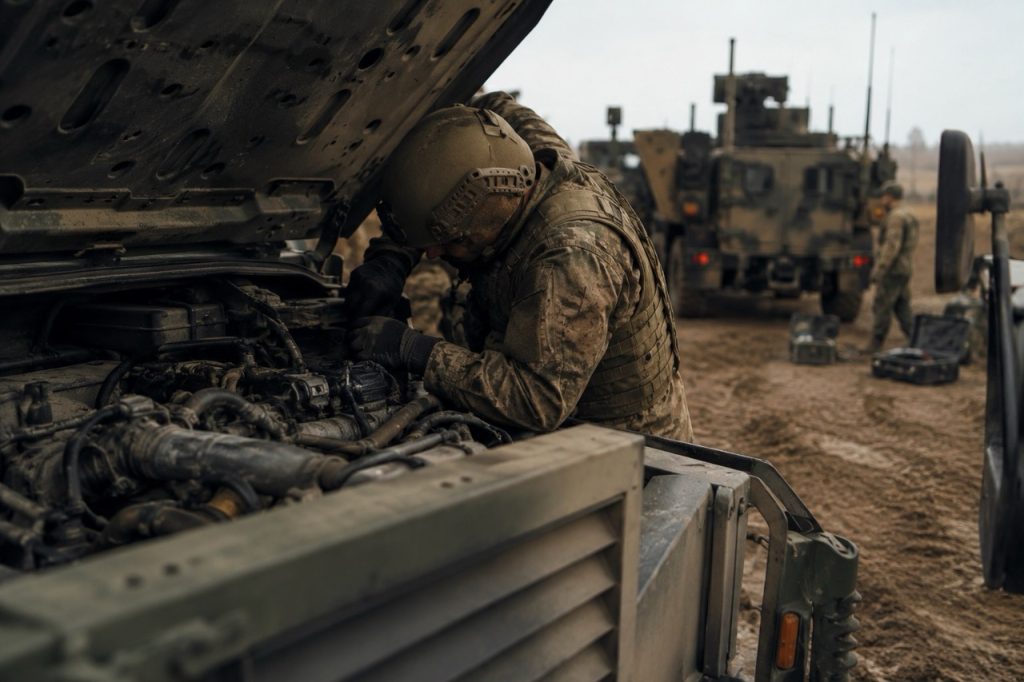
Battlefield readiness is not determined solely by the quality of a nation’s weapons systems, the volume of its procurement budget, or the tactical proficiency of its soldiers. Those factors matter enormously but they are rendered meaningless if the vehicles, platforms, and equipment required to execute a mission cannot be counted on to operate when called upon. The foundation of sustainable military capability lies in something less glamorous and far less frequently discussed in strategic policy circles: preventive maintenance.
For military organizations operating wheeled and armored vehicle fleets across NATO, the U.S. Department of Defense (DoD), and allied defense structures, the state of equipment on any given day determines the tempo of operations. A tactical wheeled vehicle grounded by a failed brake actuator, a combat support truck sidelined by a neglected lubrication interval, or an armored fighting vehicle immobilized due to undetected suspension degradation each of these represents not just a maintenance failure, but an operational liability with real consequences for personnel, mission timelines, and strategic objectives.
Preventive maintenance battlefield readiness is not a slogan. It is the measurable relationship between scheduled maintenance compliance and the percentage of a fleet that is available, operational, and capable on any given day. This article examines that relationship in depth why military vehicles fail, how preventive maintenance programs reduce failure rates, and what defense fleet managers can do to build more resilient sustainment strategies.
The Relationship Between Maintenance and Operational Readiness
The U.S. Army defines operational readiness as the ability of a unit to perform the functions for which it was organized or designed. A unit may be fully manned, fully trained, and fully equipped on paper yet if its vehicle fleet falls below mission capable thresholds, the unit cannot execute. This is not hypothetical. It is a recurring challenge documented across decades of military operations, from Cold War era NATO exercises to recent deployments in high tempo operational environments.
Military fleet readiness is typically measured through metrics such as the Operational Readiness Rate (ORR) and the Not Mission Capable (NMC) rate. These metrics reflect the percentage of vehicles in a fleet that are either available for tasking or sidelined for maintenance and repair. Historically, fleets with structured preventive maintenance programs sustain significantly higher ORR figures than those operating in a reactive, breakdown driven maintenance culture.
The relationship is straightforward: equipment that receives regular, scheduled inspection and component replacement fails less frequently, requires shorter repair cycles, and returns to service faster than equipment maintained only after a failure event occurs. In tactical vehicle maintenance environments, every hour a vehicle spends in unscheduled maintenance is an hour it is unavailable to support the operational plan. Defense fleet readiness is, at its core, a function of how well the maintenance cycle is managed before problems arise, not after.
NATO maintenance doctrine, reflected across STANAG frameworks and allied force structure agreements, emphasizes the primacy of planned maintenance scheduling. Allied maintenance standards are built on the recognition that equipment availability is a strategic variable, not a logistical afterthought. When preventive maintenance programs are properly funded, staffed, and enforced, readiness rates improve. When they are deferred, readiness degrades often in ways that are not immediately visible until a critical failure occurs under operational stress.
Why Military Vehicles Fail During Operations
Understanding why military vehicles fail is the essential prerequisite to building effective maintenance programs. The causes are neither mysterious nor unpredictable. They are well documented across military maintenance databases, after action reviews, and logistics failure analyses conducted by defense organizations worldwide.
Neglected Inspections and Deferred Maintenance
The most common root cause of unscheduled military vehicle downtime is deferred maintenance the deliberate or circumstantial decision to postpone required inspection intervals, component checks, or fluid services. In high operational tempo environments, units under pressure to keep vehicles mission capable in the short term will sometimes defer scheduled services, accepting increased long term risk. This approach consistently results in higher total downtime, greater repair costs, and more frequent catastrophic failures than would have occurred under a disciplined preventive maintenance schedule.
Suspension and Drivetrain Degradation
Military wheeled vehicles, particularly heavy tactical trucks, armored personnel carriers, and multi role platforms such as the HMMWV family or European equivalents like the Mercedes Benz Unimog and Land Rover Defender variants, operate across terrain profiles that place severe stress on suspension and drivetrain components. Shock absorbers, control arms, CV joints, differential assemblies, and transfer case components absorb continuous punishment that accelerates wear rates far beyond civilian vehicle norms. Without routine inspection and planned replacement at prescribed intervals, these components fail often without warning and typically take the vehicle out of service for extended periods.
Brake System Failures
Brake system integrity is among the most safety critical maintenance areas in any military vehicle fleet. Brake lining wear, hydraulic fluid contamination, caliper corrosion, and actuator degradation are common failure modes that develop gradually and are detectable through regular inspection. When brake inspections are skipped or deferred, minor wear conditions escalate into complete system failure. Given the weight, payload capacity, and terrain demands placed on tactical trucks and armored vehicles, brake failure in a field environment creates immediate life-safety hazards.
Electrical System Faults
Modern military vehicles carry increasingly complex electrical architectures, integrating communications systems, electronic warfare packages, weapon station controls, and vehicle management computers alongside conventional lighting, starting, and power distribution circuits. Corrosion at terminal connections, chafed wiring harnesses, failing alternators, and degraded battery performance are all common failure modes in field deployed vehicles. These faults are rarely catastrophic in isolation but they degrade operational capability, generate diagnostic workload, and can cascade into more serious failures if not identified and corrected during scheduled maintenance events.
Lubrication Deficiencies
Insufficient or contaminated lubrication is a leading contributor to premature failure in military vehicle drivetrain and chassis components. Engine oil, gear oil, differential fluid, wheel bearing grease, and hydraulic fluid all degrade in service and must be replaced at defined intervals. In deployed environments where vehicles accumulate high mileage under extreme temperature and dust conditions, lubrication intervals often compress relative to garrison operation standards. Failure to account for this accelerated degradation results in accelerated wear and early component failure.
Delayed Spare Parts Replacement
Even the most disciplined maintenance program is compromised if the required spare parts are not available when needed. Military spare parts management is a logistics challenge of significant complexity, involving NSN (National Stock Number) inventory systems, CAGE code supplier identification, lead time forecasting, and supply chain coordination across multiple tiers. When parts are unavailable at the time of scheduled service, maintenance is deferred and the vehicle continues to accumulate operating hours on components that should have been replaced.
How Preventive Maintenance Reduces Downtime
The core logic of preventive maintenance is simple: planned intervention is less costly in time, resources, and operational impact than unplanned failure. But the practical implementation of this principle in a military fleet management context requires discipline, resources, and organizational commitment.
Military maintenance planning operates across multiple echelons. Operator level maintenance, conducted by vehicle crews before, during, and after operations, forms the first line of defense against developing faults. Periodic services conducted by unit maintenance sections at defined mileage or calendar intervals address wear-sensitive components and fluid systems. Heavy scheduled maintenance events, conducted at depot level or by contracted sustainment providers, address structural inspections, major component replacement, and vehicle refurbishment.
When each of these echelons functions as designed when operators conduct thorough Before Operations checks, when services are not deferred, when parts are available failure rates drop substantially. The cost savings are significant. Component replacement during a scheduled maintenance event is typically a fraction of the cost of the same repair following a catastrophic failure, which often involves secondary damage to connected systems and extended vehicle downtime while awaiting parts.
Equipment availability improves when maintenance is proactive rather than reactive. Fleets operating under structured preventive maintenance programs consistently demonstrate lower NMC rates, fewer emergency repair work orders, and more predictable vehicle availability profiles than fleets operating without such structures. In military planning terms, predictable availability enables more reliable force generation the process by which units confirm vehicle numbers and capabilities available to support operational planning.
For defense fleet managers, maintenance scheduling is also a workforce management tool. Planned maintenance distributes technician workload more evenly over time, reducing the peaks and valleys that characterize reactive maintenance environments where multiple simultaneous unscheduled repairs compete for limited technician time, special tools, and workshop space.
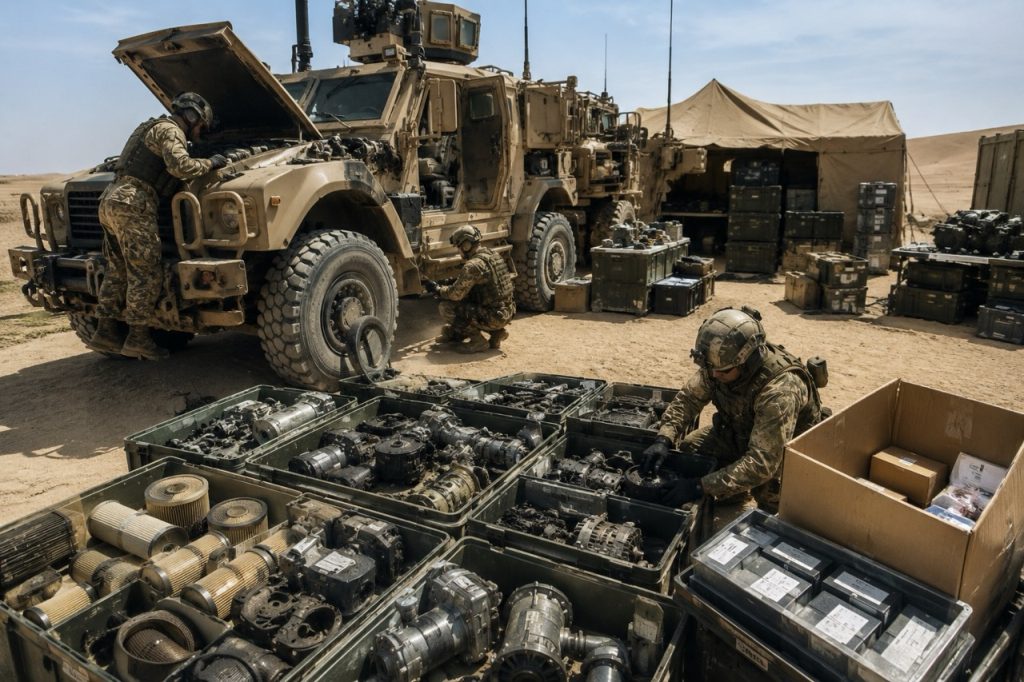
The Impact on Military Logistics and Sustainment
Military logistics support does not operate in isolation from the maintenance enterprise. The two are deeply interdependent, and the efficiency of the logistics system directly determines how well preventive maintenance programs can function.
Spare parts forecasting is one of the most demanding aspects of military asset management. Maintenance planners must project demand for consumable and replacement parts across a fleet, accounting for vehicle age, operational mileage, environmental conditions, and historical failure rates. Accurate forecasting prevents both stockouts which cause maintenance deferral and excess inventory, which ties up working capital in parts that may not be needed within a relevant operational window.
Inventory management systems, including those aligned with NATO supply chain standards and DoD inventory frameworks, rely on accurate consumption data from the maintenance enterprise to drive replenishment cycles. When preventive maintenance programs are consistently executed and accurately recorded, the resulting consumption data feeds forecasting models that improve supply chain efficiency. Conversely, irregular maintenance execution produces irregular consumption patterns that are harder to forecast and more likely to result in shortfalls.
Lead time management is particularly critical in defense spare parts procurement. Unlike commercial automotive aftermarket supply chains, defense spare parts often involve specialized manufacturers, export control requirements under ITAR/EAR regulations, and certification requirements including Certificates of Conformance (CoC), Material Test Reports (MTR), and First Article Inspection (FAI) documentation. These requirements add time and complexity to the procurement cycle. Fleet sustainment programs that plan ahead ordering parts based on scheduled maintenance requirements rather than waiting for failures can absorb this lead time without operational impact.
The supply chain for obsolete military vehicle components presents its own set of challenges. Legacy platforms, often maintained in service well beyond their originally planned service life, require parts that original equipment manufacturers (OEMs) may no longer produce in volume or at all. Specialized international defense spare parts suppliers with established networks of alternative sources, qualified equivalents, and excess military stock inventories play a critical role in sustaining these fleets. Without access to such suppliers, obsolete component requirements can ground vehicles for months.
Preventive Maintenance and Vehicle Lifecycle Extension
Military vehicle procurement is among the most capital-intensive activities in defense budget planning. A single armored fighting vehicle or heavy tactical truck represents a substantial investment that defense organizations are motivated to protect through extended service life. Preventive maintenance is the primary tool through which vehicle lifecycles are extended beyond original design service life, reducing the frequency and cost of fleet replacement programs.
Vehicle lifecycle management the structured approach to acquiring, operating, maintaining, and eventually retiring military vehicles places preventive maintenance at the center of the cost optimization model. The Total Ownership Cost (TOC) of a military vehicle encompasses not only acquisition price but also the cumulative costs of fuel, personnel, spare parts, maintenance labor, and downtime over the vehicle’s service life. Vehicles that receive consistent preventive maintenance accumulate these costs more slowly and more predictably than those maintained reactively.
Structural inspection programs, conducted at defined intervals as part of the vehicle’s lifecycle maintenance plan, identify corrosion, fatigue cracking, and structural degradation before these conditions reach critical thresholds. Early intervention through weld repair, corrosion treatment, and component reinforcement is far less costly than late stage structural rehabilitation or complete hull replacement. For armored vehicles where structural integrity directly affects crew protection these inspections are not optional; they are a fundamental safety and readiness imperative.
Engine and major powertrain overhaul at prescribed intervals, rather than waiting for in service failure, is another lifecycle extension strategy with well documented cost effectiveness. A planned engine overhaul conducted on schedule involves controlled disassembly, inspection, component replacement, and reassembly within a defined time window. An unplanned engine failure in the field may result in secondary damage to the cooling system, exhaust system, and transmission multiplying repair costs and extending the vehicle’s time out of service.
Defense organizations that have invested in robust lifecycle management programs including the U.S. Army’s Integrated Logistics Support (ILS) framework and NATO nations’ equivalent lifecycle management structures consistently report lower fleet replacement rates and longer average vehicle service lives than those operating without formal lifecycle maintenance disciplines.
The Role of Predictive and Condition Based Maintenance
While preventive maintenance based on prescribed intervals remains the cornerstone of military fleet management, advanced defense organizations are increasingly supplementing scheduled maintenance with predictive and condition based maintenance (CBM) approaches that use real time data to refine maintenance decisions.
Onboard Diagnostics and Telematics
Modern military vehicle platforms, including fourth-generation tactical trucks and upgraded armored vehicle variants, are increasingly equipped with onboard diagnostic systems (OBD) and vehicle health monitoring (VHM) systems. These systems continuously monitor parameters such as engine temperature, oil pressure, transmission fluid condition, battery voltage, and brake system status. Data collected by these systems can be transmitted via telematics to fleet management centers, enabling remote visibility into vehicle health without requiring physical inspection.
Sensor Driven Condition Monitoring
Accelerometers, vibration sensors, and thermal sensors embedded in drivetrain and suspension components can detect developing fault signatures unusual vibration frequencies, thermal anomalies, acoustic irregularities that precede component failure by hours, days, or weeks. Condition monitoring systems that analyze these data streams can identify high probability failure conditions and trigger maintenance alerts before the component fails in service. This shifts maintenance from a time based schedule to a condition based decision framework.
Predictive Analytics and Fleet Management Software
Fleet management software platforms that integrate historical maintenance records, component failure data, and real time sensor inputs can generate predictive failure probability scores for individual vehicle components. Maintenance planners can use these scores to prioritize service actions, pre position spare parts, and schedule maintenance events during low operational demand windows. The result is a more efficient maintenance enterprise that addresses high risk components proactively while avoiding unnecessary maintenance on components that remain within acceptable condition parameters.
The practical implementation of predictive maintenance in military fleet environments faces several constraints, including data security requirements, integration with legacy platforms lacking sensor infrastructure, and the training demands placed on maintenance technicians expected to interpret and act on predictive analytics outputs. These constraints mean that condition based maintenance is typically implemented as a complement to rather than a replacement for established interval-based preventive maintenance programs.
Best Practices for Defense Fleet Managers
Translating the principles of preventive maintenance into effective daily practice requires more than policy compliance. It requires organizational discipline, skilled personnel, reliable supply chains, and effective data management. The following practices represent the standards consistently associated with high readiness military vehicle fleets.
Enforce Maintenance Scheduling Without Exception. Deferred maintenance is the single most common cause of avoidable vehicle downtime. Fleet managers must establish and enforce a culture in which scheduled maintenance intervals are treated as fixed operational commitments, not flexible targets. This requires command support, administrative accountability mechanisms, and sufficient workshop time built into operational scheduling.
Maintain Accurate Maintenance Records. Every maintenance event, inspection, component replacement, and fluid service must be recorded in the fleet management information system with precision. Accurate records support failure trend analysis, parts forecasting, lifecycle tracking, and readiness reporting. Fleets with poor record discipline consistently demonstrate less efficient parts management and higher unscheduled maintenance rates.
Invest in Technician Training and Qualification. Preventive maintenance programs are only as effective as the technicians who execute them. Continuous training including manufacturer technical bulletins, updated service manuals, and hands-on qualification for new vehicle variants maintains the technical standard required to detect developing fault conditions that untrained personnel would miss.
Pre Position Critical Spare Parts. Analysis of historical failure patterns should drive the pre positioning of high demand, long lead time spare parts within the maintenance supply chain. Items identified as having high failure frequency or significant operational impact should be held in forward stocks, reducing the delay between maintenance identification and repair completion.
Establish Supplier Relationships for Hard to Source Components. For legacy platforms and obsolete parts, the ability to source components quickly is often the binding constraint on maintenance cycle time. Fleet managers should maintain established relationships with specialized defense spare parts suppliers capable of providing certified, traceable components for both current and legacy military vehicle platforms.
Conduct Regular Readiness Reviews. Fleet readiness data should be reviewed at regular intervals weekly at the unit level, monthly at the fleet management level to identify emerging trends, persistent problem vehicles, and systemic supply chain gaps before they compound into readiness crises.
Preventive Maintenance as a Force Multiplier
The argument for preventive maintenance is not difficult to make in principle. The challenge lies in sustaining the organizational commitment, resource allocation, and operational discipline required to execute it consistently across multiple vehicle platforms, varied operational environments, and the constant pressure of competing mission priorities.
What the evidence demonstrates, across decades of military fleet management data and operational analysis, is that organizations that make this commitment consistently outperform those that do not. Their vehicles are available more often. Their maintenance costs are lower. Their supply chains are more predictable. And critically, their units can be counted on to generate the vehicle availability required to execute operational plans.
In the language of military planning, preventive maintenance is a force multiplier. It does not change the number of vehicles in a fleet, but it increases the percentage of that fleet that is mission capable at any given moment and it does so in a way that is controllable, measurable, and improvable. That is a strategic advantage that no procurement program can substitute for.
For military organizations managing complex, mixed age vehicle fleets under constrained budgets and demanding operational schedules, the question is not whether preventive maintenance matters. The question is whether the systems, suppliers, and disciplines are in place to execute it effectively. That execution is where readiness is built or where it fails.
Work With AB Defence
Partner with AB DEFENCE for Reliable Combat Support Vehicle Sustainment. AB DEFENCE is a specialist international supplier of military spare parts and fleet sustainment solutions serving NATO and allied defense organisations. With deep inventory across a wide range of combat support vehicle platforms, rigorous quality assurance processes, export compliance expertise, and a commitment to long term supply chain partnership, AB DEFENCE helps defense buyers maintain fleet availability, reduce sustainment costs, and meet their operational readiness obligations. Contact the AB DEFENCE team to discuss your spare parts requirements, strategic inventory planning, and long-term sustainment programme needs.
Contact AB Defence to discuss your procurement requirements and learn how we can support your fleet readiness objectives.
Related Military Spare Parts Categories, Vehicle Platforms & Technical Guides
Explore AB Defence’s NATO-codified (NSN) and genuine OEM spare parts catalog, platform technical specifications, and sustainment engineering guides related to this article:
Stocked Spare Parts Categories (NSN & OEM Catalog)
- NATO Standard Defence Components & Military Hardware (12,993 stocked parts)
- M60 Tank Spare Parts (M60A1 / M60A3 / M60T) (497 stocked parts)
- M109 Self-Propelled Howitzer Spare Parts (585 stocked parts)
- BMC Kirpi MRAP Spare Parts (Kirpi I & Kirpi II) (597 stocked parts)
- Mercedes-Benz Unimog Military Spare Parts (562 stocked parts)
- Full NATO NSN & OEM Spare Parts Catalog (16,760+ Parts)
Compatible Vehicle Platforms & System Hubs
- Platforms
- Product Groups
- Quality
- Capabilities
- Tracked Armoured Vehicles
- Request a B2B Quotation (RFQ) & Technical Support