AB DEFENCE Platform support
Leopard 1 Series
Explore platform information, technical systems and spare parts support.
The ACV-300 and ACV-350 are FNSS-developed tracked armoured combat vehicles derived from the AIFV lineage, produced from 1992 onward and ordered in over 2,500 units across Turkey, Malaysia, the UAE, and the Philippines — making them one of the most operationally proven tracked platform families in the region
Request a Quote60 Years of Continuous Service: Why the Leopard 1 Parts Market Is Anything But Simple
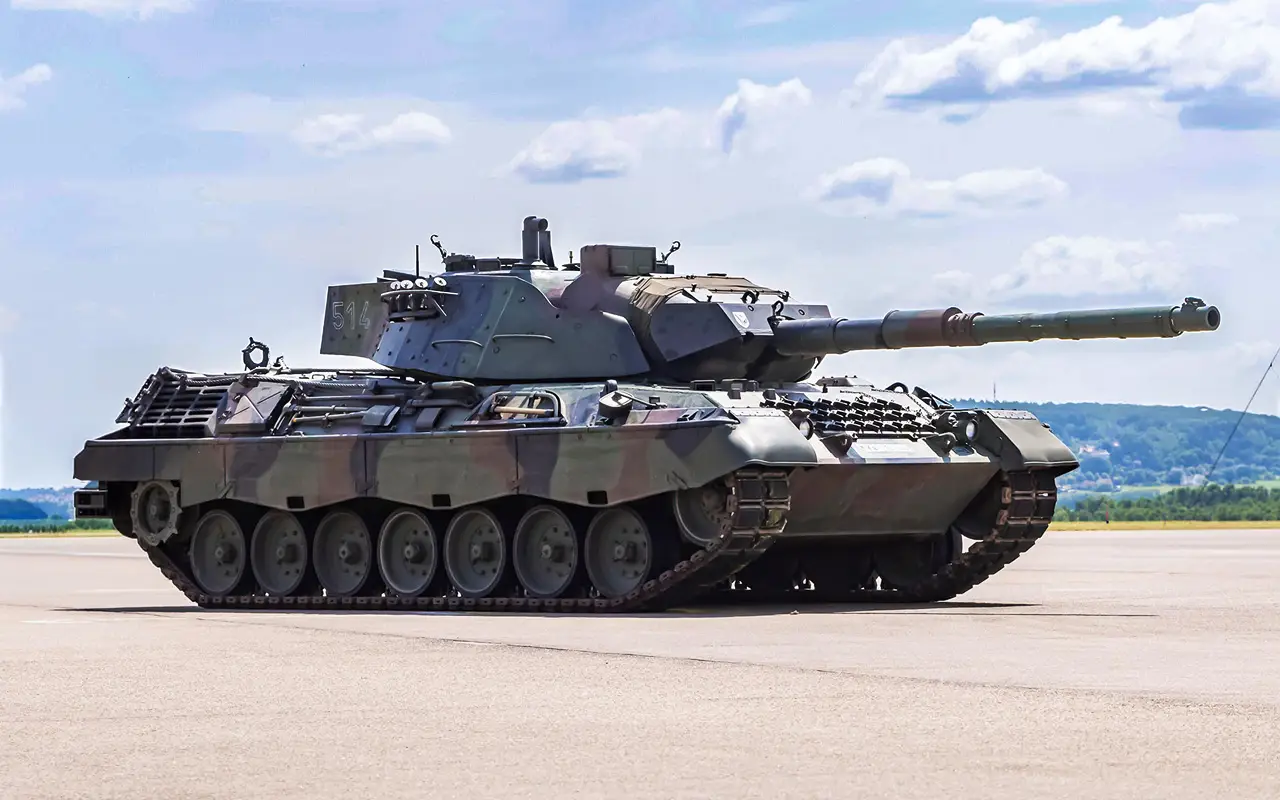
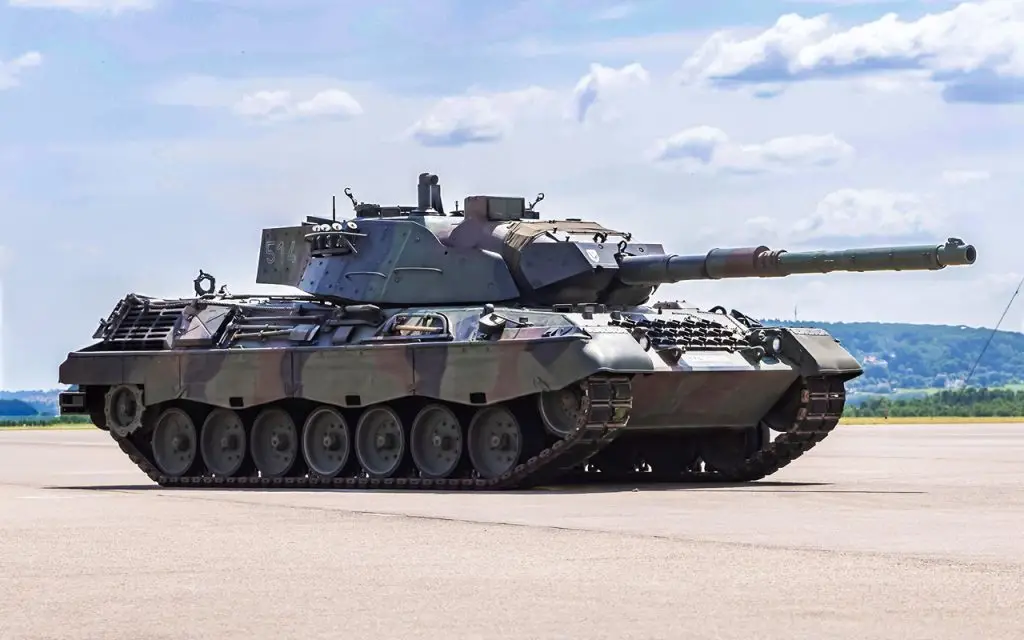
There are main battle tanks that served, were replaced, and disappeared from the logistics chain within a generation. The Leopard 1 is not one of them. Designed by Porsche and manufactured by Krauss-Maffei from 1965 onwards, the Leopard 1 entered service with the Bundeswehr at a moment when the Cold War's armoured standoff on the Central European plain was the defining strategic reality — and it went on to serve with thirteen nations in configurations that ranged from the base 1965 production vehicle to the EMES 18-equipped 1A5 standard, a fire control architecture drawn directly from the Leopard 2 programme.
Today, decades after German service ended in 1999, the Leopard 1 is not a museum piece. It is in operational service with Turkey and Greece. It has been transferred to Ukraine and photographed in active combat operations. Brazil fields over 200 Leopard 1A5s as a frontline system. Chile operates the platform. The Bergepanzer 2, Biber bridgelayer, and Dachs engineering vehicle — all based on the Leopard 1 chassis — continue to serve in multiple armed forces. And the MTU MB 838 Ca-M500 powerpack, the ZF 4HP-250 transmission, and the torsion bar running gear that were designed in the 1950s are still being maintained, rebuilt, and kept in operational condition somewhere in the world every day.
For a parts specialist, this creates a supply challenge that is substantially more complex than it might appear from the outside. The Leopard 1 family spans six production batches, multiple upgrade programmes, at least five major fire control system generations, three distinct turret architectures, and dozens of nation-specific modifications applied by operators over decades of independent service. A Leopard 1A3 in Turkish service with an EMES-12A3 FCS and an LLLTV system is not the same procurement challenge as a Greek 1A5 with the full EMES-18 package, or a Brazilian 1A5 with its specific national configuration. AB Defence has built its Leopard 1 parts capability around this complexity — not around a generic catalogue that treats all 6,485 vehicles as interchangeable.
Technical Specifications — Leopard 1 Series
| Parameter | Specification |
|---|---|
| Designer | Porsche (chassis) / Various (turret by variant) |
| Primary Manufacturer | Krauss-Maffei, Munich; MaK, Kiel |
| Production Period | 1965 – 1979 (new build); 1986 – 1992 (1A5 conversions) |
| Total Production | 6,485 combat vehicles (all variants) |
| Combat Weight | 40.4 t (Leopard 1) — 42.4 t (1A1A1 / 1A5) |
| Ground Pressure | 0.88 kg/cm² |
| Length (gun forward) | 9.54 m |
| Hull Length | 7.09 m |
| Width | 3.37 m |
| Height (turret roof) | 2.39 m |
| Crew | 4 — commander, gunner, loader, driver |
| Engine | MTU MB 838 Ca-M500 |
| Engine Configuration | V10, 4-stroke, liquid-cooled, supercharged |
| Displacement | 37.4 litres (37,330 cm³) |
| Engine Output | 610 kW / 830 hp at 2,200 rpm |
| Fuel Type | Multi-fuel: diesel (F-54 / NATO standard), aviation kerosene, 92-octane petrol |
| Fuel Consumption | Approximately 165–190 litres per 100 km |
| Transmission | ZF 4HP-250 — hydromechanical, 4 forward + 2 reverse, integrated differential steering |
| Powerpack Weight | 4,600 kg (engine + transmission + cooling system) |
| Powerpack Change Time | Approximately 20 minutes in field conditions |
| Suspension | Torsion bar — 14 independent torsion bars, 7 road wheels per side |
| Shock Absorbers | 10 hydraulic — fitted to road wheel positions 1, 2, 3, 6, 7 each side |
| Road Wheels | 7 per side, rubber-coated dual type |
| Drive Sprocket | Rear — with removable ring gears |
| Idler | Front |
| Track | Standard NATO double-pin; rubber block type |
| Maximum Road Speed | 65 km/h |
| Off-Road Speed | ~40–50 km/h |
| Operational Range | 450 km (road) |
| Main Armament | 105mm Royal Ordnance L7A3 (L/52) rifled gun |
| Ammunition Stowage | 55 rounds (42 hull, 13 turret — 1A4/1A5) |
| Secondary Armament | 7.62mm MG3 coaxial; 7.62mm MG3 anti-aircraft (commander's hatch) |
| Smoke Systems | 2 × 4 smoke grenade dischargers |
| Armour | Welded steel; 70 mm maximum on glacis |
| NBC System | Overpressure system |
| Fording | 2.25 m unprepared; 4.0 m with snorkel preparation |
Production Batches and Variant Progression: What Actually Changed and Why It Matters
The Leopard 1 was not redesigned between variants — it was progressively upgraded, with each batch incorporating the lessons of operational experience and the advances available from parallel programmes including the Leopard 2 development effort. Understanding what changed between variants is not academic exercise. It is directly relevant to which parts fit which vehicles, and which do not.
Leopard 1 / 1A1 / 1A1A1 — The First Four Batches (1965–1970, plus upgrades to 1974–1977)
The original Leopard 1 entered service in September 1965. The first four production batches, totalling 1,845 vehicles, were built to the base standard — original tracks without rubber blocks, no gun stabiliser, no thermal sleeve on the main armament, and no side skirts. Between 1970 and 1977, all 1,845 vehicles were upgraded to the Leopard 1A1 standard, which added the Cadillac Gage gun stabiliser for the 105mm L7A3 and coaxial MG3, a thermal sleeve on the gun barrel to reduce barrel droop caused by differential thermal expansion, new tracks with rubber pads and single-pin track links replacing the original two-pin type, and lateral side skirts protecting the upper run of the tracks and suspension.
The critical structural upgrade within the 1A1 family was the 1A1A1 conversion, which fitted all 1,845 vehicles with a Blohm und Voss appliqué armour kit: spaced steel panels installed at a standoff distance from the cast turret, increasing the effective protection against HEAT warheads to a level approximately equivalent to the later 1A3/1A4 welded turret. This increased combat weight to 42.4 tonnes. The 1A1A2 added the PZB 200 low-light television (LLLTV) observation and sighting system transferred from Leopard 2 development stocks; the 1A1A3 added the SEM 80/90 all-digital radio system; the 1A1A4 combined both upgrades.
Leopard 1A2 — Fifth Batch Early (232 vehicles, 1972–1974)
The 1A2 introduced a new, heavier-armoured cast turret with increased steel thickness compared to the original — a response to the evolving threat assessment of Soviet anti-tank capability. The improved turret did not receive the B&V spaced armour kit, as its own armour thickness already provided equivalent protection. The improved NBC filtration system and passive image intensification night vision equipment for commander and driver were also introduced. Sub-variants of the 1A2 followed the same upgrade path as the 1A1 family: 1A2A1 with PZB 200, 1A2A2 with digital radios, 1A2A3 with both.
Leopard 1A3 — Fifth Batch Late (110 vehicles, 1973)
The 1A3 is visually the most distinctive departure from the original Leopard 1 cast turret, introducing a wholly new welded turret with a spaced armour construction — two steel plates with a polyurethane plastic filling between them — and a wedge-shaped gun mantlet. This is the turret architecture adopted for all subsequent new-build Leopard 1s. The 1A3 incorporated the dual-axis gun stabiliser for both elevation and traverse developed by Rheinmetall. The turret rear stowage bin was integrated into the turret contour and the loader's periscope made adjustable in elevation and azimuth. The 1A3 did not receive improved fire control beyond the basic configuration.
The 1A3 is directly relevant to AB Defence's customer base: Turkey received 77 Leopard 1A3 MBTs (54 built by Krauss-Maffei, 23 by MaK) under a 1981 contract, delivered 1982–1983, fitted with the EMES-12A3 computerised fire control system and an LLLTV system, designated Leopard 1 TU (later Leopard 1A3T1) in Turkish service. Greece similarly ordered 106 Leopard 1A3 MBTs with EMES-12A3 for delivery in 1983–1984. Canada received 114 vehicles equivalent to a modified 1A3 — the Leopard C1 — with a Belgian SABCA fire control system and laser rangefinder.
Leopard 1A4 — Sixth and Final Batch (250 vehicles, 1974–1976)
The Leopard 1A4 was the last new-production Leopard 1 for the Bundeswehr and the most advanced production standard. It retained the welded turret of the 1A3 but introduced an integrated fire control system drawn substantially from the parallel Leopard 2 development programme: the PERI R12 stabilised panoramic periscope for the commander (providing independent observation capability while the gunner engages a separate target — the embryonic hunter-killer engagement methodology), the EMES 12A1 stereoscopic optical rangefinder coupled to the gunner's primary sight, and the FLER-HG ballistic computer. The fully stabilised main armament was now linked to the ballistic computer, which accepted range data from the EMES 12A1, vehicle cant, crosswind, and ammunition type, and computed the firing solution automatically. Ammunition stowage was reduced from 60 to 55 rounds to accommodate the FCS equipment.
The 1A4 is also directly relevant to Turkish fleet management: 150 ex-Bundeswehr Leopard 1A4s were converted to the Leopard 1T1 standard — equivalent to the 1A3 configuration already in Turkish service — and delivered to Turkey between 1990 and 1991. A further 110 ex-Bundeswehr 1A1A1s followed in the mid-1990s, bringing the total Turkish Leopard 1 fleet to approximately 337 vehicles.
Leopard 1A5 — The Definitive Combat Standard (1,225 conversions, 1986–1992)
The 1A5 was not a new production run. It was a conversion programme: 1,225 Bundeswehr Leopard 1A1A1 and 1A1A2 vehicles were rebuilt to a substantially enhanced standard following a 1980 research programme that concluded the Leopard 1 needed a fully capable night and all-weather fire control system to remain competitive against the Soviet T-64B, T-72B, and T-80B family. The fire control system selected after 1982–1983 comparative trials was the Krupp-Atlas Elektronik EMES 18, directly derived from the EMES 15 used on the Leopard 2.
The EMES 18 is the system that defines the 1A5 as a qualitatively different vehicle from all previous Leopard 1 variants. It integrates a fully stabilised gunner's primary sight with built-in laser rangefinder and thermal imaging channel into a single housing on the turret roof, replacing the bulky optical stereoscopic rangefinder and its characteristic external "bumps" on earlier FCS configurations. The commander received a new panoramic sight with stabilised line of sight. The ballistic computer accepted laser rangefinder data directly and computed firing solutions that enabled first-round hit probability while moving — against moving targets — in conditions of limited visibility, rain, or night. The turret was modified to accommodate the new equipment, with the rear bustle extended to house the FCS electronics and relocate part of the ammunition stowage from the left side of the driver to the turret rear — a survivability improvement.
The EMES 18-equipped Leopard 1A5 became the effective global standard for the platform. Denmark converted its entire 230-vehicle fleet to 1A5 standard with EMES 18 systems supplied by STN Atlas Elektronik. Canada upgraded 66 of its Leopard C1s to the Leopard C2 standard — effectively a 1A5 equivalent with EMES 18, a digital radio suite including IRIS and TCCCS, and GPS. The Netherlands' Leopard 1-V vehicles used the EMES-12A3 AFSL-2 rather than the EMES 18 but received comparable FCS capability. Italy upgraded its OTO Melara-produced vehicles through a similar programme.
The Turkish Leopard 1T Volkan Programme: A Case Study in Platform Depth
Turkey's Leopard 1 history illustrates more clearly than any other operator how complex the parts supply environment for this platform family actually is in practice. The Turkish Land Forces received three separate batches of Leopard 1 vehicles of different variants and specifications, delivered in different decades, built by different manufacturers:
77 Leopard 1A3 MBTs (Leopard 1 TU / 1A3T1): Delivered 1982–1983. Built by Krauss-Maffei (54 vehicles) and MaK (23 vehicles). Fitted with EMES-12A3 FCS and LLLTV system. Welded turret, wedge-shaped mantlet.
150 Leopard 1A4s (converted to Leopard 1T1 / 1A3 standard): Delivered 1990–1991 from ex-Bundeswehr stocks. Originally 1A4s with PERI R12 and EMES 12A1 FCS, converted to 1A3 configuration before delivery to Turkey.
110 Leopard 1A1A1s: Delivered from ex-Bundeswehr stocks in the mid-1990s, bringing the Turkish total to approximately 337.
All three batches subsequently underwent the Volkan FCS modernisation programme, executed by ASELSAN, which replaced the various original fire control systems with the domestically developed Volkan system — providing all-weather, day/night target acquisition and engagement capability with a first-round hit probability on moving targets at operational combat ranges. The last Volkan-modernised Leopard 1T was delivered to the Turkish Land Forces Command at a ceremony in Arifiye, Sakarya, attended by the Minister of National Defence — marking the completion of a programme that extended the operational life of the Turkish fleet by more than 20 years and re-designated the vehicles as the Leopard 1T. At IDEF 2009, an MoU was signed between ASELSAN and the Chilean Army for application of the Volkan system to Chile's Leopard 1 fleet.
The practical parts supply implication of this history is significant. A Turkish Leopard 1T carries an ASELSAN Volkan FCS on a hull and running gear that may be a 1A1A1, 1A3, or 1A4 base vehicle, with the automotive and suspension components common to all variants unchanged. AB Defence supports the Turkish fleet at both levels: the MTU/ZF powerpack and torsion bar running gear that are common across all Turkish Leopard 1s, and the variant-specific structural and turret components that reflect the three distinct batch origins.
The Leopard 1 Chassis Family: Parts Scope Beyond the Combat Tank
One of the features of the Leopard 1 that most distinguishes it from a simply managed parts catalogue is the breadth of the vehicle family built on its chassis. The automotive running gear, powerpack, and hull structure that appear in the Leopard 1 MBT also appear in the following chassis variants — all of which are in service with at least some current Leopard 1 operators:
Bergepanzer 2 (ARV — Armoured Recovery Vehicle): Based on the Leopard 1 chassis with a modified hull, the Bergepanzer 2 carries a hydraulic crane pivoted on the front-right of the hull (capable of lifting complete powerpacks and major assemblies up to 20 tonnes), a 35-tonne main winch, an auxiliary electric winch, a dozer blade for self-entrenchment and obstacle clearance, and welding equipment. Standard equipment includes a complete spare Leopard 1 powerpack carried on the vehicle for immediate exchange in field recovery operations. The MTU and ZF components of the Bergepanzer 2 are identical to those of the combat tank; the crane, winch, and hydraulic circuit are chassis-specific. Ukraine operates Bergepanzer 2s in current operations.
Pionierpanzer 2 Dachs (AEV — Armoured Engineer Vehicle): The Dachs carries a front-mounted dozer blade, a hydraulic earth auger, and a telescoping crane arm — all operated from within the armoured hull. The chassis powerpack and suspension are unchanged from the combat tank. Germany, the Netherlands, and Canada have operated the Dachs; Ukraine has received examples.
Biber (AVLB — Armoured Vehicle-Launched Bridge): The Biber carries a 22-metre scissors bridge capable of spanning a 18-metre gap, capable of supporting vehicles up to Military Load Class 60 (60 tonnes). The launching mechanism is hydraulic, and the entire bridge-laying sequence can be completed from within the vehicle. The chassis powerpack is the same MTU/ZF unit. Multiple NATO nations operate or have operated the Biber; Ukraine has received examples.
Gepard (SPAAG — Self-Propelled Anti-Aircraft Gun): The most operationally prominent Leopard 1 chassis derivative currently. The Gepard mounts a twin 35mm Oerlikon autocannon installation in an all-new turret with Siemens radar fire control — search radar and tracking radar — capable of engaging aerial targets including helicopters and low-level fixed-wing aircraft. Significantly for fleet management, the Gepard is powered by the same MTU MB 838 Ca-M500 engine as the combat tank, plus an additional MTU diesel as an independent power unit for the radar and fire control systems. Germany donated 30 Gepards to Ukraine; they have been operationally deployed and one was documented as destroyed in summer 2024. The MTU engine components that AB Defence supplies for the Leopard 1 MBT fleet are directly applicable to Gepard powerpack maintenance.
Leopard 1 Spare Parts Coverage
AB Defence provides comprehensive spare parts coverage for the MTU MB 838 Ca-M500 powerpack, ZF 4HP-250 transmission, torsion bar suspension system, and all major automotive and hull systems of the Leopard 1 series — across the full variant range and all chassis derivatives.
MTU MB 838 Ca-M500 Engine
The MB 838's V10 architecture — ten cylinders in a 90-degree V configuration, individual cylinder heads, wet-liner construction — determines the maintenance philosophy for this engine. Individual cylinder heads allow single-cylinder servicing without disturbing the remaining nine. Wet liner replacement reconditioning does not require block line boring. Multi-fuel capability means that fuel system components must be maintained to the specification that allows operation on the range of acceptable fuels — injector cleanliness and injection timing are more sensitive on multi-fuel operation than on dedicated diesel systems.
AB Defence supplies: individual cylinder head assemblies and head gasket sets (ten separate heads — each serviceable independently), piston assemblies and wet cylinder liner kits, piston ring sets and gudgeon pins, connecting rod assemblies and big-end bearing shells (standard and undersize), main bearing shells (all ten positions, standard and undersize), crankshaft assemblies and thrust washers, camshaft assemblies and bearing sets, complete valve train components including valve springs, guides, rocker arms and rocker shafts, pushrods and pushrod tubes, supercharger (roots blower) assemblies and rebuild kits — distinguishing the MB 838's supercharger from turbocharger-based systems, fuel injection pump assemblies and calibration kits for multi-fuel operation, individual fuel injector assemblies and nozzle sets, high-pressure injection lines per cylinder, engine oil pump assemblies, oil cooler assemblies and heat exchanger elements, water pump assemblies, thermostat and housing assemblies, radiator assemblies and complete coolant hose sets for the powerpack cooling circuit, engine mount and quick-disconnect coupling hardware, complete engine overhaul gasket and seal sets.
ZF 4HP-250 Transmission
The 4HP-250's integration of the torque converter, planetary gearbox, and differential steering mechanism into a single unit means that transmission maintenance is, at the sub-assembly level, a relatively specialised discipline — but at the filter, seal, and external component level, it is entirely manageable with correct-specification parts.
AB Defence supplies: torque converter assemblies and rebuild kits, planetary gearbox clutch pack assemblies (forward clutch, reverse clutch, and each range clutch), clutch disc and plate sets with correct friction material specification, transmission filter kits and magnetic drain plug assemblies, selector valve body assemblies and control components, governor assemblies, transmission oil cooler assemblies and heat exchanger elements, input and output shaft seals, all external transmission lines and fittings, pivot turn mechanism components, and all transmission mounting hardware and quick-disconnect coupling components for powerpack integration.
Running Gear — Torsion Bar Suspension and Track System
AB Defence supplies: torsion bar assemblies for all 14 road wheel positions (note the asymmetric shock absorber installation — positions 1, 2, 3, 6, 7 per side — requiring correct-position identification for shock absorber supply), hydraulic shock absorber assemblies for the five shock-absorber-equipped positions per side, road wheel assemblies (dual rubber-tyred type — seven per side), road wheel bearing kits and hub seals, road wheel arm assemblies and torsion bar anchor hardware, drive sprocket assemblies with replaceable ring gears (the ring gear is a wear item designed to be replaced without changing the full sprocket body), idler wheel assemblies and idler adjustment mechanism components, track link assemblies (single-pin type — 1A1 onward, replacing the original two-pin type), rubber track pads and pad retention hardware, track connector links and end connectors, track tension adjuster assemblies.
Hull Systems — Automotive and Crew
AB Defence supplies: driver's controls assemblies including steering wheel, transmission selector and control linkages, accelerator and braking pedal assemblies, driver's vision block assemblies (up to five periscopes in the glacis plate), driver's hatch assembly and seal, hull fuel tank assemblies and fuel system components including fuel pumps and filters, engine bay fire detection and suppression system components, NBC overpressure system components including compressor, filter, and distribution ducting, exhaust system components and thermal management hardware, external stowage hardware and track skirt mounting assemblies (1A1 and later), dozer blade mounting interface hardware.
Turret Systems — Common Automotive Components
AB Defence supplies turret ring assemblies and bearing hardware, turret drive motor assemblies and control components, turret hydraulic traverse system components, 105mm L7A3 gun barrel assemblies and barrel sleeve / thermal sleeve assemblies, breech mechanism assemblies and breach seal kits, gun mount trunnion bearings, gun elevation drive components, smoke grenade launcher assemblies (2×4 configuration) and firing circuit components, commander's hatch assemblies (cupola type — variant-specific between cast and welded turret versions), loader's hatch assemblies and vision block sets, gun mantlet seal assemblies.
Fire Control System Support — Optical and Mechanical Components
AB Defence supports the optical and mechanical (non-electronic) components of the fire control systems fitted across the Leopard 1 variant family. This includes: gunner's primary sight housing assemblies and reticle components, rangefinder optical elements and adjustment hardware for EMES-12 family optical stereoscopic rangefinder systems, commander's periscope assemblies for PERI R12 and earlier panoramic telescope installations, vision block assemblies for all turret positions, searchlight assemblies (XSW-30-U infrared/white light type, as fitted on early variants), and all associated mounting and interface hardware.
For the EMES 18 thermal and laser FCS components, AB Defence coordinates with specialist electronics support channels and does not represent supply capability for the core electronic processing units as standard stock items.
Chassis Derivative — Specific Coverage
Bergepanzer 2 ARV: Hydraulic crane assemblies and cylinder seal kits, 35-tonne winch assemblies and wire rope, dozer blade hydraulic cylinder assemblies and control valve sets, all Bergepanzer-specific hydraulic hose sets and fittings, hydraulic pump assemblies for crane/winch circuit, powerpack spare carrier mounting hardware.
Biber AVLB: Bridge-launching hydraulic system components including cylinder assemblies, control valve assemblies, and hydraulic hose sets, bridge retention and release mechanism hardware, all Biber-specific mounting interface components.
Gepard SPAAG: MTU MB 838 Ca-M500 engine components as above (primary powerpack), MTU auxiliary power unit components (radar power unit), Oerlikon 35mm autocannon interface mounting components, traverse ring hardware.
Consumables and Scheduled Maintenance Items
AB Defence maintains continuous stock of all Leopard 1 service consumables: MTU engine oil filter elements, fuel filter elements for multi-fuel system, air filter elements and pre-cleaner assemblies, ZF 4HP-250 transmission oil filter kits, powerpack cooling system antifreeze and sealant compatible with the MB 838 cooling circuit, all engine and transmission oil seals by position, torsion bar system bearing and seal kits, track pad replacement sets, and all critical torque hardware for scheduled maintenance tasks.
Variant-Accurate Parts Supply: The Discipline That Defines Competent Leopard 1 Support
The Leopard 1 presents a specific procurement challenge that rewards — and demands — platform knowledge. Three areas in particular require precision that a generic parts catalogue cannot provide.
Turret generation: Cast turret vehicles (1/1A1/1A2/1A5) and welded turret vehicles (1A3/1A4) have different turret ring dimensions, different mantlet hardware, and different stowage arrangements. Turret-related components — hatches, ring bearings, vision block mountings, and some FCS interface hardware — must be sourced to the correct turret generation.
Track type: The original Leopard 1 used two-pin tracks. From the 1A1 standard onward, single-pin tracks were fitted. These are not interchangeable, and a mixed fleet may contain both types. AB Defence confirms track type from vehicle documentation before supplying track links, pads, or end connectors.
FCS-related structural modifications: The 1A5 conversion modified the turret rear to accommodate EMES 18 equipment and relocated ammunition stowage. Turret bustle components and ammunition rack hardware differ between pre-1A5 and 1A5 standard vehicles. AB Defence applies this distinction to any turret interior structural part.
Frequently Asked Questions — Leopard 1 Series Spare Parts
Does AB Defence supply parts for all Leopard 1 variants from 1A1 through 1A5?
Yes. Our MTU MB 838 Ca-M500 and ZF 4HP-250 coverage applies across all production batches and conversion standards. Variant-specific structural and turret components are supplied with generation confirmation from vehicle documentation.
Are the Gepard SPAAG and Bergepanzer 2 MTU engines the same as the Leopard 1 MBT engine?
Yes. The primary powerpack in the Gepard and Bergepanzer 2 is the same MTU MB 838 Ca-M500 as in the combat tank. AB Defence's powerpack parts coverage applies across all Leopard 1 chassis derivatives.
Does AB Defence supply parts for the Turkish Leopard 1T with Volkan FCS?
AB Defence supplies the complete MTU/ZF powerpack, running gear, hull, and turret automotive components for the Leopard 1T fleet. The ASELSAN Volkan FCS electronics are outside AB Defence's standard supply scope, but all mechanical and optical components interfacing with the FCS are covered.
What information is required for a Leopard 1 parts enquiry?
Vehicle hull number or national inventory reference, production batch and variant designation (1A1A1, 1A3, 1A4, 1A5 or national designation such as 1T, C2, 1A5GR), turret type (cast or welded), track type (single-pin or two-pin), FCS configuration where relevant to the enquiry, parts required by description, NSN, or manufacturer's part number, quantities, delivery destination, and urgency. Our team responds with specification confirmation and a formal quotation within 24 hours.
Can AB Defence support Leopard 1 operators in both current service and reserve/storage fleet management?
Yes. Our supply capability addresses both active operational fleet maintenance requirements and reserve fleet preservation and reconditioning needs — including the long-lead powerpack components and sealing systems relevant to vehicles returning to operational status from extended storage.
ACV-300 / ACV-350 Spare Parts Coverage
Detroit Diesel 6V-53T / 6V-53TA Engine Components
AB Defence supplies the complete parts range for both engine variants across all ACV operator configurations. For the 6V-53T (300 hp / ACV-300): cylinder liner kits, piston and ring sets, connecting rod assemblies and bearing shells, main bearing shell sets, crankshaft assemblies, camshaft assemblies and followers, roots blower assemblies and rebuild kits, turbocharger assemblies for 6V-53T specification, fuel injector assemblies and injector tube seals (two-stroke unit injectors — not common with four-stroke injection systems), injector rocker arm and push tube assemblies, cylinder head assemblies and head gasket sets, valve and valve spring sets, water pump assemblies, oil pump assemblies, oil cooler assemblies, thermostat and housing, complete cooling hose sets, radiator assemblies (300 hp standard cooling circuit), full engine overhaul gasket and seal sets.
For the 6V-53TA (350 hp / ACV-350): all of the above plus after-cooler assemblies and charge air circuit components, turbocharger assemblies to 350 hp TA specification, high-temperature cooling system components including tropicalised radiator assemblies rated to +52°C, enhanced fan and shroud assemblies, and all TA-specific seals and gaskets. Glow plug assemblies and glow plug control system components are covered for the TA variant.
For the 6V-53TIA (400 hp / ACV-S option): DDEC IV electronic control module, engine sensors (coolant temperature, oil pressure, boost pressure, throttle position), DDEC IV wiring harness assemblies, all base engine components as above plus electronically controlled unit injector assemblies.
Allison X-200-4 / X-200-4B Transmission Components
AB Defence supplies: torque converter assemblies and rebuild kits, X-200-4 and X-200-4B internal clutch pack assemblies, clutch disc and plate sets (forward, reverse, and range clutches), transmission filter kits and gasket sets, hydrostatic steering unit assemblies and rebuild kits, transmission control valve body assemblies, governor assemblies, input and output shaft seals, transmission oil cooler assemblies, all external transmission lines and fittings. Transmission variant (X-200-4 vs X-200-4B) is confirmed from data plate before internal component supply.
Final Drive Assemblies & Running Gear
AB Defence supplies: final drive gear assemblies (ACV-300 and ACV-S/ACV-350 uprated specifications), final drive bearing sets and oil seals, drive sprocket assemblies for front sprocket positions, road wheel assemblies (rubber-tyred — 5 per side ACV-300, 6 per side ACV-S), road wheel bearing kits, road wheel arm assemblies, rear idler assemblies and idler bearing kits, track tension adjuster assemblies, track link assemblies and track pin kits, track pad assemblies (rubber block type), end connector sets, and all final drive mounting hardware.
Torsion Bar Suspension System
AB Defence supplies: torsion bar assemblies per road wheel position (ACV-300 5-wheel and ACV-S 6-wheel configurations), torsion bar anchor and bracket assemblies, bump stop assemblies, road wheel arm bushings and pivot seals, and track skirt mounting hardware.
Hull Systems — Amphibious, Crew Protection & Survivability
AB Defence supplies: trim vane assemblies and mounting hardware (stowed on glacis plate — amphibious preparation component), bilge pump assemblies and drive components, hull weld repair materials and appliqué armour mounting hardware, internal spall liner panels and mounting hardware, fire detection sensor assemblies for engine and crew compartments, automatic fire suppression system components including agent containers, distribution nozzles, and control modules, smoke grenade launcher assemblies (hull-mounted and turret-mounted types), vision block assemblies (driver and troop compartment positions).
NBC Protection & Environmental Systems
AB Defence supplies: overpressure NBC system components including compressor assemblies, filter assemblies, pressure relief valves, and distribution ducting, NBC sensor interface components, air conditioning compressor assemblies, condenser and evaporator assemblies, refrigerant circuit components and seals, and NBC system blower motor assemblies.
Electrical System — 24-Volt Architecture
AB Defence supplies: 24-volt alternator assemblies compatible with 6V-53T and 6V-53TA installations, 24-volt starter motor assemblies, vehicle main wiring harness assemblies, battery assemblies and isolator switches, intercom system components and control panels, vision equipment power supply components, and connector and terminal repair kits.
Weapon Station Interface & Turret Support Components
AB Defence supplies: Sharpshooter turret mounting ring hardware and turret ring bearing assemblies, turret drive motor assemblies and control components, weapon station elevation and traverse drive components, turret power supply distribution components, vision block assemblies for turret installation, and smoke grenade launcher assemblies for turret-mounted configurations.
Power Ramp & Access Systems
AB Defence supplies: powered rear ramp actuator assemblies, ramp hinge assemblies and pivot pins, ramp seal profiles and weatherstrip sets, ramp locking mechanism assemblies, integrated ramp door assemblies and hinge hardware, and emergency manual release components.
Filters, Seals & Service Consumables
AB Defence maintains continuous stock of all consumable service items: Detroit Diesel 6V-53T and 6V-53TA oil filter elements, fuel filter assemblies, air filter elements, roots blower air inlet filters, Allison X-200 transmission filter kits, complete engine overhaul gasket sets for both engine variants, torsion bar system seals, all hull and drivetrain oil seals by position, and cooling system maintenance items including antifreeze compatible with both standard and high-temperature cooling circuits.
Frequently Asked Questions — ACV-300 / ACV-350 Spare Parts
What is the difference between the ACV-300 and ACV-350?
The designation directly identifies the engine output. ACV-300 = 300 hp Detroit Diesel 6V-53T with Allison X-200-4 transmission. ACV-350 = 350 hp Detroit Diesel 6V-53TA with Allison X-200-4B transmission and tropicalised high-temperature cooling for +52°C ambient operation. The UAE's 136 vehicles are the primary ACV-350 operator. Engine components, cooling system parts, and transmission internal components are not interchangeable between the two specifications without confirmation.
What is the relationship between the ACV-300 and the M113?
The ACV-300 is derived from the AIFV, which itself developed from the M113 chassis. The Detroit Diesel 6V-53 engine family is common to both, as is the general architecture of the Allison X-200 transmission. AB Defence's coverage of both M113 and ACV families provides a broad sourcing base for common powerpack components.
Are ACV-300 and ACV-S (stretched) running gear components interchangeable?
Partially. The ACV-S adds a sixth road wheel per side, has uprated final drives, and runs suspension settings with over 380 mm of road wheel travel — differing from the ACV-300's five-wheel setup. Final drive components are uprated on the ACV-S and should not be assumed interchangeable with ACV-300 final drive assemblies. Road wheel assemblies are dimensionally similar but AB Defence confirms specification before supply.
Does AB Defence supply parts for the ACV-S / ACV-NG stretched variant?
Yes, including the DDEC IV electronic control module and related sensors for the 400 hp 6V-53TIA engine option, as well as the six-wheel running gear configuration.
What information is required to submit an ACV-series parts enquiry?
Vehicle serial number or national inventory reference, engine variant (6V-53T / 6V-53TA / 6V-53TIA), transmission model plate number, configuration variant, parts required by description or national stock number, quantities, delivery destination, and urgency classification. AB Defence responds with specification confirmation and a formal quotation within 24 hours.
 Request Technical Support
Get a response from our engineering team within 24 hours
Contact Us
AB DEFENCE / Platform support
Discuss this platform with our team.
Share your platform requirements, sourcing priorities or documentation needs.
For a specific part, use the request form on its product page.
Browse spare parts ↗AB DEFENCE
Platform support enquiry
Leopard 1 Series