August 11, 2026
7 Essential Spare Parts Every HMMWV Maintenance Unit Should Stock
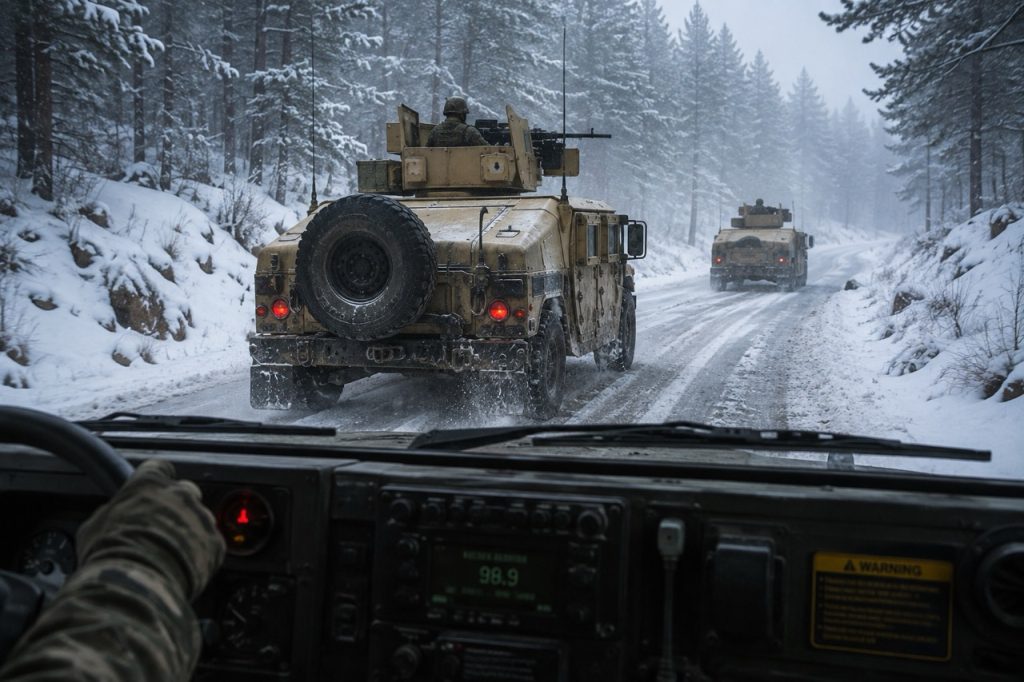
Fleet readiness is often described as a function of design robustness and maintainer skill. Both matter, but neither one keeps a HMMWV in the motor pool line up if the part that failed at 0600 is not on the shelf. A maintenance unit can have a fully qualified 63 series mechanic standing next to a vehicle with a diagnosed fault, and the vehicle will still sit deadlined until the correct, verified component arrives. For a platform that has been in continuous service since the early 1980s and now spans more than a dozen production configurations, that single fact drives most of the practical decisions a sustainment planner has to make.
The High Mobility Multipurpose Wheeled Vehicle family is not one vehicle. The base M998 and M998A1 cargo/troop carriers, the heavier payload M1097 series, the armored M1025/M1045 tow and armament carriers, and the later M1151, M1152 and M1165 configurations built on the Expanded Capacity Vehicle chassis share a common architecture but differ in engine, transmission gearing, suspension hardware and electronic content. A spare parts stockage plan that was accurate for a legacy M998A1 fleet is not automatically accurate for a unit operating up armored M1151A1s. This article works through seven categories of components that, based on documented HMMWV maintenance guidance and public defense sustainment reporting, consistently influence vehicle availability, and explains how to think about stocking each of them correctly for the specific configuration in your fleet.
1. Engine and Lubrication Service Components
HMMWV variants have been built around three distinct diesel engines: the naturally aspirated 6.2L V8 used in the original M998 and M998A1, a naturally aspirated 6.5L V8 fitted to the A2-series vehicles, and a turbocharged 6.5L V8 used in the Expanded Capacity Vehicle family that underpins the M1113 base vehicle and the M1151, M1152 and M1165 up-armored configurations. These engines are not interchangeable in terms of service parts. Oil filters, air cleaner elements, glow plug components and drive belt configurations differ by engine build, and the visual indicator most technicians use to confirm which engine is fitted is the belt arrangement V-belts on the 6.2L, a serpentine belt on the 6.5L family since data plate information does not always keep pace with engine swaps performed during depot overhaul.
Lubrication service is primarily a preventive maintenance function, but a shortage of oil filters or air cleaner elements converts it into a corrective maintenance problem the moment a scheduled service is missed. Dry type air cleaner elements load quickly in high dust and sand environments and, per long standing field guidance, may require daily attention in off-road desert operations rather than the standard service interval. A maintenance unit that under stocks filtration consumables for its specific engine configuration will see that shortage surface first as unscheduled downtime, not as a line item on a supply report.
2. Cooling System Components
The HMMWV cooling system is commonly described in field maintenance literature as a cooling stack: the radiator, engine oil cooler and power steering fluid cooler mounted together at the front of the engine bay, supported by a fan clutch and thermostat housing. This stack is checked at least annually under standard guidance and more frequently when the vehicle operates off road, because airflow through the fins is easily restricted by sand, insect debris and vegetation. A partially blocked stack does not announce itself with an immediate failure; it shows up gradually as elevated coolant temperature under load, and by the time a gauge confirms the problem, heat related wear has often already begun on the engine and transmission.
Turbocharged 6.5L engines in the up armored M1151/M1152/M1165 family run under higher thermal load than naturally aspirated variants, and the added curb weight of armor packages increases demand on the cooling system during sustained grades or desert operation. Maintenance units supporting these configurations should treat fan clutches, water pumps, radiator hoses and thermostats as higher priority stock items than they might be for a lighter, unarmored M998A1 fleet performing the same mission set.
3. Electrical and Starting System Components
Batteries, battery cables and terminal connections, alternators, starters and wiring harness connectors form the electrical backbone of the HMMWV, and long standing field maintenance guidance treats battery care as one of the cheapest and most effective forms of breakdown insurance available to a unit. Battery water levels should be checked monthly under normal conditions and weekly in hot climates, and terminal connections including ground straps, which are connections too and are easy to overlook should be kept clean and tight. None of this requires exotic parts, but it does require that batteries, terminal hardware and basic wiring components be on hand rather than requisitioned reactively.
Up armored HMMWVs fielded with antilock braking and electronic stability control beginning in 2019 add wheel speed sensors, an ABS/ESC control module and associated wiring to the electrical system. Units operating a mixed fleet of legacy M998 series and later UAH configurations with ABS/ESC should stock these components separately, since they are specific to the ABS/ESC equipped vehicles and have no equivalent on earlier trucks. Vibration from sustained rough terrain operation is a recurring cause of connector and terminal failures across the fleet, and it accelerates with vehicle age and total mileage.
4. Brake System Components
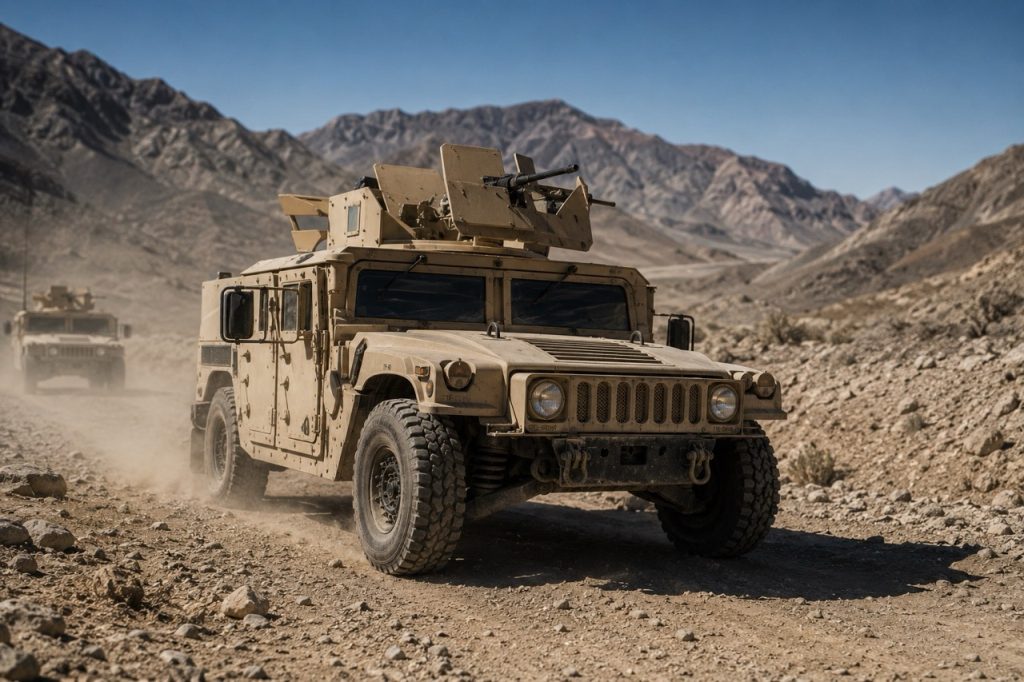
Brake system components master and wheel cylinders, brake lines and hoses, and friction material sit at the intersection of safety and availability, because a vehicle with a diagnosed brake fault is grounded until it is repaired, regardless of mission priority. Brake fluid renewal is a scheduled task independent of mileage, since brake fluid absorbs moisture over time and degrades braking performance even on a lightly used vehicle. Corrosion from moisture ingress in brake lines is a known concern in humid or coastal operating environments and in vehicles that see extended periods of static storage between missions.
The added mass of armor packages on M1151, M1152 and M1165 configurations places additional demand on the braking system relative to soft skin M998 series trucks performing comparable duty cycles, and the ABS/ESC hardware fitted to many up armored trucks introduces components hydraulic control units and wheel-speed sensors that have no counterpart on legacy vehicles. Correct identification of brake hardware by variant and configuration is essential before procurement, since brake components are not universally interchangeable across the HMMWV family.
5. Suspension, Steering and Wheel End Components
shock absorbers
Desert sand, mud and extended cross-country operation accelerate wear in these components, and heavily loaded or up armored vehicles place additional stress on suspension and steering hardware. A small number of HMMWVs are also fitted with an optional Central Tire Inflation System, documented in HMMWV parts and tools publications; units that operate CTI equipped vehicles need to stock the associated hub, valve and hose components separately from standard wheel end parts, since CTI hardware is not common across the fleet.
6. Fuel System Components
Fuel injection pumps, fuel filters, water separators and fuel lines keep the diesel engine supplied with clean, properly pressurized fuel, and this is one of the categories where engine specific identification matters most. Injection pumps differ across the 6.2L, naturally aspirated 6.5L and turbocharged 6.5L engine families and are not interchangeable between them; a maintenance unit ordering an injection pump without first confirming engine configuration risks receiving a part that will not fit or function on the vehicle in front of them. Fuel filter and water separator service is a routine preventive maintenance task, but a failed injection pump is a corrective event that typically deadlines the vehicle entirely, since there is no field workaround for a fuel system that cannot deliver pressurized fuel to the injectors.
Sand and dust infiltration into fuel system components is a recognized risk in desert operations if fuel caps, filler neck seals or filter housings are not properly maintained, and long duration field deployments increase the cumulative exposure of fuel system seals and lines to heat, vibration and contamination. Correct part identification against the vehicle’s specific engine and technical manual reference is the starting point for any fuel system stocking decision.
7. Belts, Hoses, Seals, Gaskets and Other High Wear Service Items
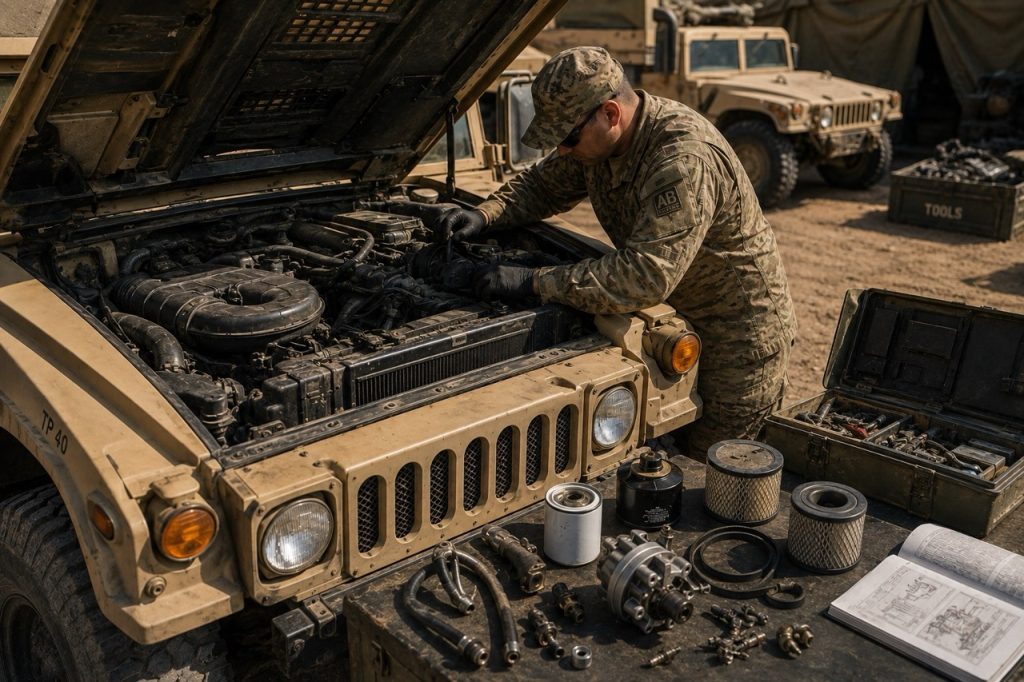
Drive belts, radiator and heater hoses, O rings and gaskets are inexpensive relative to major assemblies, which is precisely why they are underrepresented in many stocking plans and precisely why their absence causes disproportionate downtime. A missing serpentine belt stops a 6.5L powered HMMWV as completely as a missing engine block would, at a fraction of the cost and a fraction of the attention such a part typically receives in procurement planning. As noted above, belt configuration also serves as a practical field indicator of engine type, which makes stocking the correct belt for the correct engine a straightforward but easily overlooked identification step.
Rubber and elastomer components degrade with age, heat and ultraviolet exposure independent of mileage, which means a vehicle that has spent long periods in static storage or extended field deployment in hot climates can develop hose and seal failures even without heavy use. This category is predominantly a preventive maintenance concern, but because these items are consumed continuously across a fleet regardless of vehicle configuration, they are well suited to demand based stocking driven by historical consumption data rather than one time bulk purchases.
Building a Sound HMMWV Spare Parts Stocking Approach
Effective stockage planning starts with correct identification, not with a generic parts list. Every candidate item should be cross referenced against the applicable technical manual and Repair Parts and Special Tools List for the HMMWV family, principally the TM 9-2320-280 series, including the -20 unit maintenance manual and the -24P repair parts and special tools list to confirm National Stock Number, manufacturer part number, and the specific vehicle configurations for which that NSN is authorized. A part number that is correct for an M1097A2 heavy variant is not automatically correct for an M1151A1, even though the two vehicles share a substantial number of common components; HMMWV variants across the family do share a meaningful base of interchangeable parts, but configuration specific items exist throughout the drivetrain, suspension, electrical and armor related systems, and treating the fleet as fully interchangeable is a common and costly stocking error.
Beyond configuration control, a disciplined stocking approach weighs demand history and documented failure frequency for the specific fleet in question, rather than relying on a generic top parts list that may not reflect local operating conditions, climate or duty cycle. Lead time and supplier reliability matter as much as unit price, since a low cost part that arrives too late to prevent extended downtime has not actually reduced cost it has shifted it into lost vehicle availability. Shelf life is a genuine constraint for rubber, elastomer and battery components, and packaging and storage conditions should account for the humidity, temperature extremes and dust exposure the parts will face in the supply chain before they are ever installed.
Obsolescence is a recurring issue for a platform that has been in service for decades; legacy M998-series parts can become harder to source as the Army phases older configurations out of frontline units, which makes traceability and supplier qualification increasingly important rather than less. Genuine or OEM sourced components and properly qualified alternative parts both have a legitimate place in a sustainment program, but either category requires verifiable quality assurance, inspection documentation and a traceable supply chain. Purchasing the lowest-priced available part without verifying its source, documentation and fit against the applicable technical manual is not a cost-saving strategy it is a readiness risk that tends to surface at the worst possible time, and it is one of the more common ways that counterfeit or substandard components enter a maintenance unit’s inventory.
Why Spare Parts Availability Is a Readiness Issue, Not Just a Supply Issue
The relationship between spare parts availability and fleet readiness is well documented at the institutional level. A September 2025 U.S. Government Accountability Office review of Army and Marine Corps ground vehicle sustainment found that none of the Army ground vehicles examined met the service’s 90 percent mission capable goal in fiscal year 2024, and that a shortage of spare parts and materiel was one of two sustainment challenges affecting every ground vehicle type included in the review. The same report noted that the HMMWV recorded the smallest decline in mission capable rate among the Army vehicles reviewed since fiscal year 2015 a result consistent with the idea that disciplined, configuration aware spare parts management measurably supports vehicle availability, even as the broader ground vehicle fleet faces systemic sustainment pressure from reduced depot overhaul capacity and aging parts sourcing.
For an individual maintenance unit, the practical translation of that finding is straightforward: Mean Time to Repair and overall operational availability are driven as much by whether the correct part is on the shelf as by how quickly a mechanic can diagnose the fault. A small, well chosen spare parts inventory built around actual consumption data, known failure patterns and verified configuration compatibility will outperform a larger but poorly targeted inventory built on generic assumptions. Historical demand and failure data tracked at the unit or fleet level is a more reliable foundation for stockage decisions than any universal list of common parts, precisely because operating environment, vehicle age and configuration mix vary so much from one unit to the next.
Sourcing HMMWV Spare Parts Through a Qualified Supplier
Reliable HMMWV sustainment depends on a supply partner that treats part identification as seriously as procurement officers and maintenance planners do. AB Defence supports international defense organizations, NATO and allied fleet operators, and military maintenance units with traceable sourcing of military vehicle spare parts, technical part identification cross-referenced against applicable documentation, and responsive logistics support built for the realities of fleet sustainment rather than one off transactions. Whether a unit is planning stockage for a legacy M998-series fleet or an up armored M1151/M1165 configuration, correct identification confirmed engine type, confirmed configuration, confirmed NSN or manufacturer part number remains the foundation of every sourcing decision AB Defence supports.
Defense organizations, fleet sustainment managers and procurement teams evaluating HMMWV spare parts requirements are welcome to contact AB Defence to discuss part identification, supply continuity and international logistics support for HMMWV and related tactical vehicle platforms.
Work With AB Defence
Partner with AB DEFENCE for Reliable Combat Support Vehicle Sustainment. AB DEFENCE is a specialist international supplier of military spare parts and fleet sustainment solutions serving NATO and allied defense organisations. With deep inventory across a wide range of combat support vehicle platforms, rigorous quality assurance processes, export compliance expertise, and a commitment to long term supply chain partnership, AB DEFENCE helps defense buyers maintain fleet availability, reduce sustainment costs, and meet their operational readiness obligations. Contact the AB DEFENCE team to discuss your spare parts requirements, strategic inventory planning, and long-term sustainment programme needs.
Contact AB Defence to discuss your procurement requirements and learn how we can support your fleet readiness objectives.
Related Military Spare Parts Categories, Vehicle Platforms & Technical Guides
Explore AB Defence’s NATO-codified (NSN) and genuine OEM spare parts catalog, platform technical specifications, and sustainment engineering guides related to this article:
Stocked Spare Parts Categories (NSN & OEM Catalog)
- HMMWV (Humvee / Hummer M998) Spare Parts (203 stocked parts)
- Electrical, Electronic & Vision Systems for Military Vehicles (250 stocked parts)
- Military Brake Calipers, Master Cylinders & Hydraulic Systems (103 stocked parts)
- Military Portal Axles, Differentials & Drive Shafts (107 stocked parts)
- Military Engine Cooling Systems, Radiators & Water Pumps (57 stocked parts)
- Full NATO NSN & OEM Spare Parts Catalog (16,760+ Parts)
Compatible Vehicle Platforms & System Hubs
- HMMWV M998
- Tactical Wheeled Vehicles
- Electrical, Electronic & Vision Systems
- Brake & Suspension Systems
- Engine & Powertrain Systems
- Request a B2B Quotation (RFQ) & Technical Support