June 2, 2026
What Defense Procurement Officers Look for in International Suppliers

For defense procurement officers, supplier selection is never a routine purchasing decision. Every component sourced, every contract awarded, and every supplier relationship forged carries direct implications for military readiness, platform availability, operational effectiveness, and ultimately mission success. A failed hydraulic seal, an out of spec bearing, or an untraceable batch of components does not merely represent a logistical inconvenience it can ground a fleet, compromise a mission, or endanger lives.
The global defense environment has grown markedly more complex over the past decade. Aging military platforms, constrained defense budgets, stretched logistics chains, and increasingly sophisticated adversaries have placed unprecedented pressure on defense acquisition systems. Against this backdrop, procurement officers tasked with sourcing military spare parts and sustainment solutions from international suppliers face a challenge that goes far beyond price negotiation. They must evaluate technical competence, quality assurance maturity, regulatory compliance, supply chain transparency, and long-term partnership potential all simultaneously.
This article examines in depth the criteria that experienced defense procurement officers apply when evaluating international defense suppliers. It is intended as a practical reference for both procurement professionals and suppliers seeking to understand and meet the standards required to operate credibly in the defense supply chain.
Why Supplier Selection Matters More Than Ever
Rising Demand, Growing Complexity
Global defense spending has risen steadily over the past several years, driven by geopolitical instability across multiple theatres, the reassessment of NATO member defense commitments, and the emergence of new security challenges in Eastern Europe, the Indo Pacific, and beyond. As defense budgets expand and procurement volumes increase, the pressure on military supply chains intensifies correspondingly.
Procurement officers are not operating in a stable, predictable environment. Supply chain disruptions accelerated sharply by the COVID-19 pandemic and subsequent industrial dislocations have exposed the fragility of single source procurement strategies and just in time logistics models that were never truly designed with military resilience in mind. Critical components with lead times measured in months, not weeks, have forced logistics managers to fundamentally rethink inventory strategies and supplier relationships.
Aging Fleets and the Sustainment Imperative
Perhaps the most pressing challenge facing military logistics organizations today is the condition of legacy fleets. Across NATO and allied armed forces, significant proportions of ground vehicle fleets, rotary and fixed wing aircraft, and naval vessels are operating beyond their originally designed service lives. These platforms require sustained, reliable access to spare parts many of which are no longer in production, or are manufactured by original equipment manufacturers (OEMs) who have exited the market.
This reality has created both a challenge and an opportunity for international suppliers. The challenge is that obsolescence management, reverse engineering capability, and long term parts availability have become genuine differentiators not optional extras. The opportunity is that suppliers who can credibly address these requirements occupy a strategically valuable position in the defense supply chain.
For defense procurement officers managing fleet sustainment, the supplier relationship has shifted from transactional to strategic. The question is no longer simply “can you supply this part today?” It is: “Can you support this platform for the next fifteen years?”

You could visit our another blog post
How NATO Standards Influence Military Vehicle Spare Parts Procurement
The Key Criteria Defense Procurement Officers Evaluate
Compliance with Military and Defense Standards
Compliance with applicable quality and technical standards is the baseline requirement for any international supplier seeking to operate in the defense sector. This is non negotiable. Procurement officers will not advance a supplier relationship regardless of pricing or availability if fundamental standards compliance cannot be demonstrated.
The relevant frameworks vary by customer nation and platform type, but the most widely applicable include:
NATO STANAG Standards: Standardization Agreements issued by NATO govern interoperability across allied armed forces and establish common requirements for equipment, processes, and documentation. Suppliers working with NATO member procurement organizations must demonstrate familiarity with the relevant STANAGs applicable to their product categories.
AQAP Requirements: Allied Quality Assurance Publications (AQAPs) particularly AQAP-2110 and AQAP-2310 establish NATO’s quality management requirements for defense products and services. AQAP certification signals that a supplier’s quality management system meets the rigorous requirements expected of a NATO supply chain participant, and is frequently mandated by European defense procurement organizations.
ISO 9001: While ISO 9001 certification alone is insufficient for defense supply chain participation, it provides a foundational quality management framework and is typically a minimum prerequisite. Procurement officers view ISO 9001 as a starting point rather than a destination.
AS9100: Where aerospace and aviation components are involved, AS9100 certification the quality management standard specific to the aviation, space, and defense industries becomes directly relevant. Suppliers of aircraft components, rotary wing spare parts, or aviation related ground support equipment who cannot demonstrate AS9100 compliance will struggle to gain traction with serious defense customers.
Beyond certifications, procurement officers expect suppliers to maintain comprehensive technical documentation aligned with military specification requirements, including material specifications, manufacturing process documentation, and conformance records that can withstand audit scrutiny.
Proven Quality Management Systems
Certifications are credentials. Quality management systems are the underlying reality those credentials are meant to reflect. Experienced procurement officers understand the difference, and they evaluate both.
A credible defense supplier must demonstrate that its quality management system is operational, documented, and consistently applied—not a paper exercise assembled for audit purposes. The practical elements that procurement officers examine include:
Quality Control Processes: How does the supplier control incoming materials? What in process inspection checkpoints exist? How are finished goods validated before dispatch? The answers must reflect genuine operational practice, not theoretical procedure.
Inspection and Testing Protocols: For critical defense components, dimensional inspection, material verification, and functional testing are not optional. Suppliers must be able to demonstrate that inspection and testing activities are documented, traceable to individual batches or serial numbers, and conducted by appropriately qualified personnel using calibrated equipment.
Non-Conformance Management: How a supplier handles defects and non conformances is as revealing as any audit result. A mature supplier has a structured non-conformance management process that captures failures, investigates root causes, implements corrective actions, and tracks effectiveness. The absence of documented non-conformances is not a positive indicator it typically suggests that the quality system is not generating the data it should.
Continuous Improvement: Defense procurement officers are evaluating long-term partners, not short-term vendors. Suppliers who demonstrate a genuine commitment to continuous improvement through systematic performance monitoring, supplier development programs, and process refinement signal the kind of organizational maturity that sustains reliable performance over years and decades.
Traceability and Documentation
In defense procurement, documentation is not administrative overhead. It is a fundamental operational requirement that supports fleet safety, maintenance planning, regulatory compliance, and accident investigation. The inability to trace a component to its manufacturing source, material batch, and quality verification records is not merely an inconvenience it represents a potential safety and liability exposure that no defense organization can accept.
Procurement officers require suppliers to provide, as standard practice:
Certificates of Conformity (CoC): Formal declarations, issued by the supplier, confirming that supplied items conform to the specified requirements. A CoC must identify the applicable specifications, the relevant test or inspection standards, and the authorizing individual or function.
Material Test Reports (MTR): For metallic and structural components, Material Test Reports provide the chemical composition and mechanical property data for the actual material used in the supplied items. MTRs must be traceable to the material heat or batch and issued by an accredited testing laboratory or the material manufacturer.
Batch and Serial Traceability: Every item supplied must be traceable either individually by serial number or collectively by manufacturing batch to the specific production lot from which it originated. This traceability must be maintained through the supplier’s records system and reflected in the documentation provided to the customer.
Manufacturing Records: For critical components, procurement officers may require access to manufacturing process records, inspection data, and test results as part of the delivery package. Suppliers must maintain these records for defined retention periods typically no less than ten years for defense applications and be prepared to retrieve and provide them on request.
Supply Chain Transparency: Increasingly, procurement officers are interested not only in the direct supplier’s documentation, but in the traceability of that supplier’s own supply chain. Where sub tier suppliers contribute materials, components, or processes, the primary supplier must be able to account for the origin and qualification status of those inputs.
Technical Expertise and Product Knowledge
A supplier’s ability to provide a part number is the entry point. The ability to provide informed technical support around that part its application, its interface with associated systems, its failure modes, and its maintenance requirements is what distinguishes a genuine defense supply chain partner from a commodity distributor.
Defense procurement officers place considerable weight on technical expertise because the consequences of misapplication, incorrect specification, or inappropriate substitution in military equipment are severe. Key technical capabilities they look for include:
Engineering Support: Can the supplier provide technical data sheets, application guidance, and installation recommendations? Do they have qualified engineers capable of responding to technical queries? For complex components, can they support integration troubleshooting?
Reverse Engineering Capability: For platforms where OEM support has been discontinued, the ability to reverse engineer legacy components while maintaining functional equivalence and meeting applicable material and performance specifications is a critical differentiator. Suppliers with demonstrable reverse engineering programs, validated through appropriate testing and qualification, address one of the most persistent challenges in military fleet sustainment.
Obsolescence Management: Related to reverse engineering but broader in scope, obsolescence management refers to the proactive identification of parts at risk of becoming unavailable, and the development of alternate supply solutions before operational impact occurs. Suppliers who offer structured obsolescence management services become embedded in long term platform support programs in ways that purely reactive suppliers cannot.
Platform Specific Knowledge: Procurement officers dealing with specific vehicle families, aircraft types, or naval vessel classes benefit enormously from suppliers who understand the operational and maintenance context of those platforms. Generic parts suppliers are less valuable than technically informed partners who understand how a component functions within a specific system and what performance parameters are genuinely critical.
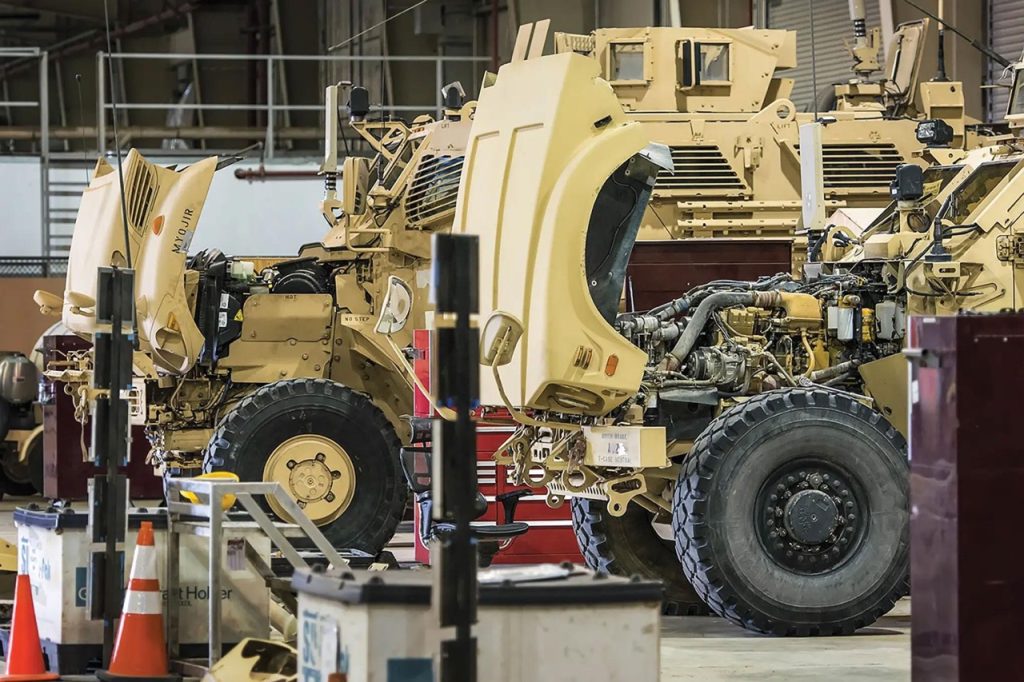
Supply Chain Reliability and Delivery Performance
Technical capability and quality credentials mean little if a supplier cannot deliver reliably. For military logistics operations managing fleet availability, delivery performance is a critical operational parameter not simply a commercial metric.
The supply chain attributes that defense procurement officers scrutinize most closely include:
Inventory Depth: Suppliers who maintain meaningful levels of strategic stock particularly for high demand, long lead, or obsolescence threatened components provide a meaningful buffer against supply disruptions. Just in time inventory strategies that work tolerably well in commercial environments are frequently inadequate in defense supply chains where demand spikes are unpredictable and the cost of unavailability is measured in operational readiness, not lost revenue.
Global Sourcing Capability: The ability to source components and materials from multiple geographic origins provides resilience against regional supply disruptions, export control complications, and single source dependencies. Procurement officers value suppliers with established, vetted multi region sourcing networks.
Lead Time Management: Realistic, consistent lead time performance is more valuable than optimistic commitments that fail to materialize. Procurement officers have long institutional memories for suppliers who quote aggressively and deliver unreliably. Honest lead time communication, even when the numbers are unfavorable, builds more durable relationships than promises that cannot be kept.
Emergency Fulfillment Capability: Military operations do not follow predictable schedules. Platforms suffer unexpected failures, operational tempos accelerate without warning, and maintenance requirements emerge on timelines that do not respect commercial order cycles. Suppliers who can demonstrate genuine emergency response capability including after hours contact protocols, expedited sourcing procedures, and rapid dispatch logistics differentiate themselves meaningfully in defense customer evaluations.
Export Control and Regulatory Compliance
Cross-border defense procurement operates within a dense and consequential regulatory framework. Procurement officers have both legal obligations and institutional risk sensitivities that make export control compliance a hard requirement for any international supplier.
ITAR and EAR: The U.S. International Traffic in Arms Regulations (ITAR) and Export Administration Regulations (EAR) govern the export, re export, and transfer of defense articles, defense services, and dual use items. Suppliers involved in transactions touching U.S. origin items or technology must understand their obligations under these regimes and demonstrate appropriate compliance programs. Non compliance is not merely a commercial risk it can result in criminal liability and permanent debarment from defense procurement.
Export Licensing: Many defense-related components require export licenses from the country of origin before they can be transferred internationally. Suppliers must have the organizational capability to identify licensing requirements, apply for and manage applicable licenses, and ensure that license conditions are met throughout the transaction lifecycle.
End-User Requirements: Many defense exports are subject to end user conditions including end use certificates, re transfer restrictions, and destination country notifications. Suppliers must understand and comply with these conditions, and must maintain appropriate records to demonstrate compliance in the event of an audit or investigation.
Trade Compliance Programs: For suppliers operating at meaningful scale in international defense markets, a structured trade compliance program incorporating regulatory monitoring, personnel training, transaction screening, and compliance documentation is a prerequisite for credibility with sophisticated defense customers. Procurement officers from NATO defense organizations will expect to see evidence of a functioning compliance program, not simply an assertion of compliance.
Financial Stability and Long Term Partnership Potential
A supplier with excellent quality credentials, strong technical capability, and competitive pricing represents no long term value if it is financially fragile. Defense procurement programs operate over years and decades. Fleet sustainment commitments are multi generational. Procurement officers are therefore keenly interested in the financial sustainability and organizational stability of the suppliers they engage.
Key considerations include business continuity planning, ownership and corporate structure stability, revenue diversification across customer bases, and evidence of long term investment in manufacturing and logistics capability. Suppliers who can demonstrate participation in multi year defense sustainment programs indicating that other defense organizations have made similar assessments of their long term viability provide meaningful reassurance.
Fleet Sustainment and Lifecycle Support Capability
The shift from transactional procurement to lifecycle partnership represents one of the most significant strategic evolutions in contemporary defense acquisition. Procurement officers increasingly evaluate suppliers not only on their ability to fulfill current requirements, but on their capacity to support platform sustainment across an extended service life.
Lifecycle support capability encompasses long-term parts availability commitments, structured obsolescence management programs, the technical depth to support evolving maintenance requirements as platforms age, and the organizational commitment to remain an active supply chain participant even as commercial demand for legacy platform components declines.
Suppliers who invest in understanding the full lifecycle trajectory of the platforms they support rather than simply cataloguing current demand position themselves as genuinely strategic partners in defense sustainment. This is the category of supplier that procurement officers seek to develop deep, durable relationships with.
Responsiveness and Communication
Technical and quality capabilities are prerequisites. The day-to-day experience of working with a supplier how quickly they respond to RFQs, how clearly they communicate on technical matters, how proactively they flag potential issues determines whether a supplier relationship becomes truly productive.
Procurement officers value suppliers who treat communication as a professional discipline: RFQ responses that are accurate and timely, technical queries that are answered by people who understand the subject matter, and account management that is proactive rather than reactive. When something goes wrong as it inevitably will over the course of a long-term supply relationship the quality of a supplier’s crisis communication often determines whether the relationship survives the incident.
Red Flags Procurement Officers Watch For
Experience teaches defense procurement officers to recognize warning signs that indicate a supplier cannot meet defense supply chain requirements, regardless of what their marketing materials suggest.
Common disqualifying red flags include the absence of traceable quality documentation, inconsistent or incomplete quality records, inability to identify the upstream origin of supplied materials, pricing that is implausibly below market which typically indicates unverified aftermarket or counterfeit risk poor communication responsiveness, lack of applicable quality certifications, and vague or unverifiable claims about manufacturing origin.
The unverified aftermarket is a particularly serious concern in defense procurement. Components of unknown provenance, without authentic manufacturing and inspection documentation, represent not only a quality risk but a potential safety hazard. Procurement officers are trained to be skeptical of any supplier whose documentation trail cannot be independently verified, and whose pricing seems designed to undercut legitimate supply chain participants.
The Growing Importance of Supply Chain Resilience
The disruptions of the early 2020s material shortages, shipping delays, manufacturing capacity constraints, and the sudden unavailability of components from specific geographic regions provided a painful but valuable lesson in supply chain fragility. Defense logistics organizations, which had in many cases allowed themselves to become dependent on single source, geographically concentrated supply chains, were forced to reckon with vulnerabilities that in retrospect should have been managed more proactively.
The lessons have been absorbed. Procurement officers now place considerably greater emphasis on supply chain resilience as an evaluation criterion seeking suppliers who maintain diversified sourcing networks, who can demonstrate genuine multi region procurement capability, and who have invested in inventory buffers for critical items.
Risk management frameworks that were previously applied only to tier-one contractors are increasingly being extended down the supply chain. Suppliers who can articulate their own risk management approach, demonstrate awareness of their sub tier supply chain vulnerabilities, and provide evidence of contingency sourcing capability are far better positioned in defense customer evaluations than those who cannot.
How International Suppliers Can Differentiate Themselves
For international suppliers seeking to establish or strengthen their position in defense procurement, several practical approaches are particularly effective.
Invest in appropriate quality certifications ISO 9001, AQAP, and where applicable AS9100 and ensure those certifications are substantiated by genuinely operational quality management systems rather than documentation assembled for audit purposes.
Build the technical depth to support genuine engineering dialogue with procurement and logistics customers. Suppliers who can discuss application requirements, failure modes, and technical alternatives are valued at a fundamentally different level than those who can only quote part numbers and prices.
Develop transparent, well documented traceability systems and be prepared to provide comprehensive documentation packages as standard not as a special request. Procurement officers notice immediately when a supplier has to be asked repeatedly for standard documentation.
Invest in long term platform knowledge. Understand the fleets your customers operate, the maintenance cycles those platforms follow, and the parts categories most likely to create availability challenges over the next decade. Proactively develop supply solutions for those challenge areas rather than waiting to be asked.
Demonstrate regulatory compliance through documented programs, not assertions. Trade compliance, export licensing capability, and end user management are operational requirements that must be evidenced, not merely claimed.
Communicate consistently and professionally. Return calls and emails promptly. Provide accurate information even when the honest answer is not the most commercially convenient one. Defense procurement relationships are long term investments, and they are built on trust established through consistent, reliable conduct over time.
Defense procurement officers are not purchasing commodities. They are making strategic decisions that affect the operational readiness, mission effectiveness, and long term defense capability of the forces they support. Every supplier selected, every contract awarded, and every component introduced into the defense supply chain carries real-world implications for the men and women who depend on that equipment in operational environments.
The most successful international defense suppliers understand this context and organize themselves accordingly. They invest in quality systems that genuinely produce conforming product. They build technical expertise that adds value beyond the transaction. They maintain documentation practices that meet the real world requirements of defense audit and investigation. They develop supply chain resilience that provides reliability even when the broader logistics environment is stressed. And they commit to long term support relationships that reflect an understanding of the strategic importance of fleet sustainment.
Suppliers who can credibly demonstrate quality, transparency, compliance, technical competence, delivery reliability, and long term commitment are not merely preferred vendors they become embedded strategic partners in the defense organizations they serve. That is the standard that serious defense procurement officers apply, and it is the standard that serious international defense suppliers should aspire to meet.
Work With AB Defence
AB Defence operates as a specialized international supplier of military spare parts and fleet sustainment solutions, serving defense procurement organizations, military logistics managers, and armed forces across NATO and allied nations. With a rigorous approach to quality assurance, full documentation traceability, and deep technical expertise across a broad range of military vehicle and equipment platforms, AB Defence is structured to meet the demanding standards that defense procurement officers rightly require.
Whether you are managing aging fleet sustainment, sourcing critical components against compressed timelines, or seeking a long-term supply chain partner with genuine defense industry expertise, AB Defence offers the technical capability, compliance framework, and operational reliability that defense supply chains depend on.
Contact AB Defence today to discuss your procurement requirements and learn how we can support your fleet readiness objectives.
Related Military Spare Parts Categories, Vehicle Platforms & Technical Guides
Explore AB Defence’s NATO-codified (NSN) and genuine OEM spare parts catalog, platform technical specifications, and sustainment engineering guides related to this article:
Stocked Spare Parts Categories (NSN & OEM Catalog)
- NATO Standard Defence Components & Military Hardware (12,993 stocked parts)
- M60 Tank Spare Parts (M60A1 / M60A3 / M60T) (497 stocked parts)
- M109 Self-Propelled Howitzer Spare Parts (585 stocked parts)
- BMC Kirpi MRAP Spare Parts (Kirpi I & Kirpi II) (597 stocked parts)
- Mercedes-Benz Unimog Military Spare Parts (562 stocked parts)
- Full NATO NSN & OEM Spare Parts Catalog (16,760+ Parts)
Compatible Vehicle Platforms & System Hubs
- Platforms
- Product Groups
- Quality
- Capabilities
- Tracked Armoured Vehicles
- Request a B2B Quotation (RFQ) & Technical Support