June 10, 2026
The 10 Most Widely Used Military Vehicles in the U.S. Armed Forces
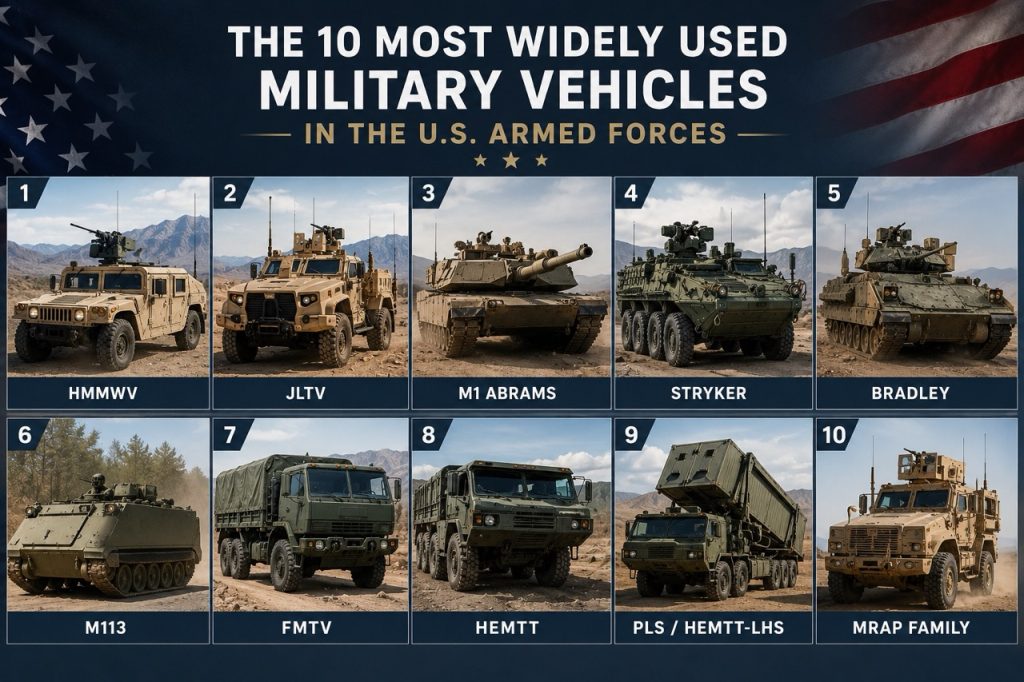
Military capability does not exist in the abstract. It is built and sustained on the ground, one vehicle at a time. Across every domain of modern warfare whether a forward operating base in an austere desert environment, a mechanized assault through contested terrain, or a strategic logistics corridor sustaining a deployed division military vehicles are the physical foundation upon which operational success is built.
The United States Armed Forces maintain one of the most diverse and technically advanced military vehicle fleets in the world, spanning light tactical mobility platforms, heavy armor, medium logistics transport, and mine resistant patrol vehicles. Understanding what these platforms are, how they are used, and what it takes to keep them operational is essential knowledge for anyone involved in defense procurement, military maintenance, fleet sustainment, or defense supply chain management.
This article provides a detailed, professionally researched reference guide to the ten most widely deployed military vehicles in U.S. service. For each platform, we examine its history, primary missions, key technical characteristics, maintenance priorities, and the spare parts and lifecycle support challenges that directly affect fleet readiness. For defense logistics professionals, this information is not background reading it is operational intelligence.
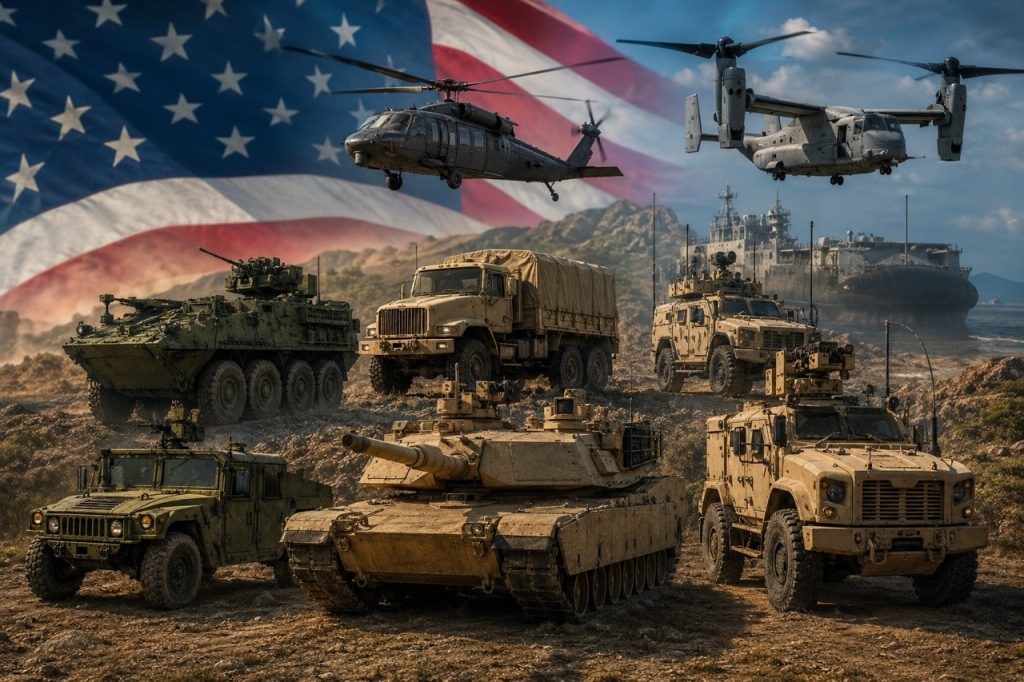
Why Military Vehicle Readiness Matters
Operational availability the percentage of vehicles in a fleet that are mission capable at any given time is one of the most closely tracked metrics in military logistics. A vehicle that cannot move, cannot be armed, or cannot communicate is not simply a maintenance problem. It is a capability gap.
The U.S. Army defines full mission capable (FMC) readiness as the ability of a vehicle to perform all assigned missions without restriction. The broader category, mission capable (MC), includes vehicles that can perform at least one primary mission. Maintaining high MC rates across a large, diverse fleet operating globally often under extreme environmental conditions and high operational tempo demands a robust and proactive approach to fleet sustainment.
Key Principles of Effective Fleet Sustainment
- Preventive maintenance: Scheduled servicing that prevents failure before it occurs, aligned to manufacturer technical manuals and Army Regulation 750-1.
- Strategic spare parts inventory: Prepositioned stocks of high demand components reduce mean time to repair (MTTR) and keep vehicles in the field.
- Multi source procurement: Dependence on a single supplier for critical components introduces supply chain vulnerability. Qualified multi-source procurement is standard practice in NATO aligned defense logistics.
- Lifecycle planning: Long term sustainment plans that account for component wear curves, obsolescence cycles, and modernization upgrades prevent the readiness cliff that affects aging fleets.
- Component traceability: Verification of part provenance, certification compliance, and quality standards (AQAP-2110, MIL-SPEC, ISO 9001) is non negotiable in defense supply chains.
- Supply chain resilience: Geographic diversification of qualified suppliers and emergency stock protocols ensure continuity of operations even during supply disruptions.
These principles apply equally to NATO allied forces, partner nation militaries, and coalition partners operating U.S.origin equipment. Understanding them in the context of specific platforms is where abstract logistics policy becomes practical fleet management.
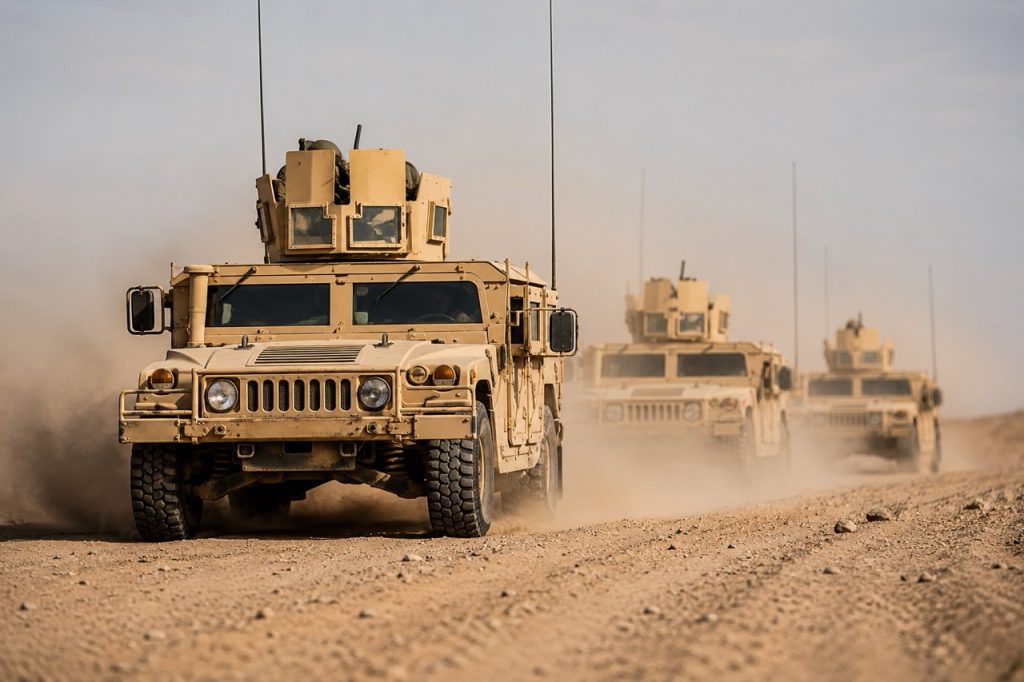
1. HMMWV — High Mobility Multipurpose Wheeled Vehicle (Humvee)
Overview and History
The High Mobility Multipurpose Wheeled Vehicle, universally known as the Humvee, has been the backbone of U.S. military tactical mobility since its introduction in 1984. Manufactured by AM General, the HMMWV was designed to replace the aging M151 jeep and M880 series trucks with a single, standardized light utility platform capable of fulfilling a wide range of missions across all terrain types and operational environments.
With approximately 300,000 units produced for U.S. military and allied customers, the Humvee is the most numerically significant tactical vehicle in American military history. Its all wheel drive drivetrain, central tire inflation system (CTIS), and high ground clearance gave U.S. forces a genuine mobility advantage over their predecessors in environments ranging from the jungles of Central America to the deserts of the Middle East.
Primary Missions and Variants
The HMMWV is produced in more than fifteen distinct variants, including:
- M1097/M1151: Armament carriers for crew served weapons
- M1025/M1026: TOW missile carriers
- M1035: Soft-top ambulance variant
- M1113: Expanded capacity variant with enhanced payload
- M1114/M1116: Up armored variants developed in response to IED threats in Iraq and Afghanistan
The platform serves the U.S. Army, Marine Corps, Air Force, Navy, and Special Operations Command, as well as over 50 allied nations. Its versatility is simultaneously its greatest operational strength and a significant sustainment complexity factor.
Maintenance Priorities and Lifecycle Support Challenges
The Humvee fleet is aging. Many units in active service are approaching or have exceeded 20 years of operational life, and the maintenance demand associated with high mileage vehicles has increased substantially. Common wear items include the 6.5L turbocharged diesel engine components, transfer case seals, front axle assemblies, and electronic systems in up armored variants.
Sourcing Original Equipment Manufacturer (OEM) parts for aging Humvees can be challenging, particularly for early generation variants where production lines have transitioned. Qualified aftermarket suppliers and international parts networks play an increasingly important role in sustaining Humvee fleets particularly for allied nations operating the platform without direct access to AM General’s primary supply chain.
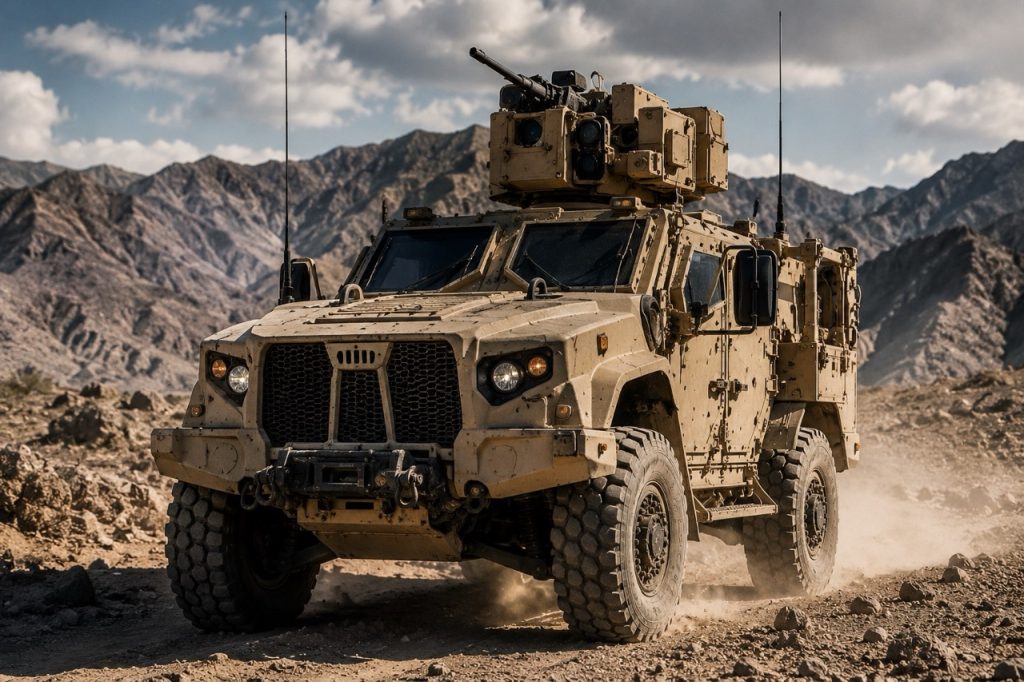
2. Joint Light Tactical Vehicle (JLTV)
Development and Capabilities
The Joint Light Tactical Vehicle program was initiated to address a fundamental operational challenge exposed by the wars in Iraq and Afghanistan: the legacy Humvee, even in up armored variants, could not provide adequate protection against modern IED threats while retaining the mobility necessary for tactical operations.
Oshkosh Defense was awarded the JLTV production contract in 2015 after a competitive evaluation process. The vehicle entered service with the U.S. Army and Marine Corps in 2016 and has since been fielded to all service branches and several allied nations including the United Kingdom, Belgium, Lithuania, and Brazil.
suspension system
hydraulic system
The current A4 production standard incorporates significant electronic systems upgrades over legacy A2 variants, including improved vehicle health management and diagnostic systems. For units transitioning from A2 to A4 vehicles or for international customers operating mixed generation fleets managing two distinct maintenance standards simultaneously is a recognized sustainment planning challenge.
Maintenance and Spare Parts Considerations
As a relatively new platform still in active production, the JLTV benefits from a well established supply chain and active OEM support. However, as fielding expands and operational hours accumulate, the scope of the sustainment mission will grow proportionally. The vehicle’s advanced electronic architecture including its CAN-Bus integrated vehicle management system requires technically trained maintenance personnel and specialized diagnostic tools.
International customers operating the JLTV outside of the U.S. logistical support framework face the same procurement complexity that affects all U.S. origin platforms: export controls under ITAR/EAR, long international lead times, and the need for qualified local or regional spare parts suppliers to fill gaps in primary supply chains.
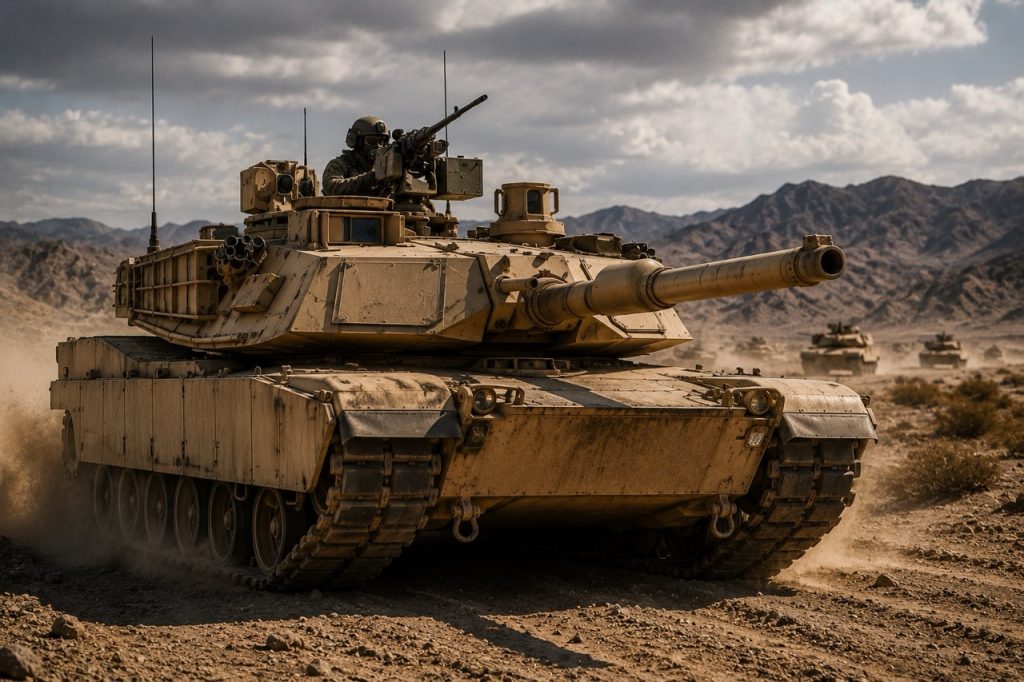
3. M1 Abrams Main Battle Tank
Combat Role and Operational History
The M1 Abrams, manufactured by General Dynamics Land Systems at the Joint Systems Manufacturing Center in Lima, Ohio, has been the U.S. Army’s primary main battle tank since its introduction in 1980. It has served as the decisive weapon of close combat for American armored forces through operations in Panama, the Gulf War, Operation Iraqi Freedom, and ongoing security assistance missions worldwide.
The Abrams combines a 120mm M256 smoothbore cannon capable of firing a range of kinetic energy penetrators and multi purpose anti tank rounds, with a composite armor package derived from Chobham armor technology that provides exceptional protection against both kinetic and shaped charge threats. The current production standard, the M1A2 SEPv3, incorporates improved electronics, Trophy active protection systems on select units, and improved power generation and distribution.
Lifecycle Complexity and Component Support Requirements
The M1 Abrams is one of the most technically complex ground vehicles in operational service globally. Its AGT1500 Honeywell gas turbine engine capable of running on diesel, jet fuel, gasoline, or any combination thereof delivers exceptional power output but requires meticulous preventive maintenance and specialized service equipment. Turbine engine components, particularly turbine blades and combustion system parts, are high value, low volume items that demand careful lifecycle management.
The Abrams’ drivetrain, tracks, suspension torsion bars, and roadwheels experience significant wear under operational conditions. Track replacement and roadwheel maintenance are among the highest frequency heavy maintenance tasks in armored unit operations. The vehicle’s thermal management systems, auxiliary power unit, and fire control electronics further expand the scope of required spare parts inventory.
Ongoing modernization programs including the M1A2 SEPv4 and potential future integration of hybrid electric drives will introduce new component families that require parallel sustainment planning. For partner nations operating older Abrams variants, managing obsolescence in electronic and fire control systems is an immediate challenge.
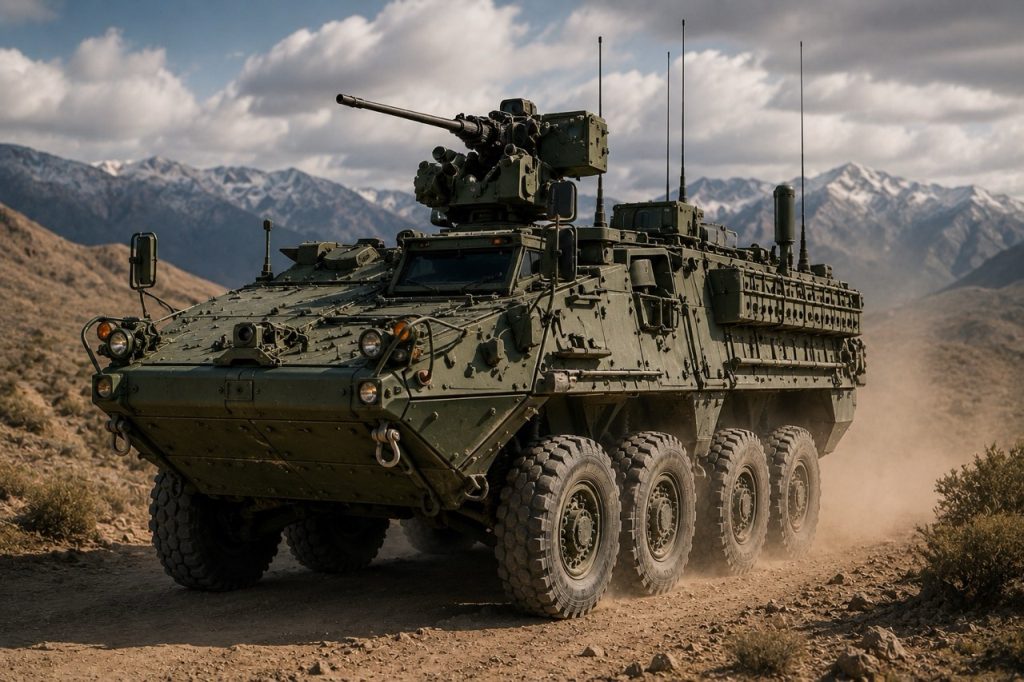
4. Stryker Armored Vehicle
Mission Profile and Configurations
The Stryker is an eight wheeled armored vehicle developed by General Dynamics Land Systems and introduced into U.S. Army service in 2002. It was specifically designed to bridge the capability gap between the Army’s heavy armored forces Bradley and Abrams equipped heavy brigade combat teams and its lighter airborne and air assault formations.
The Stryker’s defining operational advantage is strategic deployability. Its wheeled configuration allows rapid road movement and the ability to fit inside a C-17 Globemaster III transport aircraft, enabling rapid force projection that tracked vehicles cannot match. Stryker Brigade Combat Teams (SBCTs) are designed to deploy rapidly and operate effectively in complex, urban, and semi-permissive environments.
The Stryker family includes over ten variants: the ICV (Infantry Carrier Vehicle), MGS (Mobile Gun System, currently being retired), MC (Mortar Carrier), RV (Reconnaissance Vehicle), CV (Command Vehicle), FSV (Fire Support Vehicle), ATGM (Anti Tank Guided Missile), NBC RV (Nuclear Biological Chemical Reconnaissance Vehicle), MEV (Medical Evacuation Vehicle), and the Engineer Squad Vehicle.
Fleet Sustainment Considerations
The Stryker’s wheeled configuration results in a different maintenance profile than tracked vehicles. Tire management, axle maintenance, and brake system servicing are higher frequency tasks. The vehicle’s 350 horsepower Caterpillar C7 diesel engine is a relatively well supported commercial derivation powerplant with a broader service network than purpose built military engines. However, the Stryker’s electronic systems particularly its integrated battlefield command system and COMMANDER’S independent viewer require specialized support and represent the most technically complex element of Stryker sustainment.
Ongoing upgrades under the Stryker Double V Hull program and the Dragoon variant (which reinstates a 30mm cannon) introduce new components that must be incorporated into existing sustainment plans, requiring parallel procurement strategies for both legacy and upgraded configurations.
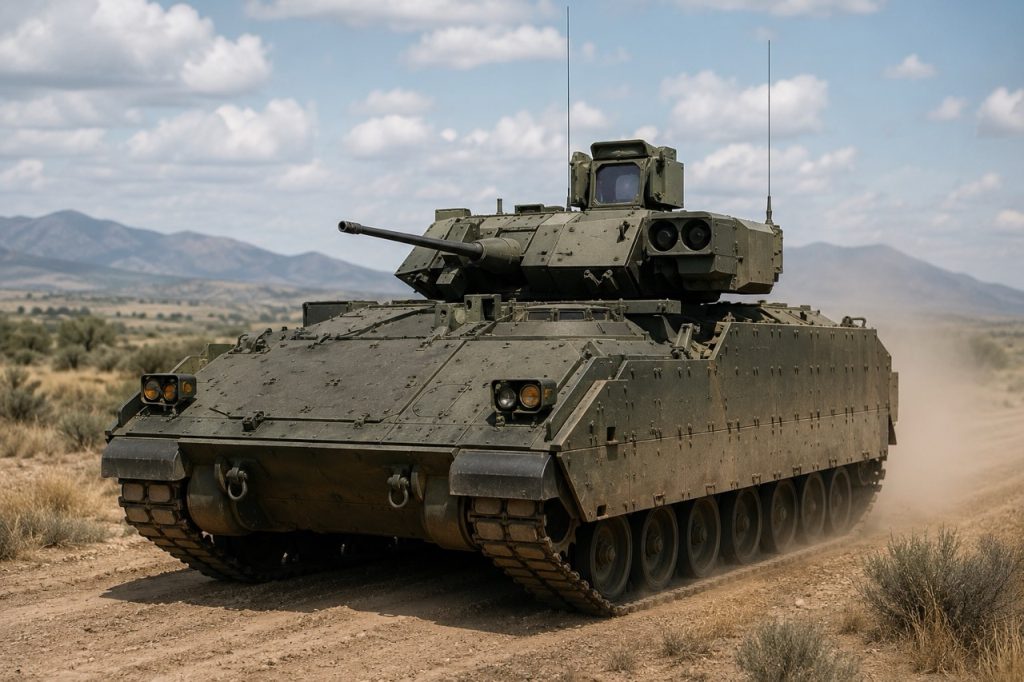
5. Bradley Fighting Vehicle
Combat Support Role
The M2/M3 Bradley Fighting Vehicle, developed by BAE Systems (formerly United Defense), has been in U.S. Army service since 1981. The M2 Bradley serves as an infantry fighting vehicle, transporting a nine man infantry squad and providing fire support with its 25mm M242 Bushmaster chain gun and TOW anti tank guided missile launcher. The M3 Cavalry Fighting Vehicle variant carries a two man scout team and additional ammunition.
The Bradley was designed from the outset to operate alongside M1 Abrams tanks in combined arms formations, providing direct fire support against infantry, light armor, and anti tank teams that would otherwise threaten main battle tanks at close range. Its performance in Operation Desert Storm where Bradley crews destroyed more Iraqi armored vehicles than the Abrams during some engagements validated this operational concept.
Modernization Programs and Maintenance Priorities
The Bradley has undergone continuous modernization since its introduction. The current M2A3/M3A3 standard incorporates the Applique Armor Kit (AAK), digital command and control systems, improved fire control, and an enhanced driver’s vision enhancer. The Army’s ongoing Bradley replacement program the XM30 Mechanized Infantry Combat Vehicle will eventually succeed the Bradley, but the platform will remain in service through the 2030s.
High priority maintenance areas for the Bradley include the powertrain (specifically the 600 horsepower Cummins VTA-903T diesel and HMPT-500 transmission), track and suspension components, Bushmaster cannon timing and feed mechanisms, and TOW launcher electronics. The vehicle’s aluminum hull requires specialized repair techniques for battle damage and corrosion management.
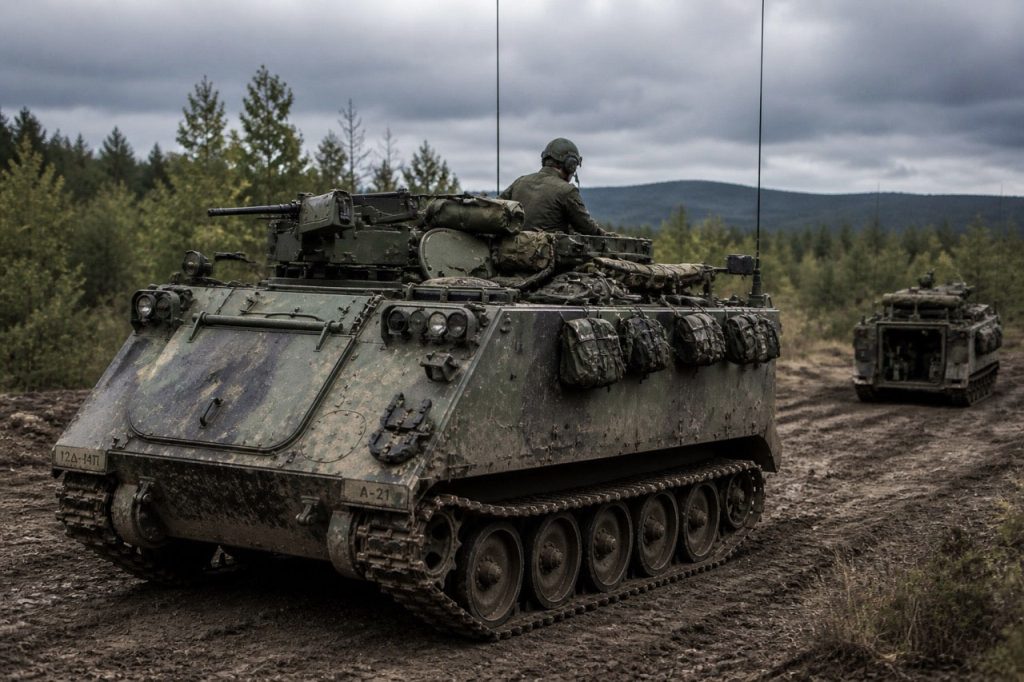
6. M113 Armored Personnel Carrier
Historical Importance and Current Service
Introduced in 1960, the M113 armored personnel carrier is one of the most widely produced and operationally deployed armored vehicles in history. Manufactured by BAE Systems (formerly FMC Corporation), the M113 has served with the U.S. Army and Marine Corps in Vietnam, Grenada, Panama, the Gulf War, Somalia, the Balkans, Iraq, and Afghanistan, as well as with the armed forces of more than 50 countries worldwide.
The M113 is a fully tracked aluminum hulled vehicle powered by a 212-horsepower Detroit Diesel 6V53T engine in the A3 variant. Its simple, robust design made it exceptionally easy to maintain and repair in field conditions a factor that contributed directly to its extraordinary longevity and global adoption. Over 80,000 units were produced during its production run, making it the most numerous armored vehicle in the Western alliance during the Cold War.
Global Adoption and Long Term Sustainment
While the U.S. Army has transitioned most front line M113s to Bradley and Stryker platforms, the vehicle remains in active service in utility, ambulance, mortar carrier, command vehicle, and engineer support roles across the U.S. force structure and among allied nations. Many partner nations including those in the Middle East, Southeast Asia, and South America continue to operate M113 fleets as their primary mechanized infantry platform.
Sustainment of aging M113 fleets presents growing challenges as original production lines have closed and OEM support has diminished. Critical wear items hull penetrations, engine and transmission components, road arm assemblies, and track systems increasingly rely on qualified aftermarket suppliers and international spare parts networks. For countries operating large M113 inventories, a proactive multi source procurement strategy is essential to maintaining acceptable readiness rates.
7. FMTV — Family of Medium Tactical Vehicles
Logistics Role and Fleet Importance
The Family of Medium Tactical Vehicles encompasses a range of 2.5 ton and 5 ton wheeled trucks that form the backbone of U.S. Army tactical logistics at the unit level. Manufactured by Oshkosh Defense under a series of production and sustainment contracts dating to 1991, the FMTV includes the Light Medium Tactical Vehicle (LMTV) in cargo and van body configurations, and the Medium Tactical Vehicle (FMTV) cargo and wrecker variants.
FMTV vehicles are the primary means by which U.S. Army units at the brigade and below level move supplies ammunition, food, fuel, water, and equipment forward to supported elements. Without a functioning FMTV fleet, tactical logistics chains break down rapidly. The platform’s importance to operational readiness is often underestimated precisely because its role is logistical rather than combat.
Reliability and Fleet Maintenance
The FMTV’s 330 horsepower Caterpillar C7 diesel engine (in post-2009 A2 variants) and Allison 3200SP automatic transmission are relatively well supported within commercial maintenance ecosystems, reducing specialized training requirements compared to purpose built military powerplants. Common maintenance priorities include brake system servicing, suspension components, transfer case maintenance, and cab structural integrity for vehicles operating on improved and unimproved surfaces.
As the FMTV fleet ages across allied nations that operate U.S.-origin logistics vehicles, the scope of the sustainment mission expands. International procurement of FMTV components must navigate both technical specification compliance and export licensing requirements, reinforcing the value of qualified international spare parts suppliers with established ITAR compliance frameworks.
8. HEMTT — Heavy Expanded Mobility Tactical Truck
Heavy Logistics Capability and Support Functions
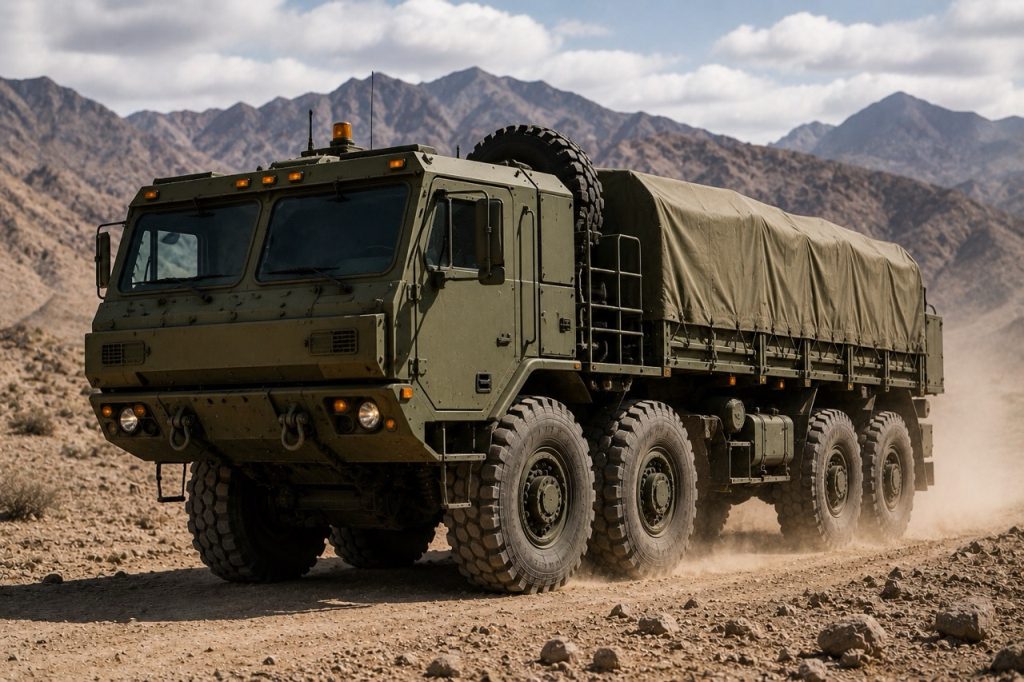
The Heavy Expanded Mobility Tactical Truck, manufactured by Oshkosh Defense since 1981, is the U.S. Army’s primary heavy logistics vehicle for operational-level sustainment. The HEMTT family includes cargo, tanker, wrecker, and load handling system variants, all built on an eight wheel drive platform powered by a Detroit Diesel or Caterpillar diesel engine producing between 445 and 605 horsepower depending on variant and production generation.
HEMTT vehicles move the heavy cargo that sustains armored and mechanized formations in the field: bulk fuel for tank and aircraft operations, ammunition for artillery and air defense systems, and the large maintenance equipment required to service complex weapons platforms. The HEMTT LVSR (Logistics Vehicle System Replacement) and the HEMTT M1120 Load Handling System (LHS) variant are particularly significant in the context of their roles in strategic resupply and forward ammunition management.
Maintenance Challenges
9. Palletized Load System (PLS) / HEMTT-LHS
Strategic Logistics and Operational Readiness Contribution
The Palletized Load System is a family of heavy tactical trucks built around a load handling system (LHS) that enables rapid loading, transport, and off loading of standardized flatrack containers and ammunition pallets without ground handling equipment. The PLS truck itself is a 10×10 variant manufactured by Oshkosh Defense, capable of self-loading and off loading its 33,000-pound payload in minutes.
The operational significance of the PLS system lies in its throughput capability. By eliminating the need for forklifts or cranes at austere operating locations, PLS vehicles enable sustained ammunition resupply, fuel transfer, and cargo movement in environments where conventional logistics infrastructure is absent. This capability directly enables high-tempo operations by armored, artillery, and aviation units.
The PLS trailer the M1076 extends the system’s capacity and allows forward positioning of pre loaded flatracks that can be swapped rapidly as the tactical situation evolves. The combination of the PLS truck and M1076 trailer has become a foundational element of Army operational logistics doctrine at the corps and division level.
Spare Parts and Maintenance Considerations
PLS sustainment overlaps substantially with HEMTT sustainment given their shared powertrain and chassis architecture. The LHS mechanism itself including its hydraulic crane arm, hook assembly, and hydraulic power unit requires specialized maintenance and represents the primary unique maintenance burden associated with the PLS platform. Hydraulic seals, cylinder components, and load hook assemblies are high priority spare parts items for PLS fleets operating at sustained tempo.
10. MRAP Family Mine Resistant Ambush Protected Vehicles
Development and Operational Deployment
The Mine Resistant Ambush Protected vehicle family represents one of the most significant rapid acquisitions in U.S. military procurement history. Following the catastrophic human cost of IED attacks on Humvees in Iraq and Afghanistan, the Department of Defense launched an emergency procurement effort beginning in 2007 that ultimately fielded over 27,000 MRAP vehicles to U.S. forces in fewer than three years.
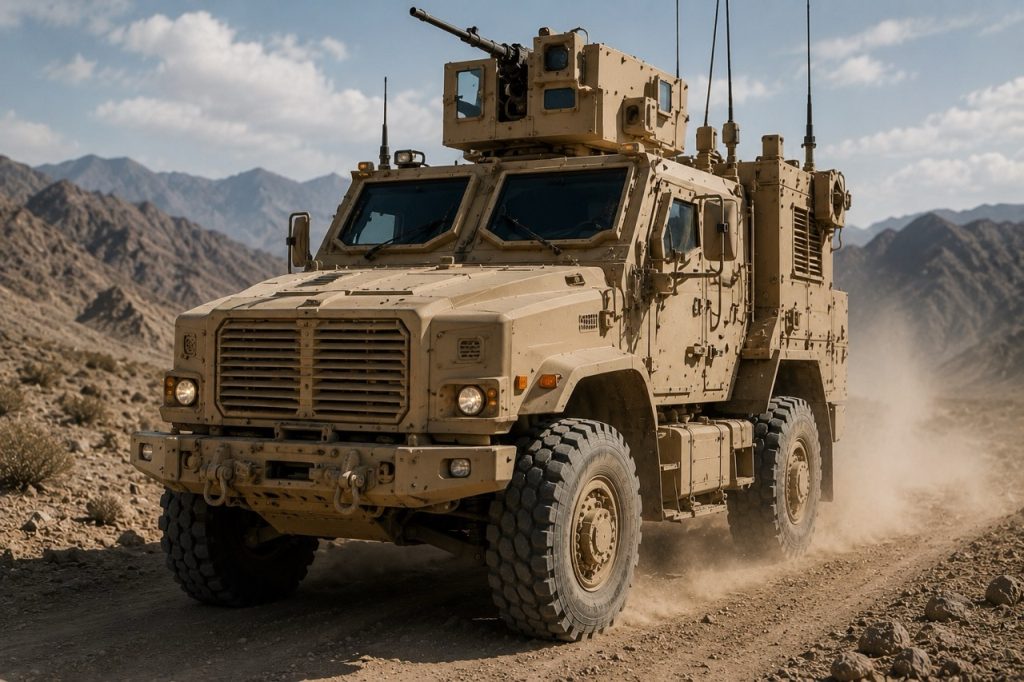
MRAP vehicles are defined by their V shaped hulls, which deflect blast energy from under vehicle IED detonations away from the crew compartment, and their reinforced crew compartment designs that provide significantly greater protection than traditional tactical vehicles. The MRAP family includes vehicles from multiple manufacturers: the Force Protection Industries Cougar and Buffalo, the International MaxxPro, the Navistar Maxxpro Plus, the BAE Systems RG-31 Nyala, and the Oshkosh M-ATV (MRAP All Terrain Vehicle).
Protection Capabilities and Long Term Sustainment
MRAP vehicles successfully reduced IED-related casualties among U.S. forces, and their deployment is widely credited as one of the most impactful force protection decisions of the post-9/11 era. The platforms are now embedded in U.S. and allied force structures for patrol, convoy escort, route clearance, and force protection missions.
Long-term MRAP sustainment presents unique challenges driven by the diversity of manufacturers and platforms within the MRAP designation. Unlike the HMMWV or JLTV, the MRAP is not a single vehicle design but a category encompassing multiple architecturally distinct platforms, each with its own spare parts ecosystem, maintenance documentation, and component sourcing requirements.
Common MRAP maintenance priorities include V-hull inspection and repair, axle and suspension servicing for the high ground clearance configurations, electronic countermeasure system integration maintenance, and tire management for the large diameter off road tires common across the family. International customers operating MRAP variants including several NATO allies and partner nations require sustained access to U.S.origin or qualified equivalent spare parts, often through international defense supply chains.
What All Successful Military Fleets Have in Common
Across the ten platforms described in this article, patterns emerge that define the difference between high readiness fleets and those that struggle with chronic non mission capable rates. These patterns are consistent regardless of platform type, service branch, or national context.
Preventive Maintenance Culture
High performing military maintenance organizations treat preventive maintenance as a strategic investment, not a scheduling burden. Adherence to manufacturer specified service intervals, systematic lubrication programs, and proactive inspection protocols prevent the compounding failure cascades that turn minor wear items into major component failures.
Strategic Spare Parts Inventory Management
Effective fleet managers do not wait for components to fail before acquiring replacements. They analyze historical failure data, forecast demand based on operational profiles, and maintain pre positioned spare parts stocks at echelons appropriate to the tempo of operations they support. Demand signal data from field units is integrated with procurement planning at the supply management level to prevent both stockouts and excess inventory.
Multi Source Procurement and Supply Chain Resilience
Dependence on a single source for critical spare parts whether an OEM or a single qualified vendor creates supply chain vulnerability. NATO logistics doctrine, reflected in procurement standards across alliance members, emphasizes the importance of qualifying multiple suppliers for high criticality components. International spare parts networks provide both depth and geographic redundancy in procurement strategies.
Lifecycle Planning and Obsolescence Management
Every military vehicle platform has a lifecycle during which components transition from active production to diminishing manufacturing sources and material shortages (DMSMS). Proactive lifecycle managers identify DMSMS risks years in advance, engage in bridge buy procurement to secure sufficient stocks before production ends, and qualify alternative sources or form fit function replacements to sustain vehicle populations through their intended service lives.
Component Traceability and Quality Assurance
The proliferation of counterfeit or substandard military spare parts is a documented and serious supply chain risk. Effective quality management in defense logistics requires full traceability from manufacturer to end user, compliance with applicable quality standards (AQAP-2110, AQAP-2310, MIL-SPEC), and a zero tolerance posture toward unverified parts in safety critical applications. Defense organizations that operate robust first article inspection (FAI) programs and maintain documented certificates of conformance for incoming components protect both their personnel and their operational readiness.
Military Vehicle Comparison Table
The following table provides a high level comparison of the ten platforms discussed in this article across key operational and sustainment dimensions.
| Vehicle | Primary Role | Service Branch | Mobility | Protection Level | Operational Focus | Lifecycle Complexity |
| HMMWV (Humvee) | Light tactical transport | Army / USMC / USAF | High (wheeled) | Light | Utility & liaison | Medium |
| JLTV | Protected light mobility | Army / USMC / USAF | High (wheeled) | Medium | Patrol & combat support | Medium-High |
| M1 Abrams MBT | Armored direct-fire combat | Army / USMC | High (tracked) | Very High | Decisive action | Very High |
| Stryker | Infantry carrier / recon | Army | High (wheeled) | Medium | Rapid deployment | High |
| Bradley IFV | Mechanized infantry / fire sup. | Army | High (tracked) | Medium-High | Combined arms combat | High |
| M113 APC | Personnel carry / utility | Army / Intl forces | Med (tracked) | Medium | Support & legacy use | Medium |
| FMTV | Medium logistics transport | Army / USMC | High (wheeled) | Low | Supply chain & sustainment | Low-Medium |
| HEMTT | Heavy logistics / recovery | Army | Moderate (wheel) | Low | Strategic lift & recovery | Medium |
| PLS / HEMTT-LHS | Palletized cargo transport | Army | Moderate (wheel) | Low | Rapid resupply | Medium |
| MRAP Family | Mine/blast protection patrol | Army / USMC / USAF | Moderate (wheel) | High | Force protection | High |
The ten platforms covered in this guide represent the operational core of the U.S. military vehicle fleet from the ubiquitous Humvee to the imposing M1 Abrams, from the logistics workhorses of the HEMTT and PLS families to the blast resistant MRAPs that redefined force protection in counterinsurgency environments. Each of these platforms performs a distinct and essential role in enabling American military capability across the full spectrum of operations.
Understanding these vehicles is only the first part of the equation. The second and operationally decisive part is ensuring that they remain ready to fight, move, and sustain. Fleet readiness is not a static condition achieved once at initial fielding. It is a continuous process that demands proactive maintenance, reliable spare parts supply chains, rigorous quality standards, and long-term lifecycle planning.
As U.S. and allied military organizations manage aging legacy fleets while simultaneously fielding next generation platforms, the complexity of the sustainment challenge grows. Procurement officers and fleet managers who approach this challenge with a strategic, data driven perspective and who build relationships with qualified, verified international supply chain partners will maintain the readiness advantage that separates capable military forces from those that fall short when operational demands increase.
AB DEFENCE serves defense organizations around the world by providing access to a verified global network of military vehicle spare parts, with a focus on quality assurance, supply chain traceability, and the technical expertise required to support complex defense procurement requirements. Whether the requirement is a critical component for an aging M113 fleet, a structural part for an up-armored HMMWV, or a specialized system element for a Stryker or Bradley, our commitment is to sourcing the right part, to the right standard, at the right time.
Strengthen Your Fleet Readiness with AB DEFENCE
Is your organization facing spare parts lead time challenges for legacy military vehicle fleets? Are your procurement teams managing growing obsolescence risk across aging platforms? Is your current supplier network providing the quality assurance and certification compliance your defense contracts require?
AB DEFENCE works with defense procurement organizations, military maintenance commands, fleet sustainment managers, and defense contractors to provide reliable, verified access to military vehicle spare parts and defense logistics support. Our technical team brings direct experience in NATO standard procurement processes, quality management systems, and international defense supply chain operations.
Contact AB DEFENCE to discuss your spare parts requirements, review your fleet sustainment strategy, or evaluate how a qualified international supply chain partner can strengthen your operational readiness. Reliable vehicles start with reliable parts and reliable parts start with the right supply chain partner.
Related Military Spare Parts Categories, Vehicle Platforms & Technical Guides
Explore AB Defence’s NATO-codified (NSN) and genuine OEM spare parts catalog, platform technical specifications, and sustainment engineering guides related to this article:
Stocked Spare Parts Categories (NSN & OEM Catalog)
- NATO Standard Defence Components & Military Hardware (12,993 stocked parts)
- M60 Tank Spare Parts (M60A1 / M60A3 / M60T) (497 stocked parts)
- M109 Self-Propelled Howitzer Spare Parts (585 stocked parts)
- BMC Kirpi MRAP Spare Parts (Kirpi I & Kirpi II) (597 stocked parts)
- Mercedes-Benz Unimog Military Spare Parts (562 stocked parts)
- Full NATO NSN & OEM Spare Parts Catalog (16,760+ Parts)
Compatible Vehicle Platforms & System Hubs
- Platforms
- Product Groups
- Quality
- Capabilities
- Tracked Armoured Vehicles
- Request a B2B Quotation (RFQ) & Technical Support