AB DEFENCE Platform support
M44T / M52T Self-Propelled Howitzer Series
Explore platform information, technical systems and spare parts support.
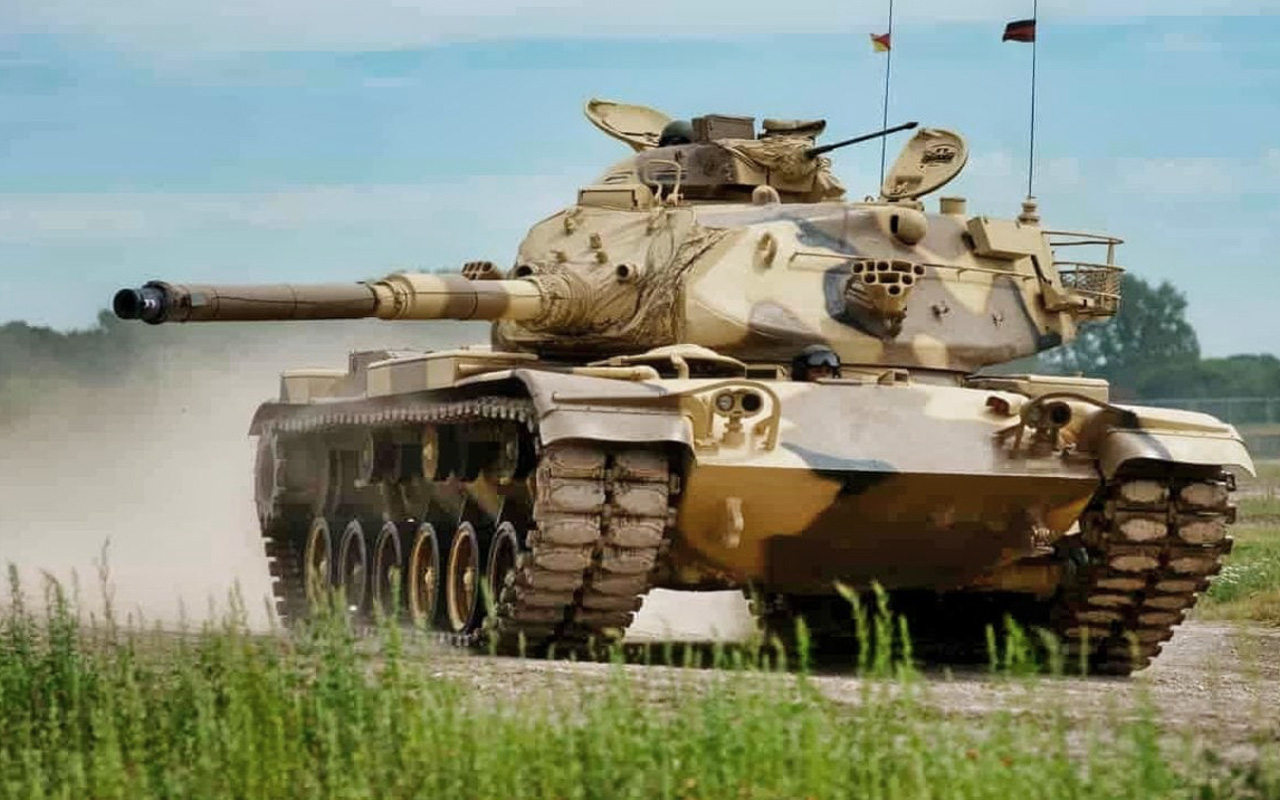
M44T / M52T
Request a QuoteTable of Contents
M44T / M52T Modernization & Sustainment Overview
The M44T and M52T self-propelled howitzer series represents one of the more technically instructive examples of tracked artillery modernization undertaken by any NATO-member land force. Both platforms trace their lineage to Cold War-era American artillery systems that served across multiple Western-aligned militaries from the 1950s onward. Rather than replace these aging systems outright, Turkey pursued a structured modernization path, drawing on German engineering expertise to extend service life, increase firepower, improve mobility, and maintain a credible tracked artillery capability across the land forces inventory.
The M44T program addressed the 155 mm tracked howitzer requirement by upgrading an existing M44 fleet with improved propulsion, fire-control enhancements, and a longer-barrel artillery system offering greater effective range. The M52T program went considerably further, converting an entire fleet of M52 105 mm howitzers into 155 mm systems, requiring significant structural adaptation to accommodate the heavier recoil loads and the larger ammunition handling architecture. Together, these two programs gave Turkish land forces a modernized 155 mm tracked artillery capability without the full acquisition cost of purpose-built new platforms, while simultaneously creating a complex but well-defined sustainment challenge that persists to this day.
For defense industry professionals, procurement teams, maintenance organizations, and spare parts suppliers, the M44T and M52T represent platforms with layered technical architecture spanning original American chassis design, German modernization subsystems, and Turkish configuration-specific integration. Understanding this layered structure is fundamental to accurate spare parts identification, correct NSN sourcing, and effective fleet sustainment support.
M44T Self-Propelled Howitzer
The original M44 was an American tracked 155 mm self-propelled howitzer developed in the early Cold War period, entering service in the 1950s. It was built on a modified M41 light tank chassis and provided NATO-aligned forces with a relatively mobile artillery platform capable of direct and indirect fire support. The M44 served in a number of NATO and allied militaries, and Turkey operated a substantial fleet through the Cold War decades.
By the late 1980s and into the early 1990s, the limitations of the original M44 configuration were well understood. Firing range was constrained, the powerpack and drivetrain showed the fatigue of decades of service, and the fire-control architecture was no longer consistent with the standards expected of a modern artillery unit. Full fleet replacement was not practical on the timeline or budgets available, so Turkey initiated a modernization program aimed at extracting significantly improved capability from existing platforms.
German technical involvement, commonly attributed to participation from German defense industry entities including Rheinmetall, provided the engineering basis for the artillery system upgrade. Open-source references indicate that approximately 222 M44 platforms underwent the Turkish modernization program. The upgraded designation, M44T, reflects both the Turkish-specific configuration and the scope of changes applied.
The heart of the M44T modernization was the replacement of the original howitzer with a 155 mm / 36 caliber gun system. This change alone provided a meaningful improvement in effective firing range. Commonly reported figures indicate a range of approximately 24.7 km with standard NATO 155 mm projectiles, with further extension possible using assisted or enhanced ammunition types, with some sources citing ranges approaching 30 km depending on ammunition configuration and loading conditions. As with all reported ballistic performance data for legacy platforms, figures should be treated as indicative rather than absolute, and may vary by source.
Propulsion improvements were also a central element of the M44T program. The platform received the MTU MB 833 Aa-501 diesel engine, commonly reported at approximately 450 horsepower, replacing the original American powerplant. This provided improved power-to-weight performance, better fuel economy, and a powertrain more consistent with German-derived military vehicle standards that were already represented elsewhere in the Turkish armored vehicle fleet. Drivetrain, cooling, and fuel system components were updated accordingly, with improvements to operational range and reliability.
Fire-control and sighting system improvements were incorporated to bring the M44T to a standard compatible with contemporary artillery operations. Maintainability was also addressed, with modifications intended to reduce the complexity and time burden of field-level and depot-level maintenance.
From an operational perspective, the M44T served as a practical bridge for Turkish land forces artillery units during the period before more modern self-propelled howitzer platforms entered service. It extended the useful service life of an established fleet, provided a meaningful step up in 155 mm fire support capability, and demonstrated that structured modernization, rather than immediate replacement, was a viable cost management approach for tracked artillery sustainment.
M44T Technical Overview
The following overview summarizes the key technical characteristics of the M44T as commonly reported in open-source defense references. Individual vehicle configurations may vary depending on the specific modernization batch and subsequent service modifications.
- Platform type: Tracked self-propelled howitzer
- Origin: United States (original M44); modernized in Turkey with German technical involvement
- Main armament: 155 mm / 36 caliber howitzer
- Reported firing range: Approximately 24.7 km with standard NATO 155 mm ammunition; extended range reported with assisted or enhanced ammunition, with some sources indicating up to approximately 30 km depending on ammunition type
- Engine: MTU MB 833 Aa-501 diesel, commonly reported at approximately 450 hp
- Modernization scope: Artillery system replacement, powerpack upgrade, fire-control improvements, drivetrain and cooling system updates
- Role: Indirect fire support for maneuver and combined-arms operations
- Fleet size (reported): Approximately 222 vehicles underwent modernization
- Sustainment considerations: Multi-origin technical architecture spanning original American chassis components and German-derived modernization subsystems; requires careful NSN and part number management for accurate spare parts sourcing
M52T Self-Propelled Howitzer
The M52 was an American tracked 105 mm self-propelled howitzer developed in the early Cold War period. Unlike the open-topped fighting compartment of the M44, the M52 featured a fully enclosed rotating turret, providing the gun crew with greater protection from weather, small arms fire, and artillery fragments. This configuration was considered an advantage in certain tactical environments, and the M52 served in a number of Western-aligned militaries throughout the Cold War decades, including Turkey.
The fundamental limitation of the original M52 configuration was its 105 mm armament. While the 105 mm howitzer retained value for close fire support tasks, evolving NATO artillery doctrine increasingly emphasized 155 mm standardization for the range, lethality, and ammunition commonality it provided. Maintaining a large fleet of 105 mm tracked self-propelled howitzers alongside a modernizing 155 mm inventory created logistical complexity and a growing capability gap relative to peer artillery standards.
Turkey addressed this with the M52T modernization program, which was considerably more ambitious in engineering scope than the M44T effort. The M52T program converted the 105 mm M52 platform into a 155 mm artillery system, requiring structural modifications to the turret and hull to manage the significantly greater recoil forces generated by the larger-caliber gun. Open-source defense references commonly report that approximately 365 M52 platforms underwent this conversion program, representing a substantial commitment to fleet life extension rather than fleet replacement.
The M52T received a 155 mm / 39 caliber gun system, providing a longer barrel than the M44T configuration and consequently improved ballistic performance. Reported firing ranges for the M52T indicate approximately 18 km with standard NATO 155 mm projectiles. With improved or extended-range ammunition types, ranges of approximately 24 km have been reported in some defense sources, and figures approaching 30 km have been cited in references to rocket-assisted projectile capability, though exact performance data should be treated as indicative and may vary depending on ammunition type, propellant charge, and specific vehicle configuration.
German technical involvement played a significant role in the M52T program, paralleling the approach taken with the M44T modernization. The powerpack was updated with an MTU diesel engine, improving propulsion performance over the original American powerplant and bringing the platform closer to the maintenance standards applicable to other German-derived vehicles in the Turkish inventory.
The structural adaptation required to accommodate the 155 mm gun system on the M52T platform was non-trivial. The turret required reinforcement and dimensional modification to accept the larger gun mount and manage recoil loads across the firing cycle. A rear stabilization spade was incorporated to provide a stable firing platform, a feature that is a meaningful identifier for this configuration. Ammunition stowage arrangements were revised to accommodate 155 mm rounds, which differ substantially in volume and weight from the original 105 mm loadout. These changes had cascading effects on vehicle mass, balance, and associated mechanical loads on the chassis and suspension.
Fire-control systems and communications equipment were updated as part of the modernization package, bringing the M52T to a standard consistent with contemporary artillery unit requirements at the time of the program. The enclosed turret, a characteristic retained from the original M52, continued to provide crew protection advantages compared with open-fighting-compartment platforms.
The operational significance of the M52T modernization was substantial. It effectively transformed a 105 mm light artillery platform into a 155 mm medium artillery system, improving fire support depth and enabling the use of the NATO-standard 155 mm ammunition ecosystem. For Turkish land forces, the M52T expanded the effective 155 mm tracked artillery inventory considerably, providing greater artillery mass without the cost of new-production platforms. The M52T also demonstrated the engineering adaptability of older tracked chassis, a lesson with continuing relevance for land forces operating legacy artillery fleets globally.
M52T Technical Overview
The following overview summarizes key technical characteristics of the M52T. As with the M44T, individual vehicle specifications may vary depending on modernization batch and subsequent service history.
- Platform type: Tracked self-propelled howitzer with enclosed rotating turret
- Original role: 105 mm indirect fire support
- Modernized role: 155 mm medium tracked self-propelled artillery
- Main armament: 155 mm / 39 caliber howitzer
- Reported firing range: Approximately 18 km with standard NATO 155 mm ammunition; approximately 24 km with improved ammunition types; up to approximately 30 km reported with rocket-assisted projectiles, depending on source and configuration
- Engine / powerpack: MTU diesel powerpack, replacing original American powerplant
- Structural modifications: Turret reinforcement for 155 mm recoil loads; rear stabilization spade; revised ammunition stowage; hull structural adaptation to accommodate increased mass and recoil forces
- Turret / crew: Enclosed rotating turret providing crew protection
- Fleet size (reported): Approximately 365 vehicles underwent modernization
- Role in Turkish artillery modernization: Significantly expanded 155 mm tracked artillery inventory; provided NATO-standard caliber capability across a larger fleet
- Sustainment considerations: More complex configuration than M44T due to the 105 mm to 155 mm conversion; configuration-specific structural and ammunition-handling components require careful part number and NSN verification
M44T vs M52T: Platform Comparison
The M44T and M52T share the same broad modernization logic, the same Turkish defense industry context, and the same German technical partnership, but they represent meaningfully different engineering approaches and result in platforms with distinct technical architectures.
The M44T began life as a 155 mm artillery system and was upgraded within the same caliber envelope. Its modernization focused on extending range through a longer-barrel 155 mm gun, improving propulsion through powerpack replacement, and enhancing fire-control and maintainability. The changes were significant but did not require fundamental structural redesign of the fighting compartment. The M44T retained its open-topped fighting compartment configuration throughout.
The M52T, by contrast, required a cross-caliber conversion, moving from 105 mm to 155 mm. This entailed a more complex engineering intervention, including structural reinforcement of the turret and hull, introduction of a rear stabilization spade, revision of ammunition handling and stowage systems, and management of increased mass across the platform. The M52T retained its enclosed turret from the original M52 design, a differentiating feature compared with the M44T.
From a spare parts sourcing perspective, the two platforms are not interchangeable at the configuration level. While they share some commonality through the German MTU powertrain and broadly similar tracked chassis architecture, the fighting compartment, gun mount, recoil system, ammunition handling components, and configuration-specific structural parts differ and must be sourced to the correct platform designation. Configuration control, meaning the precise identification of which components apply to which vehicle, is a non-negotiable discipline for effective M44T and M52T fleet sustainment.
Both platforms are legacy tracked artillery systems with modernized subsystems layered onto original American chassis architecture. Both have accumulated decades of service wear beyond their modernization dates. Both carry the characteristic maintenance demands of tracked artillery in active fleet use: high wear in running gear, powerpack loads, recoil system fatigue, and the cumulative effect of firing cycles on structural and mechanical components.
Defense Industry Importance of the M44T / M52T Series
The M44T and M52T programs are instructive beyond their immediate operational context. They illustrate a sustainment and modernization philosophy that remains highly relevant for land forces operating legacy tracked artillery fleets worldwide.
Life-extension modernization, done rigorously, can deliver meaningful capability improvement at a fraction of the cost of new-platform procurement. For artillery systems in particular, where tracked mobility, caliber standardization, and fire support depth are the primary operational requirements, targeted modernization of powerpack, armament, and fire-control systems can produce a platform that meets contemporary operational standards without the full acquisition and integration burden of a new design.
The 155 mm standardization achieved through both programs is strategically significant. NATO 155 mm ammunition compatibility provides access to a broad range of projectile types, propellant charges, and precision-guided munitions across the alliance logistics chain. Upgrading from 105 mm or from shorter-barrel 155 mm configurations to 155 mm / 36 or 155 mm / 39 caliber systems improves effective range, lethality, and logistical flexibility simultaneously.
Powerpack modernization deserves particular attention as a component of life-extension success. Replacing aging American diesel powerplants with MTU-derived units improved both performance and long-term parts availability. MTU engines have broad representation across German and German-derived military vehicle fleets, meaning spare parts infrastructure and technical knowledge bases already existed within the maintenance ecosystem. This is an important observation for any force managing a mixed-origin fleet: powerpack compatibility across platforms reduces unique parts count and simplifies depot-level maintenance.
The M44T and M52T programs also illustrate the importance of maintaining artillery mass. Tracked self-propelled howitzers provide fire support with organic mobility, capable of keeping pace with maneuver elements and repositioning under operational tempo. A modernized fleet of tracked howitzers, even if aging, preserves this capability at a fleet scale that may not be achievable through new-production procurement alone within a given budget cycle.
For land forces in other countries operating older tracked self-propelled howitzers, whether M44, M52, M109, FH-70 derivatives, or comparable Cold War-era platforms, the Turkish M44T and M52T experience provides a reference case. The critical enablers are engineering rigor, configuration control, accurate technical documentation, and a reliable spare parts and maintenance supply chain capable of sustaining multi-origin, modernized platforms across extended service periods.
The maintenance, repair, and overhaul requirement for these platforms does not diminish over time. As original components reach end-of-life and modernized subsystems accumulate service hours, the demand for accurate, verified spare parts sourcing becomes more acute, not less. This is the operational reality that defines the long-term sustainment challenge for M44T and M52T fleet operators.
Spare Parts Supply and Sustainment
Sourcing spare parts for the M44T and M52T is not a straightforward procurement task. These platforms combine original American chassis architecture, German modernization components, and Turkish configuration-specific integration, creating a technical layer structure that demands precise part identification at every level.
NATO Stock Number identification is a primary tool for spare parts management across alliance and allied military inventories. However, NSN coverage is not uniform across all components of a modernized platform of this age and configuration complexity. Some original American chassis components carry legacy NSNs that may have been superseded, consolidated, or removed from active catalogues. German modernization components may carry separate part number systems. Turkish-specific integration components may carry national-level documentation that requires direct engagement with the configuration records.
OEM part number cross-referencing is equally important. A component sourced by NSN alone may not match the correct OEM specification if the NSN has been reassigned or if multiple variants exist under the same catalog entry. For high-precision components such as recoil system parts, elevation and traverse mechanisms, and engine-related assemblies, dimensional and specification accuracy is not negotiable.
Configuration control at the individual vehicle level matters significantly for M44T and M52T maintainers. Modernization programs of this scale rarely produce perfectly identical vehicles at the fleet level. Vehicles may have received running modifications during or after the main modernization program, different batches may have received slightly different component specifications, and decades of field maintenance will have introduced further configuration variation within individual fleets. Sourcing spare parts without confirming the specific configuration of the vehicle in question can result in procurement of incompatible components, wasted expenditure, and extended downtime.
High-wear components for tracked artillery platforms of this class are predictable across categories. Running gear, including track links, track pins, road wheels, sprockets, and idler assemblies, is subject to continuous wear under operational conditions. Torsion bar and suspension components absorb the shock loads of cross-country movement and firing cycles. Powerpack components, including filters, seals, cooling system parts, and fuel system components, require regular replacement across standard maintenance intervals. Recoil system components absorb substantial mechanical stress with every round fired and require periodic inspection, servicing, and parts replacement. Electrical systems, including switches, harnesses, and fire-control support components, degrade over time and are often difficult to source for legacy platforms as original manufacturers discontinue production runs.
For military users, operational readiness depends directly on the reliability and accuracy of the spare parts supply chain. A tracked artillery platform that cannot be returned to service due to an unavailable or incorrect spare part is operationally unavailable, regardless of its overall technical condition. The quality of parts sourcing is therefore not an administrative detail but a direct factor in artillery unit readiness.
Spare Parts Categories: M44T and M52T Platforms
AB Defence supports sourcing across the following spare parts categories for M44T and M52T platforms:
- Engine and powerpack components, including MTU MB 833-series parts and related engine assembly items
- Transmission and drivetrain parts
- Cooling system components, including radiators, hoses, thermostats, and coolant system fittings
- Fuel system components, including pumps, filters, lines, and associated sealing components
- Filters, seals, gaskets, and maintenance kits for scheduled service intervals
- Track links, track pins, track pads, and complete track assembly components
- Road wheels, idler assemblies, sprockets, and related running gear parts
- Torsion bars, shock absorbers, and suspension system components
- Hydraulic cylinders, hoses, fittings, and hydraulic system support components
- Electrical components, switches, connectors, and wiring harnesses
- Fire-control system support components and ancillary sighting and communications equipment
- Recoil system components, including recoil cylinders, recuperators, and associated seals and fittings
- Elevation and traverse mechanism parts
- Rear stabilization spade components for M52T configuration
- Ammunition stowage and handling system components
- Maintenance, repair, and overhaul consumables
- Overhaul kits and hard-to-source legacy platform components
Configuration-specific part identification is applied to all sourcing requests. Where NSN documentation is available, it is used for primary identification and cross-reference. OEM part number verification is conducted where applicable to ensure dimensional and specification accuracy before supply.
AB Defence: Spare Parts Supply and Sustainment Support
AB Defence operates as a defense spare parts sourcing, supply, and logistics partner for military organizations and defense industry entities requiring support for legacy and modernized tracked vehicle platforms, including the M44T and M52T self-propelled howitzer series.
The company's approach to parts sourcing emphasizes technical accuracy as the primary criterion. NSN verification, OEM part number cross-referencing, and platform-specific configuration checks are conducted before supply commitments are made. This discipline reduces the risk of incompatible parts reaching maintenance facilities and supports higher fleet availability rates for organizations relying on accurate supply.
AB Defence supports sourcing across the full range of M44T and M52T spare parts categories, from high-volume consumables and maintenance kits to low-volume, hard-to-find components that are no longer in active production at OEM level. Legacy platform sustainment frequently requires engagement with alternative qualified sources, surplus stock evaluation, and direct coordination with specialist suppliers capable of meeting military specification requirements.
International defense logistics support is available for qualified buyers. AB Defence works with defense procurement organizations, maintenance and overhaul facilities, and military supply commands operating in compliance with applicable export regulations and defense trade frameworks. Part sourcing, documentation support, and logistics coordination are provided in accordance with the specific requirements of each procurement.
Organizations responsible for M44T or M52T fleet maintenance are encouraged to engage AB Defence with specific part requirements, NSN references, OEM part numbers, or platform configuration details. Where documentation is incomplete or part identification is uncertain, technical sourcing support is available to assist in establishing the correct specification before procurement is initiated.
Mission readiness and fleet availability depend on the reliability of the parts supply chain. AB Defence is committed to providing defense-grade sourcing accuracy, technical verification, and supply reliability for organizations maintaining the M44T and M52T tracked artillery fleet.
 Request Technical Support
Get a response from our engineering team within 24 hours
Contact Us
AB DEFENCE / Platform support
Discuss this platform with our team.
Share your platform requirements, sourcing priorities or documentation needs.
For a specific part, use the request form on its product page.
Browse spare parts ↗AB DEFENCE
Platform support enquiry
M44T / M52T Self-Propelled Howitzer Series