AB DEFENCE Platform support
PARS IV 8×8
Explore platform information, technical systems and spare parts support.
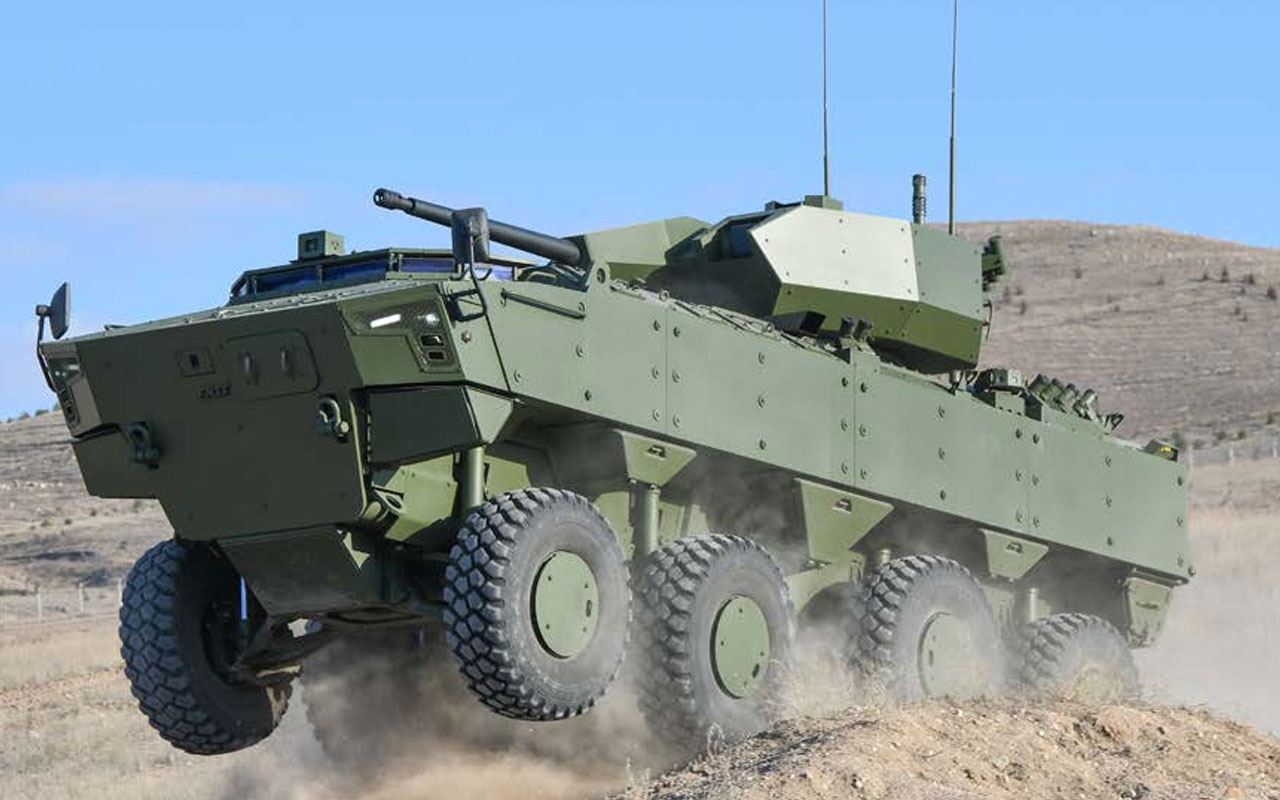
The FNSS PARS III 6x6 is a high-performance Wheeled Armoured Vehicle (WAV) engineered for superior tactical mobility and advanced ballistic and mine protection in modern combat environments. This sophisticated platform utilizes a state-of-the-art independent hydropneumatic suspension system and a high-torque power pack to ensure mission success across the most challenging off-road terrains. We provide a comprehensive range of FNSS PARS III 6x6 spare parts, specializing in drivetrain components, electronic architecture, and mission-critical engine systems to guarantee maximum fleet uptime. Through our precision-engineered lifecycle sustainment solutions and genuine OEM parts supply, we ensure the operational readiness of the PARS III 6x6 for strategic defense operations worldwide.
Request a QuoteThe PARS IV 8×8 NG-WAV: The Fourth-Generation Evolution of a Proven Tactical Wheeled Vehicle
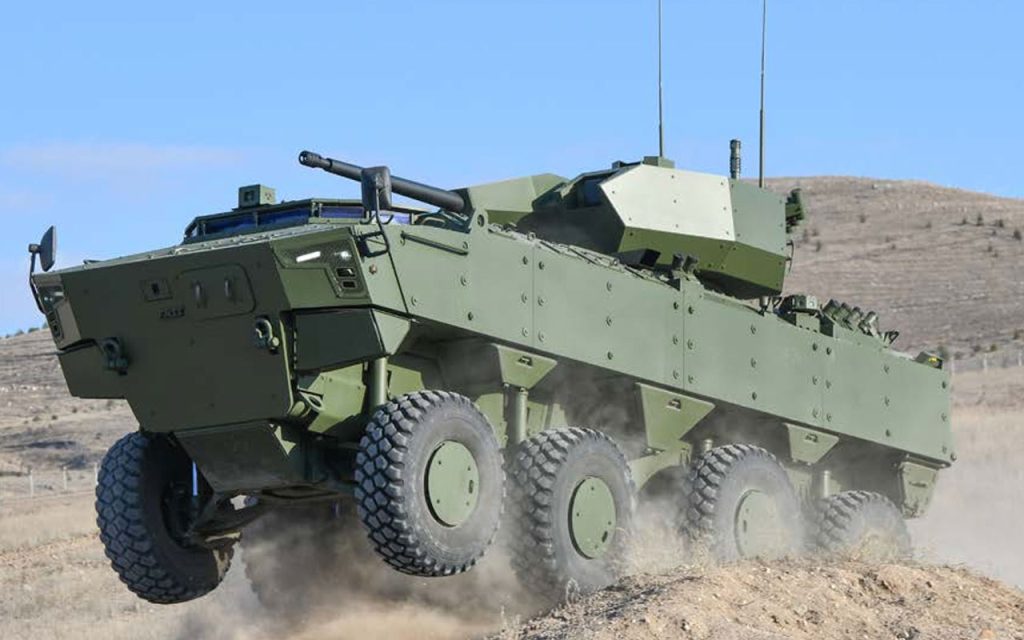
For those operating within the tactical wheeled vehicle (TWV) domain, the PARS IV 8×8 represents a specific and deliberate response to a well-documented shift in the threat environment — the convergence of symmetric conventional warfare and asymmetric hybrid threats onto the same battlefield, often simultaneously. FNSS commenced design studies for the PARS IV 8×8 in 2019, following a request for proposals issued by Turkey's Presidency of Defence Industries (SSB) within the scope of the Turkish Land Forces' New Generation Wheeled Armoured Vehicles (NG-WAV) programme. The vehicle was designed entirely using FNSS's own resources and equity — with no external co-development partner in the PARS IV generation — and was publicly unveiled for the first time at IDEF 2021 in Istanbul in August of that year.
The PARS IV designation marks the fourth generation of FNSS's PARS wheeled armoured vehicle family, which began in 2002 in cooperation with US company General Purpose Vehicles (GPV) and has since evolved through successive generations: the original PARS (PARS I), the PARS II platform upon which Malaysia's AV8 Gempita is based, the PARS III delivered to the Royal Army of Oman in 145 8×8 vehicles across eight variants, and now the PARS IV — the most capable and most protected member of the family to date. Understanding this generational progression matters for parts procurement specialists: the PARS IV 8×8 is a distinct platform with dimensions, GVW, and sub-system specifications that differ from the PARS III, and parts are not assumed to be interchangeable between generations without specific technical confirmation.
The PARS IV 8×8's GVW exceeds 35,000 kg — confirmed directly by FNSS CEO Nail Kurt at the IDEF 2021 press conference — making it the heaviest 8×8 wheeled armoured vehicle that FNSS has produced to that generation. Its dimensions are 8.4 metres in length, 3.1 metres in width, and 2.5 metres in hull height, with a turning radius of 8.5 metres on all-wheel steering — essentially turning within its own length, a capability that directly enables tactical manoeuvre in the urban terrain that has become the defining environment of contemporary hybrid warfare. The platform accommodates up to 12 personnel including driver, commander, gunner, and nine dismounts, with a protected internal volume exceeding 14 cubic metres — sufficient to carry all dismounts' personal equipment inside the vehicle, protected and accessible, without external stowage that would increase the vehicle's signature and vulnerability.
AB Defence approaches the PARS IV 8×8 with the same platform depth that we bring to the entire PARS family. Our parts support for this vehicle reflects an understanding of where the PARS IV advances beyond the PARS III — in GVW, in protected volume, in suspension specification, in electronic architecture maturity — and the specific parts supply requirements that these advances create.
What Changed from PARS III and Why It Matters for Parts
The defence professional examining the PARS IV 8×8 against the PARS III is looking at an evolution in four interconnected areas, each of which has direct implications for how the vehicle must be supported in service.
Greater GVW, Greater Axle Load
At over 35,000 kg GVW compared to the PARS III's 30,000 kg, the PARS IV carries a significantly heavier base load across its four axles. FNSS's design response to this increased weight is a near-perfectly equal distribution of that load across all four axles — achieved through the mid-hull power pack placement and optimised weight balance across the vehicle's length — which preserves the cross-country performance and low-traction terrain capability that is fundamental to the platform's tactical utility. For parts procurement, the higher GVW means that drivetrain components, axle assemblies, hub bearings, and suspension struts are operating under higher sustained loads than their PARS III equivalents, and their service lives and wear characteristics must be managed accordingly.
Increased Protected Volume — Over 14 Cubic Metres
The PARS IV 8×8's protected internal volume exceeds 14 cubic metres, enabling the vehicle to carry all dismounts' equipment internally. This architectural decision — which affects the hull proportions, floor plan, and crew compartment layout relative to the PARS III — creates structural and interior components specific to the PARS IV that have no direct PARS III equivalent. Mine-resistant seat mounting geometry, interior trim dimensions, weapon station interface positions, and rear ramp geometry are all influenced by this expanded internal volume.
All-Wheel Steering with 8.5-Metre Turning Radius
The all-wheel steering system delivers a turning radius of 8.5 metres for a vehicle 8.4 metres long — a ratio that approaches one-to-one, the functional definition of turning within your own length. This characteristic is cited by FNSS's CEO as a primary design achievement of the PARS IV, and for good reason: it directly enables tactical manoeuvre in built-up areas, vehicle parks, and defilade positions where wheeled vehicles of this weight class are typically constrained by their turn radius. The steering architecture that achieves this — managing all four axles simultaneously with progressive rear-axle lock at speed — is a more complex system than the PARS III's equivalent, and its electronic control components are generation-specific.
Fully Independent Height-Adjustable Hydro-Pneumatic Suspension
The PARS IV 8×8's fully independent, height-adjustable hydro-pneumatic suspension is produced in Turkey — a supply chain characteristic relevant for operators managing where their critical suspension components originate. The suspension provides the highest wheel travel in its class and enables active ride height adjustment: the crew can raise or lower the vehicle's ground clearance in response to terrain or threat conditions while moving. This capability is operationally significant in mine and IED threat environments, where maximising ground clearance directly reduces the energy transmitted to the hull during a detonation event.
Open Electronic Architecture — MIL-STD Compliance
The PARS IV 8×8 uses an open electronics architecture compliant with MIL-STD 1275 (vehicle electrical system characteristics) and MIL-STD 461 (electromagnetic interference), standards that ensure compatibility of mission equipment across the vehicle's operational life. Solid-state over-current protection throughout the electronics system eliminates conventional fuses and replaces them with managed solid-state protection — a more reliable and diagnostically capable architecture than the fused systems of earlier generations, but one with specific component requirements at the module level.
PARS IV 8×8 Technical Specifications
| Parameter | Specification |
|---|---|
| Manufacturer | FNSS Defence Systems, Ankara, Turkey (Nurol Holding 51% / BAE Systems 49%) |
| Generation | PARS IV (Fourth Generation) — New Generation Wheeled Armoured Vehicle (NG-WAV) |
| Configuration | 8×8, Full All-Wheel Drive |
| GVW | Over 35,000 kg |
| Personnel Capacity | Up to 12 (driver, commander, gunner + 9 dismounts) |
| Protected Internal Volume | Over 14 m³ |
| Length | 8.4 metres |
| Width | 3.1 metres |
| Hull Height | 2.5 metres |
| Turning Radius | 8.5 metres (all-wheel steering) |
| Maximum Road Speed | Over 100 km/h |
| Creep Speed | 5 km/h |
| Operational Range | Over 600 km |
| Grade Climbing | 60% |
| Side Slope | 30% |
| Vertical Obstacle | 0.7 metres |
| Trench Crossing | 2.0 metres |
| Approach Angle | 35° |
| Departure Angle | 35° |
| Fording Depth | 1.0 metre |
| Suspension | Fully independent, height-adjustable hydro-pneumatic; produced in Turkey |
| Steering | All-wheel steer-by-wire; rear axles progressively locked at speed |
| Transmission | Fully automatic, 6 forward + 1 reverse |
| Braking | ABS + engine brake |
| Tyre System | CTIS (Central Tyre Inflation System); run-flat system |
| Power Pack | Water-cooled diesel; mid-hull location (left side, between axles 1 and 2) |
| Power Pack Access | Under 60 minutes field replacement |
| Fuel System | Safety fuel tanks (explosion- and puncture-protected) + under-armour reserve tank |
| Hull | Ballistic steel |
| Armour | Modular — highest ballistic, mine, and IED protection in class; scalable |
| Crew Seating | Mine-resistant; five-point harnesses all positions |
| Driver Visibility | 180°+ horizontal; panoramic periscope array |
| Cameras | Thermal cameras front and rear; driving cameras front and rear |
| Displays | Flat-panel displays, driver and commander positions |
| Rear Access | Powered rear ramp |
| Air Conditioning | Integrated; maintains operational temperature in all climate conditions |
| Smoke Grenades | Available |
| Fire Suppression | Automatic fire suppression system |
| CBRN Protection | Available configuration |
| Electronics Standard | MIL-STD 1275, MIL-STD 461; open architecture |
| APU | Integrated Auxiliary Power Unit |
| Design Studies | Commenced 2019 |
| First Public Display | IDEF 2021, Istanbul (August 2021) |
Platform Variants and Mission Configurations
The PARS IV 8×8's modular hull architecture supports the full range of tactical wheeled vehicle mission roles. This is not a marketing claim — it is an engineering design principle built into the vehicle's structure, electrical interfaces, and weapon station mounting provisions from the initial design phase. The open architecture means that customer-specified turrets, remote weapon stations, mortar systems, engineering equipment, and CBRN systems can be integrated through standardised interfaces without requiring fundamental hull modifications.
Infantry Fighting Vehicle (IFV): The primary combat role, armed with a customer-specified turret. The FNSS TEBER-35 unmanned turret — mounting Northrop Grumman's Bushmaster III 35mm cannon — was the weapon system integrated on the IDEF 2021 prototype, developed for the Turkish Land Forces' NG-WAV competition. The open architecture supports integration of other customer-preferred turret systems from 25mm to 30mm calibres.
Armoured Personnel Carrier (APC): The baseline transport configuration, maximising dismount capacity with a self-defence Remote Controlled Weapon Station (RCWS) in place of a full turret, retaining the full nine-dismount capacity with all equipment carried internally in the over-14-cubic-metre protected volume.
Reconnaissance and Surveillance Vehicle: The platform's 100+ km/h road speed, all-wheel steer-by-wire manoeuvrability, 180°+ driver visibility, and thermal camera system make it a capable reconnaissance carrier. All-wheel drive and height-adjustable suspension extend its cross-country reach beyond road networks.
Command and Control Vehicle: Enhanced communications and data management equipment installed on the base platform, with self-defence weapon station. The MIL-STD 1275 and MIL-STD 461 compliant electronics architecture provides the electromagnetic compatibility foundation required for dense command-level communications equipment.
Mortar Carrier: The platform carries an 81mm or 120mm mortar system installed within the hull, providing organic indirect fire support at company and battalion level.
Combat Engineering Vehicle: Mission equipment — including mine-clearing apparatus and hydraulic interface systems — mounted to the modular hull through standardised structural and hydraulic interfaces. The FNSS PARS platform's first engineering vehicle variant was delivered to the Royal Army of Oman as part of the PARS III 8×8 programme, validating the engineering vehicle concept within this family.
CBRN Protection Vehicle: The PARS IV's standard CBRN overpressure protection capability — integrated as part of the electronics and air management architecture — provides the foundation for CBRN specialist variants with enhanced detection and decontamination equipment.
Recovery Vehicle: Hydraulic crane and winch-equipped variant for battlefield recovery of wheeled and armoured vehicles. The over-35-tonne GVW of the PARS IV base vehicle provides the platform stability required for crane operations with appropriately rated loads.
PARS IV 8×8 Spare Parts Coverage
AB Defence provides spare parts for all major systems and assemblies of the PARS IV 8×8. Our supply approach for this platform reflects two realities simultaneously: the PARS IV is a new-generation vehicle whose serial production is subject to the Turkish Land Forces' NG-WAV programme timeline, and it is a vehicle whose sub-system architecture is deeply rooted in the PARS platform family that AB Defence knows in depth. Where sub-systems are shared or derived from PARS III components — and many are — our existing procurement relationships apply. Where the PARS IV introduces new or upgraded systems, our technical team maintains generation-specific parts identification to ensure supply accuracy.
Power Pack — Engine & Transmission Components
The PARS IV 8×8 power pack architecture follows the same mid-hull, left-side placement and under-60-minute field-replacement philosophy as the PARS III — a design decision that represents a deliberate continuity of the PARS family's logistics philosophy across generations. The power pack is a water-cooled diesel engine coupled to a 6-forward, 1-reverse fully automatic transmission, engineered as a removable and reinstallable unit at field level without workshop facilities.
AB Defence supplies the complete range of PARS IV 8×8 power pack components: engine assemblies and sub-assemblies for the PARS IV installation, engine cooling system components including water pump, thermostat, radiator, intercooler, coolant hoses and all associated hardware, engine air filtration system including primary and safety filter elements and all housing assemblies and intake ducting, engine lubrication system including oil pump, oil cooler, filter elements, all seals and gaskets, fuel system components including primary and secondary fuel filters, fuel lift pump assembly, fuel system seals and connectors, explosion- and puncture-protected safety fuel tank components, under-armour reserve fuel tank components and hardware, engine mount assemblies and vibration isolators, complete engine gasket and overhaul seal sets, automatic transmission assemblies (6-speed) and complete service components, transmission filter and seal kits, transmission control module and interface components, all engine bay wiring harness assemblies.
8×8 All-Wheel Drive Drivetrain — Axles, Driveshafts & Differentials
The PARS IV 8×8's full all-wheel drive system, operating at a GVW exceeding 35,000 kg with equal load distribution across all four axles, places well-defined and sustained mechanical loads on drivetrain components. The equal axle load distribution — achieved through the mid-hull power pack placement — means that no single axle is disproportionately loaded, which moderates wear rates across the drivetrain relative to vehicles with less balanced axle loads. However, at this GVW and at the cross-country speeds the platform is capable of, drivetrain component condition must be actively managed.
AB Defence supplies: front axle assembly and differential, second axle assembly and differential, third axle assembly and differential, rear axle assembly and differential, axle lock actuator assemblies and control components for all four axles, inter-axle locking mechanisms where applicable, driveshaft assemblies (front-to-second, second-to-third, third-to-rear sections), propshaft universal joint cross-kits for all shaft positions, centre bearing support assemblies, wheel hub assemblies and bearing kits for all eight wheel positions (hub-reduction type where applicable), drive flange assemblies and associated fasteners, axle shaft assemblies and inner and outer oil seals, differential oil seals and complete gasket sets, axle lock engagement sensors, axle breather valves and filler/drain plugs.
All-Wheel Steer-by-Wire Steering System
The all-wheel steer-by-wire system — managing all four axles to deliver the 8.5-metre turning radius and the progressive rear-axle lock function at road speed — is both the PARS IV's most distinctive mobility characteristic and one of its most safety-critical electronic systems. The progressive rear-axle lock function is not a refinement; it is a safety imperative. At road speeds, unrestricted all-axle steering input would create vehicle instability. The system's electronic control architecture manages this continuously and transparently. A failure in the rear-axle steering control that prevents this lock from engaging is a condition that makes the vehicle unsafe to operate above walking speed.
AB Defence supplies steer-by-wire components with safety-critical sourcing discipline: steer-by-wire electronic control unit (SCU/ECU), steering actuator assemblies for all four axle positions, steering position and feedback sensors for all steering axles, hydraulic power steering pump where integrated as steering assist, steering gear assemblies by axle position, track rod assemblies and track rod ends (front and rear steering axles), steering knuckle assemblies and kingpin sets, steering column assembly and intermediate shaft, hydraulic steering hose sets and pressure fittings, complete steer-by-wire wiring harness and connector repair kits.
Fully Independent Height-Adjustable Hydro-Pneumatic Suspension
The PARS IV 8×8's hydro-pneumatic suspension system — confirmed by FNSS as locally produced in Turkey — provides fully independent wheel travel at all eight corners with active ride height control. The operational significance of ride height control in a mine and IED threat environment is direct: raising ground clearance increases the standoff distance between the hull floor and a buried device, reducing the impulse transmitted to the hull and occupants during a detonation event. This is not a secondary feature — it is an integrated element of the vehicle's mine protection architecture.
There is no commercial analogue for military-grade hydro-pneumatic suspension struts at this vehicle class. The components require procurement through the defence industry supply chain, and substitution with commercial components engineered for lighter loads and different pressure specifications is not appropriate. AB Defence maintains dedicated sourcing for PARS IV suspension components, including: hydro-pneumatic strut assemblies for all eight wheel positions, strut internal seal and complete rebuild kits, ride height control valve assemblies, hydraulic accumulator assemblies and nitrogen gas charges, suspension circuit hydraulic reservoir, suspension hydraulic pump assembly, all suspension hydraulic hoses and fittings, upper and lower suspension arm assemblies for all eight corners, suspension arm bushing sets, ball joint assemblies (upper and lower, all corners), anti-roll bar assemblies and link rod sets, all suspension fasteners and torque-critical hardware.Braking System — ABS and Engine Brake
The ABS braking system and engine brake combination must sustain performance at the extreme of the operating envelope: emergency stops at over 100 km/h at a GVW exceeding 35,000 kg, and controlled descent on 60% gradients in cross-country conditions. Brake disc condition management and ABS sensor integrity are first-order maintenance priorities on this platform.
AB Defence supplies: brake disc assemblies for all eight wheel positions, brake caliper assemblies and caliper rebuild kits for all positions, brake pad sets by axle specification, ABS wheel speed sensors for all eight wheels, ABS exciter rings and tone wheels, ABS electronic control unit, brake master cylinder and reservoir assembly, brake booster assembly, all hydraulic brake lines and fittings, engine brake actuator and control components, brake system bleed fittings and hardware.
Central Tyre Inflation System (CTIS) & Run-Flat System
The CTIS on the PARS IV 8×8 is an active tactical mobility management tool: the crew can lower tyre pressure to increase contact patch for soft-ground operations and restore pressure for road movement — all while under way, without crew exposure. The run-flat system ensures continued mobility following tyre damage. Both systems are directly mission-critical on a platform designed for hybrid warfare environments where tyre damage by small arms fire, mine fragments, or IED overpressure is a routine operational risk.
AB Defence supplies: CTIS rotary union assemblies for all eight wheel positions, CTIS control valve assemblies, CTIS pressure sensors and gauges, CTIS electronic control unit, CTIS air supply lines and fittings, valve stem assemblies compatible with CTIS installation, run-flat insert assemblies for all eight tyre positions, wheel rim assemblies and wheel fastener hardware.
Electronic Architecture — Open Architecture, MIL-STD Compliant
The PARS IV 8×8's MIL-STD 1275 and MIL-STD 461 compliant open electronics architecture uses a distributed CAN-bus control network with solid-state over-current protection throughout. The solid-state protection architecture provides superior fault isolation and diagnostic capability compared to conventional fused systems, and enables faster maintenance response — a fault is identified electronically to the module level rather than discovered by inspecting individual fuse positions.
AB Defence supplies: vehicle main control module assemblies, engine control module (ECM) for PARS IV installation, transmission control module (6-speed automatic), ABS control module, CTIS control module, suspension ride height control module, all-wheel steer-by-wire control unit (SCU), weapon station interface modules (IFV turret, RCWS, mortar, recovery and engineering equipment interfaces — variant-specific), flat-panel display units (driver and commander positions), thermal camera assemblies (front and rear), day driving camera assemblies (front and rear), panoramic periscope units (front array), driver and commander roof hatch assemblies and seal kits, vehicle electrical wiring harness assemblies (engine bay, cab, chassis), solid-state power distribution module assemblies, Auxiliary Power Unit (APU) assemblies and service components, APU fuel and cooling interface hardware, battery assemblies and isolator switches, connector and terminal repair kits to MIL-SPEC connector standards.
Crew Protection — Mine-Resistant Seating & Five-Point Harness Systems
Mine-resistant seats are safety-critical components with defined service lives, mandatory post-event replacement requirements, and no acceptable commercial substitutes. The energy-absorbing mechanism within each seat — designed to decelerate the occupant's body at a rate below spinal injury threshold during a mine detonation event — is what the vehicle's personnel protection architecture depends on at the individual level. Once a seat's energy-absorber has been triggered — whether by a mine event or by an overload condition — it must be replaced regardless of its apparent condition. AB Defence supplies these components with full certification documentation and service life traceability.
AB Defence supplies: mine-resistant seat assemblies for all crew and dismount positions, seat energy-absorber mechanisms and manufacturer-specified rebuild kits, five-point harness assemblies for all positions, harness buckle and adjustment fittings, seat mounting frame assemblies and attachment hardware, anti-blast floor plate assemblies and fasteners, interior trim panels and crew compartment fittings.
Powered Rear Ramp & Access Systems
The powered rear ramp is the primary embarkation and debarkation interface for nine dismounts and, in a casualty extraction or emergency scenario, the exit route under time pressure. Ramp actuator condition and ramp seal integrity are first-order functional requirements. AB Defence supplies: rear ramp actuator assemblies (hydraulic and electric per variant specification), ramp hinge assemblies and pivot pins, ramp seal profiles and weatherstrip sets, ramp locking mechanism assemblies, emergency manual release components and hardware.
Survivability & Protection System Components
AB Defence supplies: smoke grenade launcher assemblies and firing control components, automatic fire suppression system detector units, control modules, suppression agent containers, and distribution nozzle assemblies, CBRN overpressure protection system components including overpressure unit, filter assemblies, and detector interface components, ballistic glazing panels for driver's armoured windscreen and vision blocks, all seals and mounting hardware for ballistic glazing installations, antenna mounting assemblies and radome hardware, external stowage bracket assemblies.
Mission-Specific Equipment — Variant-Level Coverage
Recovery Variant: Hydraulic crane assemblies and mounting hardware, crane hydraulic cylinder and seal kits, crane slewing mechanism and bearing assemblies, recovery winch assemblies, winch rope or cable assemblies, winch hydraulic motor assemblies, control valve and solenoid assemblies, hydraulic hose sets for crane and winch circuits.
Combat Engineering Variant: Structural and hydraulic interface components for mission equipment mounting, hydraulic hose and fitting sets for engineering equipment circuits, rapid-mount mounting frame and attachment hardware.
Mortar Carrier Variant: Mortar mounting and traverse system components, roof hatch assemblies and seals for mortar access, ammunition stowage rack assemblies and fasteners.
CBRN Variant: Enhanced CBRN detection and filtering system components, air purification filter assemblies, positive pressure control components.
Filters, Seals & Service Consumables
AB Defence maintains continuous stock of all consumable service items for the PARS IV 8×8: engine oil filter elements, primary and secondary fuel filter elements, primary and safety air filter elements, automatic transmission oil filter elements (6-speed unit), suspension hydraulic system filter elements, complete engine overhaul gasket sets, shaft oil seals by assembly and position, O-ring and seal kits organised by system, CTIS seal kits and valve service kits, hydro-pneumatic strut internal seal kits, all critical fasteners for scheduled maintenance intervals.
The PARS IV in the Context of Tactical Wheeled Vehicle Support
The PARS IV 8×8 was designed for hybrid warfare — an operating environment that makes specific and concurrent demands on vehicles that no previous generation of tactical wheeled vehicles was fully optimised to meet. Symmetric peer-adversary threats demand the highest protection levels achievable in a wheeled platform. Asymmetric threats demand the ability to operate in urban terrain with the manoeuvrability that the 8.5-metre turning radius delivers. Counter-UAS and counter-drone threats demand the electronic architecture and power provision to support active countermeasure systems. Long-range rapid deployment demands air-transportability and strategic road mobility.
These demands shape not only how the vehicle is designed but how it must be supported in service. A platform operating in this threat environment will face mine and IED exposure that demands mine-resistant seat replacement. It will operate in environments where CTIS management and run-flat performance are routine operational requirements rather than emergency provisions. It will depend on its steer-by-wire electronics for tactical survival in urban close terrain. And it will require an electronics support infrastructure — flat panels, thermal cameras, CAN-bus modules — that has no analogue in the mechanical systems support tradition of earlier tactical wheeled vehicle generations.
AB Defence understands this operational context and has structured the PARS IV 8×8 parts supply capability accordingly. We do not treat this vehicle as a legacy platform whose parts supply can be satisfied from general automotive channels — because it cannot. We treat it as a current-generation tactical wheeled vehicle whose operational effectiveness depends on access to correctly specified, certified, and traceable components across every system from suspension to electronics.
Why AB Defence for PARS IV 8×8 Spare Parts
PARS Family Depth Applied to the Fourth Generation
AB Defence's supply knowledge spans the PARS 4×4, PARS III 6×6, and PARS III 8×8 across their full systems scope. The PARS IV 8×8's architecture is built on this platform lineage, and where sub-systems are common or derived from PARS III components, our existing procurement intelligence applies directly. Where the PARS IV introduces advances — in GVW, suspension specification, electronic architecture, and internal volume — we maintain generation-specific parts identification and sourcing to avoid cross-generation substitution errors.
Generation-Accurate Electronic Component Supply
The PARS IV's MIL-STD 1275 and MIL-STD 461 compliant open architecture with solid-state over-current protection represents a generation advance over the PARS III's electronics system. Electronic modules from the PARS III are not appropriate substitutes for PARS IV components, and AB Defence's technical team maintains strict generation-specific identification for all electronic control modules, display units, and system interface components.
Safety-Critical Component Certification — Non-Negotiable Standard
Mine-resistant seats, five-point harnesses, automatic fire suppression systems, and ballistic glazing assemblies carry defined service lives and post-event replacement requirements. AB Defence sources all safety-critical components with full certification, traceability documentation, and service life data — ensuring that every vehicle returned to service after safety-critical component replacement meets its designed protection standard and that the compliance record is complete for fleet safety audits.
Suspension Sourcing from Turkish Defence Industry Supply Chain
The PARS IV 8×8's hydro-pneumatic suspension is produced in Turkey — a supply chain alignment that AB Defence reflects in our procurement approach for these components. Sourcing suspension components requires access to the Turkish defence industry sub-contractor network that AB Defence maintains relationships with, not the commercial suspension aftermarket.
60-Minute Power Pack Philosophy, Supply Chain Aligned
FNSS designed the PARS IV 8×8 so its power pack can be replaced in the field in under 60 minutes. AB Defence's emergency supply protocols support this operational intent: power pack assemblies and high-demand engine and transmission components are treated as priority stock items, with fast-response procurement pathways to forward logistics nodes.
Documentation to MIL-STD and Procurement Standards
All parts supplied by AB Defence for the PARS IV 8×8 are accompanied by supply chain traceability records, certificates of conformity for safety-critical components, and technical data packages compliant with MIL-STD references applicable to the platform. Our documentation standard is aligned with defence procurement audit requirements across procurement authorities operating FNSS platforms.
PARS Platform Expertise
FNSS's PARS family represents one of the most significant wheeled armoured vehicle development programmes in the Turkish defence industry. AB Defence has developed specific procurement knowledge and supplier relationships aligned with the PARS platform family — knowledge that general parts distributors do not possess. We understand the parts identification requirements specific to PARS IV 8x8 sub-systems, the documentation that Turkish defence procurement regulations and NATO logistics standards require, and the urgency that applies when an operationally-deployed vehicle requires a part.
Frequently Asked Questions FNSS PARS IV 8×8 Spare Parts
What distinguishes the PARS IV 8×8 from the PARS III 8×8 for parts procurement purposes? The PARS IV's GVW exceeds 35,000 kg versus 30,000 kg for the PARS III, its dimensions differ (8.4 m length, 3.1 m width, 2.5 m hull height versus PARS III's proportions), it has a turning radius of 8.5 m, an operational range of over 600 km, MIL-STD 1275 and MIL-STD 461 electronics compliance, locally-produced hydro-pneumatic suspension, and a protected internal volume exceeding 14 m³. Electronic modules, suspension struts, drivetrain components, and hull structural parts are not assumed to be interchangeable between the two generations without specific technical confirmation.
Are PARS IV 8×8 parts interchangeable with PARS III 8×8 components? A proportion of common sub-systems exist between generations, but the GVW increase, dimensional differences, and electronics architecture advances mean that many components are generation-specific. AB Defence confirms applicability from vehicle-specific technical documentation before supply, and does not assume inter-generational interchangeability.
How does AB Defence handle parts identification for the PARS IV? We use vehicle serial number, build documentation, and configuration data to identify the correct specification for each part. For electronic components, we confirm the electronics standard (MIL-STD 1275/461 compliant PARS IV architecture) before supplying any control module or harness assembly.
What is the PARS ALPHA 8×8 and how does it relate to the PARS IV? The PARS ALPHA 8×8 was unveiled at the World Defence Show 2024 in Riyadh as the next-generation evolution of the family beyond the PARS IV. On 24 February 2025, FNSS was awarded the Turkish Land Forces NG-WAV programme for serial production of the PARS ALPHA 8×8 and 6×6 variants. The PARS IV remains a distinct platform and a current-generation vehicle in its own right. AB Defence's PARS IV 8×8 parts coverage is specific to the PARS IV generation and is maintained independently of the PARS ALPHA programme.
What documentation does AB Defence provide with PARS IV 8×8 spare parts? We provide supply chain traceability records, certificates of conformity for safety-critical and protection-rated components, part number verification against manufacturer documentation, and technical data packages compliant with MIL-STD references applicable to the platform.
What information is required for a PARS IV 8×8 parts enquiry? Vehicle serial number or procurement reference, configuration variant, parts required by description or reference number, quantities, delivery destination, and urgency classification. Our technical team will confirm specification, availability, and lead time, and issue a formal quotation within 24 hours.
 Request Technical Support
Get a response from our engineering team within 24 hours
Contact Us
AB DEFENCE / Platform support
Discuss this platform with our team.
Share your platform requirements, sourcing priorities or documentation needs.
For a specific part, use the request form on its product page.
Browse spare parts ↗AB DEFENCE
Platform support enquiry
PARS IV 8×8