May 5, 2026
Common Lifecycle Support Challenges for M113 Armored Personnel Carriers
A Platform That Refuses to Retire
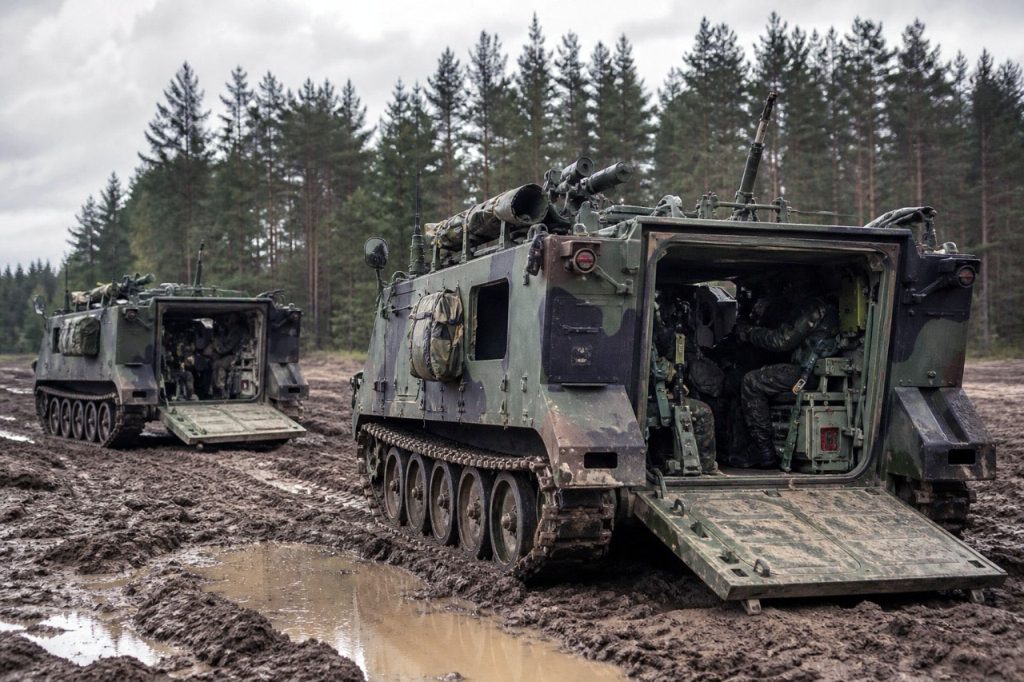
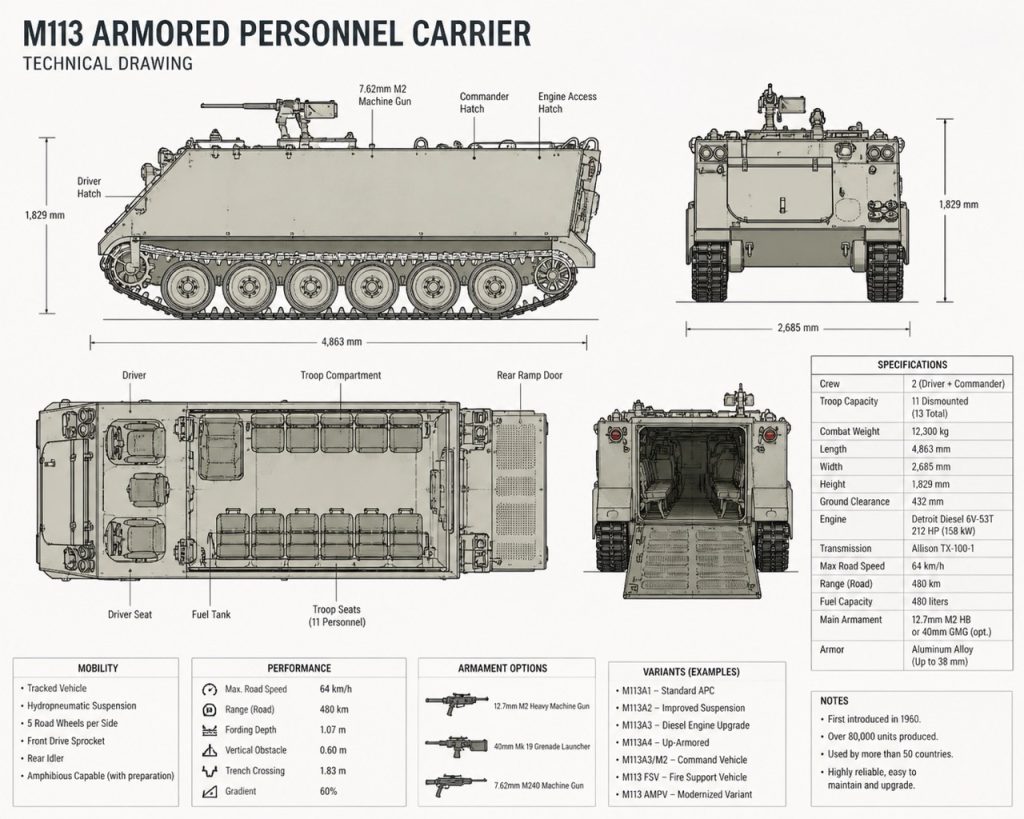
Few military vehicles have demonstrated the operational staying power of the M113 armored personnel carrier. First fielded by the United States Army in 1960, the M113 APC has served in virtually every major conflict since Vietnam and remains in active service across more than 50 nations today. Its aluminum hull, tracked mobility, and adaptable platform design made it one of the most proliferated armored fighting vehicles in history with over 80,000 units produced across multiple decades and manufacturing runs.
Yet longevity is a double-edged asset. The same platform that earned its reputation through decades of service now presents its operators with a formidable set of sustainment challenges. As fleets age past their originally intended service lives, the complexity and cost of keeping M113s operationally ready have grown substantially. For procurement officers, fleet managers, and logistics commanders, understanding these challenges is not an academic exercise it directly determines readiness rates, operational budgets, and mission outcomes.
Military vehicle lifecycle support for the M113 family is, in many ways, a microcosm of the broader challenges facing legacy fleet management across defense establishments worldwide. This article examines those challenges in technical depth and outlines the strategic approaches that effective fleet operators are using to address them.
Platform Overview: Understanding What You Are Sustaining
Technical Baseline
The baseline M113 is a fully tracked, aluminum-armored vehicle originally powered by a Chrysler 75M gasoline engine, later replaced in most variants by the Detroit Diesel 6V53 two-stroke engine paired with an Allison TX-100 or TX-200 series automatic transmission. The vehicle weighs approximately 12 tonnes in its standard configuration, carries a crew of two plus up to eleven infantrymen, and is capable of amphibious operations without preparation a feature that distinguishes it from many of its successors.
Its aluminum alloy hull, while lighter than steel, introduced specific maintenance and repair considerations that technicians continue to manage today. Welding aluminum in field conditions requires specialized equipment and training, and corrosion behavior in tropical, desert, and arctic environments differs substantially from that of steel-hulled vehicles.
Variants and Role in Modern Fleets
The M113’s modularity gave rise to a substantial family of variants over 40 recognized configurations including the M577 command vehicle, M106 mortar carrier, M163 Vulcan air defense system, M548 cargo carrier, and the M901 improved TOW vehicle, among many others. Each variant introduces unique sustainment considerations, from specialized weapons systems to custom electronic installations.
In modern force structures, the M113 APC typically occupies rear-echelon transport, fire support, engineering support, and training roles, having been displaced from frontline mechanized infantry tasks by newer platforms such as the M2 Bradley or CV90. However, in many allied and partner nation armies, the M113 remains the primary armored vehicle and continues to serve in direct combat support roles, as operational experience in multiple recent conflicts has confirmed.
Core Lifecycle Support Challenges
1. Aging Powertrain Systems
The powertrain is where M113 maintenance challenges are most acutely felt. The Detroit Diesel 6V53, while a proven and robust engine in its era, was designed with a service life that most operating fleets have long surpassed. Cylinder liner wear, injector degradation, and turbocharger fatigue where fitted are recurring issues in high-hour engines. Crankshaft and bearing tolerances tighten with age, and oil consumption rates in older powerplants often exceed specifications significantly before any fault code is generated through legacy diagnostic methods.
The Allison transmission family presents its own challenges. Clutch pack wear in the TX-200 series is a well-documented maintenance burden, and the hydraulic control systems using fluid circuits that were engineered without modern contamination-control standards require meticulous attention to prevent accelerating internal wear. In units where maintenance intervals have been stretched due to operational tempo or parts shortages, transmission failures frequently arrive without meaningful warning, compounding readiness problems.
Sourcing genuine or certified-equivalent engine and transmission components has become increasingly difficult as original equipment manufacturers have discontinued production runs. This forces many fleet managers into the spot market for M113 spare parts, with attendant risks to quality assurance and supply predictability.
2. Obsolescence of Spare Parts and Components
Parts obsolescence is arguably the most structurally challenging aspect of M113 APC maintenance. The vehicle was designed and produced during an era when the defense industrial base and the commercial automotive sector operated in closer alignment. Many components fuel system parts, cooling system hardware, electrical connectors, and hydraulic fittings were sourced from commercial supply chains that have since been rationalized or discontinued entirely.
Today, fleet operators encounter two distinct obsolescence problems. The first is hard obsolescence: components for which no manufacturer, original or aftermarket, currently offers production. The second is soft obsolescence: components that remain nominally available but only through brokers or secondary market channels, often without traceable quality documentation. Both create significant risk for maintenance organizations that have quality assurance obligations under national or alliance-level standards.
This challenge is compounded when vehicles have been modified in service. Nations that have applied indigenous upgrades additional armor appliqués, new communications fits, or locally sourced subsystems often find themselves managing bespoke parts requirements that fall entirely outside the original logistics baseline. For these operators, military spare parts supply becomes a genuinely complex engineering and procurement challenge rather than a routine logistics function.
3. Armor and Survivability Limitations
The M113’s aluminum hull armor was designed to defeat small arms fire and shell fragments, not the threats that define contemporary operational environments. Rocket-propelled grenades, improvised explosive devices, and heavy machine gun fire at close ranges represent hazard levels the original design never anticipated. Multiple nations have responded with appliqué armor kits variants such as the MEXAS composite armor package or locally developed solutions but these introduce their own sustainment challenges.
Additional armor increases vehicle weight substantially, affecting suspension loading, engine thermal performance, and amphibious capability. The structural integration points for bolt-on armor experience fatigue under operational loads, requiring periodic inspection and replacement of mounting hardware. In vehicles that have accumulated significant operational mileage with add-on armor fitted, hull stress around attachment points warrants careful structural assessment during depot-level maintenance cycles.
4. Electrical System Degradation and Modernization Gaps
The original M113 electrical architecture was designed around a relatively simple 24-volt system with modest power requirements. Decades of in-service modifications improved radios, thermal imaging devices, navigation systems, driver vision enhancement, and ancillary equipment have placed electrical loads on wiring harnesses and distribution systems that far exceed original design margins.
Wiring harness degradation in aging vehicles is a pervasive and insidious problem. Insulation brittleness, connector oxidation, and the accumulated effects of vibration-induced chafing create intermittent faults that are time-consuming to diagnose and difficult to replicate during workshop inspections. Electrical gremlins of this nature consume disproportionate maintenance man-hours and can ground vehicles for extended periods despite no single identifiable failed component.
Modernization of the electrical system to support contemporary power and data requirements including digital communications infrastructure and battle management systems requires architectural redesign rather than incremental addition, a scope of work that many national maintenance organizations lack the technical and financial resources to undertake without external support.
5. Suspension and Mobility Wear in Harsh Terrain
torsion bar
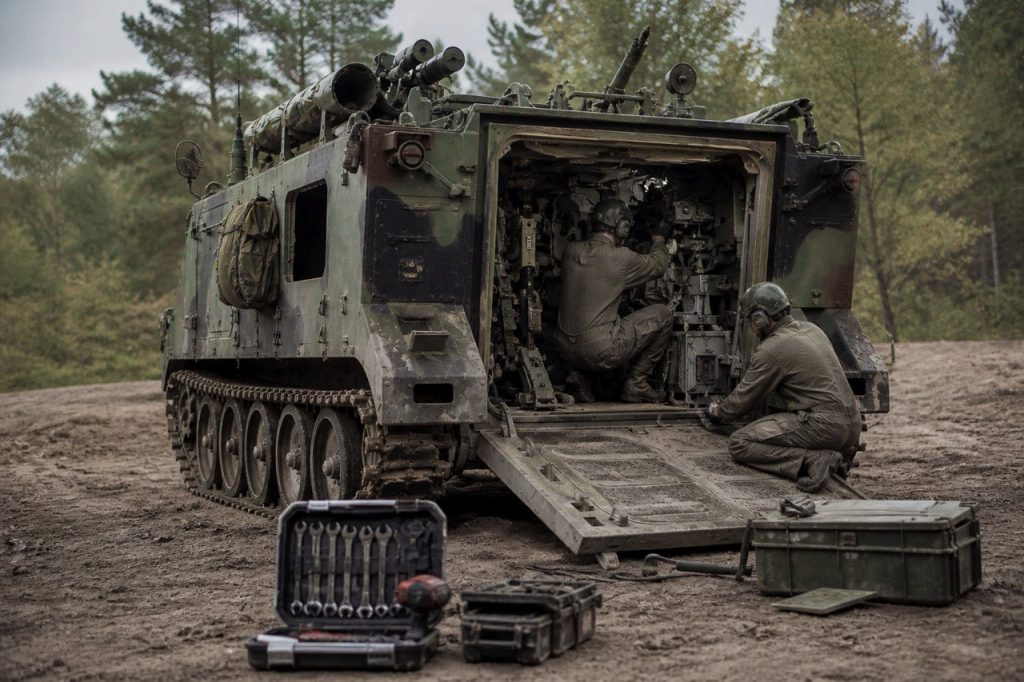
Track management is one of the most labor-intensive aspects of tracked vehicle maintenance. M113 track components, whether the original T-130 series or the improved T-150 series rubber-backed track, require regular tensioning, periodic rotation, and eventual replacement of individual shoes, pins, and bushings. In environments with high abrasive content desert sand, volcanic rock, or heavily graded road surfaces track wear rates accelerate significantly, and logistics planning must account for substantially higher consumption than standard maintenance schedules suggest.
Road wheel and return roller bearing failures, if not detected early, can rapidly escalate into hull damage and complete mobility loss. Proactive bearing inspection intervals and strategic pre-positioning of road wheel assemblies are standard best practices in well-managed M113 fleets but are frequently compromised by spare parts availability constraints.
6. Supply Chain Disruptions and Long Lead Times
Defense logistics solutions for legacy platforms like the M113 are fundamentally complicated by the fragmentation of the global supply base. Unlike modern platforms that remain in active production with structured contractor logistics support arrangements, the M113 supply chain is predominantly reactive driven by demand signals rather than proactive production planning.
This creates a structural lead time problem. When a critical component fails and no stock is held at national level, procurement action may require sourcing from a supplier in a different continent, with export licensing requirements, quality verification steps, and freight logistics adding weeks or months to what should be a days-long supply chain. For operational fleets particularly those in active theaters or on readiness commitments these lead times translate directly into non-mission-capable vehicle days.
Partnering with specialized defense logistics suppliers who maintain dedicated M113 parts inventories and have established sourcing relationships with verified manufacturers is not merely convenient for many fleet operators, it is a readiness critical strategic requirement.
7. Standardization Issues Across Variants
Managing a mixed fleet of M113 variants presents standardization challenges that compound every other lifecycle support problem. An organization operating a combination of M113A2 troop carriers, M577A2 command vehicles, and M106 mortar carriers simultaneously is, in practical terms, managing several distinct sustainment programs with partially overlapping parts lists.
Sub-system differences between A1, A2, and A3 standard vehicles particularly in engine configuration, transmission specification, and electrical architecture mean that seemingly interchangeable components may in fact have different part numbers, tolerances, or installation requirements. Errors arising from variant specific configuration mismatches are a documented cause of premature component failure and maintenance rework across M113 fleets globally.
Robust configuration management, supported by accurate vehicle history records and technically current maintenance documentation, is the foundational requirement for managing this complexity. Many legacy fleet operators have allowed their configuration documentation to fall out of date, creating a knowledge deficit that must be corrected before effective standardization programs can be implemented.
8. Maintenance Workforce and Technical Knowledge Gaps
Perhaps the most underappreciated challenge in M113 fleet management is the progressive erosion of institutional technical knowledge. Experienced technicians who trained on the M113 platform during its production era are retiring from defense organizations at an accelerating rate, and the platforms used for training new technicians in many nations have transitioned to newer vehicle types.
The result is a growing population of maintenance personnel who hold general tracked vehicle qualifications but lack platform specific familiarity with the M113’s particular characteristics its engine quirks, its electrical layout idiosyncrasies, and the specific failure modes that experienced maintainers have learned to anticipate through years of hands on exposure. This knowledge gap increases diagnostic time, drives up parts consumption through incorrect fault analysis, and elevates the risk of maintenance induced failures.
Structured technical training programs, supported by updated technical manuals and, where available, interactive electronic technical publications, are an essential investment for any organization committed to sustaining M113 capability beyond the near term.
Operational Impact: What These Challenges Actually Cost
The cumulative effect of these challenges manifests in two primary operational metrics: vehicle availability rates and sustainment cost per vehicle per year. Fleets that manage these challenges poorly typically see availability rates drop below 60 percent — meaning that at any given time, more than four in ten vehicles are unavailable for operational use. Well managed sustainment programs, by contrast, can sustain availability rates above 80 percent even in aging fleets.
Cost implications are equally significant. Reactive maintenance responding to failures as they occur rather than managing them predictively typically costs two to three times more per repair event than proactive maintenance, when the full cost of extended vehicle downtime, expedited parts procurement, and emergency labor is accounted for. For organizations managing fleets of 50 or more M113 vehicles, the difference between reactive and proactive sustainment approaches can represent millions of dollars annually in avoidable expenditure.
Mission capability degradation is the most operationally consequential outcome. A battalion-level unit whose M113 fleet is operating at reduced availability has a fundamentally different tactical capacity than one whose fleet is fully mission capable. In training environments, this affects the quality and realism of collective training. In operational deployments, it affects force protection, logistics capacity, and combat power.
Modernization vs. Sustainment: Navigating the Strategic Decision
Defense organizations operating M113 fleets inevitably confront a fundamental strategic question: at what point does sustaining an aging platform cease to be cost-effective relative to transitioning to a newer vehicle? M113 upgrade programs such as the RISE (Reliability Improved Selected Equipment) package, which introduced the Detroit Diesel 6V53T turbocharged engine and improved suspension components represent one category of response. More comprehensive mid-life upgrades, including new powertrains, digital electronics architectures, and improved protection systems, represent another.
The cost-benefit calculus is rarely straightforward. A comprehensive M113 modernization program can approach 30 to 50 percent of the cost of a new vehicle, but it delivers a platform that operates on a known logistical baseline, requires no new training for operators or maintainers, and avoids the transition costs associated with introducing an entirely new vehicle type. For nations where defense budgets constrain new vehicle acquisition, well executed modernization programs offer a credible path to capability extension without the full cost of replacement.
The alternative maintaining legacy systems without modernization investment is sustainable only with disciplined spare parts management, robust predictive maintenance programs, and reliable access to the military spare parts supply chain. Organizations that pursue this path without those foundations in place tend to experience accelerating readiness degradation and escalating sustainment costs, undermining the very financial logic that made sustaining the legacy platform attractive in the first place.
Best Practices for M113 Fleet Sustainment
Predictive Maintenance and Condition Monitoring
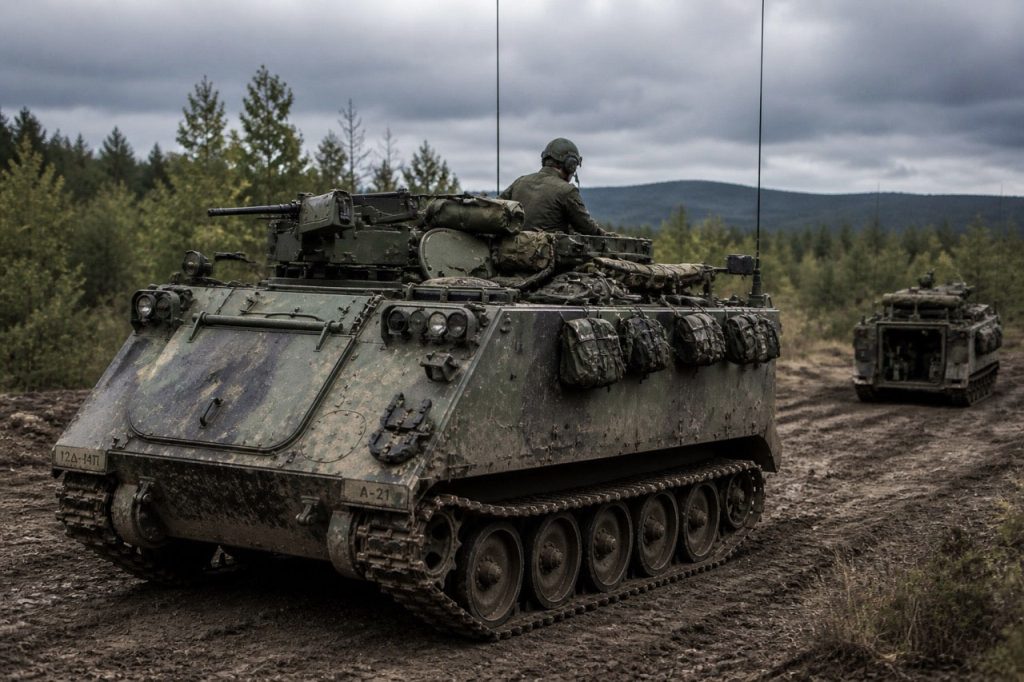
The most effective M113 fleet managers have moved beyond time based maintenance intervals toward condition based approaches. Oil analysis programs, for example, can detect engine wear metals and coolant contamination long before any performance symptom manifests, enabling targeted intervention before catastrophic failure occurs. Vibration monitoring on drivetrain components and thermal imaging of electrical systems are additional predictive tools that experienced fleet operators employ to extend component life and reduce unscheduled removals.
Strategic Spare Parts Sourcing
Maintaining a strategically sized stock of high consumption and long lead time M113 spare parts is a readiness investment, not an inventory cost. The calculation should be driven by fleet size, operational tempo, and supplier lead time analysis rather than by accounting driven minimization of stock holding. Establishing long term supply relationships with verified suppliers who specialize in armored vehicle sustainment and who maintain dedicated M113 parts inventories reduces lead times, improves parts quality assurance, and provides access to technical expertise that supplements in house maintenance capability.
Lifecycle Planning and Configuration Management
Effective armored vehicle sustainment requires accurate data. Fleet managers who invest in maintaining up to date vehicle history records, configuration documentation, and component tracking systems consistently outperform those who rely on institutional memory and informal records. Modern fleet management information systems, even when retrofitted onto legacy vehicle programs, deliver measurable improvements in maintenance efficiency and parts demand forecasting accuracy.
Partnering with Reliable Suppliers
The complexity of legacy military vehicle support means that no single national maintenance organization can hold all the expertise and inventory required to sustain a diverse M113 fleet entirely in-house. Partnering with defense logistics specialists who have deep platform knowledge, verified supply chains, and the ability to source both standard and non-standard components gives fleet managers access to capabilities and inventories that would be prohibitively expensive to replicate internally. For M113 operators, this partnership dimension of fleet management is increasingly not optional it is a structural requirement for sustainable readiness.
Conclusion: Proactive Management Is the Only Sustainable Strategy
The M113 armored personnel carrier will continue to serve in meaningful numbers for at least another decade across numerous allied and partner nation forces. Its continued relevance is not in question. What is in question and what determines whether that continued service is a strategic asset or a readiness liability is the quality of the lifecycle management applied to it.
The challenges outlined in this article are real, technically complex, and operationally significant. But they are not insurmountable. Organizations that approach M113 APC maintenance with discipline, invest in predictive maintenance capabilities, manage their supply chains strategically, and partner with specialized defense logistics providers consistently achieve and sustain the readiness rates their operational commitments require.
AB Defence understands the technical depth and logistical complexity of sustaining legacy armored vehicle fleets. With a dedicated inventory of verified M113 spare parts, deep platform knowledge spanning the full M113 variant family, and an established global supply network, AB Defence is positioned to support fleet managers and procurement officers at every stage of the M113 lifecycle from routine consumables to complex drivetrain components and long-lead specialty parts. Proactive lifecycle management begins with reliable supply chain partnerships, and that is precisely what AB Defence is built to provide.
Related Military Spare Parts Categories, Vehicle Platforms & Technical Guides
Explore AB Defence’s NATO-codified (NSN) and genuine OEM spare parts catalog, platform technical specifications, and sustainment engineering guides related to this article:
Stocked Spare Parts Categories (NSN & OEM Catalog)
- M113 Armored Personnel Carrier (APC) Spare Parts (29 stocked parts)
- M113 Engine & Powerpack Spare Parts (Detroit Diesel 6V53) (20 stocked parts)
- Electrical, Electronic & Vision Systems for Military Vehicles (250 stocked parts)
- Military Engine Cooling Systems, Radiators & Water Pumps (57 stocked parts)
- NATO Standard Defence Components & Military Hardware (12,993 stocked parts)
- Full NATO NSN & OEM Spare Parts Catalog (16,760+ Parts)
Compatible Vehicle Platforms & System Hubs
- M113 Series
- M113 Modernization Program
- YPR-765 Infantry Fighting Vehicle Series
- ACV-300 / ACV-350 Tracked Armoured Vehicle Series
- Tracked Armoured Vehicles
- Request a B2B Quotation (RFQ) & Technical Support