June 8, 2026
Military Vehicle Readiness Starts with Reliable Spare Parts Availability
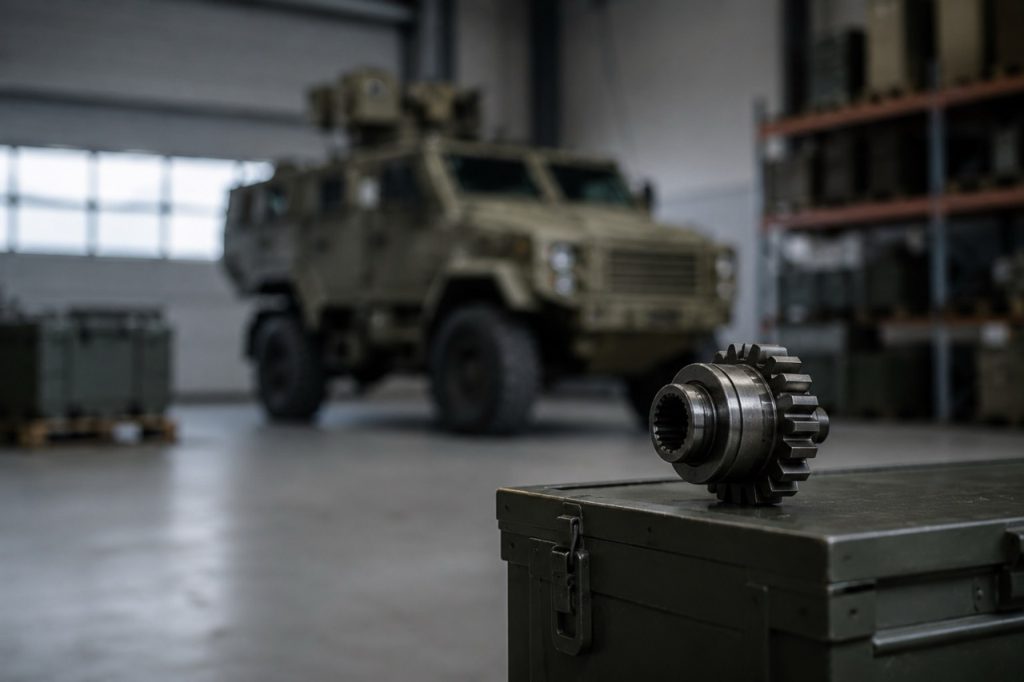
hydraulic pump
This reality is well understood across NATO and allied defense organizations. Mission capability rates, operational availability metrics, and fleet readiness indicators all converge on the same conclusion: the relationship between military spare parts availability and operational readiness is direct, measurable, and consequential. When parts are available, vehicles are maintained. When vehicles are maintained, fleets are ready. When fleets are ready, missions can be planned and executed with confidence. Any disruption in this chain however small generates compounding downstream effects that ultimately reach the operational commander.
This article examines why spare parts availability is the foundational driver of military vehicle readiness, how parts shortages degrade fleet performance, and what defense logistics professionals, procurement officers, and sustainment planners should consider when building resilient supply chain strategies for armored vehicles, tactical trucks, MRAPs, APCs, and multi role logistics platforms.
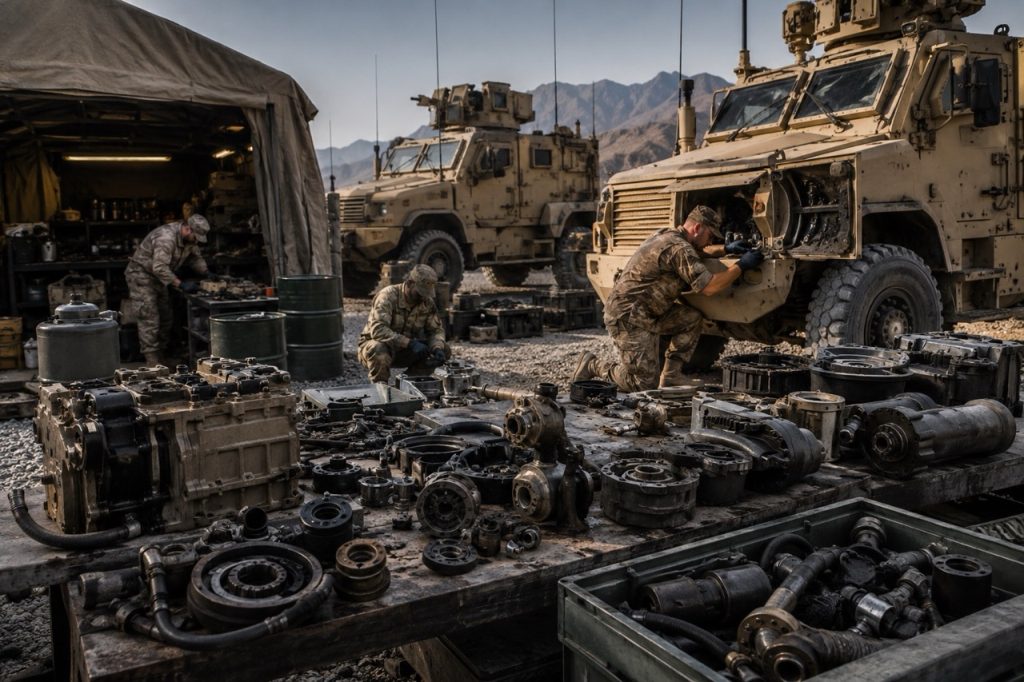
Why Spare Parts Availability Determines Fleet Readiness
There is an important distinction between owning military vehicles and having military vehicles available for operations. A defense organization may have a substantial fleet on its books, but the operationally relevant figure is the mission capable rate the percentage of vehicles at any given time that are fully equipped, fueled, armed where applicable, and mechanically prepared to perform their assigned function. This rate is a direct product of maintenance efficiency, and maintenance efficiency is inseparable from the availability of spare parts.
When a vehicle goes unserviceable whether due to a failed engine component, a degraded brake system, a faulty electronic module, or a compromised suspension it enters the maintenance queue. If the required spare part is immediately available, the vehicle can be repaired rapidly and returned to service. If the part must be sourced, ordered, transported through a supply chain, and cleared through quality inspection, the vehicle remains out of service for days, weeks, or even months. Multiplied across a fleet of any significant size, these individual part shortages translate into mission capable rate degradation that has direct operational consequences.
U.S. Army sustainment doctrine and NATO logistics guidance both recognize operational availability as a foundational planning parameter. The goal of any sustainment organization is not merely to keep vehicles running but to ensure that the right part is in the right place at the right time to support the maintenance cycle. This requires not only sufficient inventory depth but also the organizational infrastructure qualified suppliers, logistics networks, and demand forecasting systems to sustain that inventory reliably across operational cycles.
A single missing component does not simply delay a repair. It delays every mission that vehicle was tasked to support.
The Operational Cost of Spare Parts Shortages
The costs of spare parts shortages in military contexts extend well beyond the price of the missing component. The most immediate effect is maintenance queue buildup. When parts are unavailable, vehicles awaiting repair accumulate faster than the maintenance organization can clear them, creating backlogs that reduce overall fleet availability. In high tempo environments, this is operationally unacceptable.
A second and equally damaging consequence is vehicle cannibalization the practice of removing serviceable parts from one vehicle to repair another. While cannibalization can provide a short term fix, it creates a cascade of problems: the cannibalized vehicle becomes unserviceable, spare part accountability becomes difficult to maintain, and the long term reliability of both vehicles is compromised. U.S. Government Accountability Office (GAO) reports on military readiness have consistently identified cannibalization as a symptom of inadequate spare parts inventory management, not a sustainable maintenance solution.
Spare parts shortages also generate emergency procurement costs that far exceed what disciplined inventory planning would require. Urgent operational requirements commonly referred to in defense logistics as UORs typically carry significant procurement premiums, expedited freight charges, and administrative costs. Organizations that invest in strategic spare parts inventory management consistently achieve lower lifecycle sustainment costs than those that rely on reactive emergency procurement.
Beyond direct costs, the operational risks of parts shortages are significant. Delayed deployments, reduced unit readiness, and degraded mission capability are consequences that extend beyond the logistics function into operational planning and strategic decision making. For NATO allies operating in coalition environments, readiness shortfalls in one nation’s fleet can have implications for allied interoperability and collective mission effectiveness.
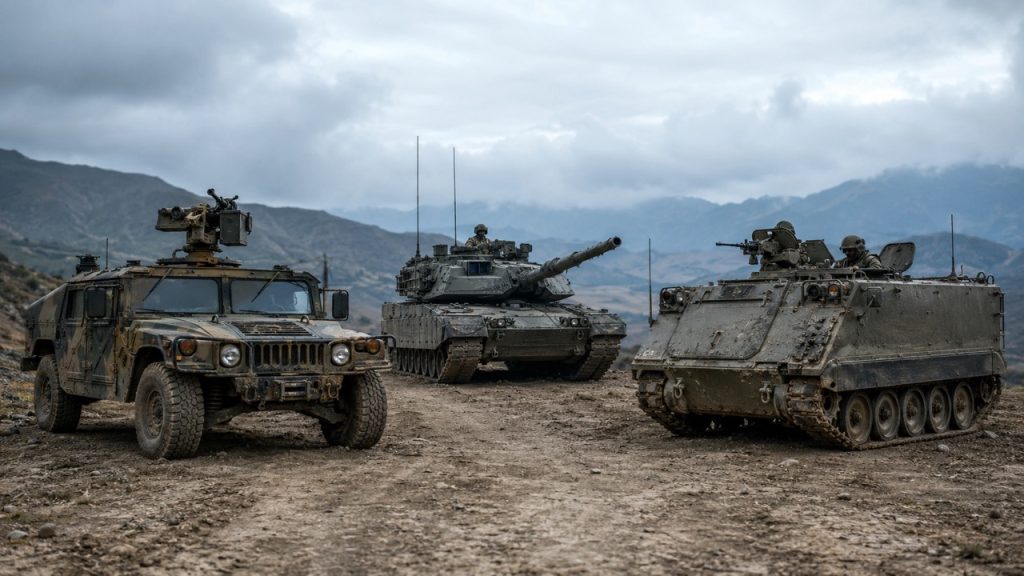
Critical Components That Influence Military Vehicle Readiness
Not all spare parts carry equal weight in fleet readiness calculations. Certain component categories sometimes referred to as critical spares have disproportionate influence on a vehicle’s mission capable status because their failure renders the entire platform inoperable. Understanding which components most frequently drive unserviceability is essential for effective inventory planning.
Powerpack and Drivetrain Systems
Engine components, transmission assemblies, and associated cooling systems represent the core of any tactical or armored vehicle’s operability. Failures in these systems are immediately mission limiting. For platforms such as the Leopard 2, M113, HMMWV, and contemporary MRAP variants, powerpack availability is a primary driver of fleet readiness. Engine filters, seals, and gaskets while individually low cost can cause significant downtime if not stocked at appropriate levels.
Suspension, Brake, and Steering Systems
Suspension components, brake systems, and steering assemblies are subject to high wear rates in operational environments, particularly in off road or high tempo maneuver contexts. Drive shafts, wheel bearings, brake pads, and hydraulic actuators are frequently replaced items that must be available in adequate quantities to avoid maintenance backlogs. Hydraulic system integrity is especially critical for vehicles with power-assisted steering, active suspension systems, or hydraulically operated weapon stations.
Electrical and Electronic Systems
Modern armored and tactical vehicles carry increasingly complex electrical architectures. Electronic control units (ECUs), multiplexed wiring systems, sensor packages, and communication interfaces introduce failure modes that were absent in earlier generations of military vehicles. When these components fail, specialist diagnostic capability may be required in addition to the replacement part itself, extending downtime unless adequate stocks and technical documentation are maintained forward.
Armor Support Hardware and Structural Components
For armored platforms, armor mounting hardware, blast plate attachments, and structural fasteners may be required following mine blast events or combat damage. OEM specified components with full traceability and material certification are particularly important in this category, as the safety implications of substandard or counterfeit components on armored vehicles are severe.
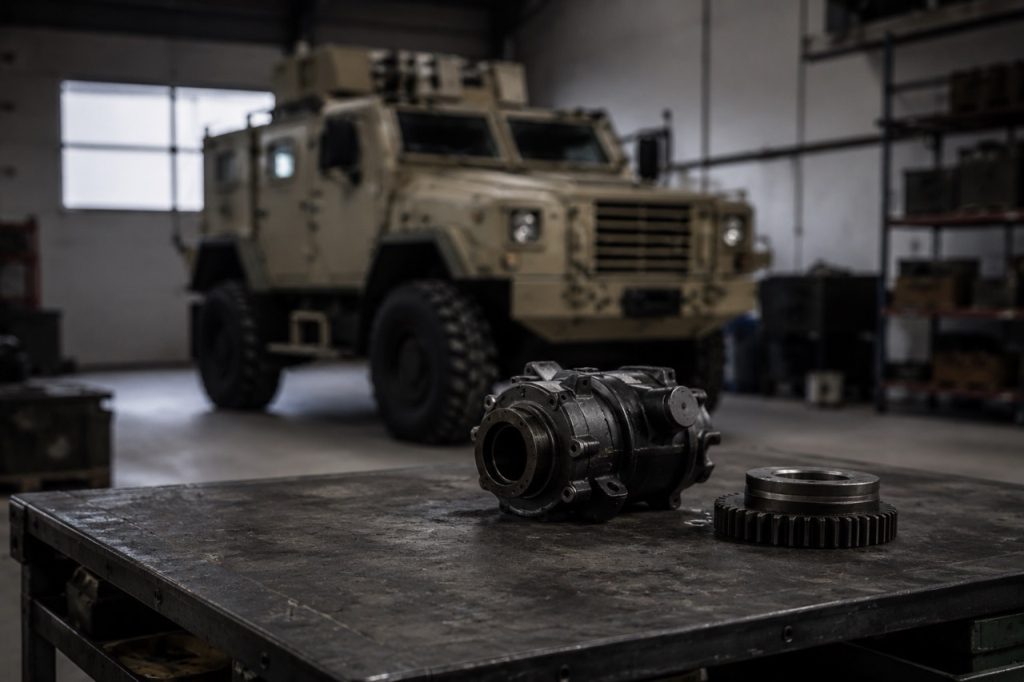
Supply Chain Resilience and Military Sustainment
Defense supply chains for military vehicle spare parts face challenges that differ substantially from commercial logistics. Long lead times, low volume/high variety demand profiles, obsolete part numbers for legacy platforms, restricted sourcing due to export control regulations, and the imperative for complete quality documentation all complicate parts procurement in ways that standard commercial supply chains are not designed to handle.
Supply chain resilience in defense sustainment is achieved through a combination of strategic approaches. Multiple sourcing strategies reduce dependence on any single supplier and create competitive pressure that supports pricing discipline. Supplier qualification programs based on frameworks such as AQAP 2110, AS9100, or ISO 9001 ensure that suppliers can consistently meet quality and documentation requirements. Regional distribution capabilities reduce lead times for forward deployed forces and allied customers in different geographic regions.
Safety stock and demand forecasting are equally essential. Modern defense logistics organizations use historical consumption data, maintenance interval analysis, and operational tempo projections to predict demand for specific components across specific platforms. This data driven approach allows inventory managers to pre position the right parts at the right levels rather than reacting to unserviceability events after they occur. For high value, long lead components in particular, strategic stocking agreements with qualified suppliers can dramatically reduce the operational impact of supply chain disruptions.
Obsolescence management deserves specific attention in any discussion of military spare parts resilience. Many allied defense organizations operate platforms that have been in service for decades, and the original manufacturers of components for these vehicles may no longer produce them commercially. Specialized defense spare parts suppliers with engineering capabilities and established sourcing networks play a vital role in identifying alternative or reconditioned solutions that meet original specification requirements while maintaining full traceability and documentation.
Resilient supply chains do not happen by accident. They are the product of deliberate planning, qualified partnerships, and sustained investment in inventory management capability.
Predictive Maintenance and Data Driven Spare Parts Planning
The shift toward condition based maintenance (CBM) and predictive maintenance represents one of the most significant evolutions in military fleet management in recent decades. Rather than replacing components on fixed time or mileage intervals regardless of their actual condition, modern CBM programs use sensor data, diagnostic outputs, and usage monitoring to predict component degradation before failure occurs.
The benefits for spare parts planning are substantial. When maintenance teams can anticipate which components are likely to require replacement over a defined operational period, they can ensure those parts are staged and available in advance rather than generating emergency procurement requirements when failures occur unexpectedly. This transforms the logistics model from reactive to proactive, reducing both downtime and sustainment costs.
Digital inventory management systems further enhance this capability. Asset management platforms that integrate vehicle health data, parts consumption records, and supply chain status allow logistics managers to maintain real time visibility across entire fleets and supply chains simultaneously. When a component in a specific vehicle is approaching its predicted service life, the system can trigger a resupply request automatically, ensuring that the required part arrives before rather than after the vehicle becomes unserviceable.
For defense organizations managing mixed nationality or multi platform fleets in coalition environments, digital supply chain visibility has additional value. NATO NSPA frameworks and allied logistics agreements increasingly emphasize interoperable digital infrastructure as a component of collective defense sustainment capability, recognizing that analog processes are insufficient for the speed and complexity of modern multi domain operations.
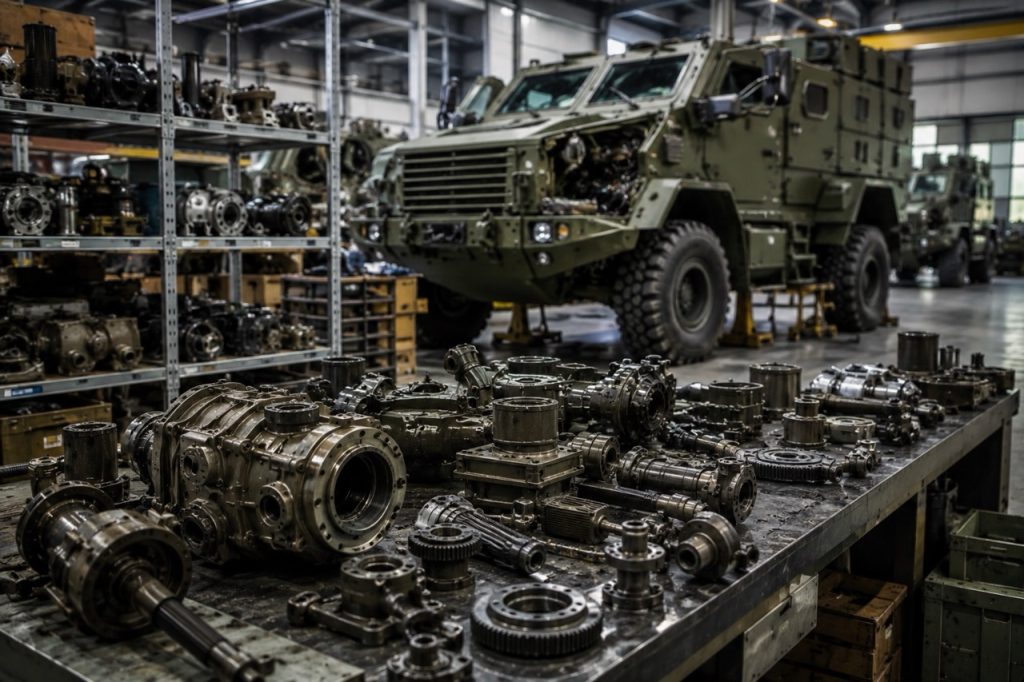
Quality and Traceability: Non Negotiable Requirements
In civilian industries, quality failures can generate financial costs and reputational damage. In military vehicle maintenance, quality failures in spare parts can cost lives. A counterfeit bearing in a steering assembly, an out of specification seal in a hydraulic brake circuit, or an improperly heat treated driveshaft component can cause catastrophic failures under operational loads. The quality and traceability requirements for military spare parts are therefore significantly more stringent than in comparable commercial applications.
Full traceability means that every component used in a military vehicle repair can be traced to its manufacturing origin through an unbroken chain of documentation. This chain typically includes a Certificate of Conformance (CoC), Material Test Reports (MTRs) confirming the physical and chemical properties of materials, First Article Inspection (FAI) records, lot control records, and serial number tracking where applicable. Components that cannot be supported by this documentation should not be used in military maintenance applications, regardless of their apparent quality.
Quality management systems such as AQAP 2110 and AS9100 provide the framework within which suppliers must operate to reliably produce and supply documented, traceable components. Organizations sourcing military spare parts should require formal quality system certification from their suppliers and conduct periodic audits to verify that certification is maintained in practice rather than merely on paper. The risks of sourcing from unqualified suppliers whether in the form of counterfeit components, inadequate documentation, or inconsistent quality far outweigh any short term cost advantages they may appear to offer.
Choosing the Right Military Spare Parts Supplier
The selection of a military spare parts supplier is not a transactional procurement decision it is a sustainment partnership decision with direct operational implications. The right supplier contributes meaningfully to an organization’s overall readiness posture, while the wrong supplier can degrade it.
Inventory depth and breadth are fundamental evaluation criteria. A supplier capable of fulfilling a single part number order quickly is useful; a supplier that can support an entire platform’s parts catalog including long lead, obsolete, and hard to source items is genuinely valuable. Defense procurement officers should assess not only what a supplier currently stocks but what their sourcing network can access on short notice and what engineering capabilities they have to support non standard requirements.
Export compliance experience is critical for international defense procurement. ITAR and EAR regulations govern the export of a wide range of military related components, and suppliers without established export compliance programs represent a regulatory risk that can delay or block shipments at critical moments. A qualified international supplier will maintain End Use Certificate management, export licensing support, and regulatory documentation as standard parts of their service offering.
Logistics capability, emergency response capacity, and documentation support round out the evaluation framework. Procurement teams should understand how quickly a supplier can respond to urgent operational requirements, what freight and customs clearance capabilities they maintain, and whether they can provide complete technical documentation packages as standard rather than on request. Organizations that engage qualified suppliers early before urgent requirements emerge are far better positioned than those who seek new supplier relationships under operational pressure.
Ultimately, the right military spare parts partner functions as an extension of an organization’s own sustainment capability, providing inventory intelligence, technical guidance, and responsive logistics support across the lifecycle of the platforms they serve.
Future Trends in Military Spare Parts Management
Defense logistics is evolving rapidly, driven by advances in digital technology, artificial intelligence, and new manufacturing approaches. AI assisted demand forecasting is already in use in advanced defense logistics organizations, analyzing large datasets of consumption history, maintenance records, and operational schedules to generate spare parts demand projections with significantly greater accuracy than traditional planning methods.
Smart warehouse technologies incorporating automated inventory management, RFID tracking, and robotic material handling are improving both the accuracy and speed of parts fulfillment in defense distribution centers. These capabilities are particularly valuable in high tempo operational contexts where the speed of parts availability can determine the difference between a vehicle returning to operations within hours or being removed from the operational count for days.
Additive manufacturing commonly referred to as 3D printing is emerging as a supplementary capability for military spare parts supply chains, particularly for low volume legacy components where traditional manufacture is no longer commercially viable. While regulatory frameworks for additive manufactured military components are still maturing, several NATO nations have undertaken qualification programs for specific part categories, and the technology’s role in sustainment is expected to grow substantially over the next decade.
Regional sustainment hubs and forward positioned supply nodes represent another emerging trend, reflecting the operational logic that parts must be close to the platforms they support. As NATO enhances its collective defense posture in Eastern Europe and other strategic regions, regional logistics infrastructure including qualified spare parts distributors with physical presence and established logistics networks in those regions will become an increasingly important component of alliance sustainment strategy.
Readiness Is Built Long Before Deployment
Military readiness is not determined when an operation begins. It is determined months and years earlier, through disciplined sustainment planning, strategic inventory management, and the cultivation of reliable spare parts supply chain partnerships. No amount of operational capability can compensate for a fleet that cannot move, communicate, or fight because the components necessary to keep it operational are unavailable.
The most capable armored vehicle cannot accomplish its mission if a single critical component is missing. The most experienced maintenance technician cannot reduce downtime if the required parts are not on hand. And no amount of emergency procurement spending can fully substitute for the operational time lost while vehicles remain unserviceable waiting for parts.
Defense organizations that invest systematically in resilient spare parts supply chains building relationships with qualified suppliers, maintaining strategic inventory levels, implementing predictive maintenance programs, and demanding complete quality documentation will consistently achieve higher mission capable rates, lower sustainment costs, and greater operational effectiveness than those that treat spare parts as an afterthought until a shortage forces the issue.
AB Defence understands that military spare parts availability is a readiness issue, not merely a procurement issue. As a specialized international supplier serving NATO and allied defense organizations, AB Defence provides inventory depth, quality assurance, export compliance expertise, and responsive logistics capability across a broad range of military vehicle platforms and component categories. We invite defense procurement officers, logistics managers, and fleet sustainment professionals to engage with our team to explore how a structured spare parts partnership can strengthen your organization’s operational readiness posture.
Work With AB Defence
AB Defence operates as a specialized international supplier of military spare parts and fleet sustainment solutions, serving defense procurement organizations, military logistics managers, and armed forces across NATO and allied nations. With a rigorous approach to quality assurance, full documentation traceability, and deep technical expertise across a broad range of military vehicle and equipment platforms, AB Defence is structured to meet the demanding standards that defense procurement officers rightly require.
Whether you are managing aging fleet sustainment, sourcing critical components against compressed timelines, or seeking a long-term supply chain partner with genuine defense industry expertise, AB Defence offers the technical capability, compliance framework, and operational reliability that defense supply chains depend on.
Contact AB Defence today to discuss your procurement requirements and learn how we can support your fleet readiness objectives.
Related Military Spare Parts Categories, Vehicle Platforms & Technical Guides
Explore AB Defence’s NATO-codified (NSN) and genuine OEM spare parts catalog, platform technical specifications, and sustainment engineering guides related to this article:
Stocked Spare Parts Categories (NSN & OEM Catalog)
- NATO Standard Defence Components & Military Hardware (12,993 stocked parts)
- M60 Tank Spare Parts (M60A1 / M60A3 / M60T) (497 stocked parts)
- M109 Self-Propelled Howitzer Spare Parts (585 stocked parts)
- BMC Kirpi MRAP Spare Parts (Kirpi I & Kirpi II) (597 stocked parts)
- Mercedes-Benz Unimog Military Spare Parts (562 stocked parts)
- Full NATO NSN & OEM Spare Parts Catalog (16,760+ Parts)
Compatible Vehicle Platforms & System Hubs
- Platforms
- Product Groups
- Quality
- Capabilities
- Tracked Armoured Vehicles
- Request a B2B Quotation (RFQ) & Technical Support