May 19, 2026
Singapore’s Defense Supply Chain: Why Southeast Asia Is Becoming a Strategic Sustainment Hub
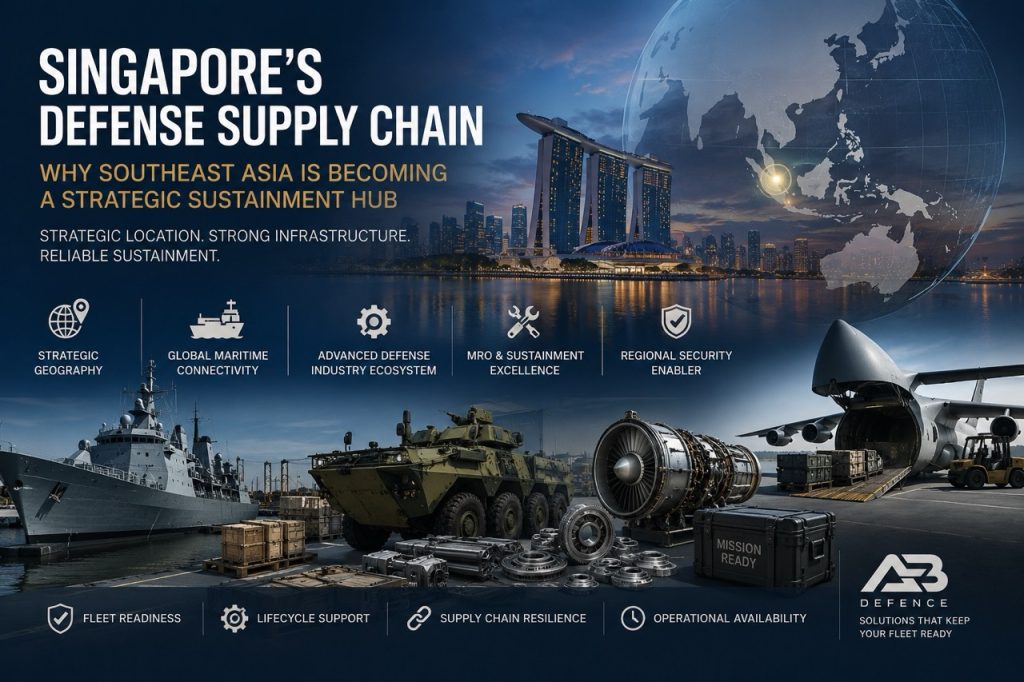
Defense readiness has never been purely a question of platforms, warheads, or headcount. Increasingly, the militaries that sustain operational advantage are those with the deepest investment in logistics infrastructure, the most resilient supply chains, and the clearest understanding of long term sustainment requirements. Procurement gets headlines. Sustainment keeps armies in the field.
Nowhere in Asia Pacific is this reality more evident than in Singapore. A city state of under six million people has, over several decades, constructed one of the most capable defense industrial ecosystems in the region, and positioned itself as a critical logistics node for military operations, fleet sustainment, and defense supply chain management across Southeast Asia. Understanding how Singapore achieved this, and what it means for the broader regional defense market, offers practical strategic insight for procurement officers, fleet managers, and defense logistics professionals operating in the region.
Why Geography Made Singapore a Natural Defense Logistics Hub
Singapore’s strategic value has always been inseparable from its location. Positioned at the southern tip of the Malay Peninsula, it sits astride the Malacca Strait, one of the world’s most critical maritime chokepoints. Approximately 40 percent of global seaborne trade passes through these waters, including enormous volumes of oil, liquefied natural gas, and finished goods moving between the Indian Ocean and the South China Sea. For military planners and defense logistics professionals alike, control over, or at minimum proximity to, this passage confers strategic leverage that no amount of interior geography can replicate.
This geographic reality has shaped Singapore’s defense posture from the outset of independence. The country’s leadership recognized that a small state with no strategic depth cannot afford garrison military thinking. Instead, it built outward projection capabilities, investing in naval power, expeditionary air force assets, and critically, the logistics infrastructure required to sustain both. The result is a port and aviation ecosystem that serves not just national defense requirements but functions as a regional sustainment anchor for allies, partners, and multilateral exercises.
The Port of Singapore remains the world’s second-busiest container port by throughput. Changi Airport is consistently rated among the most operationally efficient international aviation hubs. Both assets pull double duty: serving commercial logistics while providing the throughput capacity that military sustainment operations require. When spare parts, maintenance equipment, or defense materiel need to move rapidly through Southeast Asia, Singapore is, by structural default, the most reliable transit point in the region.
Regional military connectivity reinforces this geographic advantage. Singapore hosts the U.S. Navy’s Logistics Group Western Pacific at Changi Naval Base, a facility that supports rotational deployments of U.S. surface combatants and submarines throughout the Indo Pacific. This arrangement is not incidental. It reflects deliberate recognition by both parties that Singapore’s logistics infrastructure provides a level of reliability, depth, and reach that no other Southeast Asian nation currently matches.
Singapore’s Defense Industry Ecosystem and Military Infrastructure
Geography alone does not create a defense sustainment hub. What Singapore has built on top of its strategic location is a sophisticated defense industrial base that gives the city state genuine capacity to manufacture, maintain, overhaul, and sustain complex military systems at scale.
ST Engineering stands as the most visible element of this ecosystem. Founded in 1967 and now operating across aerospace, electronics, urban solutions, and defense segments, the company generated revenues exceeding S$9 billion in recent years and employs over 22,000 people across more than 100 locations globally. Its defense business spans armored vehicle manufacturing and upgrades, naval systems integration, satellite communications, and defense electronics. Within the military vehicle domain specifically, ST Engineering has extensive experience with the Singapore Armed Forces’ fleet of Bionix infantry fighting vehicles, Terrex armored personnel carriers, and various wheeled and tracked platforms, providing a local center of excellence for both original equipment manufacturing and lifecycle support.
Defense MRO capabilities in Singapore extend well beyond ST Engineering. The Singapore aerospace MRO sector, anchored at Seletar Aerospace Park and supported by facilities at Changi, is routinely cited as the largest aviation MRO hub in Asia Pacific. Companies including Singapore Technologies Aerospace, ST Aerospace, Rolls Royce, Pratt & Whitney, and a dense cluster of specialist component maintainers operate facilities that serve both commercial and military aviation customers. This concentration of technical skill, tooling, and certified maintenance capability has a direct benefit for defense logistics: when military aircraft and rotary wing platforms require maintenance across the region, Singapore offers the deepest bench of certified capability within ASEAN.
Changi Naval Base, commissioned in 2004 and home to the Republic of Singapore Navy’s First Flotilla, is one of the few facilities in Southeast Asia capable of accommodating and supporting large surface combatants including destroyer class vessels. Its deep-water berths, logistics infrastructure, and co located support facilities make it a natural host for partner nation vessels and a critical node in regional naval sustainment networks. The base’s ability to service visiting U.S. Navy ships is not simply a bilateral arrangement; it is a concrete expression of Singapore’s role as a regional logistics enabler.
The Singapore Armed Forces themselves function as a demanding customer that has driven the local defense industrial base to develop world class capabilities. With compulsory national service generating a standing force of significant technical sophistication, and a defense budget consistently representing over three percent of GDP, Singapore’s military places rigorous requirements on its suppliers. Meeting those requirements has shaped local industry into something capable of supporting far broader regional demand.
Southeast Asia’s Rising Defense Spending and Regional Modernization
Singapore’s defense ecosystem exists within a regional context that is changing rapidly. Across Southeast Asia, defense budgets have been climbing steadily through the 2020s, driven by a combination of perceived security challenges, long deferred fleet modernization, and growing recognition among ASEAN governments that defense readiness requires sustained investment rather than episodic procurement.
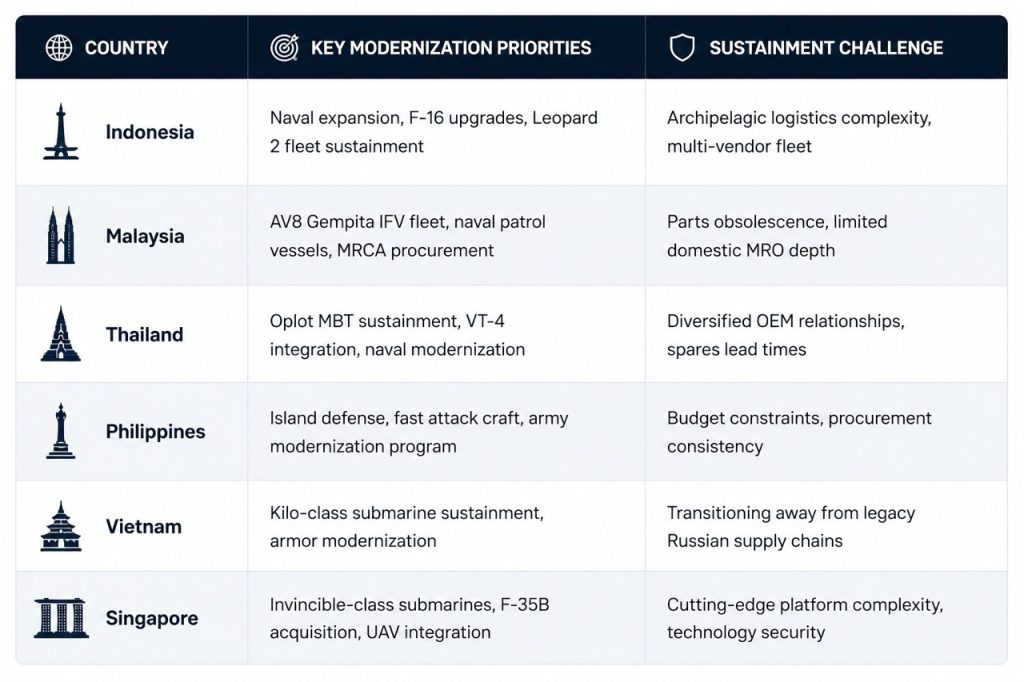
Indonesia, the region’s largest military power by personnel, has invested significantly in fleet modernization over the past decade. Its army operates Leopard 2 main battle tanks acquired from Germany, along with Marder infantry fighting vehicles and a diverse mix of wheeled platforms from multiple OEMs. Managing sustainment across such a varied fleet, delivered by suppliers scattered across Europe, Asia, and North America, represents a significant logistics challenge that Indonesian defense procurement officers are actively working to address through multi-sourcing strategies and regional support partnerships.
Malaysia’s investment in the AV8 Gempita wheeled armored platform, manufactured domestically with significant foreign content, illustrates the tension many ASEAN nations face between the desire for industrial sovereignty and the practical reality that complex military platforms require external supply chain support for years after delivery. Thailand’s experience sustaining its Oplot main battle tanks, acquired from Ukraine, has demonstrated with considerable clarity what happens when a supplier nation’s ability to provide spare parts is disrupted by geopolitical events entirely outside the purchasing country’s control.
The Philippines has been executing a sustained military modernization program under the Revised AFP Modernization Act, with allocations covering ground force platforms, naval vessels, and aviation assets. Vietnam has been quietly expanding its defense capabilities with a particular focus on maritime domain awareness and submarine operations, while simultaneously managing the complex transition away from near total dependence on Russian defense supply chains, a transition accelerated sharply by post 2022 sanctions environments.
Across all these cases, Singapore functions as a regional reference point: a nation that has demonstrated how sustained defense investment, industrial development, and logistics planning combine to produce genuine operational capability. Its regional influence on defense sustainment thinking extends well beyond its borders.
Why Sustainment Matters More Than Acquisition
The defense procurement cycle is seductive in its clarity. Platforms are identified, requirements written, competitions conducted, contracts awarded, and delivery schedules negotiated. At the end of the process, something tangible arrives: vehicles, vessels, aircraft, weapons systems. Defense budgets are justified to parliaments and finance ministries against these visible deliverables. The problem is that this procurement-centric framing systematically undervalues the cost and complexity of what comes next.
For most major defense platforms, the acquisition cost represents somewhere between 20 and 40 percent of total lifecycle cost. The remainder, running across 20, 30, and in some cases 40 years of operational service, covers spare parts, scheduled maintenance, unscheduled repair, software updates, capability upgrades, and eventually managed withdrawal from service. A country that acquires a capable armored fleet but fails to plan and fund the sustainment lifecycle does not own a military asset. It owns a depreciating collection of metal and electronics with a declining operational availability rate.
Military vehicle maintenance planning requires decision makers to think simultaneously across multiple time horizons. In the near term, it is a question of maintaining operational availability above minimum thresholds. In the medium term, it involves managing obsolescence as components go out of production and original suppliers consolidate, exit markets, or shift technology directions. Over the long term, it demands strategic engagement with the global defense industrial base to ensure that support remains available when platforms are decades past their original delivery date.
Fleet readiness is the metric that makes these abstractions concrete. A battalion of armored infantry vehicles with a 60 percent operational availability rate is, for practical purposes, a battalion of 60 percent of its nominal strength. The missing vehicles do not disappear from order of battle calculations through enemy action or training attrition. They disappear because spare parts were not available when required, because maintenance was deferred due to supply chain delays, or because inventory management practices failed to anticipate demand signals from the field.
Singapore’s approach to military vehicle support offers instructive lessons here. The Republic of Singapore Army has long maintained demanding operational availability requirements for its armored fleet, and ST Engineering has built sustainment programs around those requirements that include multi year spare parts contracts, forward inventory positioning, and managed obsolescence programs for aging platforms. This is not a model exclusive to wealthy city states. It is a structured approach to lifecycle support that any military can adapt to its own resource context.
The Military Spare Parts Challenge in Asia Pacific
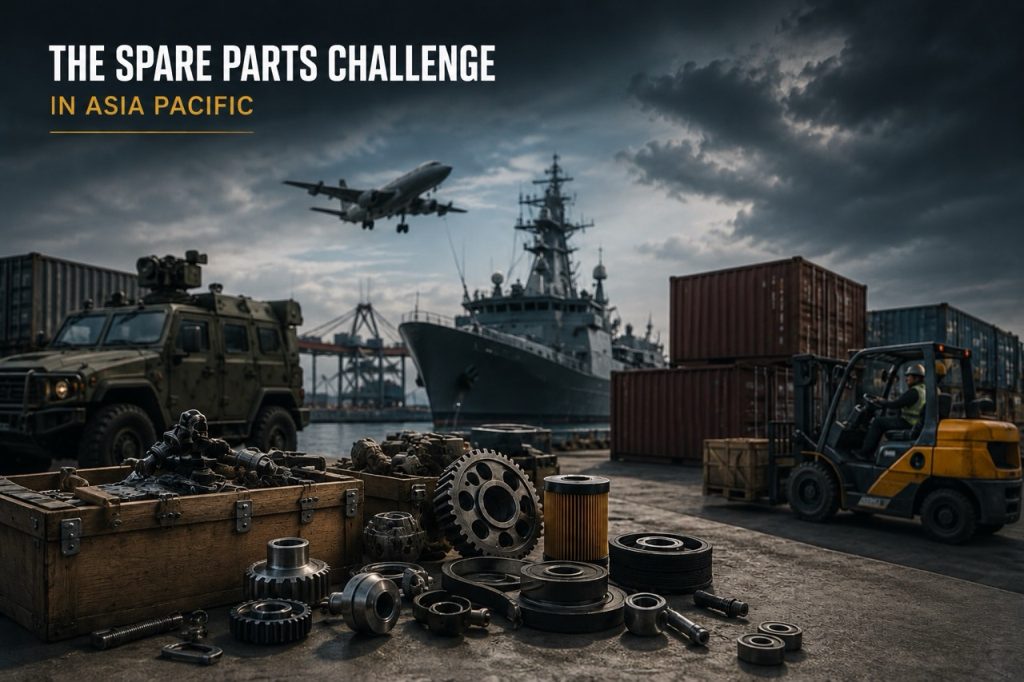
Across the Asia Pacific defense market, the spare parts supply chain presents challenges that are becoming more acute as fleets age, geopolitical tensions introduce new supply chain risks, and original equipment manufacturers consolidate their aftermarket operations.
Lead times for military vehicle spare parts across the region routinely stretch to 12, 18, and in some cases 24 months or more for complex components sourced from European or American OEMs. These lead times reflect a combination of manufacturing capacity constraints, export license processing times, shipping distances, and in some cases deliberate OEM strategies around aftermarket supply control. For military logistics planners working to maintain fleet readiness, these timelines are operationally unacceptable in crisis scenarios and financially disruptive in peacetime maintenance cycles.
Single source dependency remains the dominant risk factor in Asia Pacific defense supply chains. Many ASEAN nations acquired their major ground force platforms from single European suppliers under intergovernmental agreements, with aftermarket support locked to the original OEM or its designated network. When that network performs reliably, the arrangement is satisfactory. When it does not, whether due to supplier consolidation, political complications, export restrictions, or simple commercial decision making, the receiving nation has limited leverage and fewer alternatives than it would like.
Obsolescence management adds another layer of complexity. Platforms that entered service in the 1990s and early 2000s are now approaching or have passed the point at which original manufacturers have formally ended spare parts production for specific components. Finding alternative sources for critical components, qualifying those sources against military specifications, and integrating them into maintenance pipelines requires sustained procurement effort and technical resources that some smaller ASEAN defense establishments are only beginning to develop.
Inventory management practices across the region vary significantly. The most capable defense establishments maintain sophisticated demand forecasting systems that allow procurement teams to anticipate consumption rates, identify approaching shortfalls, and place orders sufficiently in advance to avoid operational disruption. Less mature systems rely on reactive procurement, ordering parts after failures occur rather than before them, which guarantees extended vehicle downtime and inflated emergency procurement costs.
Multi sourcing strategies are gaining traction precisely because these risks are now well understood. Defense procurement teams across ASEAN are increasingly seeking alternative qualified suppliers for critical components, not as a reflection of dissatisfaction with existing OEM relationships, but as a deliberate risk management measure. A military that has two or three qualified sources for critical drivetrain, suspension, or powertrain components is structurally more resilient than one that has one, regardless of how reliable that single source has been historically.
Regional Supply Chain Resilience and Strategic Risk Management
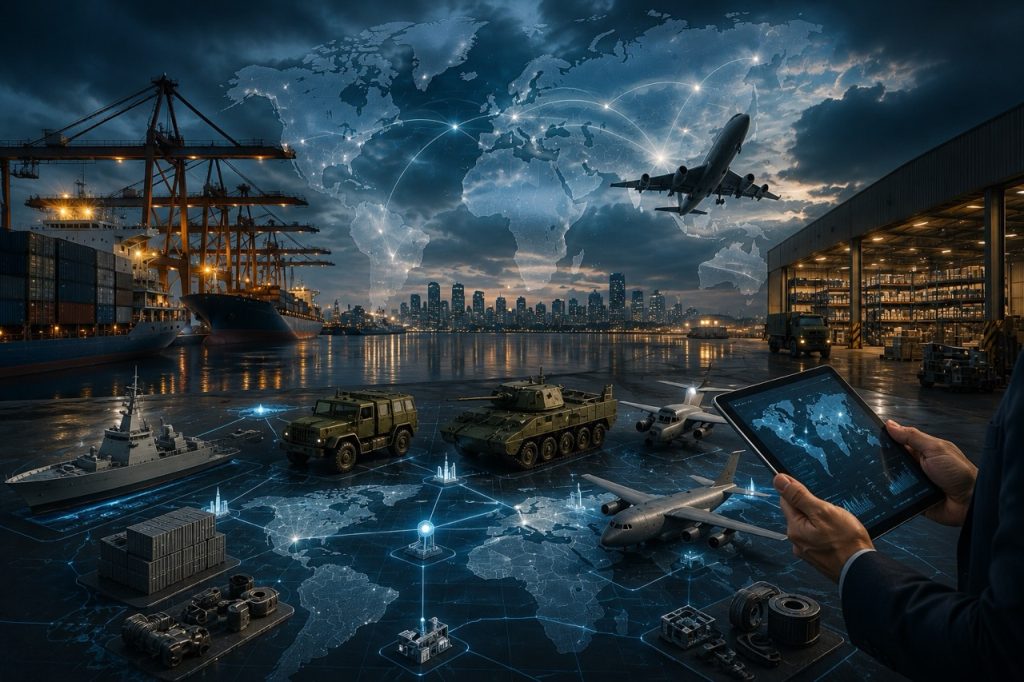
The South China Sea presents the most obvious geopolitical overlay on regional defense supply chain planning. Territorial disputes involving China, Vietnam, the Philippines, Malaysia, Brunei, and Taiwan create a background of persistent low-level tension that periodically escalates into confrontations with potential escalation pathways. For defense logistics planners in the region, the question is not simply whether those tensions will affect military operations, but whether supply chain disruptions caused by regional instability would degrade readiness at precisely the moment when readiness is most required.
This is not a theoretical exercise. The intersection of commercial shipping lanes and contested maritime zones in the South China Sea means that disruption scenarios, even short of direct military conflict, could significantly affect the flow of defense materiel through the region. Piracy, interdiction, port congestion, and insurance constraints all become realistic risk factors in elevated tension scenarios. Defense supply chain managers who have not mapped their logistics networks against these contingencies are planning for a region that no longer exists.
Singapore’s position as a regional logistics hub offers partial mitigation against these risks, precisely because its geographic location is both accessible and outside the most contested maritime areas. However, Singapore is not insulated from regional instability. The Malacca Strait itself, while generally secure, is a chokepoint that is identifiable in any serious conflict scenario as a potential disruption point. Resilient supply chain design, for any defense organization operating in Asia Pacific, requires thinking beyond single node dependency even when that node is as capable as Singapore.
Geopolitical developments beyond the immediate region add further complexity. Export control environments in the United States, European Union, and United Kingdom have become more stringent in response to broader strategic competition dynamics. Technology security considerations have led to tighter controls on dual-use components, which affects defense supply chains even when the items in question are not intrinsically military. Companies operating in the military vehicle spare parts market need to navigate these regulatory environments with increasing sophistication.
Regional manufacturing resilience is becoming a more prominent planning consideration as a result. Several ASEAN nations, including Singapore, Malaysia, and Indonesia, have been actively exploring how to increase the proportion of defense sustainment activity conducted within the region. This includes not only MRO operations but component manufacturing, repair and overhaul of complex assemblies, and the development of technical certification capabilities that reduce dependence on non-regional qualification authorities.
What Defense Procurement Teams Should Learn from Singapore
Singapore’s approach to defense supply chain management is not simply an outcome of wealth or industrial policy. It reflects a set of strategic disciplines that procurement teams across ASEAN can apply regardless of budget scale or industrial base maturity.
Supply chain mapping, conducted seriously and updated regularly, is the prerequisite for everything that follows. Defense organizations that do not have a clear picture of where their critical spare parts come from, what the lead times are, where single-source dependencies exist, and how their supply chain would perform under disruption scenarios cannot manage risks they have not identified. Singapore’s defense establishment has invested systematically in this kind of supply chain visibility, and the operational benefits are reflected in readiness rates.
Alternative supplier qualification requires lead time to be useful. A procurement team that identifies a critical single-source dependency and begins the qualification process only after a supply disruption has already occurred is managing a crisis rather than preventing one. The Singapore model suggests that alternative supplier qualification should be treated as a routine procurement function, not an emergency measure, with resources allocated to maintain qualified alternatives for critical component categories before they are needed.
Lifecycle sustainment planning at the point of platform acquisition is structurally more efficient than retrospective sustainment contracting. Procurement agreements that include committed spare parts support provisions, defined obsolescence management obligations, and clearly specified transition arrangements when production ends give military operators leverage that disappears once the platform is in service and alternatives are limited. Regional defense procurement teams that negotiate only on platform price and delivery schedule are leaving significant sustainment value on the table.
Strategic stock programs, calibrated against realistic consumption rates and supply chain lead times, provide operational insurance against disruption scenarios. Holding excess inventory has costs, but those costs are quantifiable and manageable. The cost of extended vehicle downtime caused by spare parts unavailability, in operational terms and financial terms, typically exceeds the cost of holding precautionary inventory by a wide margin.
The Future of Southeast Asia as a Defense Sustainment Hub
The trajectory of Southeast Asia’s defense market over the next decade points consistently in one direction: greater investment, greater complexity, and greater demand for sophisticated sustainment solutions. SIPRI data consistently shows ASEAN defense spending growing at rates above the global average, and the modernization programs underway across Indonesia, Vietnam, the Philippines, and Malaysia will generate sustainment requirements that existing regional infrastructure is not fully prepared to meet.
Singapore’s role as the regional anchor is likely to deepen rather than diminish, at least in the near term. No other ASEAN nation combines Singapore’s industrial depth, infrastructure quality, logistics connectivity, and policy stability in a way that would allow a rapid transfer of regional sustainment leadership. Indonesia has scale and growing industrial ambition, but its geography complicates logistics in ways that Singapore’s compact port centric structure does not face. Malaysia has capable industry but a smaller defense industrial base. Vietnam and the Philippines are developing their sustainment infrastructure from lower baselines.
The integration of advanced technologies into defense supply chain management will reshape how regional sustainment operates over the coming decade. Predictive maintenance platforms, AI-driven demand forecasting, digital twin capabilities for major platforms, and additive manufacturing for legacy spare parts production are all moving from experimental to operational within the most advanced defense establishments globally. Their adoption within ASEAN defense logistics will be uneven, but the pressure to adopt them will grow as fleets become more complex and readiness requirements become more demanding.
Defense supply chain regionalization, already a policy priority in several ASEAN capitals, will accelerate if broader geopolitical trends continue to make dependence on distant suppliers a recognized strategic vulnerability. Singapore is well positioned to host the regional nodes of emerging supply chain architectures precisely because its existing infrastructure, regulatory environment, and technical workforce make it the natural location for high value defense logistics operations. The question for defense procurement teams across the region is not whether Singapore will remain important to their sustainment networks. It is how they will structure their supply chain relationships to maximize the strategic value that this regional hub provides.
The defense organizations that will sustain operational advantage across Southeast Asia over the next generation will be those that treat logistics not as a support function but as a strategic capability. They will invest in supply chain visibility, qualify alternative suppliers systematically, negotiate sustainment provisions into procurement contracts, and plan for the scenarios in which their supply chains face stress. Singapore has modeled this approach for three decades. The rest of the region is increasingly taking note.
Sustainment Resilience Is the Competitive Edge
The most capable weapons platform in the world has a readiness rate of zero when its spare parts supply chain fails. This is not a theoretical observation. It is a documented operational reality that has affected defense forces across Asia Pacific and globally, often at moments when readiness was most critically required.
Singapore has spent decades building the infrastructure, industrial capability, and logistics depth that make it the most reliable defense sustainment node in Southeast Asia. That investment is now paying dividends not just for the Singapore Armed Forces, but for the entire regional defense ecosystem that increasingly depends on Singapore’s logistics connectivity, MRO capability, and supply chain networks.
For defense procurement officers, fleet sustainment managers, and military logistics professionals operating across ASEAN, the strategic lesson from Singapore is clear: sustainment planning must be treated with the same rigor, the same resource allocation, and the same strategic foresight as platform acquisition. The procurement decision that is made today will generate sustainment requirements for the next 25 to 40 years. The supply chain strategies that are designed today will determine whether those requirements are met at acceptable cost and operational availability levels, or at crisis level expense and degraded readiness.
Southeast Asia’s defense market is growing in scale, complexity, and strategic significance. The sustainment infrastructure required to support that growth is being built now, anchored on Singapore’s existing foundation, and extending across a region whose military establishments are increasingly sophisticated about what long-term fleet readiness actually requires.
The organizations that engage with this reality now, building supply chain resilience, qualifying alternative suppliers, and designing sustainment programs that can absorb disruption without degrading readiness, will be the ones that maintain operational advantage when it matters most.
As defense organizations across Southeast Asia continue to expand and modernize their fleets, sustainment can no longer be treated as a secondary function. Operational readiness depends on resilient supply chains, reliable military spare parts availability, and long term lifecycle support strategies capable of sustaining mission critical platforms through decades of service.
At AB Defence, we understand that maintaining fleet readiness requires more than sourcing components. It requires trusted supply networks, continuity planning, and a sustainment-focused approach designed around operational realities. From military vehicle spare parts support to supply chain resilience and long term fleet sustainment requirements, our focus remains on helping defense organizations strengthen operational availability in increasingly complex environments.
To discuss your military spare parts requirements, sustainment challenges, or fleet support needs, contact our team and explore how strategic supply partnerships can strengthen long term readiness.
You could contact us for defence spare parts
Related Military Spare Parts Categories, Vehicle Platforms & Technical Guides
Explore AB Defence’s NATO-codified (NSN) and genuine OEM spare parts catalog, platform technical specifications, and sustainment engineering guides related to this article:
Stocked Spare Parts Categories (NSN & OEM Catalog)
- NATO Standard Defence Components & Military Hardware (12,993 stocked parts)
- M60 Tank Spare Parts (M60A1 / M60A3 / M60T) (497 stocked parts)
- M109 Self-Propelled Howitzer Spare Parts (585 stocked parts)
- BMC Kirpi MRAP Spare Parts (Kirpi I & Kirpi II) (597 stocked parts)
- Mercedes-Benz Unimog Military Spare Parts (562 stocked parts)
- Full NATO NSN & OEM Spare Parts Catalog (16,760+ Parts)
Compatible Vehicle Platforms & System Hubs
- Platforms
- Product Groups
- Quality
- Capabilities
- Tracked Armoured Vehicles
- Request a B2B Quotation (RFQ) & Technical Support