AB DEFENCE Platform support
M113 Modernization Program
Explore platform information, technical systems and spare parts support.
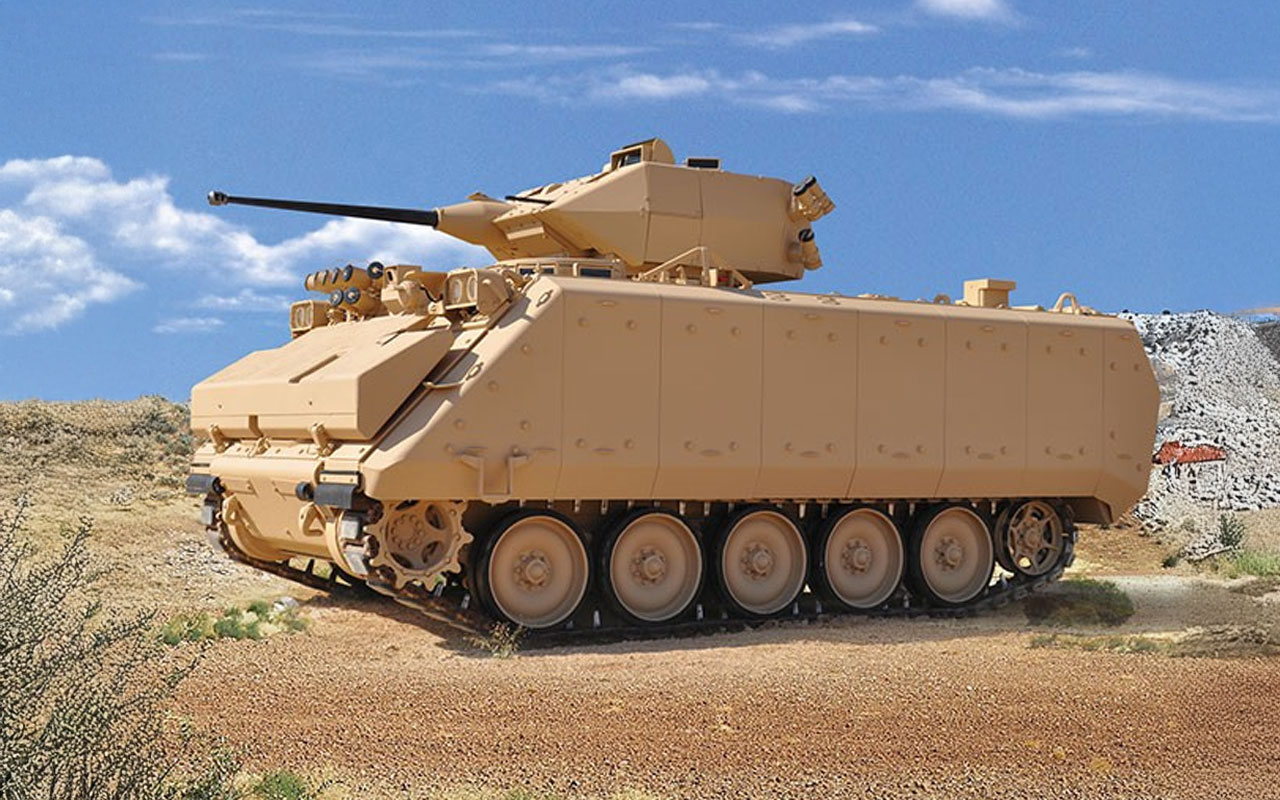
An in-depth examination of the M113 modernization ecosystem, covering battlefield evolution, survivability upgrades, mobility enhancements, digital transformation, and long-term sustainment strategies for one of the most widely operated armored platforms in military history.
Request a QuoteWhy the M113 Modernization Market Still Matters in 2026
Few weapons systems in military history have remained operationally relevant for more than six decades. The M113 Armored Personnel Carrier is one of them. With over 80,000 vehicles in service globally across more than 40 recognized variants, the M113 family plays a key role in the militaries of at least 44 countries. That figure alone explains why the global M113 modernization and spare parts market continues to generate contracts worth hundreds of millions of dollars annually — and shows no signs of slowing down.
The economic argument is straightforward. By leveraging the existing M113 platform — of which thousands remain in global service — armies can achieve significant improvements in lethality, survivability, and operational relevance without committing to the high costs associated with acquiring new-generation IFVs. For defense procurement offices operating under constrained budgets, that equation is increasingly attractive. The result is a sustained, global demand for M113 modernization packages, upgrade kits, overhaul services, and the spare parts needed to support all of the above.
AB Defence supplies M113 spare parts and components to defense operators, prime contractors, and authorized maintenance organizations worldwide. This page documents the full technical and operational landscape of M113 modernization — its history, engineering, active programs, and the specific components where we provide procurement support.
Part I: Platform History and Engineering Baseline
The Development Mandate (1954–1960)
The M113 was born out of lessons absorbed in the Korean War and the Army's post-war mechanization doctrine. In the mid-1950s, the U.S. Army issued specifications for a fully tracked, fully enclosed APC that could match the cross-country mobility of contemporary tanks, enabling mechanized infantry and armor to operate as a cohesive combined-arms team. The vehicle had to be amphibious, air-deliverable, and maintainable under field conditions by soldiers with basic technical training.
FMC developed two prototype APCs, known as the T113 and T117. The T113 was constructed from aluminum and was thus considerably lighter than the steel T117, allowing it to be used in airborne operations. The Army was pleased with the overall performance of the T113 and awarded FMC the production contract. This decision made the M113 the first armored military vehicle constructed primarily from aluminum — a structural and industrial innovation that defined its weight class and logistics profile for the next half century.
The first prototype was completed in 1957, and the vehicle officially entered operational service with the U.S. Army in 1960. Production ran initially out of FMC's San Jose, California facilities, later with licensed manufacturing established at OTO Melara in La Spezia, Italy, and BMF in Belgium — creating the distributed production base that would eventually underpin a global spare parts ecosystem.
The ACAV Experience: Vietnam and the Birth of Tactical Innovation (1965–1975)
The Vietnam War was the M113's operational crucible. What began as a "battle taxi" — a vehicle intended to deliver infantry to the edge of contact and then withdraw — rapidly evolved into a frontline combat platform. American mechanized cavalry units in the Mekong Delta discovered that the M113's amphibious capability, combined with its aluminum hull's buoyancy, made it uniquely suited to paddy field operations where no wheeled vehicle could operate.
The M113 ACAVs and other variants proved successful in the jungles and rice paddies of Vietnam. In addition to being used directly in operations against enemy forces, the Army used M113 ACAVs on convoy escort missions, where their firepower could quickly disrupt an enemy ambush. ACAV (Armored Cavalry Assault Vehicle) kits — consisting of additional gun shields for the commander's M2 Browning and two additional M60 7.62mm machine guns on the cargo hatch — transformed the standard APC into a fire support platform capable of engaging dismounted infantry with considerable effect.
Vietnam simultaneously exposed the M113's most serious limitations. The Chrysler 75M gasoline engine was a significant fire hazard when struck. RPG-7 warheads could penetrate the aluminum hull at most engagement angles. And the commander's exposed position while operating the .50 caliber meant that crew casualties were disproportionately high. These operational lessons directly drove the A1 modification program and established the engineering philosophy that would guide all subsequent upgrades: maximize what the hull can carry while addressing its fundamental vulnerability profile.
Variant Evolution: M113 Through M113A3
The M113 family evolved through four primary production standards, each addressing deficiencies identified in combat and extended service:
M113 (1960): Initial production variant. Chrysler 75M air-cooled gasoline engine, 209 hp. Allison TX-100 three-speed automatic transmission. Crew of two plus eleven passengers. Standard armament: one 12.7mm M2 Browning HMG on pintle mount, operated by the commander with head and upper torso exposed. Amphibious without preparation. C-130 air-transportable.
M113A1 (1964): The most consequential single upgrade in the platform's history. The diesel-powered M113A1 replaced the original model in production, introducing the Detroit Diesel 6V53 engine offering improved performance and significantly reduced fire hazard compared to the gasoline-powered original. The six-cylinder, two-stroke diesel developing 212 hp became the powerplant that most of the world's M113 fleets still operate. This variant was exported in enormous quantities throughout the late 1960s and 1970s, and represents the largest single segment of the global operational fleet today.
M113A2 (1979): A package of automotive improvements rather than structural changes. Updated suspension geometry, improved cooling system capacity, revised shock absorbers on all road wheel stations, and enhanced NBC protection provisions. Most of the M113 family that saw service during Desert Storm were underpowered A2 level vehicles — a fact that directly accelerated the A3 program. FAS.org
M113A3 (1987): The most comprehensive factory-standard upgrade in the platform's history. The standard A3 package, or RISE (Reliability Improvement of Selected Equipment) package, includes an upgraded propulsion system, greatly improved driver controls, external fuel tanks, and a 200 Amp alternator with four batteries. Additional A3 improvements include incorporation of spall suppression liners and provisions for mounting external armor.
The technical heart of the A3 upgrade is the powertrain substitution. The A3 conversion package contains all the components necessary to install the OEM or U.S. Government supplied 6V53T turbocharged engine and X200-4/4 transmission. The new hydrostatic steer transmission permits use of a more powerful 275 HP turbocharged Detroit Diesel 6V53T engine, and eliminates the transfer case and controlled differential. The RISE powertrain package increases fuel economy, acceleration, hill climbing speed and braking capabilities.
Critically, the shift from the TX-100-1 transmission to the X200-4 (and later X200-4A) hydrostatic unit eliminated the tiller-bar steering system that had required significant upper-body strength to operate effectively, replacing it with a conventional steering wheel. This single change dramatically reduced driver fatigue during long-movement phases and improved precision maneuvering in close terrain.
Production ran from 1987 to 1992, in which over 6,000 new-built M113A3s were manufactured. In addition, thousands of earlier-model M113s were converted to A3 standard.
Part II: Technical Specifications
| Parameter | Specification |
|---|---|
| Hull Material | 5083 aircraft-grade aluminum alloy |
| Combat Weight | 12.3 tonnes (bare A3) / up to 14.6 tonnes with appliqué armor |
| Length | 4.863 m |
| Width | 2.686 m |
| Height (hull top) | 1.85 m / 2.52 m with cupola |
| Engine | Detroit Diesel 6V53T, 6-cylinder 2-stroke turbo, 275 hp |
| Transmission | Allison X200-4A hydrostatic, 4 forward / 2 reverse |
| Drive System | Front sprocket, five road wheels per side, rear idler |
| Track | T130E1 steel single-pin, or rubber-band (modified fleets) |
| Maximum Road Speed | 67.6 km/h |
| Water Speed | 5.8 km/h (track propulsion, no preparation required) |
| Operational Range | 480 km |
| Fuel Capacity | 360 litres (internal + external tanks, A3) |
| Crew | 2 (commander, driver) + 11 dismounts |
| Armor — Hull Sides | 44 mm aluminum equivalent |
| Armor — Hull Front | 38 mm (sloped at 60° from vertical) |
| Armor — Standard Protection | STANAG 4569 Level 1 (baseline); Level 2-3 with appliqué |
| Amphibious | Yes, without preparation — trim vane deployment required |
| Air Transport | CH-47, C-130, C-141 compatible |
| Floatation | Sealed aluminum hull, two electric bilge pumps (166 L/min combined) |
Aluminum Hull: Engineering Advantage and Protective Limitation
The 5083 aluminum alloy used in the M113 hull is the same grade historically used in marine vessel construction — selected for its combination of weldability, corrosion resistance, and strength-to-weight ratio. Its use in the M113 was genuinely pioneering in 1960, enabling a combat vehicle to be airlifted and airdropped by transport aircraft at a time when all comparable platforms were steel.
The tradeoff is well understood: aluminum requires approximately three times the section thickness to match the ballistic performance of steel at equivalent protection levels. The baseline M113 hull provides protection against 7.62mm ball ammunition and artillery splinters. It does not protect against 12.7mm AP, heavy machine gun fire, RPG warheads, or IEDs — threats that have defined the operational environments in which M113s have been deployed since the 1980s.
This protection gap is the primary driver of every serious modernization program. The hull provides the volumetric envelope; the upgrades address its survivability deficit.
Part III: The M113A3 RISE Program — The Template for Global Modernization
Understanding the M113A3 RISE program is essential context for evaluating any subsequent upgrade effort. The RISE package established both the engineering methodology and the performance benchmarks against which all later modernization efforts are measured.
The upgrade was undertaken to improve the overall performance of the M113 fleet, addressing its deficiencies in terms of protection and mobility. With a lower engine power and top speed compared to the M1 Abrams MBT and M2 Bradley IFV, the M113A2 lagged behind its counterparts. However, replacing the entire M113 family with Bradley variants proved to be technically, logistically, and financially impractical. The decision was made in 1984 to upgrade the M113s instead. Army Recognition
The RISE program delivered the following engineering changes:
Propulsion: Detroit Diesel 6V53T turbocharged engine (275 hp) replacing the naturally aspirated 6V53 (212 hp). The turbocharged variant develops greater torque at lower RPM, improving hill-climbing and acceleration under load. The engine is CAN-bus compatible in later production runs, enabling diagnostic readout at the driver's station.
Transmission: Allison X200-4A hydrostatic unit replacing the TX-100 series. The hydrostatic design enables infinitely variable steering without discrete gearshifts during turning, and eliminates the controlled differential and transfer case — reducing drivetrain component count and associated failure modes. The X200-4A is rated for up to 265 hp continuous, and transmits engine output through four-speed forward and two-speed reverse ranges.
Driver Controls: Conventional steering wheel replacing lever-bar tillers. Power-assisted braking system. New driver instrument cluster with engine diagnostic indicators.
Spall Liners: Internal polyurea-backed Kevlar/nylon composite panels bonded to the hull interior surfaces. These do not improve the hull's primary ballistic resistance but significantly reduce secondary fragment injury to crew from armor defeat events — a lesson drawn directly from IDF experience in Lebanon.
External Fuel Tanks: Two 68-litre stainless steel tanks mounted externally on the hull rear flanking the troop ramp, increasing total fuel capacity and moving combustible fuel outside the occupied compartment. This change eliminated the most serious fire hazard in the original interior fuel tank configuration.
Electrical System: 200-amp alternator (up from 100 amp) with four batteries — a capacity increase driven by the growing electrical load demands of communications equipment, night vision systems, and later digitization packages.
Appliqué Armor Provisions: Standardized mounting points for bolt-on steel or composite armor panels were incorporated into the hull structure. The optional appliqué kit provides protection against 14.5mm AP projectiles on frontal arc.
The RISE package was not a new vehicle — it was a deliberate effort to extend the operational life of an existing hull through targeted system replacement. That philosophy has since been replicated, refined, and significantly expanded by defense industries worldwide.
Part IV: Global M113 Modernization Programs
The United States: M113A3 RISE and the Digitization Package
Beyond the baseline RISE upgrade, the U.S. Army pursued a digitization program for the M113A3 fleet. This involved integration of Force XXI Battle Command Brigade and Below (FBCB2) hardware, enabling position reporting and situational awareness sharing within digital brigade combat team networks. The M113A3 digitization program supports the Army's Modernization Plan by applying appliqué hardware, software, and installation kits hosted in the M113A3 FoV. FAS.org
The U.S. Army's longer-term trajectory is platform replacement through the Armored Multi-Purpose Vehicle (AMPV) program. The AMPV program was pursued to address the limitations of the M113, a platform that has been in service since the 1960s. Although versatile, the M113 has shown vulnerabilities in modern combat scenarios, particularly during the Iraq War where urban warfare tactics exposed its weaknesses. Army Recognition
The U.S. Department of Defense announced at the beginning of January 2025 that 900 M-113 APCs and 300 armored medical treatment vehicles will be transferred to Ukraine. This transfer, combined with the AMPV production ramp, shapes the U.S. fleet's future — but it also means thousands of M113s will remain in foreign operator fleets with no immediate replacement timeline, sustaining global demand for spare parts and sustainment services well into the 2030s. Army Recognition
Germany: The M113G3 — FFG / MTU / ZF Consortium
Germany's M113 modernization program is one of the most technically rigorous anywhere, and was executed through a consortium led by Flensburger Fahrzeugbau GmbH (FFG) in partnership with MTU Friedrichshafen and ZF Friedrichshafen.
The heart of the upgrade includes the installation of a new power pack which consists of a MTU 6V183 TC 22 diesel engine, based on the commercial Mercedes-Benz OM 441 LA, coupled to a ZF LSG 1000 steering and transmission system. Army Guide
The M113G3 series upgrade by FFG initially covered 97 M113A1s, and in 1999 it was announced that 257 M113A1s were to be upgraded between 2001 and 2004, which included a more powerful 6-cylinder, 10.6 liter turbo-charged diesel engine (MTU 6V 183 TC22 EURO II) developing 300 hp with a ZF LSG 1000 transmission (6 forward, 2 reverse), improved suspension, prepared slots for mounting add-on armor, external fuel tanks, a basket mount on the front hull, six smoke dischargers, replacement of the original T130 tracks with Diehl 513 tracks, a new 200 AMP generator, and an improved steering and brake system. Wikipedia
The MTU 6V183 TC22 engine is a significant step beyond the American RISE powerpack — it delivers 300 hp versus 275 hp, meets EURO II emissions standards (relevant for peacetime use in European urban areas), and draws on the well-established Mercedes-Benz commercial engine supply chain. The ZF LSG 1000 transmission is a hydromechanical unit with full-range steering and automatic shifting, offering superior driver ergonomics compared to the Allison X200 series.
FFG has modernized more than 1,600 M113 vehicles in a wide variety of configurations over more than 35 years of experience in the industrial refurbishment of military vehicles. Norway subsequently contracted FFG for the upgrade of its M577A2 command post vehicle fleet, using the same MTU/ZF powertrain core. Ffg-flensburg
Turkey: GZPT-T1 — Aselsan SARP Integration
Turkey operates one of the largest M113 fleets in NATO, with approximately 3,000 vehicles across multiple variants. The most recent modernization effort — the GZPT-T1 program — represents a targeted capability upgrade focused on firepower and crew protection.
A total of 52 units are scheduled for the GZPT-T1 upgrade, with deliveries expected between 2024 and 2025. The Turkish Army currently operates approximately 520 M113 vehicles, and this modernization effort aims to ensure that these vehicles remain a reliable and effective component of Turkey's military capabilities for the years to come. Army Recognition
The core of the GZPT-T1 upgrade is Aselsan's SARP (Stabilized Advanced Remote Weapon Platform) remotely controlled weapon station. The SARP combat module features guidance angles of -30° to +60° vertically and 360° in azimuth, and supports multiple armament options: 12.7mm M2HB machine gun (400 rounds), 7.62mm FN MAG58 or M240 (1,000 rounds), 5.56mm FN Herstal Minimi (1,000 rounds), or 40mm MK19 Mod3 automatic grenade launcher (80 rounds). Военное обозрение
The SARP system enables the crew to engage targets from a fully protected position within the hull — eliminating the exposed-commander vulnerability that has been responsible for a disproportionate share of M113 crew casualties across every conflict from Vietnam to Iraq. The electro-optical suite includes a daytime CCD camera and a thermal imaging channel, enabling day/night all-weather target acquisition and engagement.
Saudi Arabia: The M113A4 — FNSS's Most Ambitious Program
The Saudi Arabian M113 modernization program is the most extensive and commercially significant M113 upgrade program ever executed, representing total contracted value exceeding $500 million USD across multiple phases.
FNSS has proficiently operated the Automotive and Upgrade Centre (AUC) of the Royal Saudi Land Forces (RSLF) for nearly 15 years, embarking on a substantial modernization endeavor targeting the M113A4 Armored Personnel Carriers. With more than 1,000 M113A4 vehicles enhanced to date under FNSS's stewardship and backing of local talent, the joint venture also takes pride in delivering a fleet of advanced Armored Command Post Vehicles. MilitaryLeak
The M113A4 designation used by FNSS and Saudi Arabia represents a comprehensive rebuild rather than a kit-based upgrade. The program covers nine different vehicle configurations across the Saudi inventory. Key technical elements include:
- Engine: MTU engine (300 hp class) supplied under a sub-contract worth approximately $10 million, replacing the original 6V53 powerplant
- Transmission: New automatic unit compatible with the higher-output engine
- Armor: Additional appliqué steel armor panels on hull sides and front; slat armor options against RPG warheads
- Armament: Sharpshooter one-man turret (FNSS design) with 12.7mm M2HB in armored enclosure — replacing exposed pintle mount
- Smoke Systems: Eight-round smoke grenade launcher bank mounted forward of the hull
The total amount of the Phase 2 contract alone was 322.7 million US dollars, covering 312 vehicles in nine configurations with a 36-month delivery schedule, including technology transfer, comprehensive localization, and maintenance of the AUC facility. Nurol
The Saudi program is the clearest example of what a procurement-funded, in-country modernization program can achieve when a bilateral industrial partnership is structured correctly. FNSS's role as both technical lead and AUC operator — with Saudi companies progressively brought in as certified sub-system suppliers — created a sustainable local maintenance capability that reduces long-term dependency on foreign technical support.
Greece: Rafael SAMSON 30 / METKA Program
Greece operates approximately 2,900 M113s and faced a procurement decision with significant strategic implications: invest in modern IFVs (Bradley or VBCI) or modernize the existing fleet. The Greek military opted for a more economical solution by modernizing its M113 fleet through a collaboration between Israeli company Rafael and Greek firm METKA, involving upgrading over 500 M113 vehicles. Army Recognition
Rafael's proposal showcased at DEFEA 2025 features a remotely controlled SAMSON 30 turret housing a 30mm Bushmaster cannon coupled with Spike LR2 missile launcher capability. The modernization package also includes enhanced armor protection, a new more powerful engine, and comprehensively upgraded electronic communications systems. Rafael has committed to establishing a production line in Magnesia, with METKA handling local assembly, manufacturing, and integration tasks. Defense-Update
The upgrade also includes next-generation C4I (Command, Control, Communications, Computers, and Intelligence) capabilities, enabling real-time battlefield networking and coordination with allied units — making the M113 an integral part of the digital battlefield. This NATO-compatible upgrade ensures interoperability with modern military forces. Army Recognition
The Spike LR2 integration is the most significant lethality upgrade in any M113 modernization program currently active. With a maximum engagement range of 5,500 meters in man-in-the-loop mode and fire-and-forget capability against armored targets, the combination of 30mm Bushmaster autocannon and Spike LR2 ATGM gives the modernized Greek M113 a weapons suite equivalent to many purpose-built IFVs.
Singapore: STK's Modular Upgrade Package
Singapore Technologies Kinetics (STK) developed a modular M113 upgrade program as a private venture, targeting the export market. The design philosophy — modularity enabling customers to select specific upgrade elements — has proven commercially effective.
In the STK upgrade, the existing M113 power pack consisting of a Detroit Diesel engine coupled to an Allison automatic transmission has been replaced by a new power pack. This new power pack consists of the Caterpillar 3126B 4-stroke six-cylinder turbocharged diesel engine developing 330 hp at 2,400 rpm, meeting EURO II requirements. The diesel engine is coupled to an electronically controlled HMX-1100 hydromechanical continuously variable transmission. Army Guide
The 330 hp Caterpillar unit represents the highest-output engine option currently available in any M113 upgrade package. The CVT (continuously variable transmission) eliminates discrete gear steps entirely, optimizing power delivery across the full operating speed range — particularly beneficial for the mixed on-road/off-road movement profiles typical of mechanized infantry operations.
The STK upgraded M113 achieves a maximum road speed of 75 km/h, a cruising range of 480 km, and can execute a pivot turn through 360° in seven seconds. By comparison, the baseline M113A3 achieves 67.6 km/h with a significantly longer pivot turn time. Army Guide
The STK suspension package replaces hydraulic shock absorbers on only the first and last road wheel stations (the baseline configuration) with shock absorbers at all five stations, combined with heavy-duty torsion bars that raise maximum gross vehicle weight capacity to 16 tonnes — allowing full protection appliqué kits to be carried without compromising mobility.
The armament package centers on STK's 40/50 one-man cupola, armed with a 40mm automatic grenade launcher and 12.7mm HMG with a transparent armor kit protecting the gunner from small arms fire — a significant improvement over the exposed commander position of the baseline vehicle.
Canada: APCLE / MTVL Program
Canada's Armored Personnel Carrier Life Extension (APCLE) program, initiated under the 1994 White Paper on Defence, aimed to modernize 341 M113A2 series vehicles. The modifications included a more powerful Detroit Diesel 6V-53TIA series DDEC IV electronic engine (which allows the user to electronically tune the engine to a desired rating up to 400 hp), upgraded suspension, additional under-floor fuel tanks increasing capacity to 757 litres, bolt-on steel armor plates, replacement of lever-based steering with a steering wheel, and optional cage armor. Wikipedia
The DDEC IV electronic control system is particularly notable — it allows engine tuning up to 400 hp without hardware modification, giving maintainers the ability to adjust power output based on mission requirements, load, and terrain. This degree of electronic engine management represents a significant advance over the purely mechanical fuel injection systems in earlier M113 powertrains.
The stretched MTVL (Mobile Tactical Vehicle Light) variant extended the hull by 34 inches and added a sixth road wheel station per side, increasing troop capacity and cargo volume while distributing the higher payload across a larger ground contact area.
Israel: Zelda, Kasman, and the Autonomous M113
Israel's relationship with the M113 is the longest, most combat-intensive, and most technologically creative of any operator. The IDF maintains a fleet of over 6,000 M113s — the largest concentration of the type anywhere in the world. Wikipedia
The IDF's approach to M113 modernization has been driven by hard combat lessons across multiple decades and conflicts. The Zelda configuration introduced surrounding mesh armor (slat armor) and an elevated fighting compartment to protect against RPG warheads. The Kasman variant applied TOGA passive armor plating for improved ballistic protection against direct fire threats.
The improved modernized M113 receives the engine designed for the A3 version (275 hp), a new steering wheel, and torsion bars that increase weight-carrying capability. The additional weight of the new protection suite totals 3.25 tonnes and includes full protection against multiple hits from heavy automatic weapons, IEDs, and RPGs, as well as improved floor protection. The hybrid ballistic technology contains a special energetic solution enabling significant weight reduction together with an increase in crew safety by eliminating the risk of sympathetic detonation. Defense-Update
Most significantly, Israel has converted M113s into autonomous unmanned ground vehicles (UGVs). In November 2024, IAI showed videos of unmanned M113 units working with unmanned D9 bulldozers in what appeared to be Gaza as an example of its new teaming system for robotic units. This represents the most radical reimagining of the M113's role — the 60-year-old platform serving as the mechanical chassis for autonomous combined-arms operations. Wikipedia
In May 2025, Israel announced an international tender to sell approximately 5,000 surplus M113 units — signaling the long-term phase-out of legacy stocks but simultaneously expanding the available second-hand fleet for nations seeking to establish or expand M113 inventories at minimal acquisition cost.
Part V: Key Modernization Technical Domains
Domain 1: Powertrain Modernization
The single most critical and most frequently addressed domain in any M113 modernization program. The original Detroit Diesel 6V53 (212 hp) was adequate for the baseline 10.4-tonne vehicle but becomes progressively inadequate as appliqué armor, weapon stations, and electronic systems add weight. Programs typically target the 275–330 hp range, with available options including:
- Detroit Diesel 6V53T (275 hp): The U.S. RISE standard. Proven, widely supported, and uses the same basic block architecture as the original 6V53 — minimizing parts proliferation in mixed fleets.
- MTU 6V183 TC22 (300 hp): The German/Norwegian standard. Commercially derived from Mercedes-Benz OM 441 LA, EURO II compliant, strong torque curve. ZF LSG 1000 transmission pairing is well-regarded.
- Caterpillar 3126B (330 hp): STK's selection. Highest power output in the current M113 upgrade market. HMX-1100 CVT provides optimal power delivery.
- Detroit Diesel 6V53TIA DDEC IV (up to 400 hp, electronically tunable): Canada's MTVL choice. Provides the highest ceiling for mission-specific power adjustment.
Transmission selection is equally important. The original Allison TX-100-1 (three-speed) is obsolete in modernization programs; the X200-4A and ZF LSG 1000 represent the current standard. Both use hydrostatic steer mechanisms that enable smooth radius control at all speeds without clutch engagement.
Domain 2: Protection — Passive, Reactive, and Active
M113 protection upgrades exist on a spectrum from modest to comprehensive:
Level 1 — Spall Liners: Kevlar/polyurea composite panels bonded to interior hull surfaces. Reduce fragment velocity after hull defeat by 60–80%. No external signature change. Included in the A3 RISE package as standard.
Level 2 — Steel Appliqué Kits: Bolt-on steel armor panels on hull front, sides, and ramp face. Typically certified to STANAG 4569 Level 2-3 (protection against 7.62mm AP and 14.5mm ball on selected arcs). Weight addition approximately 1.5–2.0 tonnes.
Level 3 — Composite Appliqué: High-hardness steel, alumina ceramic, or UHMWPE composite panels providing Level 3–4 protection. Weight addition 2.0–3.5 tonnes — requires powertrain upgrade to maintain mobility.
Level 4 — Slat/Cage Armor: Welded steel bar or tubular frameworks that defeat HEAT warheads by prematurely initiating the piezoelectric fuze before warhead contact with the hull. Effective against RPG-7 at 60–90% intercept rates. Adds 800 kg–1.2 tonnes. IDF, U.S. forces in Iraq, and multiple other operators deployed this option.
Level 5 — Reactive Armor (ERA): Explosive Reactive Armor tiles that use a controlled explosion to counter HEAT and (to a lesser degree) kinetic energy threats. Requires specific structural mounting points and affects surrounding infantry — limits urban applicability.
Level 6 — Active Protection Systems (APS): The emerging category. Systems such as Rafael Trophy or Elbit Iron Fist detect incoming threats and defeat them before hull impact. Integration on M113-class vehicles has been demonstrated and is technically feasible, though the weight and cost premium is significant.
Domain 3: Firepower — From Exposed Gunner to Networked Weapon Station
The evolution of M113 armament mirrors the broader IFV development trajectory:
Phase 1 — Shielded Pintle: ACAV-style gun shields added around the commander's M2 HMG and cargo hatch machine guns. Provides rear-arc and side-arc protection for the gunner while maintaining the 360° traverse of the pintle mount.
Phase 2 — Armored Cupola: A rotating armored cupola housing the HMG, protecting the gunner on all arcs except the forward weapon aperture. FNSS Sharpshooter and similar designs. Crew remains at risk only during direct frontal engagement.
Phase 3 — RCWS (Remotely Controlled Weapon Station): The current generation standard. The crew operates the weapon system from within the fully protected hull using electro-optical sensors and a joystick. Aselsan SARP, Rafael Samson, Elbit UT30, and similar systems. Weapon options range from 12.7mm HMG to 30mm autocannon.
Phase 4 — Integrated Turret with ATGM: Systems such as the Rafael SAMSON 30 with Spike LR2 integration represent the current ceiling of M113 armament modernization — giving the vehicle genuine anti-armor capability against MBTs at extended range, combined with an autocannon effective against infantry, light vehicles, and low-flying UAVs.
Domain 4: Situational Awareness and C4I Integration
Modern battle management demands real-time position reporting, secure voice and data communications, and sensor integration. M113 modernization programs in NATO-aligned countries typically incorporate:
- Battlefield Management Systems (BMS): Software-defined displays showing blue force tracking, mission overlays, and indirect fire coordination. Compatible with NATO digital infrastructure (STANAG 5522, STANAG 4677).
- Electro-Optical Suite: Combined day/night camera with thermal imaging channel, typically integrated into the RCWS or a separate commander's independent viewer (CIV). Allows target detection at 3,000–5,000+ meters under all conditions.
- Laser Warning Receivers (LWR): Detects hostile laser rangefinders and designators. Provides crew warning and cues countermeasure activation.
- GPS/INS Navigation: Inertial navigation system combined with GNSS receiver provides position accuracy independent of satellite signal. Essential for GPS-denied environments.
- Intercom and Radio: Modern HAVE QUICK or SATURN-compatible encrypted VHF/UHF radios. Vehicle intercom systems with noise-canceling crew stations.
Domain 5: Track and Suspension
In the STK upgrade, the existing steel tracks have been replaced by Soucy rubber-band tracks, claimed to have a track life of 8,000 km. Not only are these rubber-band tracks lighter, they have less vibration and are much quieter. The improvements to the suspension provide a much-improved cross-country ride for the crew. Army Guide
Rubber-band tracks — continuous belts rather than linked steel shoes — offer several operational advantages beyond vibration reduction: they reduce road damage (relevant for peacetime operations and NATO burden-sharing requirements), they operate more quietly (reducing acoustic signature), and they require less maintenance than linked steel tracks, which must be regularly tensioned and are subject to pin and bushing wear. Their primary limitation is susceptibility to track throw during high-speed pivoting and reduced resistance to anti-tank mine blast compared to steel tracks.
Part VI: M113 Modernization Market
The Economic Logic of Upgrade vs. Replace
The financial mathematics that drive M113 modernization decisions are consistent across all operator nations. A fully modernized M113 — including new powertrain, RCWS, composite appliqué armor, and digital C4I — costs approximately $800,000 to $2.5 million per vehicle depending on the depth of modification and the source nation's industrial labor costs. A new-generation IFV (CV90, Lynx, ASCOD, Redback) costs $4–8 million per unit at current market prices, excluding initial spares packages, training systems, and infrastructure modifications.
For an operator with 500 M113s seeking to field a credible mechanized force within three to five years, the cost differential is measured in billions. Greece's decision to modernize rather than replace underscores a pragmatic approach to extending the lifespan of existing equipment while addressing immediate operational needs. Modernizing the fleet offers a cost-effective alternative to acquiring modern IFVs, especially considering the purchase, maintenance, and training costs associated with new vehicles.
The argument is not that an upgraded M113 equals a modern IFV. It demonstrably does not — particularly in protection levels and automotive performance. The argument is that a significant modernized M113 fleet, fielded at one-quarter the per-unit cost of new platforms, delivers more aggregate mechanized capability per defense dollar than a much smaller fleet of superior vehicles. For most M113 operators, that trade-off is both rational and strategically sound.
Active Demand Drivers (2024–2025)
Several factors are sustaining and in some cases accelerating M113 modernization market activity:
Ukrainian conflict experience: Real-time combat data from Ukraine is informing protection upgrade specifications across multiple European operators. M113s delivered to Ukraine as battlefield assets have generated detailed information on vulnerability profiles against current threats — including loitering munitions, top-attack missiles, and heavy IEDs. This data is flowing into active upgrade programs in NATO member states.
U.S. surplus transfers: The U.S. has pledged 900 M-113 APCs and 300 armored medical treatment vehicles to Ukraine as of January 2025. These transfers, combined with earlier packages, are expanding the global M113 fleet in active conflict use while simultaneously creating AMPV procurement pressure that benefits long-term M113 program sustainment funding.
Israeli surplus tender: The May 2025 tender for 5,000 surplus Israeli M113s — many of them Zelda and Kasman variants with embedded Israeli protection modifications — represents a significant market opportunity for nations seeking to expand their M113 fleets at below-new-build cost, followed by further upgrades.
NATO expansion: Finland and Sweden's NATO accession brings additional M113 operators into the alliance's interoperability framework, creating standardization pressure that typically drives upgrade programs.
Part VII: Spare Parts Ecosystem and Sustainment Intelligence
The M113 Parts Landscape — Why It Remains Commercially Viable
The M113's six-decade production run and its derivative commercial engine and drivetrain components create a spare parts ecosystem with unusual depth and longevity. Several factors distinguish it from other legacy platforms:
Commercial engine lineage: The Detroit Diesel 6V53 series derives from commercial truck engine technology. Detroit Diesel continued producing the 6V53 family in various forms well into the 1990s, and a substantial aftermarket rebuild industry exists for these engines — including full remanufacture programs meeting U.S. Army work requirements.
Transmission commercial crossover: The Allison X200-4A and TX-100 series transmissions share design heritage with Allison's commercial transmission families. Rebuild kits, remanufactured units, and OEM spare parts remain available through both defense-specific channels and commercial automotive supply networks.
OEM continuation: BAE Systems, as the current design authority holder, maintains technical documentation and type approval authority for M113 components. This preserves the chain of authenticity required for military procurement compliance.
Aftermarket depth: Tecmotiv has supplied remanufactured and overhauled 6V53 engines for many militaries worldwide, offering overhaul and remanufacture services using U.S. Army work requirements coupled with years of experience. Remanufactured units come with one-year warranties and meet military acceptance standards — critical for procurement compliance in regulated defense markets. Tecmotiv
Critical Parts by System Group
Powertrain — Engine: Detroit Diesel 6V53 (naturally aspirated) and 6V53T (turbocharged) components constitute the highest-value, highest-demand segment of the M113 spare parts market. Critical items include cylinder liner sets, piston and ring assemblies, crankshaft bearings, fuel injection pumps, injectors, turbocharger cartridges (6V53T), water pump assemblies, oil cooler cores, thermostat housings, and gasket/seal kits. Engine overhaul kits (complete rebuild packages) are the preferred procurement unit for operators running high-cycle fleets.
Powertrain — Transmission: TX-100-1 and X200-4A (A3 fleet) overhaul kits, friction clutch disc sets, valve body assemblies, planetary gear sets, torque converter rebuilds, and output shaft seal kits. Tecmotiv also provides remanufacture and upgrade kits to upgrade the TX100 to TX100-1A, which is suitable for the 265 hp engine and is the latest version of the TX100 series transmissions. Tecmotiv
Drivetrain: Final drive assemblies and rebuild kits, differential components, transfer case assemblies, drive sprocket teeth and hub assemblies, idler wheel hubs and bearings.
Track and Running Gear: T130E1 track shoes, track pins (single-pin type), track pin retainers, road wheel assemblies (rubber-tired), road wheel arm assemblies, torsion bar sets (left and right), bump stop components, idler wheel assemblies, shock absorber units (first and last road wheel stations, standard; all stations in upgraded configurations).
Cooling and Filtration: Radiator core assemblies, fan and drive belt sets, thermostat units, water pump impeller and housing assemblies, oil-to-water heat exchanger cores. Filtration: air filter elements (both primary and safety elements), fuel filter/water separator elements, hydraulic filter elements, lube oil filter elements.
Fuel System: Fuel injection pump assemblies, injector nozzle and holder assemblies, lift pump units, fuel filter head assemblies, fuel tank repair and valve kits (external A3 tanks specifically).
Electrical: 24V battery sets (four-battery complement), 200A alternator assemblies (A3), starter motor units, voltage regulator modules, wire harness assemblies (engine compartment and hull), circuit breaker panels.
Hull and Structural: Ramp hydraulic actuator seals and rebuild kits, ramp hinge assemblies, hatch seal sets, trim vane mounting hardware, vision block assemblies (M17 and M27 periscopes), driver's instrument panel components.
Weapon Station: M2 Browning mounting adapter plates, cupola bearing sets, gun mount trunnion components, ammunition storage brackets. For vehicles with RCWS installations: sensor pod mounting hardware, cable assemblies, and control unit spare components vary by RCWS type (SARP, Samson, UT30, etc.).
NSN-Based Procurement Navigation
All M113 components are catalogued within the NATO Stock Number (NSN) system under Federal Supply Classes (FSC) relevant to tracked vehicle components. Key FSC categories covering M113 parts include:
- FSC 2510: Vehicular cab, body, and frame structural components
- FSC 2520: Vehicular power transmission components
- FSC 2530: Vehicular brake, steering, axle, wheel, and track components
- FSC 2590: Miscellaneous vehicular components
- FSC 2815: Diesel engines and components
- FSC 2910: Engine fuel system components
- FSC 2930: Engine cooling system components
- FSC 2940: Engine air and oil filters, strainers, and cleaners
- FSC 6150: Miscellaneous electrical power and distribution equipment
Procurement professionals should specify the M113 variant (A1/A2/A3), the applicable Technical Manual (TM 9-2350-294 series for the M113 family), and the relevant component part number (P/N) or NSN in all sourcing requests to enable accurate cross-referencing across OEM, aftermarket, and remanufactured supply channels.
Part VIII: How AB Defence Supports M113 Operators
AB Defence provides B2B spare parts sourcing and procurement support to defense operators, prime contractors, and authorized maintenance and overhaul organizations maintaining M113 Family of Vehicles. Our coverage spans M113A1, M113A2, M113A3, and derivative variant configurations.
Our M113 Support Scope
We source and supply components across all major system groups: engine rebuild kits and sub-assemblies for the 6V53 and 6V53T, transmission overhaul kits for TX-100/TX-100-1A and X200-4A units, drivetrain components including final drives and differentials, track assemblies and running gear, cooling and filtration systems, fuel system components, electrical system hardware, and hull structural components. We also support weapon station hardware for standard pintle mounts and select RCWS configurations.
For modernization programs requiring components from the MTU 6V183, Caterpillar 3126B, ZF LSG 1000, or Allison HMX-1100 families — engine and transmission types associated with upgraded M113G3, MTVL, and STK variants — we apply the same NSN-referenced sourcing methodology, working with our international supplier network to identify compliant parts.
Procurement Process
Every request received by AB Defence begins with technical verification: we confirm the applicable variant, cross-reference the part number against OEM documentation, and verify specification compliance before providing a sourcing proposal. We distinguish clearly between new OEM parts, new authorized aftermarket parts, and remanufactured units — and provide documentation appropriate to each category for your procurement file.
We operate with full awareness of export control requirements (ITAR/EAR) and provide the documentation required for defense procurement compliance in your jurisdiction. Our supplier relationships include both U.S.-based OEM channels and European aftermarket suppliers, enabling competitive sourcing across the primary M113 production ecosystem.
For operators running M113 fleets in austere logistics environments where delivery speed is operationally critical, we maintain preferred supplier relationships that can reduce lead times compared to standard government procurement channels.
To submit a parts request or inquire about ongoing supply arrangements, contact us at absdefence.com/contact
 Request Technical Support
Get a response from our engineering team within 24 hours
Contact Us
M113 Spare Parts
All M113 Defence PartsVerified NSN & OEM Spare Parts in Stock
Below is a representative selection of NATO-codified (NSN) and OEM spare parts stocked by AB Defence for this platform. View the full category catalog or click any component for complete cross-reference specifications:
AB DEFENCE / Platform support
Discuss this platform with our team.
Share your platform requirements, sourcing priorities or documentation needs.
For a specific part, use the request form on its product page.
Browse spare parts ↗AB DEFENCE
Platform support enquiry
M113 Modernization Program